

Zambia’s 10% Copper Concentrate Export Duty Returns as 271,742-Tonne Waiver Expires
Issue | Verified position |
|---|---|
Policy change | The temporary suspension of the copper concentrate export duty expired |
Effective date of resumed duty | October 1, 2026 |
Normal duty rate | 10% |
Waiver coverage | 271,742 tonnes across six mining companies |
Original suspension | Introduced in August 2025 |
Most recent extension | Extended through September 30, 2026 |
Legal framework | Customs and Excise Act and relevant statutory instruments |
Main reason for relief | Allowing stockpiled concentrate to move while major smelters underwent maintenance and repairs |
Subsequent development | KCM said it was seeking a further, limited waiver for concentrate that domestic smelters could not process |
Key policy question | How to balance domestic beneficiation with practical limits on local processing capacity |
What changed on October 1?
Zambia’s temporary relief from the 10% export duty on copper concentrates ended on September 30, 2026. No further extension had been announced by the time Fastmarkets reported the approaching deadline on September 30.
Consequently, the normal duty treatment applied again from October 1 to exports that no longer qualified for a valid suspension or exemption.
The policy had been introduced in August 2025 and extended in June 2026. The latest extension allowed specified mining companies to export a combined 271,742 tonnes of copper concentrate without the usual duty through September 30.
The immediate policy change is therefore the expiry of a time-limited exemption, rather than the introduction of a new 10% tax on October 1.
That distinction matters. The government had temporarily relaxed an existing duty to address operational pressures in the mining sector. Once the specified period ended, the relief was no longer available under that instrument.
What the expiry does—and does not—mean
It does mean that qualifying exports are no longer covered by the expired suspension.
It does mean that miners must account for the applicable export duty when assessing shipments outside any valid exemption.
It does not mean that Zambia has prohibited all copper concentrate exports.
It does not establish that the full 271,742 tonnes was shipped abroad.
It does not rule out a subsequent, legally authorised exemption for particular companies or material.
The distinction between an allocation and an actual shipment is particularly important. A quota defines the quantity that could qualify for relief under the relevant arrangements; it is not, by itself, a customs record confirming that the material was exported.
Why Zambia introduced the temporary suspension
The suspension was introduced to help mining companies clear stocks of unprocessed copper concentrate while major domestic smelting facilities underwent prolonged maintenance and repairs.
Copper concentrates are intermediate products produced after mined ore has been processed to increase its copper content. They are then treated in smelters to produce copper-bearing material that can be refined further, ultimately into high-purity copper cathodes.
When a smelter is unavailable or operating below capacity, concentrate can accumulate faster than it can be processed. Producers then face a practical choice: hold the material until local processing becomes available or seek to export it to an external processor.
The duty suspension gave selected companies temporary flexibility to move specified quantities abroad without the normal export charge.
The operational problem
The relief was linked to extended maintenance and technical challenges at major smelting facilities. The June 2026 extension was intended to help clear accumulated concentrate stocks while those operational issues were being addressed.
This was not simply a question of whether Zambia possessed smelters. The relevant issue was whether domestic facilities could process the available material at the required time and in the required quantities.
Processing capacity can be constrained by several factors:
Planned maintenance that lasts longer than expected.
Technical faults discovered during shutdowns.
Limited availability of processing equipment or inputs.
Differences in the metallurgical characteristics of concentrates.
Competition for available smelting capacity among producers and third-party suppliers.
The suspension provided short-term flexibility in response to those pressures. Its expiry means the temporary relief ended; it does not, on its own, prove that all processing bottlenecks have been resolved.
The six mining companies covered by the waiver
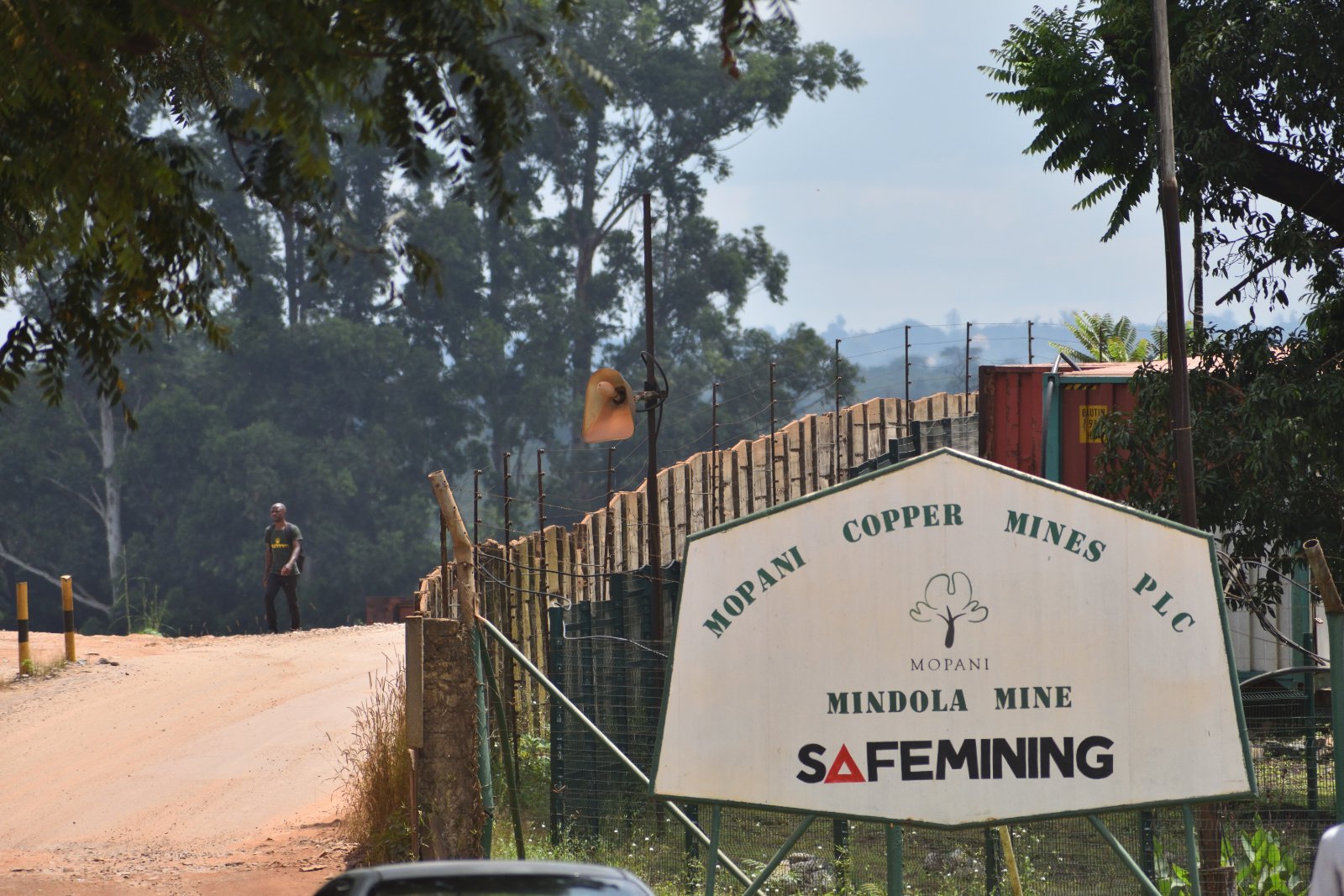
The June 2026 extension covered six producers, with Mopani Copper Mines receiving the largest reported allocation.
Mining company | Reported duty-free allocation | Context |
|---|---|---|
Mopani Copper Mines | 100,000 tonnes | The largest allocation under the scheme |
Lumwana Mining Company | 56,986 tonnes | Operated by Barrick Mining |
First Quantum Minerals | Approximately 43,000 tonnes | Reported allocation |
Nkana Mining and Minerals Processing | Approximately 43,000 tonnes | Reported allocation |
Lubambe Copper Mine | 15,000 tonnes | Partly owned by China’s JCHX Mining |
Konkola Copper Mines (KCM) | 12,541 tonnes | Operated by Vedanta Resources |
Combined waiver coverage | 271,742 tonnes | Aggregate reported in the government notice cited by Reuters |
Note: Figures described as approximately 43,000 tonnes are rounded media reports. The aggregate of 271,742 tonnes is the reported total for the waiver; the individual rounded figures should not be used to reconstruct an exact statutory allocation schedule.
The allocations illustrate that the measure was targeted rather than a universal suspension for every copper producer. The relief was tied to specified companies, quantities and concentrate tariff classifications.
The individual allocations should also not be mistaken for confirmed export volumes. A company may receive permission to export a defined quantity without necessarily using its entire allocation. The actual quantity shipped requires separate confirmation.
Why Mopani’s allocation stands out
Mopani’s 100,000-tonne allocation represented the largest single share of the reported waiver. That made the expiry particularly relevant to the company’s options for handling any concentrate stocks that remained eligible for export but had not been shipped before the deadline.
However, the allocation alone does not establish that Mopani exported all 100,000 tonnes. Reporting on the June extension indicated that Mopani had said it did not intend to use its quota at that time, preferring domestic smelting. That position should not be treated as proof of the company’s final shipment position at the end of September without more recent confirmation.
The wider lesson is that quota figures explain the scope of the government’s relief, but shipment records and company disclosures are needed to establish its actual use.
What is the legal basis for the 10% duty?
The original draft attributed the measure to Section 86 of the Mines and Minerals Development Act. That is not the legal basis identified in the available reporting on the suspension.
The relevant framework is Zambia’s Customs and Excise Act, including the statutory instruments issued under the Act to suspend the duty temporarily.
In June 2026, the government’s suspension was reported under Statutory Instrument No. 43 of 2026, titled the Customs and Excise (Suspension) (Copper Concentrates) (No. 2) Regulations, 2026. The instrument was made under powers conferred by Section 89 of the Customs and Excise Act.
It reduced the export duty to zero for qualifying exports under specified copper concentrate tariff headings during the suspension period.
The distinction between the two legal frameworks matters:
The Mines and Minerals Development Act governs important aspects of mining rights, mining operations and the sector’s regulatory framework.
The Customs and Excise Act provides the legal framework relevant to customs duties, including the suspension of the copper concentrate export duty.
The statutory instrument defines the scope and duration of the temporary relief.
The expiry of the suspension did not require a new mining-law provision to create a fresh duty. Rather, the time-limited relief ended, leaving the applicable underlying customs duty in place for shipments not covered by another valid exemption.
Which copper products were covered?
The June suspension applied to specified copper concentrate tariff classifications, including headings 2603.00.21, 2603.00.22, 2603.00.23 and 2603.00.29.
These classifications distinguish types of copper concentrates for customs purposes. The precise treatment of a shipment depends on its classification and the applicable legal instruments.
For mining companies, the practical question is therefore not simply whether a shipment contains copper. It is whether the product falls within the relevant tariff classification and whether the shipment qualifies for any applicable exemption.
For legal and compliance reporting, the statutory instrument and customs tariff should take precedence over broad descriptions of the policy as an export restriction.
KCM’s smelter restart and the case for a new exemption
The end of the waiver coincided with an important operational development at Konkola Copper Mines.
KCM said its Nchanga smelter resumed operations on September 13 following a shutdown that lasted 106 days. The shutdown had initially been scheduled for 60 days, but inspections identified additional critical work, extending the maintenance period.
The restart is relevant because the original waiver was designed partly to help producers manage concentrate stocks while smelting facilities were unavailable.
However, the restart does not mean every type of concentrate can necessarily be processed immediately. KCM subsequently said it was seeking a new waiver for material that domestic smelters could not process because of its metallurgical characteristics.
According to Fastmarkets’ October 8 report, KCM said it had exported its entire 12,541-tonne duty-free quota before the September 30 deadline. The company was engaging relevant ministries over a further exemption, but the reported account did not specify the volume or duration sought, or whether the request had been formally approved.
Why concentrate characteristics matter
Copper concentrates are not identical. Their mineral composition and impurities can affect how they behave in a smelting process. A facility may be configured to handle particular concentrate types, and blending or processing different material can require operational adjustments.
That means available smelter capacity is not always interchangeable across all concentrates. Even when a smelter has restarted, some material may remain difficult or unsuitable to process within the relevant plant’s operating constraints.
KCM’s reported request reflects this distinction between a general return to operations and the ability to process every available concentrate.
It is important, however, to separate a request for relief from a decision to grant it. As of the October 8 reporting, a new KCM waiver had not been confirmed. The request should not be described as an approved exemption unless an official instrument or subsequent authoritative report establishes that status.
The economic implications: domestic processing versus export flexibility
The duty affects the relative economics of exporting concentrate and processing it within Zambia.
By applying a cost to qualifying concentrate exports, the duty can make domestic smelting more attractive when local processing is available and commercially viable. It can also generate customs revenue when taxable exports proceed.
But the duty cannot create smelting capacity by itself. If a producer cannot process a particular concentrate locally because of maintenance, technical constraints or the material’s characteristics, the export charge can add to the cost of managing that bottleneck.
The policy therefore involves several competing considerations.
Policy objective | How the duty can affect it | What determines the outcome |
|---|---|---|
Encourage domestic processing | Makes exporting concentrate more expensive relative to otherwise comparable alternatives | Available local capacity, processing costs and plant reliability |
Generate government revenue | Can raise revenue from taxable concentrate exports | Actual export volumes, customs valuation and compliance |
Reduce unprocessed mineral exports | Changes the cost of shipping concentrate abroad | Whether viable domestic processing alternatives exist |
Support mining-sector operations | May encourage companies to use domestic facilities where feasible | Whether those facilities can accept the material and operate reliably |
Maintain export flexibility during disruptions | The duty increases the cost of exports outside an exemption | Whether targeted relief is granted and how quickly it is administered |
The policy’s effectiveness should therefore be judged against measurable outcomes: domestic processing volumes, smelter utilisation, concentrate stock levels, export quantities and revenue collected. The duty’s existence alone does not demonstrate that the country has increased its processing capacity.
The role of smelter reliability
Reliable domestic processing is central to a policy that seeks to encourage more copper beneficiation within Zambia.
A duty can change the incentives facing producers, but predictable processing capacity determines whether they can respond to those incentives. Extended shutdowns can disrupt production schedules, increase storage requirements and create uncertainty about the movement of intermediate products.
The return of the duty puts greater emphasis on the operational performance of local smelters. If facilities can consistently process available concentrates, the policy may reinforce the commercial case for domestic treatment. If capacity remains constrained, the government may face further requests for targeted relief.
This is why the operational record of facilities such as Nchanga, Mufulira and Chambishi is relevant to the wider debate. Their names alone, however, do not establish current capacity, availability or the suitability of each facility for every concentrate type.
Copper prices are high, but the duty is not a tax on all copper revenue
The global copper price provides useful market context, but the distinction between refined copper and copper concentrate is essential.
The London Metal Exchange’s official prices for October 1, 2026, showed a cash copper bid of US$14,733 per tonne and an ask of US$14,735 per tonne. This supports the description of copper prices as elevated, although it does not support presenting US$15,000 per tonne as the exact price on that date.
More importantly, the LME reference price for copper metal is not the same thing as the export value of a tonne of concentrate.
Copper concentrate contains copper along with other minerals and materials. Its commercial value depends on factors including its copper content, recoverable metal, impurities, treatment and refining charges, and the terms of the sales contract.
Consequently, it would be misleading to multiply the total 271,742-tonne waiver allocation by the LME copper price to estimate the value of the concentrate or the revenue that Zambia could collect from the duty.
A defensible estimate of potential duty revenue would require, at a minimum:
The quantity actually exported after the waiver expired.
The customs value or other applicable duty-assessment basis for those shipments.
Confirmation of the duty rate applied to each shipment.
Information about any further exemptions or special treatment.
Evidence of the relevant customs assessments and payments.
The 271,742-tonne figure represents the total quantity covered by the temporary relief, not the amount necessarily exported after October 1. It cannot be used directly to calculate post-expiry tax revenue.
What the policy means for Zambia’s copper strategy

Zambia is seeking to expand copper production while maintaining its role as a significant producer of refined copper. Reuters reported that the country exported 890,346 tonnes of copper in 2025 and has an ambition to raise annual production to 3 million tonnes by 2031.
Those goals make the management of processing capacity increasingly important. Higher mine output can create additional demand for smelting and refining, as well as for electricity, transport, maintenance and other supporting infrastructure.
The export duty forms part of this broader policy environment, but it is only one instrument. Its effectiveness depends on how it interacts with investment in processing facilities, operational reliability, customs enforcement and the commercial realities of individual mines.
The temporary waiver showed that the government was prepared to provide targeted flexibility when smelter disruptions created a need to move accumulated stocks. Its expiry restores the normal duty treatment, while KCM’s reported request for a further exemption shows that questions about the suitability of local processing capacity may persist.
The policy challenge is not simply to discourage concentrate exports. It is to make domestic processing sufficiently available and reliable that more material can be treated locally without repeated operational disruptions.
What to watch next
Several developments will determine the practical impact of the duty’s return.
Further exemptions: Will the government approve a new, narrowly defined waiver for concentrate that cannot be processed locally? Any approval should be assessed by its legal basis, eligible material, quantity and duration.
KCM’s request: Will the company receive relief for material that its own smelter or other domestic facilities cannot process? The reported request should remain distinct from any eventual decision.
Smelter performance: Will facilities that underwent extended maintenance sustain reliable operations, and will they be able to process the concentrate types produced by local mines?
Actual export volumes: How much concentrate was exported under the previous waiver, and how much is being shipped under the normal duty regime?
Customs revenue: What revenue is actually collected after the suspension expires? Any estimate should use verified shipment quantities and appropriate customs values rather than the full waiver allocation.
Concentrate stockpiles: Do stocks decline as processing capacity returns, or do operational constraints continue to create pressure for exports?
Policy consistency: Will future relief be clearly defined and published, allowing producers to understand the rules while maintaining the government’s domestic-processing objectives?
These indicators will provide a clearer picture of whether the duty is changing processing and export behaviour or mainly adding costs during periods when domestic facilities are constrained.
Conclusion
Zambia’s 10% copper concentrate export duty resumed on October 1, 2026, after a temporary suspension covering 271,742 tonnes expired. The measure restores the normal customs-duty treatment for qualifying exports not covered by another valid exemption, but it does not constitute a blanket ban on concentrate shipments.
The original suspension addressed a specific operational problem: stockpiles accumulated while major smelters underwent maintenance and repairs. KCM’s Nchanga restart is a significant development, but the company’s subsequent request for further relief indicates that the ability to process every concentrate type remains an important question.
The legal distinction is equally important. The duty and its temporary suspension fall under Zambia’s Customs and Excise Act and associated statutory instruments, rather than Section 86 of the Mines and Minerals Development Act.
Ultimately, the measure’s impact will depend on actual exports, customs revenue, the reliability of domestic smelters and whether available processing capacity can handle the material produced by Zambia’s mines. A durable shift towards greater domestic beneficiation requires not only export-duty policy, but also reliable infrastructure and commercially workable processing options.
Citations
- 1.Reuters, June 3, 2026 — Zambia extends duty-free copper concentrate export duty waiver amid smelter outages. Reports the extension to September 30, the 271,742-tonne total, and the six companies’ allocations.
- 2.https://www.reuters.com/world/africa/zambia-extends-duty-free-copper-concentrate-export-duty-waiver-amid-smelter-2026-06-03/
- 3.Fastmarkets, September 30, 2026 — Zambia’s copper concentrate export duty waiver set to expire September 30 as KCM restarts Nchanga smelter. Reports the approaching expiry and KCM’s smelter restart.
- 4.https://www.fastmarkets.com/insights/zambias-copper-concentrate-export-duty-waiver-set-to-expire-september-30-as-kcm-restarts-nchanga-smelter/
- 5.Zambia Monitor, June 4, 2026 — Government suspends export duty on copper concentrates. Identifies SI No. 43 of 2026, the Customs and Excise Act, Section 89 and the covered tariff headings.
- 6.https://www.zambiamonitor.com/govt-suspends-export-duty-on-copper-concentrates/
- 7.ZambiaLII — Customs and Excise (Suspension) (Copper Concentrates) Regulations, 2026, SI No. 15 of 2026. A primary-law reference for the earlier 2026 suspension framework.
- 8.https://zambialii.org/akn/zm/act/si/2026/15/eng%402026-03-05
- 9.Fastmarkets, October 8, 2026 — KCM seeks new Zambian export duty waiver for hard-to-smelt copper concentrate. Reports KCM’s use of its 12,541-tonne quota, the Nchanga restart and the company’s request for further relief.
- 10.https://www.fastmarkets.com/insights/kcm-seeks-new-zambian-export-duty-waiver-for-hard-to-smelt-copper-concentrate/
- 11.London Metal Exchange — Official Prices. Official market reference prices for copper, including October 1, 2026.
- 12.https://www.lme.com/Market-data/Reports-and-data/LME-Official-Prices
Finish Reading the Full Story and Expert Analysis.
Get the latest legal & regulatory intelligence in Zambia
Wansom is AI and can make mistakes.