
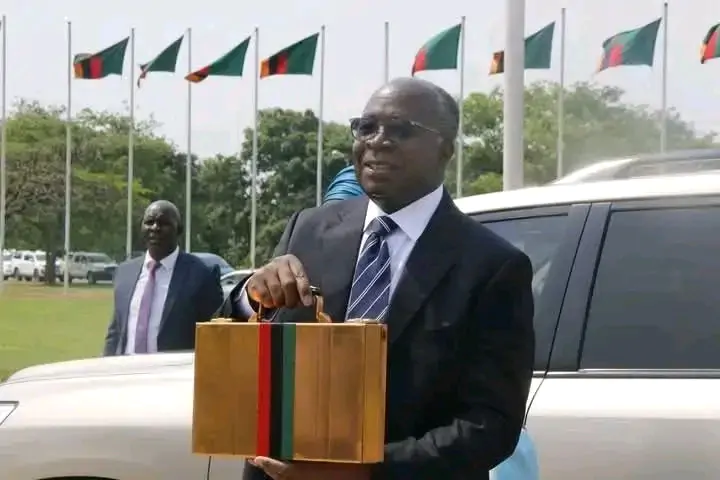
Zambia Launches Its 2027–2031 Medium-Term Revenue Strategy: Broader Base, Not Higher Rates
Summary
The launch: consultations on the 2027–2031 MTRS opened at the Mulungushi International Conference Centre, Lusaka, on 3 September 2026, under the theme "Mobilising Domestic Resources for Sustainable Growth and National Development".
The promise: Secretary to the Treasury Felix Nkulukusa said the MTRS is not about new taxes or higher rates, but about a broader, fairer, more transparent and predictable revenue system.
The goal: raise domestic revenue by 2–4 percentage points of GDP over five years, from about 22.2% in 2025, and narrow the revenue–expenditure gap to under 2% of GDP by 2027–2029.
The compliance gap: ZRA puts it at about 45%, against about 13% in South Africa. Compliance is 49% among SMEs, 62% in mining and 68% among large taxpayers.
The scenarios: ZRA projects K169.6 billion for 2026 against a K185 billion target. Compliance improvements of 5%, 10% and 20% would lift collections to K178.1 billion, K186.6 billion and K203.6 billion.
The relief bill: tax relief averaged about K10 billion a year in 2023–2024 without resolving complexity, inequality or low compliance.
The context: the IMF programme ended in January 2026, a successor is being negotiated, and debt restructuring is nearly complete. Domestic revenue is now the main route to sustainable financing.
What Was Launched
On Thursday, 3 September 2026, the Ministry of Finance and National Planning opened public consultations on Zambia's 2027–2031 Medium-Term Revenue Strategy (MTRS) at the Mulungushi International Conference Centre in Lusaka. The theme was "Mobilising Domestic Resources for Sustainable Growth and National Development". The government had announced its intention to develop the strategy in the 2026 Budget.
Not a tax-increase exercise. Secretary to the Treasury Felix Nkulukusa was explicit: the MTRS is not intended to introduce new taxes or raise tax rates. Its aim is a broader, fairer, more transparent and more predictable revenue system. He argued that the strategy replaces fragmented annual measures with a coherent five-year framework, and that Zambia can no longer lean heavily on borrowing after its debt restructuring.
The diagnosis. Nkulukusa set out the problems the strategy must address:
a revenue-to-GDP ratio that has stayed sluggish for years;
tax relief averaging about K10 billion a year in 2023 and 2024, documented in the government's tax expenditure reports, without solving inequality, complexity or low compliance;
low compliance, smuggling, and large-scale tax avoidance and evasion.
The targets. Budget Office Director Willies Chipango gave the headline goals:
Indicator | Position / target |
|---|---|
Revenue collected in 2025 | About 22.2% of GDP |
Government expenditure in 2025 | About 26% of GDP |
MTRS revenue target | Raise domestic revenue by 2 to 4 percentage points of GDP over five years |
Fiscal gap goal | Narrow the revenue–expenditure gap to under 2% of GDP between 2027 and 2029 |
Three questions for the consultation. The Treasury framed the consultations around why Zambia needs stronger domestic revenue, what additional and predictable resources could finance, and how better administration and compliance can turn revenue potential into fiscal performance. Nkulukusa asked the private sector, professional bodies and civil society for evidence-based, actionable proposals. A technical committee on the MTRS will assess them against a formal appraisal framework.
What a Medium-Term Revenue Strategy Is
The MTRS is not a Zambian invention. It is an internationally developed approach to tax reform, promoted since 2016 by the Platform for Collaboration on Tax, a joint initiative of the IMF, OECD, United Nations and World Bank Group that the G20 endorsed. Its premise is that piecemeal, year-by-year tax changes rarely produce durable results. Countries do better when they commit to a multi-year plan that sets a revenue goal and aligns every lever of the tax system behind it.
The four interdependent components:
Component | What it requires |
|---|---|
1. Revenue goal | A broad, inclusive consensus on how much revenue the country needs over the medium term, linked to its spending and development needs |
2. Comprehensive reform plan | Coordinated reforms across tax policy (what is taxed and how), revenue administration (how the tax authority collects and enforces) and the legal framework (the statutes and procedures, including the balance between the authority's powers and taxpayers' rights) |
3. Sustained commitment | Whole-of-government political support and resourcing for implementation over several years, not just one budget cycle |
4. Coordinated support | Domestic resources and external technical assistance aligned behind the country's own plan |
Why it matters for taxpayers. An MTRS changes the rhythm of tax policy. Instead of annual surprises in the budget speech, businesses should in principle see a published road map of the reforms planned over five years, the order in which they will come, and the revenue each is expected to raise. Predictability of that kind is a benefit in its own right, because it lowers the risk premium on long-term investment.
The regional picture. Several African governments now publish such strategies. Tanzania, for example, adopted an MTRS for 2025/26 to 2027/28, organised around the same policy, administration and legal-reform pillars. Zambia's decision to consult publicly before drafting reflects the framework's emphasis on national ownership, which the Treasury itself cited as a goal of the Lusaka consultations.
Zambia's Revenue Picture: The Compliance Gap Is the Story
Strong growth in collections. Zambia Revenue Authority (ZRA) collections have almost doubled in four years:
Year | ZRA target | Net collection |
|---|---|---|
2020 | K58.7 billion | |
2021 | K83.9 billion (19.7% of GDP) | |
2023 | K100.6 billion (gross K117 billion, less K16.3 billion in refunds) | |
2025 | K158.9 billion | K160.6 billion (gross K185.5 billion, less K24.9 billion in refunds) |
2026 | K185 billion (at least 20% of projected GDP of K923.7 billion) | Projected K169.6 billion |
The 2026 projection, however, falls about K15.4 billion short of target. That shortfall is the backdrop to the MTRS.
The compliance gap. Commissioner General Dingani Banda called low compliance the single biggest obstacle to domestic resource mobilisation. He put Zambia's tax compliance gap at about 45%, against about 13% in South Africa. Compliance varies sharply by segment:
Taxpayer segment | Estimated compliance |
|---|---|
Small and medium enterprises | About 49% |
Specialised tax office (mining sector) | About 62% |
Large taxpayers | About 68% |
What better compliance would raise. Banda set out ZRA's scenarios for 2026:
Improvement in compliance | Projected collection | Increase on K169.6 billion baseline |
|---|---|---|
None (current projection) | K169.6 billion | |
5% | K178.1 billion | +K8.5 billion |
10% | K186.6 billion | +K17.0 billion |
20% | K203.6 billion | +K34.0 billion |
Reaching the K185 billion target would therefore require compliance to improve by at least 10 percentage points. Banda argued that sustained gains of this kind could deliver the 2–4% of GDP revenue increase the MTRS targets without higher tax rates. Nkulukusa went further, suggesting that stronger compliance could eventually create room to lower some rates while still increasing total revenue.
The cost of tax relief. The other side of the ledger is revenue foregone. The government's tax expenditure reports show reliefs and incentives averaging about K10 billion a year in 2023 and 2024. Measuring and reviewing that spending, and asking whether each incentive delivers what it was meant to, is a standard part of any MTRS.
The Context: From Default to Self-Financing
The MTRS arrives at a turning point in Zambia's fiscal history.
Date | Milestone |
|---|---|
2020 | Zambia defaults on its external debt during the COVID-19 pandemic |
31 August 2022 | IMF approves a 38-month Extended Credit Facility (ECF) arrangement; restructuring proceeds under the G20 Common Framework |
2025 | Primary fiscal surplus of 3.1% of GDP |
27 January 2026 | IMF completes the sixth and final ECF review; total disbursements of about US$1.7 billion |
May 2026 | IMF staff report inflation back within the 6–8% target band, reserves at 4.4 months of imports, and debt deals covering about 94% of the restructuring perimeter |
August 2026 | General elections; Finance Minister Situmbeko Musokotwane reappointed |
3 September 2026 | MTRS consultations launched |
27 September 2026 | Government's medium-term framework projects growth of 6.0% (2027), 7.5% (2028) and 7.1% (2029) |
Why revenue now. The IMF has flagged renewed fiscal pressures in 2026, citing the war in the Middle East, pre-election spending and overruns at the Food Reserve Agency. Public debt is assessed as sustainable but still at high risk of distress. With no ECF in place since January, the government is seeking a successor IMF arrangement by the end of 2026. It has also made clear that it wants to finance more of its own development. Nkulukusa tied the MTRS explicitly to preventing a return to debt distress.
How the MTRS fits the budget cycle. An MTRS is a road map, not a finance bill. The legal changes it recommends will still pass through the annual budget and Finance Act process, beginning with the 2027 Budget. The value of the MTRS lies in setting those annual changes within a published five-year plan, so that each budget can be read against a known direction of travel.
Where Reform Is Likely to Land
The strategy itself has not yet been drafted; the consultations are meant to shape it. But the launch presentations and ZRA's recent reforms point clearly to where the pressure will fall.
Area | Signals from the launch and ZRA | Possible implications (Briefly analysis) |
|---|---|---|
Data and digitalisation | ZRA presented measures built on greater use of data, digitalisation and risk-based compliance systems; Smart Invoice now underpins VAT compliance | More third-party data matching, fewer blind spots, and audits selected by risk algorithms rather than rotation |
Compliance enforcement | ZRA has strengthened its capacity against evasion and avoidance schemes and stepped up enforcement against illicit trade and smuggling | Closer scrutiny of cross-border trade, transfer pricing and aggressive planning |
SME formalisation | SME compliance is the lowest of any segment, at about 49%; the Treasury talks of improving formalisation rather than raising rates | Simplified regimes paired with stronger registration and invoicing obligations |
Mining sector | Compliance in the specialised mining tax office is about 62% | Continued focus on mining tax assessments, pricing and deductions |
Tax expenditures | Relief averaging about K10 billion a year in 2023–2024 | A likely review of incentives that cannot show a return; some may be narrowed or given sunset dates |
Taxpayer services | ZRA has launched a national Cost of Tax Compliance Survey to cut compliance costs, especially for MSMEs | Improvements to digital filing and payments, taxpayer education and administrative procedures |
The legal dimension. In the international MTRS framework, legal reform is a pillar in its own right. It covers both the powers a revenue authority needs to enforce modern, data-driven compliance and the rights taxpayers need in return: clear procedures, proportionate penalties, timely refunds and independent dispute resolution. The refund side is not academic. ZRA refunded K24.9 billion in 2025 and has acknowledged a backlog of unpaid refunds. A credible MTRS will need to show how enforcement and taxpayer protections advance together.
"No new taxes" is a commitment on rates, not on burden. For compliant taxpayers, the promise of no new taxes and no rate increases is meaningful. For taxpayers who are under-declaring, the practical burden will rise as enforcement improves, and that is the point of the strategy.
Practical Implications
Engage in the consultation. The Treasury has asked for evidence-based, actionable proposals, which a technical committee will assess against a formal appraisal framework. Submissions that quantify revenue effects, compliance costs and implementation steps will carry more weight than general objections. Business associations, professional bodies and chambers are well placed to submit sector-specific evidence.
Prepare for data-driven compliance. As ZRA leans on data and risk-based systems, the consistency of a taxpayer's own records becomes the first line of defence. Businesses should reconcile Smart Invoice data, VAT returns, income tax returns and customs declarations. Mismatches are what risk engines flag first.
Take stock of incentives. Companies relying on tax incentives should document how they meet the qualifying conditions and what investment, jobs or exports those incentives support. If incentives are reviewed under the MTRS, beneficiaries that can show results will be best placed to defend them.
SMEs. With SME compliance at about 49%, this segment is an obvious focus for formalisation. Smaller businesses should make sure they are registered for the correct taxes, issuing compliant invoices and keeping records. They can also take part in ZRA's Cost of Tax Compliance Survey, which is meant to shape simplification.
Mining. Mining companies should expect continued attention to the specialised tax office's compliance figures. Pricing, deductions and mineral royalty positions should be well documented.
Watch the timeline. Key milestones to watch are:
the published draft MTRS and any second round of consultation;
the 2027 Budget and Finance Bills, the first to operate within the new framework;
negotiations on a successor IMF arrangement, which is likely to include revenue commitments consistent with the MTRS.
Frequently Asked Questions
What is Zambia's 2027–2031 Medium-Term Revenue Strategy? A five-year framework for revenue reform covering tax policy, revenue administration and the legal framework. Public consultations began on 3 September 2026 in Lusaka.
Will the MTRS introduce new taxes or raise tax rates? According to Secretary to the Treasury Felix Nkulukusa, no. The aim is a broader, fairer, more transparent and more predictable system, mainly through better compliance and formalisation.
How much revenue does the government want to raise? The target is an increase of 2 to 4 percentage points of GDP over five years. Revenue was about 22.2% of GDP in 2025, against spending of about 26%.
What is ZRA's 2026 revenue target? K185 billion. ZRA projects K169.6 billion on current compliance and says compliance must improve by at least 10 percentage points to meet the target.
How big is Zambia's tax compliance gap? ZRA estimates about 45%, against about 13% in South Africa. Compliance is about 49% for SMEs, 62% for the mining tax office and 68% for large taxpayers.
How can businesses contribute? By submitting evidence-based, actionable proposals to the Ministry of Finance and National Planning during the consultation, directly or through business and professional associations.
Citations
- 1.• Govt to launch medium-term revenue strategy consultations, Diggers News (31 August 2026)
- 2.• Govt launches consultations on 5-year revenue strategy, Diggers News (4 September 2026)
- 3.• Govt Seeks Public Input on Revenue Strategy, ZNBC
- 4.• Zambia Revenue Authority eyes K203.6 billion through compliance drive, Zambia Monitor (4 September 2026)
- 5.• Govt to launch national consultations on 2027-2031 medium-term revenue strategy, Zambia Monitor
- 6.• MoF Launches 2027–2031 MTRS, Lusaka Times (3 September 2026)
- 7.• Zambia Bets on Tax Compliance to Raise Revenue Without New Taxes, Ecofin Agency
- 8.• Nkulukusa bemoans sluggish revenue to GDP ratio, Daily Revelation
- 9.• We collected gross revenue of K185.5 bn in 2025, Diggers News (2 February 2026)
- 10.• IMF Staff Concludes Visit to Zambia, IMF Press Release 26/150 (14 May 2026)
- 11.• IMF Executive Board Completes Sixth Review Under the ECF with Zambia, IMF (27 January 2026)
- 12.• Zambia aims to lift economic growth to 7% over next three years, Reuters via CNBC Africa (28 September 2026)
- 13.• Medium-Term Revenue Strategy speech, IMF (2019)
- 14.• Platform for Collaboration on Tax, World Bank
- 15.• Zambia's revenue authority launches nationwide cost of tax compliance survey, Zambia Monitor
Finish Reading the Full Story and Expert Analysis.
Get the latest legal & regulatory intelligence in Zambia
Wansom is AI and can make mistakes.