
World Mosquito Day 2026: Europe Must Upgrade Control Tools as Disease Risks Rise
What Happened
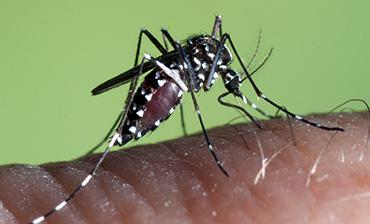
Europe needs to improve its preparedness and control efforts as the risk of mosquito-borne diseases increases, with West Nile virus (WNV) continuing to spread to new regions and invasive mosquito species becoming established in more parts of Europe, the European Centre for Disease Prevention and Control (ECDC) said on World Mosquito Day. This year, six regions in Europe reported locally acquired infections with WNV for the first time ever. According to ECDC’s most recent weekly figures, 429 locally acquired cases of WNV infection have been reported in nine European countries as of 13 August 2026. As transmission usually peaks during August and early September, further cases can be expected. 'The expansion of West Nile virus transmission as well as the spread of invasive mosquito species demonstrate why Europe needs to strengthen its mosquito-control capacity,' says Céline Gossner of ECDC. 'For effective mosquito control, we need close cooperation in Europe and an integrated approach that brings together mosquito monitoring, community engagement, and targeted mosquito control solutions that take environmental impact into account.' While the mosquitoes that spread WNV ( Culex mosquitoes) are already widely present in Europe, the Asian tiger mosquito ( Aedes albopictus ), which can transmit dengue and chikungunya viruses, is now established in 16 European countries, double the number from 12 years ago. A new article published today by ECDC and EU partners in the Eurosurveillance journal, 'Strengthening mosquito control to manage emerging mosquito-borne diseases', identifies gaps in Europe’s mosquito-control capacity and calls for improved coordination and a bigger toolbox to increase mosquito control. This coincides with the publication of a new ECDC report on mosquito surveillance and control practices in Europe, highlighting the need for more effective mosquito-control programmes. ECDC works to support European countries through seasonal surveillance of WNV infections, dengue and chikungunya virus disease, alongside risk assessments, mosquito-distribution maps, modelling and practical guidance on preparedness, prevention and outbreak response. Effective mosquito control requires an integrated approach that combines mosquito and disease surveillance, larval source management, community engagement, and targeted mosquito control adapted to local conditions. Insecticide resistance, environmental concerns, and the limited range of products authorised for use against mosquitoes also underline the need for more diversified control options and stronger evidence on their effectiveness, safety, and environmental impact. By removing or covering stagnant water in and around homes, including balconies and gardens, communities and individuals have an important role to play in helping to reduce mosquito populations. Personal protection is also important, including using repellents, wearing protective clothing and mosquito-proofing homes. Healthcare professionals should also remain alert to local transmission and the possibility of importation to prevent the further spread of these viruses. Surveillance and monitoring Surveillance and control of Culex mosquitoes and Aedes invasive mosquitoes in Europe: questionnaire findings on current practice and needs
Source
How does this affect you?
Get an AI analysis of this article grounded in your jurisdictions, practice areas, and any policy documents you've uploaded to Wansom.
Wansom is AI and can make mistakes.