
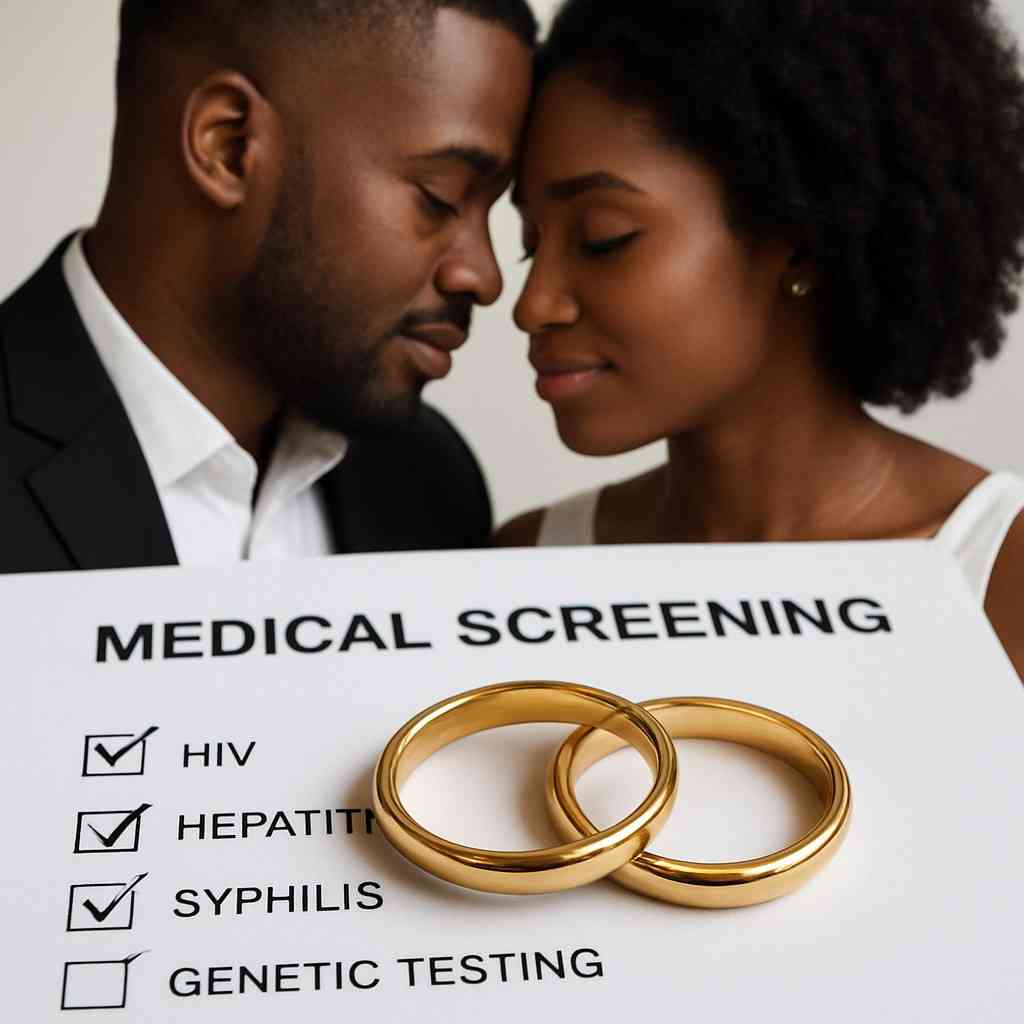
Why couples should undergo medical screening before "I do"
Abstract
In Kenya, despite the significant societal impact of infertility stigma and undiagnosed genetic risks, there is currently no mandatory legal requirement for couples to undergo medical screening before marriage. This article examines the legal vacuum surrounding premarital health checks, contrasting it with the growing recommendations from medical professionals and the practices of some religious institutions. It highlights the critical importance of voluntary screening for conditions such as genetic disorders, sexually transmitted infections, and fertility issues, arguing that such proactive measures are vital for informed reproductive choices, preventing avoidable health tragedies, and upholding the constitutional right to health. The analysis delves into the existing legal framework, ethical considerations, and the implications for legal practitioners advising clients on marital and reproductive health matters.
Introduction
The journey to 'I do' is often envisioned as a celebration of love and commitment, yet for many couples in Kenya, it can inadvertently lead to unforeseen health challenges and profound emotional distress. A recent report from Standard Media underscores a critical issue: the pervasive stigma surrounding infertility and the overlooked dangers of undiagnosed genetic risks, advocating for premarital medical screening as a preventative measure against reproductive and health tragedies. This concern resonates deeply within a society where the aspiration for family is paramount, and the absence of children can lead to immense personal suffering and social marginalization.
While medical experts increasingly advocate for comprehensive premarital health assessments, Kenyan law currently does not mandate such screenings. This article aims to dissect the legal landscape surrounding premarital medical screening in Kenya, exploring the interplay between individual autonomy, public health imperatives, and the evolving understanding of reproductive rights. It will examine the existing statutory provisions, the ethical dilemmas, and the practical implications for legal professionals advising couples on these sensitive yet crucial matters.
Background
Marriage in Kenya is primarily governed by the Marriage Act, 2014, which consolidates various laws relating to marriage and divorce. The Act defines marriage as a voluntary union between a man and a woman, whether monogamous or polygamous, and outlines the procedural requirements for its registration. Notably, the Act does not include any provisions for mandatory medical examinations as a precondition for solemnizing a marriage. This legal stance is consistent with a broader principle of individual liberty and privacy enshrined in the Constitution of Kenya 2010, particularly Article 31 on privacy and Article 43(1)(a) which guarantees the right to the highest attainable standard of health, including reproductive health care.
Historically, there have been discussions and even past legislative attempts concerning premarital health checks, particularly regarding HIV/AIDS. However, a law passed approximately a decade ago (from 2016) explicitly banned HIV tests as a precondition for marriage, aiming to combat stigma and discrimination against people living with HIV. Despite this, some religious institutions in Kenya continue to recommend or even demand HIV test results before officiating weddings, a practice that has raised concerns about confidentiality and potential infringement on rights. The National Reproductive Health Policy 2022-2032, while not mandating premarital screening, reflects the government's commitment to high-standard reproductive services and acknowledges the unique needs of individuals with infertility, signaling a policy direction towards better reproductive health outcomes.
Analysis
The absence of mandatory premarital medical screening in Kenya creates a significant legal and public health gap. While the law respects individual autonomy, it inadvertently exposes couples to preventable health crises and emotional distress. Medical professionals consistently recommend a range of tests, including screening for sexually transmitted infections (STIs) like HIV, syphilis, and hepatitis B and C; genetic disorders such as sickle cell disease, albinism, and Marfan syndrome; blood group compatibility (especially Rh factor to prevent hemolytic disease of the newborn); and fertility assessments. These tests are crucial for identifying potential health risks, informing reproductive decisions, and enabling early intervention or management strategies.
The ethical considerations are complex. On one hand, mandatory screening could be seen as an infringement on privacy and bodily autonomy. The High Court of Kenya, in other contexts like paternity disputes, has emphasized that ordering DNA testing is a serious intrusion implicating constitutional rights, including human dignity and privacy, and requires a firm legal and factual foundation. This judicial caution against compelled genetic testing, even for establishing paternity, underscores the high bar for any mandatory premarital screening. On the other hand, the societal and personal costs of preventable conditions, such as the emotional and financial burden of managing a child with a severe genetic disorder or the stigma associated with infertility, argue for a more proactive approach.
The recently passed Assisted Reproductive Technology (ART) Bill, 2022 (now awaiting Senate concurrence and presidential assent), while not directly addressing premarital screening, signifies a legislative move towards regulating reproductive health services. This Bill aims to bring order to a previously unregulated sector, establishing a framework for IVF, gamete donation, and surrogacy, and creating a regulatory body under the Kenya Medical Practitioners and Dentists Council (KMPDC). This development, by providing legal pathways for addressing infertility, indirectly supports the broader objective of informed reproductive choices, which premarital screening facilitates. Comparative jurisdictions, such as Oman, have adopted mandatory premarital medical examinations, demonstrating that such policies are feasible and can serve public health interests.
For legal practitioners, the current landscape necessitates a nuanced approach. While they cannot legally compel clients to undergo screening, they have a professional and ethical responsibility to inform couples about the benefits of voluntary premarital medical checks. This includes advising on the potential legal implications of not knowing one's health status, particularly concerning inherited conditions that could lead to disputes over child support, inheritance, or even marital dissolution. The Evidence Act (Cap 80, Laws of Kenya) already recognizes DNA test results as admissible evidence in court, particularly in child matters, highlighting the legal weight of genetic information.
Conclusion
The call for couples to undergo medical screening before marriage in Kenya is not merely a medical recommendation but a critical public health and legal imperative. While the current legal framework prioritizes individual autonomy by not mandating such tests, the profound personal and societal consequences of undiagnosed genetic risks and infertility underscore the urgent need for a more informed approach. Legal practitioners play a pivotal role in bridging this gap, guiding clients through the complexities of family law with an emphasis on proactive health planning.
Moving forward, there is a compelling case for increased public awareness campaigns, potentially led by the Ministry of Health in collaboration with legal and religious bodies, to educate prospective couples on the benefits of voluntary screening. Furthermore, policymakers could explore legislative reforms that encourage, rather than compel, premarital health assessments, perhaps through incentives or integrated counseling services. Such measures would empower couples to make informed decisions, mitigate future health and legal challenges, and ultimately foster healthier, more resilient families in Kenya, aligning with the constitutional right to the highest attainable standard of health.
Citations
- 1.Kenya: Pre-marital HIV tests requested by some Kenyan churches despite law banning them as a precondition for marriage - The Christian Century (October 01 2016)
- 2.REPRODUCTIVE HEALTH POLICY - Ministry of Health, The National Reproductive Health Policy 2022 - 2032, Government of Kenya, July 2022.
- 3.Health experts urged couples to undergo medical tests before marriage for better planning (June 13 2026)
- 4.Important Tests Couples Should Undergo Before Marriage, Getting Babies: "HIV and Fertility" - Tuko.co.ke (May 03 2024)
- 5.Legal provision for compulsory paternity DNA test in Kenya - Academia.edu
- 6.Marriage Under Kenyan Law - Umsizi LLP (July 28 2021)
- 7.No, Kenya's health cabinet secretary Nakhumicha didn't say 'DNA tests for newborns are now mandatory'. Ignore viral claim - Africa Check (April 12 2024)
- 8.Six tests you need to take before you sign that marriage certificate - Standard Newspaper (November 13 2018)
- 9.FAQs on the Role of DNA Testing in Children Matters in Kenya (July 04 2024)
- 10.National Adolescent Sexual and Reproductive Health Policy, 2015. - Population Reference Bureau
- 11.5 medical examinations every couple needs before marriage | Pulse Kenya (October 14 2021)
- 12.Why couples should undergo medical screening before "I do" - Standard Newspaper (June 12 2026)
- 13.Pre-marital Health Screening | Health checks | Sexually Transmitted Infections (STIs) | Hereditary Conditions | Fertility - MyGyno
- 14.Why couples should undergo medical screening before "I do" - The Standard Health (June 13 2026)
- 15.High Court Clarifies: DNA Tests Cannot Be Forced in Succession Disputes to Prove Paternity - CM Advocates LLP (February 11 2026)
- 16.MEDICAL PRACTITIONERS AND DENTISTS ACT
- 17.Kenya Medical Practitioners and Dentists Board - Wikipedia
- 18.Opportunities and barriers for genetic service delivery in Kenya from a health personnel perspective - PMC (July 06 2021)
- 19.What Kenya's new fertility treatment law bans and allows - The Star (November 21 2025)
- 20.Hope for couples battling with infertility as National Assembly passes landmark bill (November 14 2025)
- 21.Kenya Bans Fertility Tourism, Legalizes Altruistic Surrogacy for Citizens - Association CLARA (November 13 2025)
- 22.Kenya Legalises Assisted Reproductive Technology (ART): What The New Law Means (November 18 2025)
- 23.Kenyan National Assembly passes Bill regulating IVF and surrogacy | PET (November 24 2025)
- 24.National Family Planning Guideline - Ministry of Health
- 25.Marriage and divorce - Kenya - UNHCR
- 26.Premarital medical examination - Wikipedia
How does this affect your business?
Get an AI analysis of this article grounded in your jurisdictions, practice areas, and any policy documents you've uploaded to Wansom.
Wansom is AI and can make mistakes.