
Who is the Supreme Court’s most “ideological” justice? And does that question even make sense?
Abstract
The conventional wisdom of the United States Supreme Court often categorizes justices into rigid ideological blocs: conservative, liberal, and a centrist group. However, this article argues that such a simplistic framework fails to capture the intricate dynamics of judicial decision-making. Through an examination of recent terms, including cases involving birthright citizenship and administrative law, it becomes evident that judicial ideology is a fluid concept, shaped by specific issue areas, the Court's docket, unexpected coalitions, case selection, and the public visibility of votes. The article highlights instances where justices cross traditional ideological lines, demonstrating that a nuanced understanding of the Court requires moving beyond mere political labels to appreciate the complexities of legal reasoning and jurisprudential philosophies.
Introduction
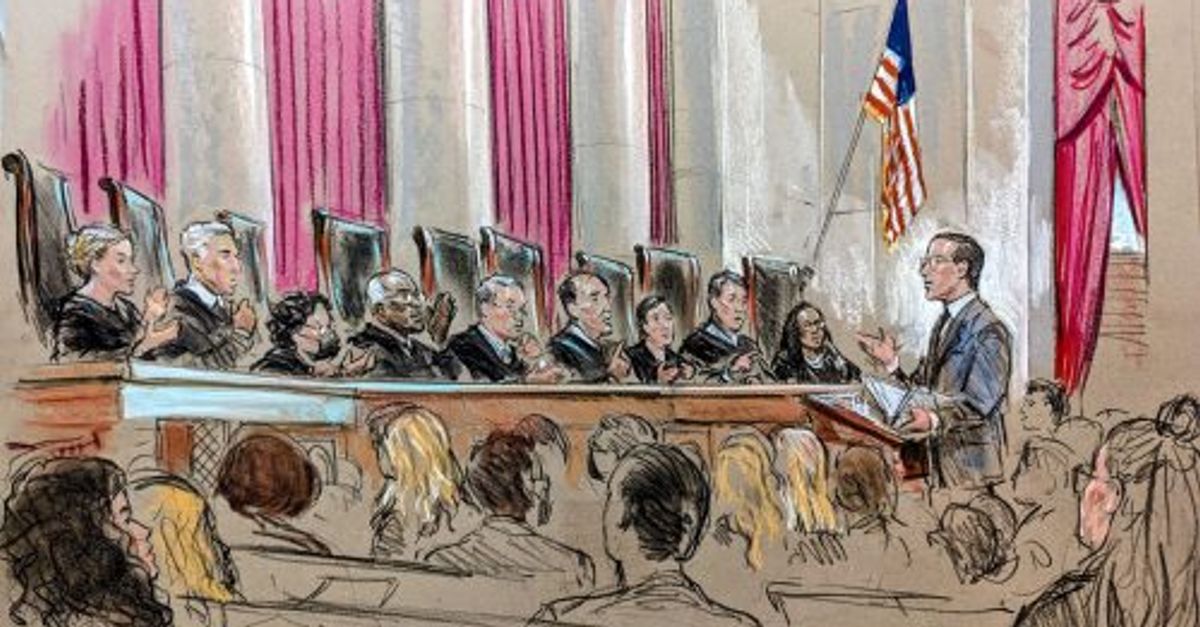
The United States Supreme Court is frequently described through a familiar shorthand: a conservative wing, a liberal wing, and a smaller group of justices occupying the ideological middle. This categorization often aligns with the appointing president's political party, leading to a perception of predictable voting blocs. For instance, Justices Clarence Thomas, Samuel Alito, and Neil Gorsuch are often placed on the far right; Justices Sonia Sotomayor, Elena Kagan, and Ketanji Brown Jackson on the left; with Chief Justice John Roberts and Justices Brett Kavanaugh and Amy Coney Barrett sometimes seen as nearer to the Court's center. This description, while capturing a general trend, risks oversimplification and can obscure the intricate realities of how the Court functions and how individual justices arrive at their decisions.
This article contends that while ideological labels offer a convenient starting point, they are ultimately insufficient for a comprehensive understanding of Supreme Court jurisprudence. The notion of a justice's "ideology" is not static or monolithic but is profoundly influenced by a multitude of factors, including the specific legal question at hand, the Court's overall docket, the formation of unexpected coalitions, the strategic selection of cases, and the public scrutiny surrounding particular votes. Examining recent decisions reveals that justices frequently defy easy categorization, forming majorities that cut across perceived ideological divides and challenging the utility of a purely political lens.
Background
The perception of an ideologically divided Supreme Court is not new, but it has intensified in recent decades, particularly with the increased politicization of judicial appointments. This ideological framing often correlates with differing judicial philosophies. For instance, many conservative justices are associated with originalism or textualism, approaches that emphasize interpreting the Constitution or statutes based on their original public meaning or the ordinary meaning of the text. In contrast, some liberal justices may lean towards a "living constitutionalism," which views the Constitution as a dynamic document whose principles should adapt to contemporary societal changes.
Historically, the Court has seen shifts in its composition and interpretive approaches. Landmark decisions throughout history have often reflected the prevailing judicial philosophies of the time, leading to periods where the Court was perceived as more activist or restrained. However, even within these broader trends, individual justices have always brought their unique perspectives and legal methodologies to bear, sometimes leading to unexpected outcomes. The ongoing debate about judicial restraint versus judicial activism, and the application of various interpretive canons, further complicates any attempt to neatly pigeonhole justices into fixed ideological boxes.
Analysis
The notion that judicial ideology is a straightforward, consistent force is often challenged by the Court's actual output. Consider, for example, cases that touch upon fundamental constitutional principles, such as birthright citizenship. While the foundational precedent for birthright citizenship was established over a century ago in *United States v. Wong Kim Ark*, 169 U.S. 649 (1898), which affirmed that children born in the U.S. are citizens regardless of their parents' alienage, contemporary challenges to this principle can reveal complex judicial alignments. When the Court rejects efforts to narrow birthright citizenship, as seen in recent hypothetical scenarios, and the majority opinion is penned by a justice typically considered conservative, with other conservative-appointed justices joining the liberal wing, it underscores that outcomes are not always dictated by a simple liberal-conservative split.
This complexity extends across various legal domains. In administrative law, for instance, recent terms have seen significant shifts that defy easy ideological prediction. The Court's decision in *Loper Bright Enterprises v. Raimondo*, 602 U.S. ___ (2024), which overruled the long-standing *Chevron* deference, and *Securities and Exchange Commission v. Jarkesy*, 602 U.S. ___ (2024), which imposed Seventh Amendment jury trial requirements on certain agency adjudications, demonstrate how statutory interpretation and constitutional limits on agency power can lead to diverse coalitions. Chief Justice Roberts, for example, authored the majority opinion in *Loper Bright*, a decision that significantly curtails agency power, but the alignment of justices in such cases is not always a clean ideological sweep.
Furthermore, statutory interpretation cases frequently illustrate how justices with similar jurisprudential philosophies can diverge on specific applications. In *Bittner v. United States*, 598 U.S. 85 (2023), Justice Gorsuch, a staunch textualist, wrote for a majority that included Chief Justice Roberts, Justice Alito, Justice Kavanaugh, and Justice Jackson, interpreting the Bank Secrecy Act's penalty provisions. This unusual coalition saw Justices Barrett, Thomas, Sotomayor, and Kagan in dissent, highlighting that even within a textualist framework, reasonable minds can reach disparate conclusions based on their understanding of statutory language, context, and canons of construction. These examples demonstrate that factors such as the specific statutory text, the legislative history (even if disfavored by some textualists), and the perceived implications for federalism or separation of powers can lead to unexpected alliances, making simple ideological labels inadequate predictors of judicial behavior.
The Court's docket and case selection also play a crucial role in shaping perceived ideology. Cases involving highly visible social issues might elicit more predictable ideological splits, while those focused on technical statutory interpretation or administrative procedure can produce more varied and surprising coalitions. The "3-3-3" Court hypothesis, suggesting distinct blocs of justices (Thomas, Alito, Gorsuch; Roberts, Kavanaugh, Barrett; Sotomayor, Kagan, Jackson), attempts to capture some of this nuance, but even this model is often challenged by the fluid nature of alliances on specific issues.
Conclusion
The persistent effort to label Supreme Court justices as simply "liberal" or "conservative" provides a convenient, albeit often misleading, shorthand for understanding the Court's dynamics. While broad ideological tendencies are undeniable, a deeper analysis reveals that judicial decision-making is a far more intricate process, influenced by the specific legal questions, the nuances of statutory and constitutional text, and the formation of issue-specific coalitions. Cases ranging from foundational constitutional interpretations like birthright citizenship to complex administrative law challenges demonstrate that justices frequently transcend conventional ideological boundaries, aligning in unexpected ways based on their legal reasoning and interpretive methodologies.
For legal practitioners, this complexity underscores the importance of moving beyond simplistic ideological predictions. Effective advocacy before the Supreme Court requires a meticulous focus on the precise legal arguments, a thorough understanding of various judicial philosophies, and an appreciation for how different issue areas can elicit unique alignments among the justices. Practitioners should closely monitor not just the general ideological composition of the Court, but also the evolving coalitions on specific types of cases, the interpretive tools favored by individual justices in different contexts, and the subtle shifts in jurisprudential approaches that ultimately shape the law. The question of a justice's "ideology" is thus less about a fixed political stance and more about a dynamic interplay of legal principles and contextual factors.
Citations
- 1.United States v. Wong Kim Ark, 169 U.S. 649 (1898)
- 2.Bittner v. United States, 598 U.S. 85 (2023)
- 3.Loper Bright Enterprises v. Raimondo, 602 U.S. ___ (2024)
- 4.Securities and Exchange Commission v. Jarkesy, 602 U.S. ___ (2024)
How does this affect your business?
Get an AI analysis of this article grounded in your jurisdictions, practice areas, and any policy documents you've uploaded to Wansom.