
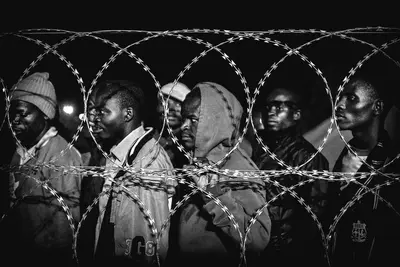
Which foreigners are unwelcome in South Africa?
Abstract
South Africa grapples with significant ambiguity regarding the legal status of "unwelcome foreigners," a lack of clarity that has unfortunately led to the victimisation of individuals, including South African citizens mistaken for foreign nationals. This article delves into the statutory framework governing immigration in South Africa, primarily the Immigration Act 13 of 2002, and examines how its provisions for "prohibited" and "undesirable" persons are interpreted and applied. It highlights the divergence between legal definitions and public discourse, exacerbated by socio-political movements, and explores key judicial pronouncements that seek to uphold the constitutional rights of all persons within the Republic's borders. The piece underscores the critical need for precise legal definitions and consistent enforcement to prevent arbitrary actions and protect fundamental human rights.
Introduction
The notion of "unwelcome foreigners" has become a contentious and often inflammatory subject in South Africa, leading to widespread confusion and, as highlighted by recent reports, the victimisation of individuals, including South African citizens who are perceived to be foreign. This ambiguity not only undermines the rule of law but also fuels xenophobic sentiments and actions, creating a precarious environment for both documented and undocumented foreign nationals, as well as those who merely 'look like' the perceived targets. The lack of clear, consistent messaging and enforcement from state authorities further exacerbates this problem, leaving legal practitioners and the public alike struggling to discern who, precisely, is deemed "unwelcome" under South African law.
Background
South Africa's immigration landscape is primarily governed by the Immigration Act 13 of 2002 (the Act), which aims to regulate the admission, residence, and departure of persons from the Republic. The Act establishes various categories of temporary residence visas and permanent residence permits, each with specific requirements and conditions. Key to understanding who might be considered "unwelcome" are the provisions relating to "prohibited persons" under Section 29 and "undesirable persons" under Section 30 of the Act. These sections outline specific grounds upon which a foreigner may be denied entry, a visa, or a permanent residence permit.
Analysis
Sections 29 and 30 of the Immigration Act provide the legal framework for identifying individuals who may be denied entry or residence in South Africa. Prohibited persons, as defined in Section 29, include those with infectious diseases, outstanding warrants or convictions for serious crimes (such as genocide, terrorism, human smuggling, or murder), or those found in possession of fraudulent documents. Undesirable persons, under Section 30, are those who are likely to become a public charge, have been judicially declared incompetent, are unrehabilitated insolvents, fugitives from justice, or have previous criminal convictions without the option of a fine for conduct that would be an offence in South Africa. Critically, overstaying a visa for prescribed periods also leads to a declaration of undesirability, preventing re-entry for specific durations. While the Director-General of Home Affairs has discretion to waive grounds for prohibited persons, and the Minister for undesirable persons, for "good cause," this discretion must be exercised within the bounds of the law and the Constitution.
Conclusion
The ongoing lack of clarity regarding who constitutes an "unwelcome foreigner" in South Africa poses significant challenges for legal practitioners and undermines the fundamental rights enshrined in the Constitution. While the Immigration Act 13 of 2002 clearly defines "prohibited" and "undesirable" persons, the public discourse and actions of certain groups often extend beyond these legal definitions, leading to arbitrary targeting and victimisation. The recent High Court judgment interdicting Operation Dudula from unlawfully demanding documents and engaging in xenophobic acts serves as a crucial reminder that immigration enforcement is the exclusive preserve of authorised state officials, and that all persons in South Africa, regardless of nationality, are entitled to dignity, equality, and protection under the Constitution. Legal practitioners must remain vigilant in challenging unlawful detentions, arbitrary declarations of undesirability, and any actions that infringe upon the constitutional rights of foreign nationals. It is imperative for the Department of Home Affairs to provide unequivocal guidance and ensure consistent, lawful application of immigration policies, thereby mitigating the risk of xenophobic violence and upholding South Africa's constitutional and international human rights obligations.
Citations
- 1.Immigration Act 13 of 2002
- 2.Refugees Act 130 of 1998
- 3.Minister of Home Affairs and Others v Watchenuka and Another (010/2003) [2003] ZASCA 142; [2004] 1 All SA 21 (SCA)
- 4.Arse v Minister of Home Affairs and Others (25/2010) [2010] ZASCA 9; 2010 (7) BCLR 640 (SCA); [2010] 3 All SA 261 (SCA); 2012 (4) SA 544 (SCA)
- 5.Kopanang Africa Against Xenophobia and Others v Operation Dudula and Others (Gauteng Division, Johannesburg, Case No. 2022/000000)
- 6.Promotion of Equality and Prevention of Unfair Discrimination Act 4 of 2000
- 7.Regulation of Gatherings Act 205 of 1993
How does this affect your business?
Get an AI analysis of this article grounded in your jurisdictions, practice areas, and any policy documents you've uploaded to Wansom.
Wansom is AI and can make mistakes.