
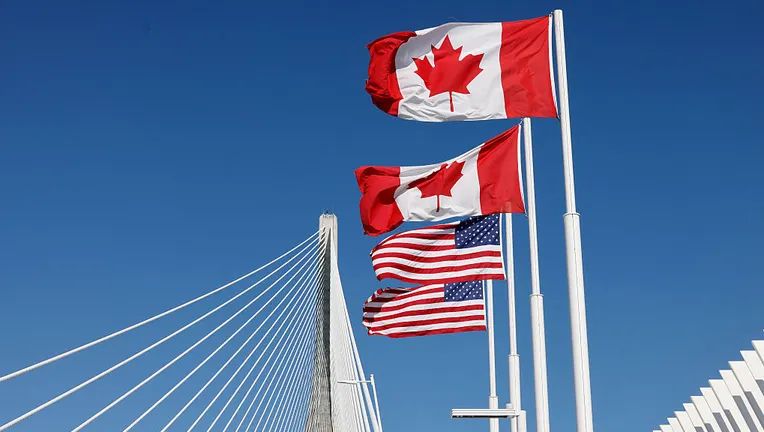
US Ban on Canadian Dairy, Alcohol and Motorcycles Takes Effect: The Legal Fault Lines of the Trade War
Summary
What is banned: certain Canadian whey and molasses products, most beer, wine, cider and spirits packaged for consumption, and motorcycles and mopeds over 800cc. HTSUS headings 0404, 1702, 1703, 2202 to 2208 and 8711 are covered, under Proclamations 11061 to 11063.
Legal basis: Section 338 allows up to 50% duties where a country discriminates against US commerce, and exclusion from importation if the discrimination continues. The 50% duties started on 22 August, and the bans are the second stage.
Why Section 338: in Learning Resources v. Trump (20 February 2026), the Supreme Court held 6–3 that IEEPA does not authorise tariffs. Section 338 expressly authorises duties and exclusions, but the President's findings and the measures' breadth remain open to challenge.
CUSMA offers no shield: the measures apply regardless of CUSMA origin. The US declined to renew CUSMA at the 1 July joint review, putting it on annual reviews until 2036.
Canada's response: 15% to 50% surtaxes on C$27.6 billion of US goods since 8 September under the United States Surtax Order, 2026, with remission available. There has been no further retaliation since the bans were announced.
At the border: CBP rejects covered goods outright. Goods imported, warehoused or in an FTZ before the cutoff can still be entered at the 50% duty.
For business: screen SKUs, protect refund rights, review force majeure and change-in-law clauses, and plan for a prolonged stand-off.
What Came Into Force on 29 September
From 12:01 a.m. Eastern Time on Tuesday, 29 September 2026, certain Canadian dairy products, alcoholic beverages and motor vehicles are excluded from importation into the United States. Presidential Proclamations 11061, 11062 and 11063, signed on 8 September, implement the ban.
Sector | What is barred (per the annexes) | HTSUS headings |
|---|---|---|
Dairy and sugar products | Whey products, including protein concentrates and fluid and modified whey; molasses, including invert and cane molasses | 0404, 1702, 1703 |
Alcoholic beverages | Beer (including non-alcoholic and malt beer), wine, cider and spirits such as whisky, vodka, rum, gin, brandy, tequila and liqueurs, mainly where packaged for direct consumption | 2202 to 2208 |
Motor vehicles | Motorcycles and mopeds with petrol engines larger than 800cc | 8711 |
The American Action Forum estimates that the covered products account for about $19.9 billion of US imports from Canada.
"Packaged" matters. Where the alcohol annex limits scope to packaged goods, the ban applies only to products in bottles, cans, boxes, kegs or similar direct-to-consumer containers. Bulk alcohol outside the scope limits is not banned; it remains subject to the 50% duty.
How the dispute escalated:
Date | Step |
|---|---|
March 2025 onward | Canadian provinces restrict or remove US alcohol; Canada applies 25% tariffs on non-USMCA US vehicles |
20 July 2026 | President signs three Section 338 proclamations (11046 to 11048) imposing 50% duties on Canadian dairy, alcohol, motor vehicles and related goods |
22 August 2026 | 50% duties take effect after a three-day suspension; talks collapse |
8 September 2026 | Canada's retaliatory tariffs of 15% to 50% on C$27.6 billion of US goods take effect; the US signs five further proclamations, three imposing import bans and two changing tariff scope |
15 September 2026 | Scope changes apply: ATVs and more dairy added to the 50% list, rock salt and cement removed |
29 September 2026 | Import bans take effect |
Since 9 September, neither side has announced further escalation. President Trump predicts that Canada will concede within weeks. Canadian Trade Minister Dominic LeBlanc says Canada will not sign a deal that is bad for the country. US Trade Representative Jamieson Greer says the US feels no urgency, pointing to continued trade in oil, gas and potash.
The Legal Authority: Section 338, a 1930 Statute Revived
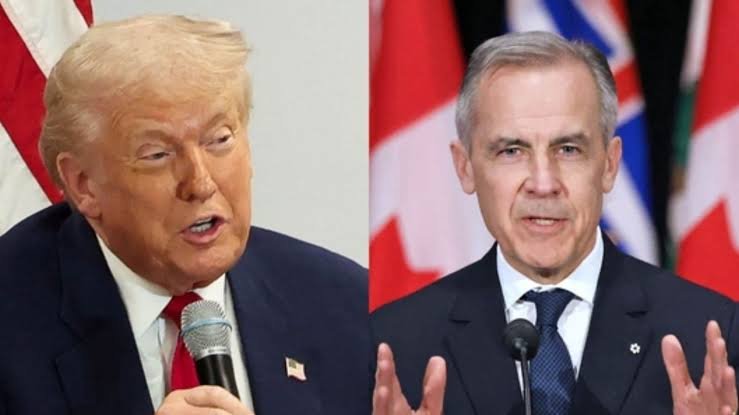
Why not IEEPA? The President's earlier Canada tariffs, justified by fentanyl trafficking, relied on the International Emergency Economic Powers Act (IEEPA). On 20 February 2026, in Learning Resources, Inc. v. Trump (consolidated with Trump v. V.O.S. Selections), the Supreme Court held 6–3 that IEEPA does not authorise tariffs. The Court reasoned that the tariff power is a taxing power the Constitution gives to Congress, and that IEEPA's authority to "regulate … importation" does not include it. The administration has since turned to statutes that expressly mention duties.
Section 338 of the Tariff Act of 1930. The July and September Canada measures are the first use of Section 338 (19 U.S.C. § 1338) in modern trade practice. The provision works in two stages:
Stage | Trigger | Presidential power |
|---|---|---|
1. Additional duties | The President finds as a fact that a country imposes unreasonable charges or restrictions not applied equally to all countries, or discriminates in fact against US commerce so as to disadvantage it compared with other countries | New or additional duties up to 50% ad valorem, taking effect no earlier than 30 days after the proclamation |
2. Exclusion from importation | The country maintains or increases its discrimination after the duties are imposed | Exclude that country's products from importation into the United States |
The September bans are the second stage. In each proclamation, the President found that Canada had maintained or increased its discrimination despite the 50% duties:
Dairy: Canada's cheese tariff-rate quota lets EU retailers use the CETA quota but excludes retailers from the equivalent USMCA quota.
Alcohol: provincial boycotts of US alcohol since March 2025. The administration cites an 81% fall in US alcohol exports to Canada.
Motor vehicles: Canada's 25% tariffs on US vehicles and non-originating content, and its automaker-specific quotas.
Is Section 338 on firmer ground than IEEPA? In one respect, yes. Unlike IEEPA, it expressly authorises duties and import exclusions, which answers the textual objection that decided Learning Resources. But it is not immune to challenge:
Statutory conditions. The power depends on factual findings of discrimination. Challengers can argue that the findings do not meet the statute's terms. For example, a provincial retail boycott may not be discrimination by "a foreign country" in the statutory sense, and treatment under a different trade agreement may not amount to discrimination at all.
Scope creep. The 50% duties cover goods well beyond dairy, alcohol and vehicles, such as cement, hockey sticks and furniture. That invites the argument that the response is not tied to the discrimination found.
Nondelegation and major questions. Learning Resources applied a demanding approach to broad economic delegations. Challengers will test whether Section 338's open-ended standards survive that scrutiny, although the Supreme Court upheld a similar flexible-tariff provision nearly a century ago in J.W. Hampton, Jr. & Co. v. United States (1928).
Deference. Courts have traditionally deferred heavily to presidential findings in foreign-trade matters, which makes these challenges difficult.
Challenges to tariff and import measures generally belong in the US Court of International Trade. Importers that paid the 50% duties should consider protecting potential refund rights while the legal position develops.
CUSMA and the WTO: A Trade Agreement Under Strain
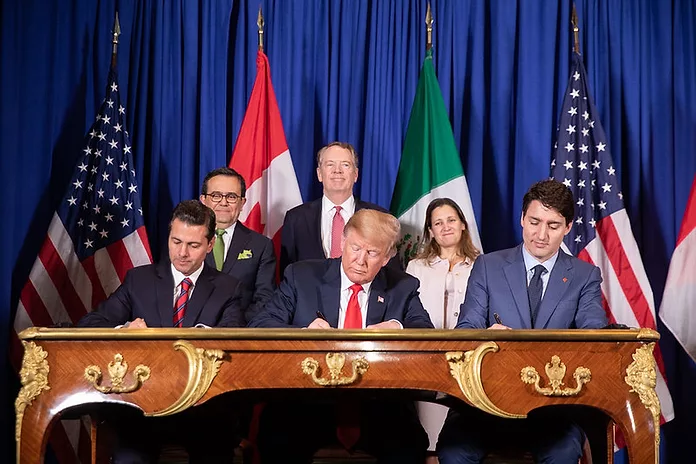
CUSMA origin is no protection. Since 2025, qualifying under the Canada–United States–Mexico Agreement (CUSMA, or USMCA in the US) shielded most Canadian exports from US tariff actions. The Section 338 measures remove that shield. Both the 50% duties and the new bans apply whether or not the goods qualify for CUSMA preference, and on top of any Section 232 tariffs.
The agreement is in force, but on probation. At the first mandatory joint review under CUSMA Article 34.7 on 1 July 2026, the United States declined to renew the agreement for a further 16-year term. CUSMA therefore remains in force until 2036, but the parties now face annual reviews, and every tariff measure becomes leverage in them. Separately, Article 34.6 still allows any party to withdraw on six months' written notice.
Where the legal arguments lie:
Forum | Canada's likely argument | Complications |
|---|---|---|
CUSMA Chapter 31 (state-to-state panel) | Tariffs above agreed zero rates on originating goods, and import prohibitions contrary to the agreement's market-access rules | Panel reports are binding, but there is no power to compel compliance; the remedy is suspension of equivalent benefits, which retaliation already approximates |
WTO | Import bans are quantitative restrictions barred by GATT Article XI; discriminatory duties breach the MFN principle (Article I) and bound rates (Article II) | The Appellate Body has been non-functional since 2019, so a losing party can appeal "into the void"; the US may argue its measures are countermeasures to Canadian breaches |
The underlying disputes have been litigated before. The Section 338 findings build on long-running grievances that have already reached CUSMA panels. In December 2021, a panel sided with the United States on Canada's allocation of dairy tariff-rate quotas. In November 2023, a second panel largely upheld Canada's revised approach. The US has now chosen a domestic statute over a third panel, which is itself a legal and strategic signal.
Canada's legal position. Minister LeBlanc calls the US measures illegal and unjustified. Canada says its counter-tariffs are a dollar-for-dollar response. Any formal proceedings would run in parallel with the negotiations both sides say are continuing.
Canada's Response and Its Legal Machinery
The United States Surtax Order, 2026. Canada's counter-tariffs took effect at 12:01 a.m. on 8 September 2026 under the United States Surtax Order, 2026, an order in council made under the Customs Tariff. The Canada Border Services Agency administers it through Customs Notice 26-23.
Feature | Detail |
|---|---|
Rates | 15%, 25% or 50% surtax, by product |
Value covered | About C$27.6 billion (US$20 billion) of US imports, described as dollar-for-dollar with the Section 338 duties |
Scope | Several hundred tariff classifications: steel and aluminum, dairy (including whey and cheese), pulp and paper, plywood, electronics, appliances, agricultural equipment, furniture, clothing and sporting goods |
Origin test | Applies to goods that are US goods under Canada's CUSMA country-of-origin marking regulations, with no CUSMA carve-out |
Existing measures | Earlier counter-tariffs, including on US vehicles, stay in place; steel and aluminum surtaxes rise from 25% to 50% |
In transit | Goods in transit on 8 September are exempt, with documentation |
Relief | The United States Surtax Remission Order (2025) is extended to the new surtaxes, allowing self-assessed remission at entry; discretionary remission requests can be made to the Minister of Finance under section 115 of the Customs Tariff |
Alongside the tariffs, Ottawa announced a C$7.5 billion support package for affected businesses and workers.
No further retaliation, for now. Canada has not answered the 29 September bans with new measures. Prime Minister Mark Carney has instead pursued closer ties with the European Union and described US policy as economic coercion. For Canadian importers, the practical question is whether and how to claim remission on US inputs they cannot source elsewhere.
A parallel US measure. On 8 September, President Trump also directed the General Services Administration to remove Canadian products from its Multiple Award Schedule, the main vehicle for federal procurement contracts, until Canada restores what the administration calls full and fair reciprocity. For Canadian suppliers to the US government, this is a separate exposure from the border measures.
Compliance Mechanics at the Border
What CBP will do. US Customs and Border Protection issued implementing guidance (CSMS # 70050970) on 28 September. From 12:01 a.m. Eastern Time on 29 September, covered Canadian products cannot be:
entered for consumption;
admitted to a foreign-trade zone;
entered into a bonded warehouse; or
moved in-bond.
CBP will unconditionally reject covered products, and cancel ACE entries for covered goods that have not been released. New ACE error codes flag prohibited tariff numbers for Canadian origin: 239 for FTZ admissions, 335 for cargo release and 886 for entry summaries.
Goods caught in the transition:
Status on 29 September | Treatment |
|---|---|
Imported before 12:01 a.m. on 29 September | May still be entered for consumption, subject to the 50% duty |
In a bonded warehouse or FTZ before the effective time | May be withdrawn for consumption, subject to the 50% duty |
Arriving after the effective time | Refused entry |
Scope traps. The ban tracks HTSUS headings 0404, 1702, 1703, 2202 to 2208 and 8711, but the annexes set product-specific limits. The "packaged" limitation for alcohol and the 800cc engine threshold for motorcycles are the most important. Goods outside those limits are not banned but remain subject to the 50% duty under Proclamations 11046 to 11048. Duty drawback remains available on the 50% additional duty.
Contracts. An import prohibition is a supervening legal event, not a price increase. Parties to US–Canada supply contracts for covered goods should review:
force majeure and change-in-law clauses, and whether they expressly cover governmental import prohibitions;
in US sales law, Uniform Commercial Code § 2-615, which can excuse a seller's delay or non-delivery where performance is made impracticable by compliance with a governmental regulation or order;
Incoterms and risk of loss, which determine who bears the cost of goods refused at the border; and
termination rights and notice periods, especially for distribution and supply agreements built on regular cross-border shipments.
The excuse doctrines are narrow and depend on the clause and the facts. Parties should give prompt written notice and document why the ban prevents performance.
Practical Implications
US importers and distributors.
Screen every Canadian SKU against the three September annexes and the updated 50% duty lists. Coverage changed on both 15 and 29 September, and runs well beyond dairy, alcohol and vehicles.
Identify goods in warehouses or FTZs before the cutoff. They can still be withdrawn at the 50% duty, but new shipments will be refused.
Keep entry records and consider protecting refund rights on Section 338 duties already paid, in case of a legal challenge or a negotiated settlement.
Check whether duty drawback is available where goods are re-exported.
Canadian exporters.
Treat covered products as closed to the US market until further notice. Redirect inventory and consider alternative markets, including the EU.
Serve force majeure or change-in-law notices where contracts allow, and renegotiate Incoterms for goods in the pipeline.
Test whether products can legitimately fall outside the scope limits, such as bulk rather than packaged alcohol or motorcycles at or below 800cc. Classification must be accurate: misdeclaring origin or classification to avoid a prohibition carries serious penalty risk.
Canadian importers of US goods. Confirm which inputs attract the 2026 surtax, claim self-assessed remission at entry where eligible, and apply to the Minister of Finance for discretionary remission where there is no alternative source.
Federal contractors. Suppliers of Canadian-origin goods through GSA schedules should review their contracts and the timing of any removal from the Multiple Award Schedule.
Watch list. Further CBP guidance, any court challenge to the Section 338 measures in the Court of International Trade, the next CUSMA annual review, and any statement on whether Canada will escalate or negotiate.
Frequently Asked Questions
Which Canadian products are banned from the US? Certain whey and molasses products; most packaged beer, wine, cider and spirits; and motorcycles and mopeds with petrol engines over 800cc. The HTSUS headings are 0404, 1702, 1703, 2202 to 2208 and 8711, as defined in the proclamation annexes.
When did the ban take effect? At 12:01 a.m. Eastern Time on 29 September 2026.
What law allows the President to ban Canadian imports? Section 338 of the Tariff Act of 1930 (19 U.S.C. § 1338). It allows duties of up to 50% where a country discriminates against US commerce, and exclusion from importation if the discrimination continues.
Does CUSMA/USMCA protect Canadian goods? No. The Section 338 duties and bans apply regardless of CUSMA origin.
What about goods already in the US or in transit? Goods imported, or placed in a bonded warehouse or foreign-trade zone, before the effective time can still be entered or withdrawn for consumption, subject to the 50% duty. Later arrivals will be refused.
Can the ban be challenged in court? Challenges to US tariff and import measures generally go to the Court of International Trade. Section 338 expressly authorises duties and exclusions, which puts it on firmer textual ground than IEEPA, the statute the Supreme Court held in February 2026 could not support tariffs. Challengers can still contest the President's findings and the breadth of the measures.
Citations
- 1.• America's Canadian import restrictions come into force, CNBC (29 September 2026)
- 2.• U.S. reveals import ban on slew of Canadian goods as trade war escalates, CNBC (9 September 2026)
- 3.• U.S. Imposes Section 338 Tariffs on Certain Canadian Imports (CBP guidance on 29 September import exclusions), GHY International (updated 28 September 2026)
- 4.• Temporary Suspension of Additional Duties to Offset Canadian Discrimination, The White House
- 5.• US imposes 50% tariffs on Canadian dairy, alcoholic beverages, motor vehicles and various other goods, PwC Canada
- 6.• U.S. Imposes 50% Tariffs on Canadian Products, Effective August 22, 2026, Blakes
- 7.• Supreme Court Rules Against Tariffs Imposed Under IEEPA, Congressional Research Service
- 8.• Following July 1st Review, CUSMA Remains in Effect Until 2036, McMillan LLP
- 9.• Canada Releases Details of New Retaliatory Tariffs Against U.S. Goods, Baker McKenzie Global Import Blog (8 September 2026)
- 10.• Elbows back up: U.S. section 338 tariffs, Canada's retaliatory surtaxes and the current tariff landscape, Osler
- 11.• Trump banning Canada's dairy products, motorcycles and many alcoholic beverages, The Hill
- 12.• Eh-scalating the U.S.-Canada trade war, American Action Forum
Finish Reading the Full Story and Expert Analysis.
Get the latest legal & regulatory intelligence in United States
Wansom is AI and can make mistakes.