
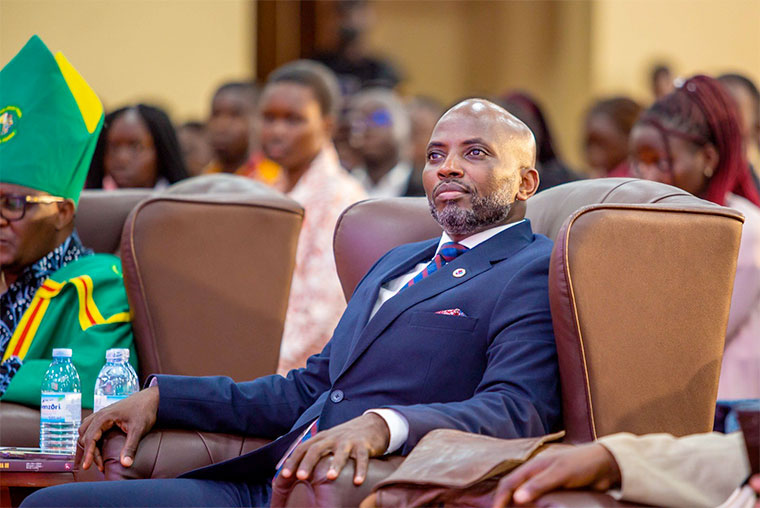
ULS cautions Dr Muganga against inflaming anti-Rwanda sentiments
Abstract
The Uganda Law Society (ULS) has issued a stern caution to Dr. Lawrence Muganga, the Vice Chancellor of Victoria University, urging him to desist from framing the parliamentary scrutiny of his ministerial appointment as anti-Rwanda sentiment, tribalism, or racism. Dr. Muganga's nomination as Minister of State for Internal Affairs was rejected by Parliament's Appointments Committee due to unresolved questions surrounding his citizenship status, with allegations of him holding Ugandan, Canadian, and Rwandan passports. The ULS emphasized that eligibility for high public office is a matter of constitutional and statutory compliance, not personal attacks or ethnic grievances. This intervention highlights the critical intersection of citizenship law, public appointments, and the imperative to uphold the rule of law in Uganda, particularly in sensitive government portfolios.
Introduction
The recent caution issued by the Uganda Law Society (ULS) to Dr. Lawrence Muganga, following the rejection of his ministerial nomination, has brought to the fore contentious issues surrounding citizenship, eligibility for public office, and the potential for ethnic polarization in Uganda. Dr. Muganga, who was nominated by President Yoweri Museveni as Minister of State for Internal Affairs, faced parliamentary vetting that ultimately stalled his appointment due to allegations of holding multiple citizenships, specifically Ugandan, Canadian, and Rwandan passports.
In response to Dr. Muganga's public assertions that his rejection was motivated by prejudice against his Rwandan ethnic background, the ULS intervened, stressing that such claims risk polarizing public debate and undermining the rule of law. This article delves into the legal framework governing citizenship and public appointments in Uganda, analyzes the ULS's role in upholding constitutionalism, and explores the broader implications of this incident for legal practitioners and national cohesion.
Background
Uganda's legal framework for citizenship is primarily enshrined in the 1995 Constitution of the Republic of Uganda, as amended, and the Uganda Citizenship and Immigration Control Act, Cap. 66. The Constitution, particularly Article 15, permits dual citizenship for Ugandan citizens aged 18 and above who voluntarily acquire citizenship of another country. However, this allowance is not absolute. Article 15(7) explicitly empowers Parliament to prescribe offices of state that cannot be held by persons holding dual citizenship.
This constitutional provision is operationalized by Section 23 of the Uganda Citizenship and Immigration Control Act, read together with its Fifth Schedule. This statutory instrument unequivocally bars dual citizens from occupying a range of sensitive state offices, including the President, Vice President, Prime Minister, Cabinet Ministers, and Ministers of State, unless Parliament formally amends the Schedule through a resolution. The rationale behind these restrictions is to safeguard national sovereignty and ensure undivided allegiance, particularly for roles central to national security and governance. Ministerial appointments in Uganda require approval by Parliament's Appointments Committee, which vets nominees for compliance with constitutional and statutory requirements.
The Uganda Law Society, established under the Uganda Law Society Act, 1956 (Cap. 276), serves as the bar association for lawyers in Uganda. Its statutory objects include maintaining and improving professional standards, facilitating legal knowledge, protecting members, assisting the public in legal matters, and aiding the Government and courts in legislation and the administration of justice. The ULS's mandate also explicitly extends to promoting the rule of law and human rights protection.
Analysis
Dr. Lawrence Muganga's case presents a complex interplay of constitutional law, statutory interpretation, and political dynamics. His nomination as Minister of State for Internal Affairs was rejected by the parliamentary Appointments Committee, reportedly due to his alleged possession of Ugandan, Canadian, and Rwandan passports. While Dr. Muganga maintains he renounced his Rwandan citizenship upon acquiring Canadian nationality, he reportedly failed to provide sufficient documentary evidence to the committee. This raises the critical legal question of whether holding three citizenships, even if one is purportedly renounced without clear proof, falls within the ambit of Uganda's dual citizenship regime, which primarily contemplates two nationalities.
The ULS's intervention underscores the principle that eligibility for high public office is a matter of strict constitutional and statutory compliance. Article 15(7) of the Constitution and Section 23 read with the Fifth Schedule of the Uganda Citizenship and Immigration Control Act are clear in prohibiting dual citizens from holding ministerial positions. The ULS's caution against framing legitimate legal scrutiny as anti-Rwanda hatred, tribalism, or racism is crucial. Such narratives, as the ULS noted, risk polarizing public debate and diverting attention from the fundamental legal requirements at stake. This highlights the ULS's role, under Section 3(d) of the Uganda Law Society Act, in protecting and assisting the public in matters touching on the law and assisting the government in the administration of justice.
The situation also brings into focus the parliamentary vetting process. The Appointments Committee is mandated to ensure that nominees meet all legal qualifications. The Leader of the Opposition, Joel Ssenyonyi, reiterated that dual citizens must either renounce their foreign passports or withdraw from the process if they wish to serve in Cabinet. This stance aligns with the legal framework designed to prevent conflicts of interest and ensure undivided loyalty, especially for a portfolio like Internal Affairs, which is responsible for immigration and citizenship matters. The ULS's decision to comment, despite not ordinarily investigating citizenship matters, was prompted by Dr. Muganga's public discourse on social media, which invited broader public scrutiny and necessitated a clarification of the legal position.
Conclusion
The ULS's caution to Dr. Lawrence Muganga serves as a vital reminder to all public office aspirants and legal professionals in Uganda that constitutional and statutory compliance remains paramount, particularly concerning citizenship requirements for sensitive government positions. The incident underscores the importance of adhering to the letter and spirit of the law, as enshrined in the 1995 Constitution and the Uganda Citizenship and Immigration Control Act, Cap. 66, which explicitly restrict dual citizens from holding ministerial roles.
For practitioners, this case highlights the need for thorough due diligence on citizenship status for clients seeking public office and the potential legal complexities arising from multiple nationalities, especially where renunciation of one is not clearly documented. It also reinforces the ULS's critical role as a guardian of the rule of law, intervening to depoliticize legal debates and ensure that constitutional principles guide public discourse. Legal professionals should continue to monitor the resolution of Dr. Muganga's citizenship status and any subsequent legislative or judicial interpretations that may further clarify the nuances of dual or multiple citizenship in Uganda's public service.
Citations
- 1.The Constitution of the Republic of Uganda, 1995 (as amended)
- 2.Uganda Citizenship and Immigration Control Act, Cap. 66
- 3.Uganda Law Society Act, 1956 (Cap. 276)
How does this affect your business?
Get an AI analysis of this article grounded in your jurisdictions, practice areas, and any policy documents you've uploaded to Wansom.
Wansom is AI and can make mistakes.