
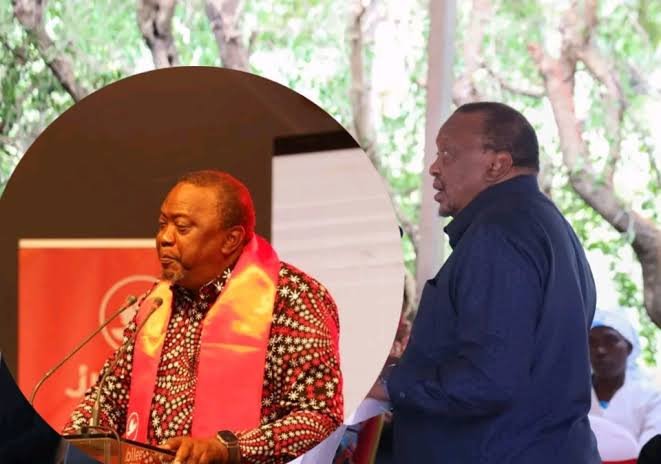
Two Judges, Two Answers: Can Retired Presidents Lead Political Parties?
The same law, opposite constitutional conclusions
In September 2026, Kenya’s High Court delivered two conflicting judgments on Section 6(1) of the Presidential Retirement Benefits Act, 2003.
On 3 September, Justice Lawrence Mugambi upheld the provision, finding that restricting retired presidents from holding political party office beyond six months after leaving the presidency was a reasonable and constitutionally justifiable limitation.
On 21 September, Justice Bahati Mwamuye reached the opposite conclusion. He declared Section 6 unconstitutional and void in its entirety, holding that retirement from the presidency does not strip a former head of state of the political rights guaranteed by the Constitution.
The disagreement is not simply about the wording of a retirement statute. It concerns two competing understandings of constitutional democracy.
The first prioritises protecting democratic institutions from the continuing political dominance of former presidents. The second insists that constitutional rights cannot be restricted merely because a citizen once occupied the country’s highest office.
Both judgments recognise that former presidents retain political influence. They differ fundamentally on what the law may do about it.
What Section 6 actually prohibits
Section 6(1) of the Presidential Retirement Benefits Act states that a retired president may not hold office in a political party for more than six months after leaving office.
The provision does not expressly prohibit a former president from being a party member, expressing political opinions, campaigning for a political cause or participating in public debate. Its central restriction concerns formal party office after the six-month period.
The distinction matters because political participation and political leadership are not identical. A former president may support a party without chairing it, advise its members without holding an official position, or influence political debate without exercising any formal authority within its structures.
The legal question is whether the Constitution permits Parliament to draw a special boundary around the formal political leadership of former presidents.
The dispute arose under Articles 27, 36 and 38 of the Constitution, which protect equality, freedom of association and political rights. Article 24 permits limitations on constitutional rights only where they satisfy the applicable constitutional requirements, including reasonableness and justification in an open and democratic society.
The central issue, therefore, is not whether Parliament can regulate political activity in general. It is whether this particular restriction is constitutionally justified when applied specifically to former heads of state.
Justice Mugambi: The need to protect democratic competition
Justice Mugambi’s judgment began from the exceptional position occupied by a former president.
A person who has served as head of state does not leave office with the same political circumstances as an ordinary citizen. A former president may retain national recognition, established political networks, relationships within government and considerable influence over party members and potential successors.
For Justice Mugambi, those circumstances justified treating retired presidents as a distinct category for the purpose of the law.
His reasoning drew on the history surrounding the legislation. The Act was enacted in 2003, following the end of Daniel arap Moi’s 24-year presidency. The concern underpinning the restriction was that a former president might continue exercising substantial political control after leaving State House, potentially influencing the government through party leadership or political proxies.
The judge viewed Section 6 as a safeguard against that possibility.
The constitutional argument is straightforward: a president’s authority is tied to a defined term of office, but the political influence accumulated during that term can survive the formal transfer of power. Restricting party leadership can help establish a clearer separation between the presidency and partisan political control after retirement.
Justice Mugambi also distinguished between party membership and party office. The law did not prevent a former president from remaining a member of a political party; it restricted the leadership role.
In his analysis, that distinction helped make the limitation proportionate. Rather than removing political participation altogether, the statute imposed a narrower restriction designed to protect democratic competition.
He concluded that the provision had not outlived its usefulness and dismissed the constitutional challenge.
The strength and the difficulty of this argument
The strength of Justice Mugambi’s reasoning is that it recognises a practical risk that formal constitutional transitions may not, by themselves, eliminate: power can continue through informal networks and political structures.
A former president who controls a party may remain influential in selecting candidates, determining alliances and shaping the political direction of a successor government. Such influence may complicate the separation between the authority of the current administration and the political legacy of the previous one.
But the difficult question is whether a blanket statutory restriction on party office is a sufficiently precise and proportionate response.
Political influence is not necessarily improper. A popular former president may retain public support without interfering unlawfully in government. A restriction based on status rather than demonstrated misconduct must therefore be justified by more than the assumption that influence itself threatens democracy.
This is where the constitutional debate becomes more demanding: how can the law protect democratic transitions without treating continued political relevance as a form of wrongdoing?
Justice Mwamuye: Retirement ends office, not citizenship
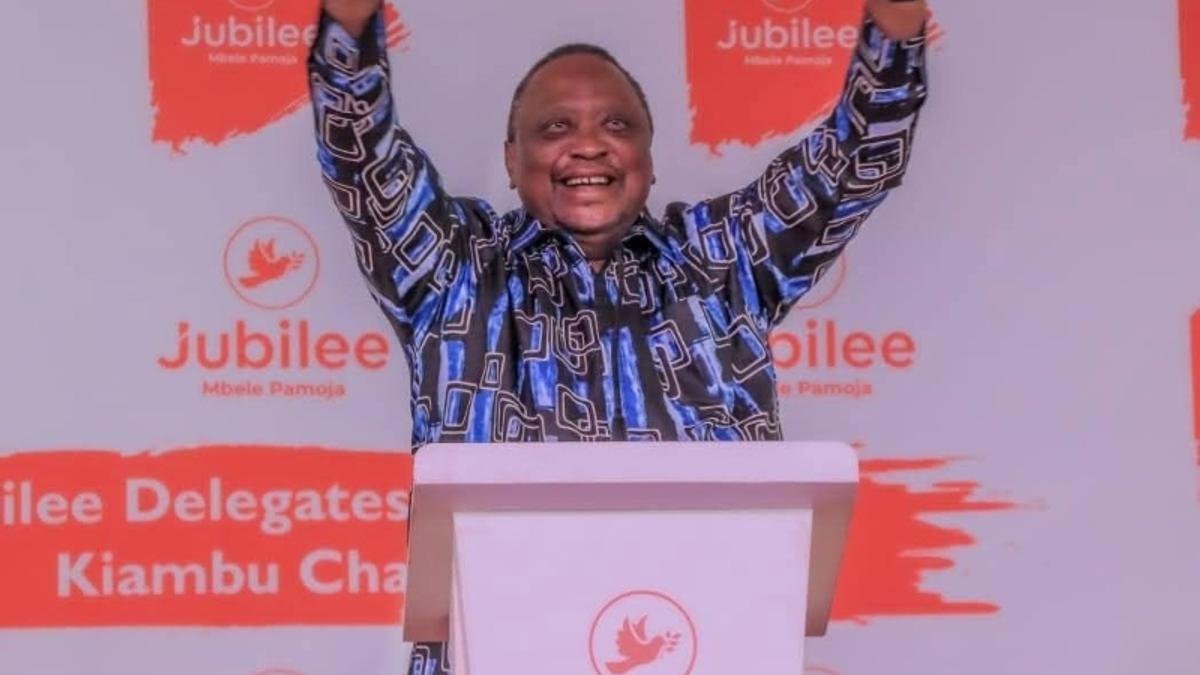
Justice Mwamuye approached the question from the constitutional rights of the individual.
His judgment held that a former president does not become a constitutionally diminished citizen after leaving office. Article 38 protects political rights, and those rights do not disappear merely because the citizen previously occupied the presidency.
The judge distinguished between political influence and constitutional authority. A retired president may remain influential, but influence is not itself executive power. Holding a formal party position does not automatically confer the legal powers of the presidency.
That distinction challenged the logic underlying Section 6. If the concern is that a former president might continue to exercise improper control over government, prohibiting formal party office may not solve the underlying problem. A former president can continue to influence party decisions and political debate without occupying an official position.
Conversely, a former president who holds party office does not necessarily exercise unlawful control over the state.
Justice Mwamuye therefore considered the restriction inconsistent with Article 38. In his analysis, the constitutional right to political participation could not be curtailed simply because the individual had previously held the highest elective office.
The judgment also addressed the relationship between political conduct and retirement benefits. The statutory framework linked certain political activities contrary to Section 6 to the possibility of losing or having retirement benefits reduced. Justice Mwamuye considered this relationship constitutionally problematic because it could compound the restriction on political participation with a financial penalty.
He declared Section 6 unconstitutional and void in its entirety.
The strength and the difficulty of this argument
Justice Mwamuye’s reasoning places the Constitution’s protection of citizenship at the centre of the dispute. It resists the idea that a person’s previous office can, by itself, justify a lasting reduction in political freedom.
That position protects an important democratic principle: retirement from public office should not automatically mean retirement from public life.
Yet the competing concern does not disappear. Former presidents can possess influence far beyond that of ordinary political actors. Even without executive authority, their involvement in party leadership may affect internal competition, succession politics and the practical independence of a sitting government.
The challenge for this approach is to explain how constitutional rights should be balanced against the legitimate interest in preventing the indirect continuation of presidential power.
Justice Mwamuye’s reasoning places the burden on the state to justify any restriction on political rights. The mere possibility of influence, on this view, is not enough to establish that a categorical prohibition is constitutionally permissible.
The deeper constitutional conflict: Influence versus rights
Read together, the judgments expose a difficult question about democratic transitions: should the law regulate the political status of former presidents because of their potential influence, or should it regulate unlawful conduct while preserving their ordinary constitutional rights?
Justice Mugambi’s approach is preventive. It seeks to protect democratic competition by establishing a formal boundary between the presidency and party leadership after retirement.
Justice Mwamuye’s approach is rights-centred. It warns against restricting constitutional freedoms on the assumption that a former president’s continuing influence is inherently problematic.
Neither approach can be reduced to a simple contest between democracy and individual freedom. Both claim to protect constitutional democracy, but they emphasise different risks.
A state that places no limits on the political activities of former presidents may struggle to prevent informal power structures from undermining the independence of a successor administration. A state that imposes broad restrictions on former presidents may, however, create a special class of citizens whose political freedoms are curtailed because of their history in public office.
The question of proportionality is therefore central. Is restricting formal party leadership necessary to protect democratic transitions? Could the same objective be achieved through narrower rules governing conflicts of interest, misuse of state resources, unlawful interference with public institutions or other specific misconduct?
Those are not interchangeable legal solutions. Each would require its own constitutional and legislative analysis. But they expose the key issue the courts must resolve: whether the restriction imposed by Section 6 is justified by the risks it seeks to prevent.
Why Uhuru Kenyatta’s Jubilee leadership became the immediate test
The dispute has direct political significance because former President Uhuru Kenyatta retained leadership of the Jubilee Party after leaving State House in September 2022.
The question of his continued formal role had already produced competing claims within the party and proceedings concerning its leadership structures. The September judgments brought the constitutional issue into sharper focus.
Following Justice Mugambi’s ruling, Kenyatta’s office said he was willing to complete the handover of the Jubilee chairmanship, describing the judgment as providing legal clarity for the transition.
That position was understandable in light of the ruling then available. But Justice Mwamuye’s judgment on 21 September subsequently invalidated the statutory restriction on which the earlier decision had relied.
The sequence illustrates why legal developments must be read chronologically. A political response to one judgment does not settle the legal position after a later, conflicting decision.
The implications also extend beyond Jubilee. The Act applies to retired presidents generally, and the constitutional questions raised by the judgments are not confined to one party or one former head of state.
The broader issue is whether the state may impose special political restrictions on former presidents and, if so, what constitutional justification is required.
The retirement-benefits ruling adds another constitutional layer
Justice Mwamuye’s decision went beyond Section 6.
The petition before him also challenged Section 4 of the Presidential Retirement Benefits Act, which allowed the National Assembly, by a two-thirds majority, to withhold or reduce a retired president’s benefits in specified circumstances.
Those circumstances included certain forms of misconduct and political activity contrary to Section 6(1).
Article 151(3) of the Constitution provides protection against the disadvantageous variation of retirement benefits payable to a former president and former deputy president, together with their facilities and privileges, during their lifetime.
Justice Mwamuye treated that constitutional protection as a decisive limit on the statutory mechanism. He declared Sections 4(1), 4(2) and 4(3) unconstitutional, while leaving Section 4(4), which concerns benefits payable to surviving spouses, untouched because it had not been challenged.
He also found that the mechanism for reducing or withdrawing benefits raised concerns under constitutional protections relating to property and fair administrative action.
This part of the ruling matters because it separates two questions that can easily become entangled in political debate.
The first is whether a former president may hold formal political office. The second is whether retirement benefits guaranteed by the Constitution may be reduced because of the former president’s conduct.
A conclusion on one question does not automatically resolve the other. The constitutional provisions governing political participation and those protecting retirement benefits must each be interpreted according to their terms and purpose.
By addressing both issues, Justice Mwamuye’s judgment broadened the dispute from the role of former presidents in party politics to the limits of Parliament’s power over constitutionally protected retirement entitlements.
Do the two judgments cancel each other out?
No automatic conclusion follows simply because two High Court judges have reached opposite conclusions.
The judgments arose from separate constitutional petitions, brought by different petitioners and involving distinct proceedings. Justice Mugambi upheld Section 6 in the case before him. Justice Mwamuye subsequently declared the section unconstitutional and void in his case.
The decisions are therefore in direct tension, but the existence of that tension should not be confused with a formal appellate resolution.
The High Court is a court of first instance for these constitutional petitions. One High Court judgment does not operate as an appellate reversal of another merely because it was delivered later. The precise effect of the later declaration, the status of any appeal or stay, and the orders applicable to the parties must be assessed from the judgments and any subsequent proceedings.
An appellate court may ultimately provide authoritative clarification if the conflict is brought before it. Until the procedural position is verified, it would be premature to state that the Court of Appeal has settled the matter—or that every practical question about party leadership has been conclusively resolved.
This is also why the underlying judgments, rather than political statements or headlines, are essential to understanding the legal position.
The Commonwealth perspective: What happens when a former leader retains political power?

For a landmark-cases series examining legal developments across Commonwealth jurisdictions, this dispute raises a question with comparative significance.
Many Commonwealth constitutional systems combine elected executive leadership with multiparty politics, constitutional rights and laws governing the privileges or benefits of former heads of state. The details differ, but the underlying challenge is familiar: how should a constitutional system manage the transition from executive power to ordinary political citizenship?
Kenya’s judgments illustrate two possible approaches.
One gives priority to preventive safeguards intended to ensure that a former head of state cannot continue exercising political control through formal party structures. The other gives priority to the continuing constitutional rights of former presidents, requiring the state to justify any special restriction on their participation.
The judgments should not be treated as automatically determining the law in other Commonwealth countries. Their constitutions, statutes and institutional arrangements may differ significantly. Their comparative value lies in the constitutional questions they illuminate.
Can the law impose restrictions based on a person’s former office? What evidence or reasoning is required to justify such restrictions? How should courts distinguish legitimate political influence from the exercise of authority that belongs exclusively to the current government? And what safeguards prevent retirement benefits from becoming a mechanism for political pressure?
These questions reach beyond former presidents. They concern the design of constitutional transitions and the relationship between political power, individual rights and institutional independence.
What happens next?
The immediate legal priority is clarity on the status and consequences of the competing judgments, including whether appellate proceedings have been initiated and whether any orders have been stayed or varied.
An appellate determination, if the dispute proceeds through that route, could clarify the constitutional test for restricting former presidents’ political rights and the relationship between Section 6 and the protection of retirement benefits under Article 151(3).
The political consequences will depend on that legal position and on the internal rules of the parties concerned. But the constitutional question is larger than the leadership of Jubilee or the future role of one former president.
It concerns whether the law should place special limits on a retired head of state’s political activity to protect democratic transitions—and whether those limits can be reconciled with constitutional guarantees that continue to apply after the presidency ends.
The enduring significance of this dispute is not simply that two judges disagreed. It is that their judgments expose a fundamental constitutional choice: how to prevent the continuation of presidential power without turning retirement from office into a loss of political citizenship.
Citations
- 1.Wambui v Senate of Kenya & 4 others [2026] KEHC 13820 (KLR) — full judgment, delivered 21 September 2026
- 2.The Star — Court upholds law barring retired presidents from political party leadership
- 3.The Star — Retired presidents free to engage in politics, High Court rules
- 4.Daily Nation — Court upholds ban on retired presidents holding political party office
- 5.Daily Nation — Court strikes down law threatening Uhuru’s retirement benefits
- 6.Kenya Law — Presidential Retirement Benefits Act
Finish Reading the Full Story and Expert Analysis.
Get the latest legal & regulatory intelligence in Kenya
Wansom is AI and can make mistakes.