
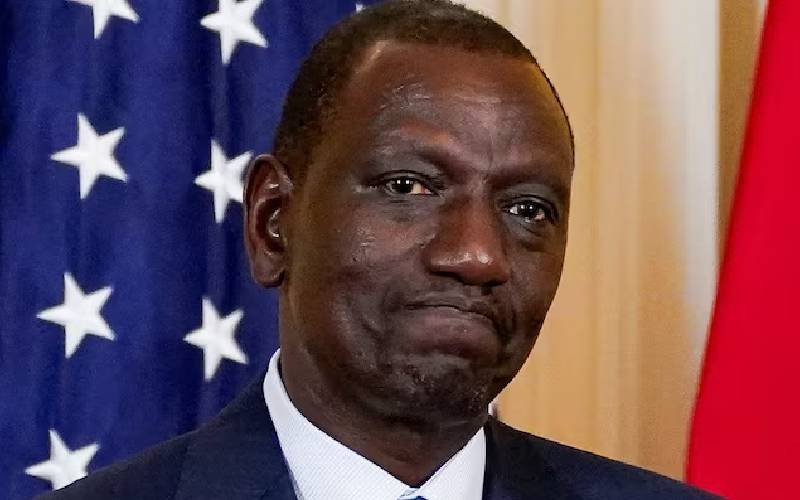
Tax Bill rebellion: Why MPs have rejected Ruto's proposals
Abstract
The Kenyan National Assembly's Committee on Finance and National Planning recently played a pivotal role in the dramatic rejection of President William Ruto's Finance Bill 2024. This legislative 'rebellion' saw the Committee initially scrutinise and propose significant amendments to a raft of aggressive tax measures, including controversial levies on essential goods and services. Following widespread public protests and parliamentary debate, President Ruto ultimately declined to assent to the Bill, referring it back to the National Assembly with a recommendation for its complete deletion. The subsequent vote by Members of Parliament to agree with the President's reservations led to the Bill's withdrawal in its entirety, underscoring the critical checks and balances within Kenya's legislative framework and the potent influence of public participation on fiscal policy.
Introduction
Kenya's legislative landscape recently witnessed a significant assertion of parliamentary and public will, culminating in the rejection of the Finance Bill 2024. This contentious piece of legislation, championed by President William Ruto's administration, proposed a series of aggressive tax measures aimed at bolstering government revenue. However, the proposals met with fierce opposition from various quarters, including the public, civil society, and crucially, the National Assembly's Committee on Finance and National Planning. The Committee's systematic 'poking holes' in the Bill, as reported, marked a critical juncture in its legislative journey.
The ultimate withdrawal of the Finance Bill 2024, following President Ruto's decision to decline assent, represents a landmark moment in Kenyan fiscal policy and parliamentary oversight. It highlights the intricate balance of power between the executive and legislative arms of government, particularly concerning money bills, and underscores the growing demand for transparency and public participation in the law-making process. This article delves into the legal and procedural aspects that led to the Bill's rejection, examining the constitutional framework, the role of parliamentary committees, and the implications for future tax legislation in Kenya.
Background
The legislative process for money bills in Kenya is primarily governed by the Constitution of Kenya, 2010, particularly Articles 114 and 115. Article 114 defines a 'money Bill' as one dealing with taxes, the imposition of charges on public funds, appropriation of public money, or the raising of loans, among other incidental matters. Such bills can only be introduced in the National Assembly. The National Assembly, through its Departmental Committee on Finance and National Planning, plays a crucial role in scrutinising these bills. This Committee is mandated to consider all matters relating to public finance, including taxation, and to make recommendations to the House.
The President's role in the legislative process is outlined in Article 115, which grants the President 14 days to either assent to a Bill or refer it back to Parliament for reconsideration, noting any reservations. If the President refers a Bill back, Parliament can either amend it to accommodate the reservations or pass it a second time without amendment. To override a presidential veto and pass a Bill without amendments, it requires the support of at least two-thirds of the Members of the National Assembly. The importance of public participation in this process has been consistently emphasised, notably in challenges to previous legislation like the Finance Act 2023, where the Supreme Court ultimately upheld its constitutionality, partly on the basis of sufficient public participation.
Analysis
The Finance Bill 2024, introduced in May 2024, proposed a wide array of tax measures aimed at raising KSh 346 billion for debt repayment and development projects. Among the most controversial proposals were the introduction of an eco-levy on imported sanitary towels and diapers, a 16% Value Added Tax (VAT) on bread, a motor vehicle tax, and increased taxes on mobile money transfers and cooking oil. These aggressive measures triggered widespread public outcry and protests across the country, with citizens actively engaging their Members of Parliament to reject the Bill.
The National Assembly's Departmental Committee on Finance and National Planning, chaired by Hon. Kuria Kimani, undertook extensive public participation, receiving numerous memoranda and conducting public hearings. In response to the overwhelming public sentiment and its own deliberations, the Committee initially proposed significant amendments, scrapping some of the most contentious proposals, such as the 16% VAT on bread and taxes on motor vehicles, vegetable oil, and mobile money transfers. This demonstrated the Committee's responsiveness to public concerns and its role in tempering the executive's fiscal ambitions.
Despite these amendments, the Bill was approved by Parliament on June 25, 2024. However, in an unprecedented move, President William Ruto declined to sign the Finance Bill 2024 into law on June 26, 2024, citing widespread public dissatisfaction. Exercising his powers under Article 115(1)(b) of the Constitution, the President referred the Bill back to the National Assembly with reservations, specifically recommending the deletion of all sixty-nine clauses. This presidential veto effectively constituted a rejection of the Bill in its entirety.
Subsequently, on July 25, 2024, the National Assembly voted to agree with the President's reservations and the recommendation to delete all clauses of the Finance Bill 2024. This decision, made by a simple majority in the Committee of the Whole House, led to the Bill's rejection in its entirety, meaning there was no Bill to be presented to the President for assent. This outcome highlighted the robust nature of Kenya's constitutional checks and balances, where both parliamentary scrutiny and presidential prerogative can halt legislative proposals, especially when faced with significant public opposition.
The rejection of the Finance Bill 2024 has had immediate implications, leading President Ruto to order substantial budget cuts to address the projected revenue shortfall. This legislative episode underscores the dynamic interplay between the executive, legislature, and the public in shaping fiscal policy, demonstrating that aggressive tax measures, even if passed by Parliament, can be overturned if they fail to garner broader societal acceptance.
Conclusion
The rejection of the Finance Bill 2024 marks a significant precedent in Kenya's legislative history, affirming the critical role of parliamentary oversight and the power of public participation in shaping national fiscal policy. For legal practitioners, this event underscores the necessity of closely monitoring the entire legislative journey of money bills, from initial proposals and committee deliberations to presidential assent and potential legal challenges. The robust public engagement and the National Assembly's responsiveness, culminating in the Bill's ultimate withdrawal, highlight a maturing democratic process where the executive's fiscal agenda is subject to rigorous scrutiny and popular will.
Looking ahead, the ongoing discussions around subsequent Finance Bills, such as the Finance Bill 2026, will continue to be a focal point for tax professionals. The lessons from 2024 emphasize that legislative proposals must be carefully crafted, considering their socio-economic impact and ensuring adequate public consultation to avoid similar rejections. Practitioners should advise clients on the heightened importance of engaging in public participation processes and preparing for potential shifts in tax policy influenced by public sentiment and parliamentary action. The dynamic nature of Kenya's tax legislation demands continuous vigilance and proactive engagement from all stakeholders.
Citations
- 1.Constitution of Kenya, 2010
- 2.Income Tax Act, Cap 470
- 3.Value Added Tax Act, 2013
- 4.Excise Duty Act, 2015
- 5.The Kenyan Parliament Website, "NATIONAL ASSEMBLY REJECTS FINANCE BILL, 2024" (July 29, 2024)
- 6.EY - Global, "Kenya Supreme Court declares the Finance Act 2023 constitutional" (October 29, 2024)
- 7.Wikipedia, "Kenya Finance Bill 2024"
- 8.JURIST - News, "Kenya president declines assent to Finance Bill and refers bill to parliament for reconsideration" (June 27, 2024)
- 9.Peoples Dispatch, "Amid economic hardship and repression, Kenyans reject the Finance Bill 2024" (June 19, 2024)
- 10.The Mwango Weekly - Substack, "Finance Bill Rejected" (July 01, 2024)
- 11.Soko Directory, "Kenyan Constitution: Chapter Eight, Part 4, Article 114 to 116" (September 13, 2016)
- 12.The Kenyan Parliament Website, "FINANCE AND NATIONAL PLANNING"
- 13.TechTrendsKE, "Kenya's Finance Bill 2026 Enters Final Review Stage" (June 17, 2026)
- 14.People Daily Digital, "Finance Bill 2026: MPs seeks balance between revenue mobilisation and taxpayer relief" (June 17, 2026)
- 15.Explainer: Applicable procedure and implications of rejection of Finance Bill 2024 (June 27 2024)
How does this affect your business?
Get an AI analysis of this article grounded in your jurisdictions, practice areas, and any policy documents you've uploaded to Wansom.
Wansom is AI and can make mistakes.