
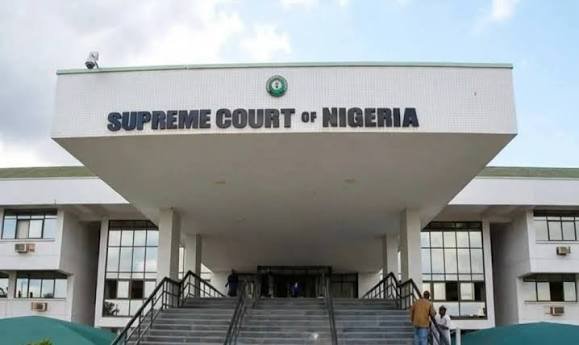
Supreme Court Settles the 2027 Rulebook: Electoral Act Provisions Upheld
The decision that restored the rules
On 24 September 2026, Nigeria’s Supreme Court unanimously allowed an appeal by the Independent National Electoral Commission (INEC), overturning a Court of Appeal judgment that had declared four provisions of the Electoral Act 2026 unconstitutional.
In Independent National Electoral Commission v Zenith Labour Party, the seven-member panel set aside the Court of Appeal’s decision of 16 July 2026 and restored the Federal High Court’s earlier judgment dismissing the party’s constitutional challenge.
The provisions restored were sections 77(5), 77(6), 77(7) and 84(2). They govern which party members may participate in primaries, which membership register must be used, the consequences of failing to submit that register within the prescribed period, and the statutory methods for nominating candidates.
The Court also ordered the Zenith Labour Party (ZLP) to pay ₦2 million in costs to INEC. The outcome is significant because the provisions are part of the legal framework governing preparations for Nigeria’s 2027 general elections.
The judgment did not introduce a new electoral code. It reinstated rules that had been struck down by the intermediate appellate court, restoring their legal effect after a dispute over the boundary between legislative regulation and political parties’ constitutional autonomy.
What the four provisions actually require
The practical importance of the judgment becomes clearer when the provisions are considered separately.
Section 77(5): Who can participate?
Only members whose names appear in the party membership register submitted to INEC at least 21 days before a primary, congress or convention are eligible to participate in that exercise.
This creates a formal link between a party’s recognised membership records and its internal electoral processes. A person’s assertion that they belong to a party may not, by itself, satisfy the statutory requirement if their name is absent from the relevant submitted register.
Section 77(6): Which register controls?
A political party must use the membership register submitted to INEC for its primaries, congresses and conventions. It cannot substitute a different register for those exercises.
The provision is designed to establish a consistent reference point for determining who may participate. It also limits the scope for disputes arising from competing lists of members, although its effectiveness depends on accurate records and proper administration.
Section 77(7): What happens if a party fails to submit its register?
The provision states that a party that fails to submit its membership register within the prescribed period is not eligible to field a candidate for the relevant election.
This is the most consequential of the three register provisions. It attaches a serious electoral consequence to non-compliance, potentially affecting not only the party’s internal administration but also its ability to contest an election.
Section 84(2): How can candidates be nominated?
The provision prescribes direct primaries or consensus as the methods through which political parties nominate candidates for elective positions.
In a direct primary, party members participate in selecting a candidate. Under consensus, a candidate emerges through an agreed process rather than a contested vote. The statutory provision therefore restricts the nomination methods available to parties under the Electoral Act.
Taken together, the provisions regulate both the electorate within a political party and the process through which the party selects those who will represent it in public elections.
Why the Zenith Labour Party challenged the law
The dispute concerned a constitutional question: how far can the National Assembly regulate the internal affairs of political parties through electoral legislation?
The ZLP argued that the disputed provisions interfered with powers protected by the 1999 Constitution, particularly sections 221 and 222. These provisions form part of the constitutional framework governing political parties and their role in sponsoring candidates for elections.
The party’s challenge also raised concerns about whether statutory requirements could effectively create additional barriers to electoral participation beyond the qualifications and disqualifications prescribed by the Constitution.
The argument was not simply that maintaining a membership register was inconvenient. It was that the law could make compliance with a particular administrative process a condition of a party’s ability to nominate candidates, while also restricting the methods through which it could choose them.
The Federal High Court rejected the challenge on 5 May 2026. The Court of Appeal subsequently took the opposite position, allowing the ZLP’s appeal in part and striking down the disputed provisions in July.
That reversal placed the issue before the Supreme Court, where INEC sought restoration of the statutory framework.
The constitutional tension: party autonomy versus electoral regulation

The dispute exposed two competing concerns in Nigeria’s electoral system.
On one side is the constitutional position of political parties. Parties are central to electoral competition, and their ability to organise themselves and sponsor candidates is protected within the constitutional framework. Excessive state interference in internal decision-making can restrict political association and weaken party autonomy.
On the other side is the need for an enforceable electoral framework. Membership registers affect who can participate in primaries, while nomination procedures determine how candidates emerge. Rules in these areas can promote consistency, make internal processes more verifiable and provide a common basis for resolving disputes.
The Court of Appeal had accepted the ZLP’s argument that the challenged requirements were inconsistent with constitutional protections for political parties. The Supreme Court reversed that conclusion and held that the provisions were not inconsistent with the Constitution.
The legal effect is clear: the Court did not accept the constitutional challenge as a basis for invalidating these provisions. The statutory requirements were restored.
However, the decision should not be read as a declaration that every possible restriction on party autonomy would be constitutional. It resolves the challenge to the particular provisions before the Court. Other rules or future disputes would have to be assessed on their own legal merits.
Why the ruling matters for INEC and political parties
The judgment strengthens the legal basis on which INEC can administer the membership-register and nomination requirements set out in the Electoral Act.
For political parties, compliance is no longer a question that can be set aside on the basis of the Court of Appeal’s now-reversed ruling. Parties must account for the statutory requirements when managing registers and organising the relevant internal processes.
For aspirants, the membership register may become central to disputes about participation in primaries and conventions. A person who believes they were improperly omitted from a register may face a different legal question from a party that failed to submit the required register altogether.
For INEC, the judgment provides judicial support for the statutory framework, but administration remains important. The Commission must apply the law to the relevant facts, maintain accurate records and address complaints within its lawful powers.
The decision also has consequences for litigation strategy. Parties challenging a nomination or seeking to establish that a process was unlawful must identify the relevant statutory requirement, the alleged breach and the available legal remedy. The Supreme Court’s ruling does not eliminate every possible dispute about primaries; it establishes that the specific provisions challenged by the ZLP remain valid.
Does the judgment automatically invalidate nominations already completed?
No such blanket conclusion should be drawn from the judgment alone.
The Supreme Court restored the disputed provisions, but that does not mean its ruling automatically disqualifies every candidate whose nomination has already taken place. Nor does it establish, without further examination, that every earlier primary complied with the restored requirements.
The consequences in an individual case may depend on the relevant party register, the date and nature of the nomination exercise, the applicable statutory requirements and the particular relief sought in any legal challenge.
Reporting after the judgment identified uncertainty over how the restored provisions would apply to nomination processes already completed for the 2027 elections. INEC subsequently said it was reviewing the certified judgment and representations from political parties, aspirants and the National Assembly.
That distinction matters. The Supreme Court resolved the constitutional validity question in the ZLP litigation. The administrative and legal treatment of particular candidates or nomination disputes is a separate question that should not be presumed to have been decided wholesale by that outcome.
What the ruling settles and what it leaves to implementation
The judgment settles the immediate constitutional dispute over sections 77(5), 77(6), 77(7) and 84(2) in favour of INEC. The Court of Appeal’s contrary decision has been set aside, and the Federal High Court’s dismissal of the ZLP’s case has been restored.
It does not remove the need for careful implementation. A membership register must be managed in accordance with the law; a nomination process must be assessed against the applicable requirements; and a dispute involving a specific candidate must be resolved on its own facts and legal basis.
The ruling’s wider importance lies in the relationship between election administration and constitutional adjudication. The Supreme Court has confirmed that these statutory requirements are compatible with the Constitution, allowing them to remain part of the framework governing political party nominations.
For the 2027 elections, the message is straightforward: political parties must organise their membership records and nomination processes around the law as upheld by the Supreme Court. But the judgment should be understood as restoring the rules, not as automatically determining the validity of every candidate’s nomination.
Citations
- 1.Supreme Court of Nigeria, Independent National Electoral Commission v Zenith Labour Party, judgment delivered 24 September 2026. The judgment sets aside the Court of Appeal’s decision, restores the Federal High Court judgment and awards ₦2 million in costs to INEC.
- 2.https://sheriahub.com/cases/ng/caselaw/ng-8aae2e5add287746b327768c073fb008d34acce7
- 3.Politics Nigeria, “Supreme Court Gives Judgment on INEC’s 2026 Electoral Act,” 24 September 2026.
- 4.https://politicsnigeria.com/2026/09/24/supreme-court-gives-judgment-on-inecs-2026-electoral-act/
- 5.Premium Times, “Supreme Court restores Electoral Act provisions voided by appeal court,” 25 September 2026.
- 6.https://www.premiumtimesng.com/news/top-news/912319-supreme-court-restores-electoral-act-provisions-voided-by-appeal-court.html
- 7.TheNigeriaLawyer, “Supreme Court Has Affirmed Sections 77(5)-(7) Of Electoral Act 2026” — INEC Reviews Judgment On Party Registers, Candidate Nominations,” 6 October 2026.
- 8.https://thenigerialawyer.com/usupreme-court-has-affirmed-sections-775-7-of-electoral-act-2026-inec-reviews-judgment-on-party-registers-candidate-nominations/
Finish Reading the Full Story and Expert Analysis.
Get the latest legal & regulatory intelligence in Nigeria
Wansom is AI and can make mistakes.