
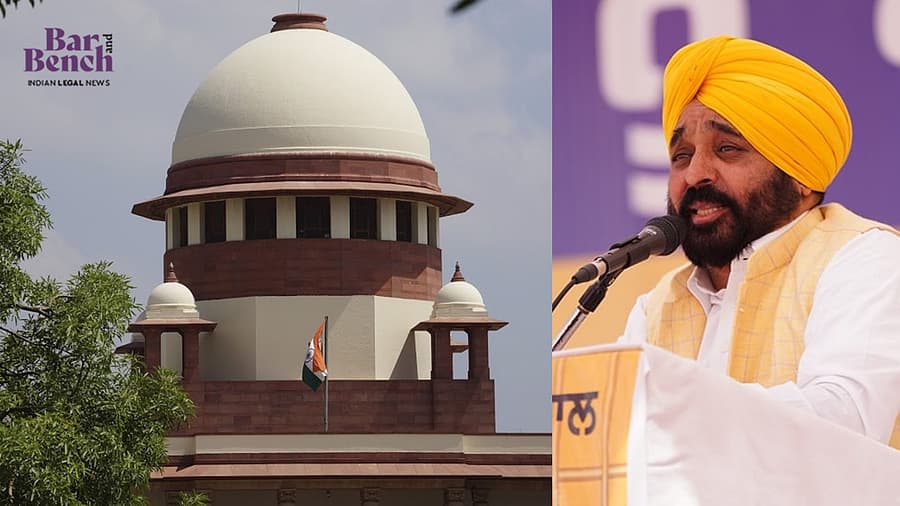
Supreme Court Notice to Punjab CM Bhagwant Mann Over Protest Case
Summary
- The Supreme Court has issued a notice to Punjab Chief Minister Bhagwant Mann in response to an appeal filed by the Chandigarh Administration.
- The appeal challenges a decision made by the Punjab and Haryana High Court to quash a case of rioting and unlawful assembly against Mann and other AAP leaders.
- The case was registered in 2020 after a protest march turned violent, with police using a water cannon to stop protesters.
- The Supreme Court's notice suggests that it will examine the matter and potentially overturn the High Court's ruling.
What Happened
The reasoning in the order is perverse,
The Supreme Court has issued a notice to Punjab Chief Minister Bhagwant Mann in response to an appeal filed by the Chandigarh Administration. The appeal challenges a decision made by the Punjab and Haryana High Court to quash a case of rioting and unlawful assembly against Mann and other leaders of the Aam Aadmi Party (AAP). The case was registered in 2020 after Mann and others took out a protest march against a hike in electricity tariff, which turned violent when police used a water cannon to stop them. The High Court had quashed the case on November 29, 2025, ruling that there was no reason for the police to stop the protestors as no prohibitory order had been issued under Section 144 of the Code of Criminal Procedure (CrPC).
Legal Context
The Supreme Court's decision to issue a notice in this case is significant, as it suggests that the top court will examine the matter and potentially overturn the High Court's ruling. The Chandigarh Administration had argued that the reasoning behind the High Court's decision was 'perverse', and Additional Solicitor General SV Raju represented them in the appeal. The AAP leaders and workers involved in the protest march were accused of rioting and unlawful assembly, but the High Court ruled that there was no evidence to support these charges. The case has implications for similar protest cases in India, particularly those involving government officials or politicians.
Why It Matters
The Supreme Court's notice in this case sends a signal that it will scrutinize the actions of government officials and politicians involved in protests. This is significant because it sets a precedent for similar cases across India, where protesters may face charges of rioting or unlawful assembly. The court's decision also highlights the importance of upholding the rule of law and ensuring that those in power are held accountable for their actions. Lawyers should pay close attention to this case as it unfolds, as it has potential implications for future protest cases involving government officials or politicians.
Practical Implications
Lawyers should watch for the potential implications of this Supreme Court notice on similar protest cases in India, particularly those involving government officials or politicians.
Source
How does this affect your business?
Get an AI analysis of this article grounded in your jurisdictions, practice areas, and any policy documents you've uploaded to Wansom.