
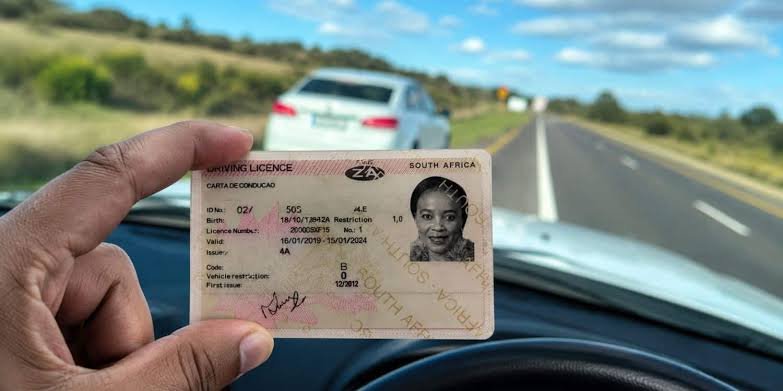
South Africa's Ten-Year Driving Licence Reform: The Full Regulatory Picture as the Comment Window Closes
Why This Matters Now, and Why the Timing Isn't an Accident
South Africa is two days away from the close of formal public input on a regulatory change that has been six years in the making: the comment window opened on 17 August 2026 and closes this Thursday, 17 September 2026. Understanding the full path from first proposal to this week's deadline explains both why the reform has taken this long, why the current draft looks the way it does and who will be affected.
The Six-Year Timeline, in Full
Date | Development |
|---|---|
September 2020 | OUTA first calls publicly for extended driving licence validity, during COVID-19 disruption to licensing services and the resulting renewal backlog. |
June 2021 | OUTA surveys 3,685 motorists on their experience of the renewal system. |
10 March 2022 | OUTA presents its research and formal motivation to then-Transport Minister Fikile Mbalula. |
October 2022 | Mbalula announces the department has sought Cabinet approval for an 8-year validity period (not 10) — a proposal that subsequently stalls, with OUTA later noting no formal proposal or supporting research was ever made public. |
2024 | Barbara Creecy takes over as Transport Minister under the Government of National Unity; reform is revived. |
November 2025 | Creecy expresses support for the extension. |
December 2025 | Department director-general Mathabatha Mokonyana confirms the department is moving forward with the proposal. |
April 2026 | The reform is formally built into the department's 2026/27 Annual Performance Plan, with the department targeting Cabinet approval by end of fiscal year 2026/27 (March 2027). |
Late June 2026 | Reported presidential-level sign-off on the extension (reporting on the precise nature of this step is not fully consistent across outlets — see note below). |
30 July 2026 | Cabinet approval formally confirmed at a post-Cabinet briefing by Minister Khumbudzo Ntshavheni — this is a policy decision, not the legal instrument itself, and arrives roughly eight months ahead of the department's own original schedule. |
17 August 2026 | The actual regulatory amendment — to Regulation 108 — is gazetted for public comment, opening the 30-day window. |
17 September 2026 | Public comment window closes. |
One inconsistency worth flagging directly: some outlets describe President Cyril Ramaphosa personally "green-lighting" the extension in late June 2026, while the more consistently reported version of events is that Cabinet which Ramaphosa chairs, approved the policy and this was publicly confirmed on 30 July.
What Happens After 17 September
Closing the comment period does not create the new law. Three further steps remain, none of which has a published date: review and incorporation (or rejection) of submitted comments; legal scrutiny of the amended regulation by the State Law Advisor; and formal promulgation in the Government Gazette, which is the step that actually gives the amendment legal force. Only after promulgation would the 10-year validity period apply, and even then, only to cards ordered from that point forward, existing card holders would not have their current cards' validity retroactively extended.
The Codes, Precisely: What Changes and What Doesn't
This reform is narrower than "driving licences get longer" headlines can suggest. It applies to some licence categories and explicitly not others.
Licence Code | Vehicle Type | Current Validity | Proposed Validity | Affected by This Amendment? |
|---|---|---|---|---|
A, A1 | Motorcycles | 5 years | 10 years | Yes |
B | Standard light motor vehicle (car) | 5 years | 10 years | Yes |
EB | Light motor vehicle with trailer | 5 years | 10 years | Yes |
C1 | Medium commercial vehicle | 5 years | 5 years (unchanged) | No |
C | Heavy commercial vehicle | 5 years | 5 years (unchanged) | No |
EC1 | Medium commercial vehicle with trailer | 5 years | 5 years (unchanged) | No |
EC | Heavy commercial vehicle with trailer | 5 years | 5 years (unchanged) | No |
PDP (Professional Driving Permit) | Required for professional/commercial drivers | 2 years | 2 years (unchanged) | No |
The practical effect: the roughly half of South Africa's licence codes covering private motorists and motorcyclists get a materially longer validity period, while every commercial, heavy-vehicle, and professional-driver category is untouched. Any organization running a mixed fleet, a logistics company, a delivery platform, a car rental firm, will need to track two different renewal cycles rather than assume a blanket change.
How South Africa's Proposed Period Compares Internationally
OUTA has anchored much of its advocacy in a comparative claim: that its research across 35 countries in six regions found an average driving licence validity period of 8.5 years, with a range from 3 to 20 years. A 10-year South African standard would sit above that reported average, not merely catch up to it. Illustrative country examples, drawn from separate published comparative reporting (dated 2023, included here for illustrative context rather than as current confirmed policy in each country):
Country | Reported Validity Period | Note |
|---|---|---|
Switzerland | No renewal required until age 70 | Then renewed every 2–4 years based on medical exam |
Singapore | No renewal required until age 65 | Then renewed every 3 years |
India | 20 years, until age 50 | Then renewed every 5 years |
Denmark, France, Germany, Norway | 15 years | Standard renewal cycle |
South Africa (current) | 5 years | All codes |
South Africa (proposed) | 10 years | Codes A, A1, B, EB only |
This table should be read as illustrative of the range other countries use, not as a verified current snapshot of every listed country's policy, the underlying comparative data traces to 2023 reporting and to OUTA's own research, neither of which we independently re-verified country-by-country for this piece.
The Evidence Question: Does Longer Validity Affect Road Safety?
This is the crux of the department's own stated rationale and the center of OUTA's counter-argument, and it's worth separating fact from position precisely. OUTA's stated position is that its research found no evidence linking longer validity periods for ordinary licences to higher road fatality rates, and that the only health-related check currently conducted at renewal is an eyesight test — which OUTA argues drivers address on their own initiative (via glasses) as vision changes, independent of the licence renewal cycle. OUTA CEO Wayne Duvenage has gone further, stating that "in countries where the validity period is 10 years, they have much lower road fatality statistics than South Africa." This is OUTA's characterization of its own research and a comparative claim we have not independently verified against South Africa's actual road fatality data or a controlled comparison of countries by licence validity period. It should be read as OUTA's advocacy position, not as an independently confirmed causal or even correlative finding.
Separately, the Department of Transport has cited a Road Traffic Management Corporation (RTMC) study — reportedly examining causes of fatal road crashes and benchmarking South Africa against other countries — as informing its decision. We were not able to access this RTMC study directly and note that both the department's and OUTA's evidentiary claims here rest on research we have not independently reviewed.
What the Renewal System's Problems Actually Were, According to OUTA's Own Survey
OUTA's June 2021 survey of 3,685 motorists is a useful, if dated and organisation-sourced, data point on why reform was sought in the first place:
65% reported frustration with the online booking system
60% complained of long queues
~45% cited poor staff attitudes
More than 10% reported witnessing bribery
These figures are OUTA's own survey results, not independently audited, and are now more than four years old, useful as context for the reform's political momentum, not as a current measurement of DLTC service quality.
The Fee Question: The Part of This Story With No Resolution Yet
This is arguably the most consequential open question in the entire reform, and it's the one the Department of Transport itself has been most direct about flagging as unresolved.
Minister Creecy told Newzroom Afrika that extending validity creates a structural revenue problem for the Driving Licence Card Account (DLCA), the entity responsible for producing licence cards: fewer renewals mean less revenue collected through renewal fees, potentially requiring a tariff increase to keep the DLCA's production costs covered. "There could be an implication that there isn't enough revenue if it's every eight years, and we may have to increase the tariff," Creecy said — notably referencing an eight-year figure in that specific remark, distinct from the ten-year period actually gazetted, which may reflect the fact her comment predates or refers loosely to the department's earlier internal figure rather than the final proposal.
OUTA's response, articulated by both CEO Wayne Duvenage and separately by executive director Advocate Stefanie Fick in comments to different outlets, rejects the premise that revenue needs to stay constant. The organisation's position: government "is not in the business of making money" but "in the business of covering costs," and if renewal volume drops, so should the DLCA's total costs — meaning per-unit fees should not need to rise to preserve total revenue, since total revenue need only cover (lower) total costs. Fick specifically called for the DLCA's full cost basis to be made public before any fee increase is considered.
Compliance Implications / What This Means for Your Business
Who must act, and what specifically changes: No one is required to act yet. This is a draft regulation still in its public-comment phase; the current five-year validity period remains the legally binding standard for every code. Organizations with employees who drive as part of their role — logistics, field sales, delivery, ride-hailing, driving schools — should treat this as a planning input, not a compliance trigger.
Financial and operational exposure: Fleet operators managing large driver populations should model two distinct risks separately, since they cut in opposite directions. First, renewal frequency for light-vehicle drivers could roughly halve over time, reducing administrative overhead and staff time spent on licence-renewal logistics. Second, the DLCA fee question is genuinely unresolved — if per-renewal fees rise to offset lower renewal volume, the net cost saving for a large fleet is not calculable until a specific fee figure is published. Businesses should also model the mixed-fleet tracking requirement: any organization operating both light and medium/heavy commercial vehicles will need parallel renewal-cycle tracking rather than a single unified system, since this reform explicitly does not extend to Codes C1, C, EC1, EC, or PDPs.
Realistic compliance timeline: The comment period closes 17 September 2026. No published timeline exists for legal scrutiny or promulgation after that point. Given the department's own stated ambition to resolve this "once and for all" within the current year, and the fact that Cabinet approval already arrived roughly eight months ahead of the department's own original schedule, a faster-than-typical implementation timeline is plausible — but no confirmed effective date exists as of this writing, and South African regulatory processes have a documented history (per this reform's own six-year path) of extended delay.
What remains uncertain or pending: Whether the DLCA will raise renewal fees, and to what extent, is unresolved. Whether the regulation will apply only to newly issued cards or interact in any way with cards already in circulation is a question OUTA has itself publicly asked the department to clarify, and we found no published answer. Whether the 30 July Cabinet approval and the "late June" presidential sign-off referenced in some reporting describe one step or two remains unreconciled in available sourcing.
Frequently Asked Questions
Is the 10-year driving licence validity period law yet? No. It's a draft regulatory amendment to Regulation 108 of the National Road Traffic Regulations, currently in its public comment period, which closes 17 September 2026. It still requires review of submissions, legal scrutiny, and formal promulgation before taking legal effect.
Which licence codes are affected, and which aren't? Codes A, A1, B, and EB (motorcycles and standard light motor vehicles) would move from 5 to 10 years if the amendment is finalised as drafted. Codes C1, C, EC1, and EC (medium and heavy commercial vehicles) are entirely unaffected and remain on the 5-year cycle. Professional Driving Permits remain on a 2-year cycle regardless of this reform.
How long has this reform actually been under consideration? OUTA's public advocacy dates to September 2020. A prior, different proposal — for an 8-year validity period — was floated by then-Minister Fikile Mbalula in October 2022 and subsequently stalled without a published formal proposal. The current 10-year proposal under Minister Creecy has moved from renewed departmental commitment in late 2025 to Cabinet approval and gazetting within roughly nine months.
How do I submit a formal comment before the deadline? Written comments, objections, or representations can be emailed to the Department of Transport at CommentsNRTR@dot.gov.za before Thursday, 17 September 2026.
Will licence renewal fees increase because of this change? That remains unresolved. Minister Creecy has said the department is actively considering whether a fee increase will be needed to sustain DLCA revenue under reduced renewal volume. OUTA has publicly opposed linking the extension automatically to a fee increase. No specific fee proposal has been published as of this writing.
How does South Africa's proposed 10-year period compare internationally? Per OUTA's own research (35 countries, six regions), the international average is reportedly 8.5 years, with a range of 3 to 20 years. A 10-year South African standard would sit above that reported average. Some individual countries — Switzerland and Singapore among them — effectively defer renewal until a driver reaches a certain age, rather than using a fixed multi-year cycle at all.
Does a longer validity period compromise road safety? This is genuinely contested between the two main parties in this story. OUTA argues its research found no link between longer validity periods and higher road fatality rates. The Department of Transport has cited an RTMC study as informing its decision. We were not able to independently verify either party's underlying research, and readers should treat both claims as attributed positions rather than settled fact.
What happens to my current licence card if the regulation passes? Existing card holders are very unlikely to see their current card's expiry date retroactively extended — the draft regulatory language ties the new validity period to cards newly ordered from the Card Production Facility. Confirm directly with the Department of Transport once the regulation is finalised, since this specific point was one OUTA itself has asked the department to clarify publicly.
Citations
- 1.Original reporting: TopAuto, "One-week warning for anyone with a driving licence in South Africa," and two earlier TopAuto pieces in the same ongoing series.
- 2.Gazette publication date (17 August 2026), regulatory text, and the Regulation 108 citation: MyBroadband, "Proposed rules for 10-year driving licences in South Africa published".
- 3.Cabinet approval confirmation (30 July 2026) and ministerial quotes: Moneyweb, "Cabinet approves 10-year driving licences for light vehicles"; The Citizen; SAnews (South African Government News Agency).
- 4.Full regulatory and policy timeline (2020–2026), OUTA's 35-country research, and the June 2021 motorist survey figures: OUTA's own published statement, "Ten-year driving licences: Gov finally heeds civil society's call"; corroborated by Business Day, TimesLIVE, Mail & Guardian, and IOL.
- 5.International comparison table: MyBroadband, "South Africa's 5-year driver's licence cards vs the world" (2023) — flagged in the article body as dated, illustrative context rather than independently re-verified current policy.
- 6.Fee figures were found to be inconsistent across low-authority secondary sources and are explicitly flagged in the article as unconfirmed; no direct DLCA or Department of Transport fee schedule was accessed.
Finish Reading the Full Story and Expert Analysis.
Get the latest legal & regulatory intelligence in South Africa
Wansom is AI and can make mistakes.