
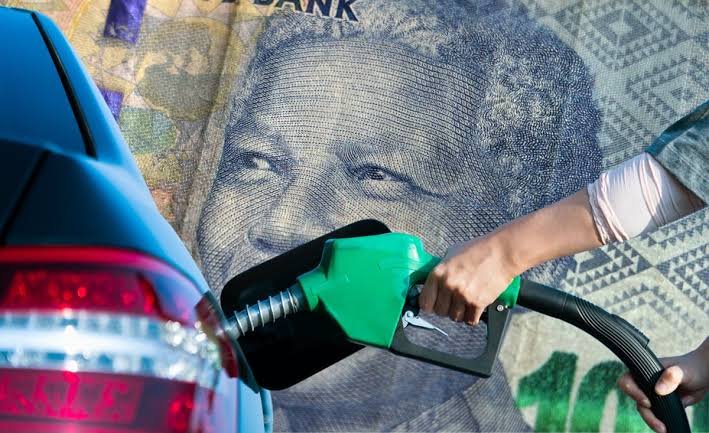
South Africa’s R17.2 Billion Fuel Levy Relief Has Ended. Did It Protect Consumers or Merely Buy Three Months?
South Africa’s three-month fuel levy intervention was designed to buy households and businesses breathing room during an international energy shock. Beginning on 1 April 2026, the government reduced the general fuel levy by R3 per litre on petrol and diesel, temporarily lowering the tax component of fuel prices as geopolitical conflict drove up global oil costs.
The intervention did not remain unchanged for three months. In May, petrol retained the R3-per-litre reduction while diesel relief was increased to R3.93 per litre, bringing the general fuel levy on diesel to zero. In June, the relief was reduced by half before being withdrawn entirely on 1 July. By then, the government estimated that the intervention had cost R17.2 billion in foregone tax revenue.
The decision was significant not only because of its size, but because it exposed a recurring policy dilemma. When an external shock raises the cost of an essential input such as fuel, governments can reduce taxes to cushion consumers. But a reduction in revenue must be financed, offset or accommodated elsewhere in the budget. And if international prices remain elevated, a tax cut may soften the increase without removing the underlying pressure.
National Treasury said the intervention would be fiscally neutral, funded through higher-than-expected tax revenue and underspending, without changing the fiscal framework approved after the 2026 Budget. That is an important qualification: the R17.2 billion was foregone revenue, but Treasury did not present it as an unfunded deficit of the same amount.
The central question is therefore not simply whether the relief ended. It is what the temporary intervention achieved, what it cost, and whether it was the most effective way to protect South Africans from volatile energy prices.
How the relief worked: three months, three different arrangements
The policy began as an emergency response to rising international energy costs. On 31 March, National Treasury and the Department of Mineral and Petroleum Resources announced a temporary R3-per-litre reduction in the general fuel levy, effective from 1 April to 5 May.
The government described the measure as short-term relief for households facing steep increases in fuel prices following conflict in the Middle East. The original estimate put the cost of the first month at approximately R6 billion. The intervention would then be reviewed before any extension.
On 28 April, Treasury announced an extension through May and June, with different arrangements for petrol and diesel. The June phase was explicitly designed to taper the relief before the full levy returned in July.
The timeline
Period | Petrol general fuel levy | Diesel general fuel levy | Relief compared with the full levy |
|---|---|---|---|
Before relief, from 1 April baseline | R4.10/L | R3.93/L | Full levy |
1 April–5 May | R1.10/L | R0.93/L | R3.00/L reduction on both |
6 May–2 June | R1.10/L | R0.00/L | R3.00/L petrol relief; R3.93/L diesel relief |
3–30 June | R2.60/L | R1.97/L | R1.50/L petrol relief; R1.96/L diesel relief |
From 1 July | R4.10/L | R3.93/L | Temporary relief ended |
The timetable matters because describing the policy simply as a R3-per-litre reduction for three months misses the differences between petrol and diesel and the gradual withdrawal in June.
For petrol, the full R3 reduction remained in place during April and May, then halved to R1.50 in June. For diesel, the government initially reduced the levy by R3, then increased the relief to R3.93 in May, bringing the general fuel levy to zero. Diesel relief was then reduced to R1.96 in June.
The arrangement reflected the government’s concern about the scale of the expected diesel-price increase and the exposure of businesses that depend heavily on diesel for transport, logistics and operations.
It also meant that the intervention’s value differed according to fuel type and the month in which fuel was purchased. A single headline figure cannot fully describe the amount of relief experienced by an individual motorist, farmer or transport operator.
What did R17.2 billion actually mean?
The estimated R17.2 billion represents the revenue the government expected not to collect because the general fuel levy was temporarily reduced between April and June.
It is a substantial amount, but its interpretation requires care.
First, it is not the same as saying that the government spent R17.2 billion on direct payments to households. The intervention reduced a tax component of fuel prices. Its immediate benefit was therefore linked to fuel purchases rather than distributed as a fixed payment to every household.
Second, it is not automatically equivalent to a R17.2 billion increase in the budget deficit. Treasury said the measure would be funded through higher-than-expected tax revenue and underspending, keeping it within the fiscal framework adopted after the 2026 Budget.
Third, the amount should not be confused with the total increase in fuel costs experienced by consumers during the international shock. The relief offset part of the increase; it did not control global oil prices or eliminate the costs associated with imported petroleum products.
The fiscal distinction is essential. A government can forgo revenue from one tax while still meeting its overall budget target if other revenue exceeds expectations or expenditure comes in below budget. But that does not mean the intervention had no economic opportunity cost.
If underspending provides part of the offset, the relevant follow-up question is which allocations were underspent and whether those savings were genuinely available without undermining service delivery. Treasury’s announcement does not, by itself, establish which specific programmes bore any opportunity cost. That would require a breakdown of the actual funding sources and subsequent expenditure outcomes.
Similarly, higher-than-expected revenue may make the intervention affordable within the budget, but it does not mean that revenue was costless or guaranteed to remain above expectations.
The appropriate conclusion is narrower: the government estimated a large loss of fuel-levy revenue, and it said that loss would be offset within the existing fiscal framework. Whether the promised neutrality was achieved in the final accounts should be assessed against subsequent fiscal reports, not inferred solely from the announcement.
Why the government intervened
The immediate rationale was to cushion the effects of a sudden increase in global energy costs.
South Africa’s domestic fuel prices are influenced by international crude oil and refined-product prices, import costs and the rand-dollar exchange rate, alongside domestic taxes, levies and regulated price components. When international prices rise rapidly, the domestic adjustment can transmit that shock to motorists and businesses.
In its 31 March announcement, the government cited escalating conflict in the Middle East and the risk of historically high fuel-price increases. It said the intervention was intended to balance the socio-economic impact on consumers with the fiscal objectives set out in the February Budget.
The relief also had a broader economic rationale. Fuel is both a direct household expense and an input into production and distribution. Higher fuel costs can affect commuting, passenger transport, freight, agriculture and the movement of food and other goods.
The government’s intervention was therefore intended to do more than reduce the amount motorists paid at filling stations. It was also meant to soften pressure on transport-related costs, reduce the risk of additional inflation and support economic activity during a period of global uncertainty.
Those are reasonable policy objectives. However, the announcement of a tax reduction is not proof that each objective was achieved to the same degree.
To evaluate the policy properly, three questions must be separated:
Did the levy reduction lower the tax component of fuel prices? Yes, by the announced amounts.
Did it prevent the full international cost shock from reaching consumers? It reduced the impact, but the price announcements show that fuel prices could still rise sharply.
Did it materially reduce overall inflation or protect economic growth? Those outcomes require separate economic evidence and cannot be established from the levy change alone.
This distinction between the intervention’s direct effect and its wider economic impact is central to a credible assessment.
The relief did not stop the April shock
The first month illustrates the limitations of a tax cut when the underlying price increase is exceptionally large.
On 1 April, the government implemented the R3-per-litre reduction against the backdrop of a sharp rise in international crude oil prices. The official fuel-price announcement reported that average Brent crude had increased from US$69.08 to US$93.67 per barrel during the relevant review period, with international petroleum-product prices following the upward movement.
The levy reduction therefore arrived during a period when the cost of obtaining fuel was increasing sharply.
A levy cut lowers one component of the final price. It does not directly reduce the price paid for crude oil or refined products on international markets. If the international component rises by more than the tax reduction, the final price can still increase.
That is why the distinction between relief and price reduction matters. A tax cut may make fuel cheaper than it would otherwise have been, while motorists still face a higher price than before the international shock.
The government itself presented the intervention as a means of cushioning consumers against the expected increases, rather than as a guarantee that fuel prices would remain unchanged.
The April experience therefore demonstrates a basic limit of temporary tax relief: it can redistribute part of the shock between consumers and government revenue, but it cannot remove the shock itself.
July exposed the difference between a tax change and a pump-price change
The end of the relief could easily be interpreted as an automatic price increase. The July price announcement shows why that interpretation would be misleading.
Effective 1 July, the full general fuel levy returned to R4.10 per litre for petrol and R3.93 per litre for diesel. At the same time, the Department of Mineral and Petroleum Resources announced reductions in the regulated fuel prices.
The department reported that average Brent crude had fallen from US$104.59 to US$86.53 per barrel during the July review period. It also reported lower international petroleum-product prices and a stronger average rand against the US dollar, from R16.52 to R16.38.
Those changes lowered the Basic Fuel Price component. The July adjustment included reductions of 201 cents per litre for 93-octane petrol, 196 cents for 95-octane petrol, 313.80 cents for diesel with 0.05% sulphur and 358.80 cents for diesel with 0.005% sulphur.
The department also reported a negative cumulative slate balance of R13.32 billion for petrol and diesel at the end of May. In accordance with the Self-Adjusting Slate Levy Mechanism, a slate levy of 113.94 cents per litre was applied to petrol and diesel from 1 July.
The important finding is that several components moved in different directions. The full general fuel levy returned, the international cost of fuel fell, the rand strengthened modestly, and the slate levy continued to reflect accumulated under-recoveries.
The final price was the result of the combined price structure not the levy in isolation.
This matters for evaluating the relief. The end of the tax reduction did not prevent fuel prices from falling when international market conditions improved. Equally, the July decline does not prove that the tax cut was unnecessary. It shows that tax policy and international fuel costs are separate variables that must be analysed together.
A rigorous account should therefore avoid attributing July’s pump-price movement entirely to the withdrawal of relief or entirely to falling oil prices. The official announcement identifies the factors and their contributions, but the overall price outcome depends on the full set of components.
Who benefited from the relief?
The design of the intervention made it broad-based: the reduction applied to the general fuel levy rather than being limited to a specific income group, occupation or transport service.
That meant the direct benefit was tied to litres of fuel purchased. Someone buying more fuel received a larger absolute reduction than someone buying less, all else being equal.
Consider a simple illustration. A motorist buying 50 litres of petrol would receive a direct reduction of R150 during a period when the full R3-per-litre relief applied. In June, when petrol relief was R1.50 per litre, the same purchase would receive a direct reduction of R75.
For a diesel user buying 50 litres during the May period, when the general fuel levy was reduced to zero from its R3.93 baseline, the direct reduction in that levy would be R196.50. In June, the reduction would be R98.
These calculations represent the difference in the general fuel levy alone. They do not estimate the overall change in pump prices, which also depends on international costs and other domestic price components.
Motorists and households
Private motorists received the clearest immediate benefit. The lower levy reduced the tax included in each litre purchased during the relief period.
But the distribution of that benefit was not necessarily progressive. Households that purchased more fuel received a larger direct benefit, while households without a car received little or no direct benefit from petrol relief.
That does not mean households without cars were unaffected by the policy. They could potentially benefit indirectly if lower fuel costs reduced the pressure on taxi fares, delivery charges or prices of transported goods. But the extent of that pass-through depends on the decisions of operators and businesses; it cannot be assumed that every rand of tax relief translated into lower prices elsewhere.
Diesel-dependent businesses
The larger diesel intervention in May reflected the potential exposure of commercial users to fuel costs. Transport operators, agricultural businesses, construction firms and other diesel-intensive activities may benefit directly from lower diesel levies.
There is also a possible indirect benefit for consumers if businesses pass some of the cost reduction through in lower fares or prices.
However, businesses may instead use the relief to absorb other rising expenses or rebuild margins. Without evidence on pricing and operating costs, it is not possible to quantify how much of the benefit reached consumers through these indirect channels.
People who rely on public transport
For households that depend on minibus taxis, buses or other shared transport, the direct benefit was less certain. These households may not purchase petrol or diesel themselves, but they can be affected by the cost of operating transport services.
If operators pass lower fuel costs through to passengers, relief may extend to commuters. If fares are fixed, if other costs are rising, or if operators retain the savings to offset their expenses, the immediate effect may be smaller.
This is an important limitation of a universal fuel-levy cut: the direct benefit is easiest to identify at the fuel purchase, while the indirect benefit to people who depend on transport services is harder to establish.
The distributional question
A broad tax cut can be implemented quickly and may benefit a large number of fuel users. But the amount each person receives depends on consumption.
That raises a policy trade-off. Broad relief can reach motorists and businesses without the administrative process required to identify eligible households. Yet it is not automatically the most targeted way to support people most vulnerable to higher transport and food costs.
A targeted transfer, transport subsidy or other form of support might reach some lower-income households more directly, but would require design, administration and funding. The relative effectiveness of those alternatives cannot be established without comparing their coverage, delivery costs, speed and fiscal implications.
The available official announcements do not provide a distributional breakdown showing how the R17.2 billion was divided by household income, fuel consumption or business sector. Any claim that the intervention primarily benefited one income group would therefore go beyond the evidence currently cited.
The fiscal trade-off: relief now, funding elsewhere
The R17.2 billion estimate puts the intervention squarely within a broader fiscal question: how should government respond to a temporary external shock without undermining its budget objectives?
Treasury said the relief would be financed through a combination of higher-than-expected tax revenue and underspending. It also stated that the measure would not affect the fiscal framework adopted by Parliament following the 2026 Budget.
That assurance is relevant, but it does not remove the need for scrutiny.
A fiscal framework can accommodate a temporary revenue reduction if other receipts exceed expectations or spending is lower than budgeted. The policy question is whether the sources of funding are sustainable, what they would otherwise have supported, and whether the assumptions remain valid as conditions change.
If additional revenue is genuinely above forecast, using some of it to cushion an energy shock can be a temporary policy choice. If the offset relies on underspending, the evaluation should examine whether the lower expenditure reflects efficiency, delayed implementation or services and investments that were not delivered.
The Treasury announcement does not identify the specific expenditure lines that supplied the underspending, so it would be premature to claim that the intervention caused cuts to any named public service.
The same caution applies to the phrase “fiscally neutral”. In the government’s statement, it means the measure was designed to be accommodated within the existing fiscal framework. Whether final revenue and spending figures confirmed that outcome is a question for the subsequent fiscal accounts.
The R17.2 billion should therefore be understood as a significant policy choice with a stated funding plan, not as proof of either fiscal irresponsibility or cost-free relief.
The hidden question: what does the general fuel levy pay for?
The general fuel levy is a tax on fuel, and it is only one of several taxes and levies included in the final fuel price. The Road Accident Fund levy, carbon-related charges and other components are distinct from the general fuel levy.
The April intervention reduced the general fuel levy; it did not remove every tax or charge from fuel.
This distinction matters because the levy is a source of government revenue. Reducing it means that the state collects less from that specific source during the relief period. Restoring it brings the levy back to the level specified in the pricing structure.
The 2026 Budget Review placed total fuel levies at approximately R110.34 billion in the 2025/26 fiscal year and projected R116.26 billion for 2026/27. These are budget estimates for fuel levies as a revenue category, not a measure of the temporary relief alone.
The comparison illustrates why the intervention was fiscally material: R17.2 billion is a substantial amount relative to the annual fuel-levy revenue projected in the Budget Review. However, the periods are not identical, and the temporary relief estimate should not be directly subtracted from the annual projection without accounting for the Budget’s assumptions and actual revenue outcomes.
The broader policy issue is how the state balances the revenue generated by fuel taxes with the cost of making transport and goods more expensive.
Fuel taxes are relatively straightforward to collect, but their economic burden can spread beyond the person who buys fuel. They may affect businesses’ operating costs and, depending on market conditions, the prices paid by consumers. At the same time, reducing fuel taxes can constrain revenue available for other government priorities unless the loss is offset.
There is no cost-free option. The debate is about which costs are most urgent, how they should be shared, and whether a temporary tax reduction is the most effective response to the particular shock.
What the inflation evidence tells us and what it does not
The relief was announced partly because of concerns about inflation and economic growth. Fuel is an important input into transport and distribution, so sharp increases can affect the prices of other goods and services.
Statistics South Africa’s June 2026 inflation release provides relevant context. Annual consumer inflation rose to 5.0% in June from 4.5% in May. The agency said transport was the largest contributor to both the annual and monthly changes in the consumer price index, with higher fuel prices playing a major role. Fuel prices rose 34.3% over the 12 months to June, including a 50.8% increase in diesel and a 31.7% increase in petrol.
The same release reported a monthly increase of 8.1% in passenger transport prices, with annual passenger transport inflation rising to 12.5%. It recorded sharp monthly increases in minibus taxi fares, e-hailing services, long-distance bus fares and school transport.
These figures show that transport-related inflation was substantial during the period in which the fuel levy relief was in effect. They do not, however, show what inflation would have been without the intervention.
That is the counterfactual problem. To measure the relief’s actual effect on inflation, an analyst would need to estimate the prices that would have prevailed had the levy remained unchanged, while accounting for international fuel prices, exchange rates, other levies and broader economic conditions.
The observed increase in transport inflation does not prove that the relief failed. Prices may have risen less than they otherwise would have. Conversely, the existence of relief does not prove that it prevented a wider inflationary impact.
The right conclusion is that the policy was intended to cushion inflationary pressure, while the available data show that fuel and transport inflation remained elevated. The precise amount of inflation avoided because of the intervention has not been established by the cited announcements.
By October, the inflation risks had not disappeared. On 15 October, South African Reserve Bank Governor Lesetja Kganyago told Reuters that global energy and food costs remained upside risks. He said inflation was projected to average 4.4% in 2026 and return to the bank’s 3% target only by 2028. The bank had raised its policy rate by 25 basis points to 7.25% in September.
Those later developments underline the difference between temporary relief and durable protection against energy-price shocks. A three-month tax cut can cushion a particular period; it cannot guarantee low fuel prices or prevent all second-round effects on the economy.
Was the phase-out the right approach?
The decision to taper relief in June rather than abruptly remove it at the beginning of the month gave fuel users a transition period. Petrol relief fell from R3 to R1.50 per litre, while diesel relief declined from R3.93 to R1.96 per litre.
A phase-out can make the transition more predictable and reduce the immediate tax-driven change compared with a sudden withdrawal of the entire relief amount. It also limits the duration of the revenue reduction.
But a gradual withdrawal has its own trade-offs. It reduces support while fuel costs may still be elevated, and it may be difficult for households and businesses to plan when the underlying international market is volatile.
Whether the phase-out was optimal depends on the objective. If the goal was to provide emergency relief while preserving the fiscal framework, a temporary measure with a published end date and tapering schedule had a clear rationale. If the goal was to protect the most vulnerable households from transport and food inflation, the assessment would also need to compare the levy cut with more targeted alternatives.
The official announcements establish the government’s intended rationale and timetable. They do not provide a complete evaluation of the intervention against alternative policies.
A more definitive assessment would need at least four additional pieces of evidence:
The final fiscal outturn showing how the R17.2 billion was offset.
An estimate of how much of the levy relief was passed through to retail fuel prices and, indirectly, to transport and goods prices.
A distributional analysis of who benefited, by income group and fuel consumption.
A comparison with alternative interventions, including targeted household support and transport assistance.
Without those data, it is possible to assess the design and mechanics of the policy, but not to declare that it was the most effective or least costly option.
The policy lesson: emergency relief needs an exit strategy and an evaluation
The April–June intervention offers a useful case study in crisis response. It was announced quickly, extended as the external shock continued, differentiated between petrol and diesel, and phased out before July. The government also stated how it intended to fund the foregone revenue.
Those features made the policy more structured than an open-ended promise to keep fuel prices low. The published timetable gave fuel users notice that the relief would end, while the funding statement acknowledged that tax reductions have fiscal consequences.
But a clear exit strategy is only one part of good policy. An emergency intervention should also be evaluated after it ends.
For the fuel levy relief, that evaluation should determine whether the price reduction reached consumers as intended, whether the broader economic benefits were measurable, how the fiscal offsets were achieved, and which groups gained most from the policy.
It should also examine the relationship between short-term tax relief and longer-term exposure to imported fuel costs. The country’s vulnerability to international energy markets cannot be solved by repeatedly reducing and restoring the levy. More resilient transport systems, efficient logistics and reduced exposure to volatile fuel inputs may help over time, although these measures require investment and cannot eliminate immediate shocks.
The government’s review of the fuel-price formula, announced alongside the April–June relief measures, is another relevant part of the policy context. The outcome of that review could affect how regulated prices are determined, but the cited relief announcement does not establish what changes were ultimately adopted. Any claims about the review’s final recommendations or implementation should be checked against a later official publication.
Conclusion: the relief ended, but the policy question remains
South Africa’s R17.2 billion fuel levy intervention was a temporary attempt to share the cost of an international energy shock between consumers and the public finances. It reduced the general fuel levy on petrol and diesel, expanded diesel relief during May, and then tapered the support in June before restoring the full levy on 1 July.
The relief was real in the narrow, measurable sense that the tax charged per litre was reduced. Its broader effects on inflation, transport fares and household welfare are harder to quantify. The available data show that fuel and transport inflation remained elevated, but they do not reveal what those prices would have been without the intervention.
The return of the full levy also did not automatically cause pump prices to rise in July. International crude and refined-product prices fell during the review period, and the government announced lower petrol and diesel prices even as the full general levy returned. That is a reminder that fuel prices reflect multiple moving components, not tax policy alone.
Treasury’s statement that the R17.2 billion would be offset through higher-than-expected revenue and underspending is equally important. The intervention was designed to remain within the fiscal framework, but its final fiscal performance and the opportunity cost of its funding should be assessed using subsequent budget reports.
The lasting lesson is that temporary tax relief can soften an external shock, but it cannot remove the underlying vulnerability. For future interventions, the critical test will be whether government can demonstrate not only that relief was announced, but who benefited, how it was funded, and whether it achieved more than a short-lived reduction in the tax component of fuel prices.
Citations
- 1.National Treasury, South African Government — 28 April 2026. “National Treasury on extension of short-term relief measures to address fuel price increases.” Primary source for the relief timetable, levy levels, R17.2 billion estimate, proposed funding and fiscal-neutrality statement.
- 2.https://www.gov.za/news/media-statements/national-treasury-extension-short-term-relief-measures-address-fuel-price
- 3.National Treasury and Department of Mineral and Petroleum Resources — 31 March 2026. “Announcement on short-term relief measures to address fuel price increases.” Primary source for the original April intervention and the initial estimate of R6 billion in foregone revenue for the first month.
- 4.https://www.treasury.gov.za/comm_media/press/2026/2026033101%20Media%20statement-%20Short%20term%20relief%20measures%20to%20address%20fuel%20price%20increases.pdf
- 5.Department of Mineral and Petroleum Resources, South African Government — 30 June 2026. “Minister Gwede Mantashe announces adjustment of fuel prices effective from 1 July 2026.” Primary source for the reinstatement of full levies, July fuel-price decreases, international price movements, exchange-rate changes and slate levy.
- 6.https://www.gov.za/news/media-statements/minister-gwede-mantashe-announces-adjustment-fuel-prices-effective-1-july
- 7.Statistics South Africa — June 2026. “Inflation rises to a two-year high.” Data on headline inflation, transport inflation, fuel-price movements and passenger transport costs.
- 8.https://www.statssa.gov.za/?p=19757
- 9.National Treasury — 2026 Budget Review. Revenue projections and historical context for fuel levies.
- 10.https://www.treasury.gov.za/documents/national%20budget/2026/review/FullBR.pdf
- 11.Reuters — 28 April 2026. “South Africa extends fuel tax cuts to cushion Iran war impact.” Independent reporting on the extension, its international context and the government’s stated funding approach.
- 12.https://www.reuters.com/business/energy/south-africa-cuts-fuel-tax-two-more-months-ease-pressure-households-2026-04-28/
- 13.Reuters — 15 October 2026. “South Africa’s central bank governor Kganyago sees upside risks to inflation.” Recent context on inflation risks from energy and food costs and the Reserve Bank’s outlook.
- 14.https://www.reuters.com/world/africa/south-africas-central-bank-governor-kganyago-sees-upside-risks-inflation-2026-10-15/
- 15.FreshPlaza — 29 April 2026. “South Africa extends R3 per litre fuel levy relief to June 2026.” Secondary reporting on the revised timetable and levy amounts.
- 16.https://www.freshplaza.com/africa/article/9833404/south-africa-extends-r3-per-litre-fuel-levy-relief-to-june-2026/
Finish Reading the Full Story and Expert Analysis.
Get the latest legal & regulatory intelligence in South Africa
Wansom is AI and can make mistakes.