
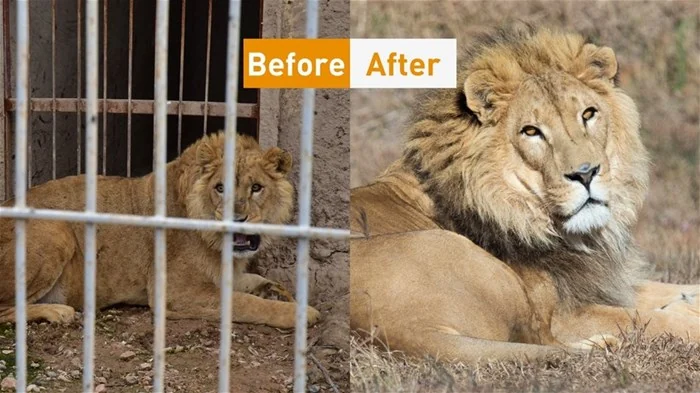
South Africa’s ConCourt Upholds Animal Wellbeing in Biodiversity Law
One word became the centre of a constitutional dispute: wellbeing.
For the South African Hunters and Game Conservation Association, the concern was that animal-wellbeing provisions had been materially changed during the legislative process without another opportunity for the public to comment. For the National Council of Societies for the Prevention of Cruelty to Animals (NSPCA) and the EMS Foundation, removing those provisions would weaken the connection between animal welfare and the legal framework governing biodiversity.
On 9 October 2026, South Africa’s Constitutional Court dismissed the hunters’ association’s application in South African Hunters and Game Conservation Association v Speaker of the National Assembly and Others [2026] ZACC 42. The unanimous judgment, written by Justice Rogers, left the challenged provisions in place.
The outcome was particularly notable because Parliament and the Minister of Forestry, Fisheries and the Environment had accepted that public participation was inadequate and did not oppose the application. Yet the Court did not consider that position decisive. It examined the history of consultation, the extent of the changes, the nature of the provisions and crucially the association’s delay in bringing its case.
The application was launched more than two years after presidential assent and more than a year after the relevant provisions came into force. The Court found the delay unreasonable and concluded that the interests of justice did not justify overlooking it.
The result preserves animal wellbeing in biodiversity law, but it is not a blanket declaration that every aspect of the legislative process was beyond criticism. Nor does it mean every future regulation affecting hunting or wildlife management is automatically lawful.
The judgment is important precisely because it addresses both sides of the constitutional balance: the public’s right to participate in lawmaking, and the need for legal certainty when challenges to legislation are brought long after enactment.
The legal significance of a single word
The dispute concerned amendments to South Africa’s National Environmental Management: Biodiversity Act 10 of 2004, introduced through the National Environmental Management Laws Amendment Act 2 of 2022.
The amendment defined animal “wellbeing” as:
“the holistic circumstances and conditions of an animal, which are conducive to its physical, physiological and mental health and quality of life, including the ability to cope with its environment.”
That definition reaches beyond whether a species survives or whether a wildlife population is managed sustainably. It directs attention to the condition and experience of individual animals, including their physical and mental health and their ability to cope with their environment.
The amendment introduced wellbeing into three important parts of the Biodiversity Act.
First, section 2 now includes consideration of animal wellbeing among the Act’s objectives. Second, section 9A empowers the Minister to prohibit activities that may negatively affect an animal’s wellbeing. Third, section 97(1)(aA) authorises regulations relating to animal wellbeing.
These provisions do not have identical legal effects. A statutory objective guides decision-making; an enabling provision gives the Minister a power that may be exercised later; and regulations can establish more detailed rules through a separate legal process.
That distinction became central to the judgment.
The hunters’ association feared that the new framework could be used to restrict activities undertaken by its members, including responsible hunting and game farming. The NSPCA and EMS Foundation argued that recognising wellbeing within biodiversity legislation helps ensure that decisions affecting wildlife account for individual animals rather than treating them solely as biological resources.
The Court was not asked to settle the entire debate over hunting, conservation ethics or sustainable use. It was asked whether the challenged provisions should be invalidated because Parliament had failed to facilitate constitutionally adequate public participation.
But answering that question required the Court to examine what had changed in the Bill, what consultation had already occurred and whether the association had waited too long to bring its case.
The legislative history: three versions, one disputed change

The National Environmental Management Laws Amendment Bill was introduced in the National Assembly in May 2017. During its passage through Parliament and the provincial legislative process, the Bill developed through different versions.
The public-participation process was not absent. The hunters’ association itself participated in it.
In August 2017, it submitted written comments to the National Assembly’s Portfolio Committee. It later made submissions on the second version of the Bill to the relevant committee of the North West Provincial Legislature in September 2020.
On the issue of animal wellbeing, the association supported its inclusion in the Biodiversity Act but argued that a distinction should be made between animals in the wild and animals in captivity. It also maintained that wellbeing considerations should be aligned with sustainable and responsible use, and should not be used to stop responsible hunting.
The dispute arose when the definition of wellbeing changed between the second and third versions of the Bill.
The final definition appears to have originated in a report submitted by the Limpopo Provincial Legislature in October 2020. The National Council of Provinces adopted the third version in December 2021, and the National Assembly passed it on 1 March 2022. The President assented to the legislation on 21 June 2022. The relevant provisions came into operation on 30 June 2023.
No further public participation took place after the third version emerged from the provincial process.
That fact was common cause. The legal question was whether the change in the definition was sufficiently material to require another round of public participation.
The association relied on previous Constitutional Court decisions in which significant amendments introduced during the legislative process had required renewed consultation. Its argument was that the final definition was not simply a technical adjustment: it could influence how wildlife was managed and how activities affecting animals were regulated.
The State parties accepted that public participation had been inadequate. But the Court had to decide the constitutional question for itself, particularly because the NSPCA and EMS Foundation opposed the application and sought a judicial determination.
The Court therefore turned to a preliminary obstacle that would prove decisive: the time taken to challenge the legislation.
The challenge arrived too late
The association instituted its application on 23 July 2024, approximately 25 months after presidential assent and 13 months after the relevant provisions came into force.
There is no fixed deadline in the Constitutional Court’s rules for every public-participation challenge of this kind. But the Court’s earlier jurisprudence establishes that such challenges should be brought as soon as possible after legislation has been passed.
The principle serves an important purpose. Legislation is not merely a document awaiting legal scrutiny. Once enacted, it may guide public administration, influence regulations, shape institutional decisions and become relevant in litigation. Delay can make it harder to establish what happened during the legislative process and can unsettle decisions made in reliance on the law.
The Court applied the familiar approach used in legality-review cases: first determine whether the delay was unreasonable, and, if it was, consider whether the interests of justice nevertheless justified overlooking it.
An unexplained delay is generally unreasonable. But that is not necessarily the end of the matter. Courts can consider the public interest in legal certainty, prejudice to affected parties, the nature and seriousness of the alleged illegality, the prospects of the challenge succeeding and the conduct of the applicant.
The association argued, in part, that it had been involved in parallel policy discussions with the Department of Forestry, Fisheries and the Environment. It had understood those discussions as an opportunity to influence the development of biodiversity policy, including the treatment of animal wellbeing.
The Court rejected that explanation.
Policy discussions could not undo legislation that had already been passed, and they did not prevent the association from bringing a constitutional challenge. The association had actively participated in the legislative process and had long been concerned about the concept of wellbeing. It was therefore difficult for it to explain why it had not monitored the final legislative process or sought legal advice sooner.
The Court also distinguished the case from earlier decisions in which delays had been overlooked. Those cases involved factors such as broad public-interest challenges, extensive preparation, early notice of intended litigation or circumstances in which setting aside legislation would cause little disruption.
Here, the association represented genuine conservation interests, but the Court found those interests more closely tied to its members’ concerns about hunting, game ranching and related activities. The challenge was also relatively narrow: it turned principally on whether the change to the definition of wellbeing required renewed consultation.
The association had not provided a satisfactory explanation for waiting more than two years.
The Court consequently held that the interests of justice did not permit the delay to be overlooked.
Why the State’s concession did not decide the case
One of the most striking features of the proceedings was the position adopted by Parliament and the responsible Minister.
Both accepted that public participation had been inadequate and did not oppose the application. In an ordinary dispute, a concession of that kind might appear to simplify the question before the Court.
But constitutional litigation does not always allow the parties’ agreement to determine the outcome.
The Court explained that Parliament’s view could carry considerable weight in appropriate circumstances, because Parliament is responsible for deciding how public participation should be facilitated, subject to an objective standard of reasonableness. Nevertheless, the State’s concession was not decisive.
The NSPCA and EMS Foundation opposed the application. As intervening parties, they were entitled to a judicial decision on whether the legislative process had complied with the Constitution. The Court could not simply treat the State’s concession as resolving the constitutional issue.
This aspect of the judgment is institutionally important.
The constitutional duty to facilitate public participation belongs to the legislature, but the legality of a legislative process is ultimately a matter for the courts when properly brought before them. The executive and legislature cannot conclusively settle a constitutional dispute simply by agreeing with an applicant.
That does not make their position irrelevant. It means their assessment must be considered alongside the legal record, the arguments of other parties and the applicable constitutional principles.
In this case, the Court examined the concession against the narrow scope of the alleged defect, the consultation that had already occurred and the unexplained delay. Its conclusion was that the application should be dismissed.
Not every substantive amendment requires fresh consultation
The judgment’s most important contribution to public-participation law lies in its treatment of material amendments.
The Court considered earlier cases in which changes made during the legislative process had required further public participation. In one, a profession was brought within the reach of legislation only after the relevant participation process had concluded. In another, a revised definition of “waste” had radically expanded the scope of the legislation.
Those cases demonstrated why renewed consultation may be necessary. If an amendment changes who is affected by a Bill, or fundamentally expands the reach of a regulatory scheme, people who had no reason to participate earlier may need a new opportunity to make representations.
But the Court cautioned against treating the distinction between “technical” and “substantive” amendments as an automatic test.
If every change that went beyond technical drafting required another full round of public participation, the legislative process could become interminable. Public submissions often lead to substantive amendments precisely because lawmakers are expected to consider suggestions and improve proposed legislation.
The question, therefore, is one of degree and objective reasonableness: how significant was the change, in context, and did it alter the proposal in a way that made renewed participation constitutionally necessary?
In this case, the public had been consulted on animal wellbeing during both the National Assembly and National Council of Provinces processes. The disputed definition had emerged from the provincial process rather than being introduced without any connection to public participation.
That did not automatically establish that the process was flawless. It did, however, distinguish the case from situations in which affected groups had effectively been excluded or the scope of a Bill had been radically expanded after consultation ended.
The Court considered the alleged defect substantially narrower than the defects in those earlier cases.
Its reasoning does not establish that the public must never be consulted again after a Bill is amended. Instead, it rejects the idea that every substantive change necessarily triggers a new process, regardless of its context or consequences.
For legislatures, that is a practical but demanding standard. The need for further consultation depends on the nature of the amendment, its effects and whether the earlier process gave the public a reasonable opportunity to address the subject matter.
Why the provisions were not automatically restrictive
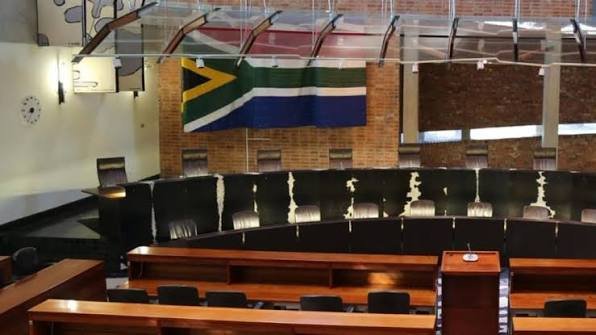
The Court also examined the character of the wellbeing provisions. It found that they were not self-executing: their inclusion in the Biodiversity Act did not automatically prohibit particular activities or establish that every decision affecting an animal must favour wellbeing over every other statutory objective.
Section 2 identifies objectives that decision-makers must consider. Those objectives include the conservation and management of biodiversity, protection of ecosystems and sustainable use of indigenous biological resources. Animal wellbeing becomes another relevant consideration within that framework.
The Court observed that the objectives may sometimes point in different directions. A decision-maker may need to balance animal wellbeing against other legitimate conservation objectives. The statutory requirement to consider wellbeing does not, by itself, determine the outcome of every decision.
Section 9A similarly gives the Minister a power to prohibit activities that may negatively affect animal wellbeing. It does not impose an immediate, blanket prohibition on hunting or other lawful activities. Any exercise of that power would require a decision by the Minister, taking account of the Act’s objectives and complying with applicable administrative-law requirements.
The Court noted that the Minister had not imposed prohibitions under section 9A at the time considered in the judgment. Nor was there evidence that the Minister intended to use the power to restrict the existing lawful activities of the association’s members.
If the power were exercised, affected parties would have procedural protections under the Promotion of Administrative Justice Act. Decisions could be challenged if they were irrational or otherwise unlawful.
The same distinction applied to regulations. The Minister’s authority to make regulations concerning wellbeing did not remove the requirement for a consultative process before regulations were promulgated.
These findings were relevant to the Court’s assessment of the prospects of the constitutional challenge. They should not be overstated as a final ruling on the lawfulness of every possible future exercise of the Minister’s powers.
The central point is that the Act establishes a consideration and a framework for future decisions. It does not automatically dictate the result of every wildlife-management dispute.
The contrast with the Public Procurement Act judgment
The ruling becomes particularly revealing when read alongside the Constitutional Court’s 17 September 2026 decision invalidating South Africa’s Public Procurement Act, 2024.
Both cases concerned the constitutional duty to facilitate public participation in legislation. Both raised questions about amendments made during the legislative process. Yet they reached different outcomes.
In the procurement case, the Court found that major changes to Chapter 4 had not been followed by a renewed opportunity for public participation. The changes affected a wide range of procurement rules, while the process for considering submissions was also found deficient. The Court invalidated the entire Act.
In the animal-wellbeing case, consultation had taken place on the subject at both national and provincial stages. The disputed change concerned the definition of wellbeing, and the Court found that the provisions were not self-executing. It also found that the association had waited unreasonably long to challenge the legislation.
There is an essential qualification: the Court in South African Hunters dismissed the application after deciding that the delay should not be overlooked. Its discussion of the prospects of the participation challenge was undertaken to assess that delay, not as an unrestricted final determination that every aspect of the process had complied with the Constitution.
The judgments are therefore not a simple contradiction. They illustrate that public-participation challenges are fact-sensitive. The scale of the amendments, the nature of the consultation already undertaken, the practical effects of the provisions and the timing of the litigation can all matter.
The procurement judgment should not be read as establishing that every significant amendment invalidates a law if no new consultation occurs. Equally, the animal-wellbeing judgment should not be read as permission to introduce major changes without further participation.
The common principle is that the legislative process must meet an objective standard of reasonableness. Applying that standard requires attention to the details of each case.
What the decision means for wildlife governance
The immediate legal consequence is straightforward: the application was dismissed, and the challenged wellbeing provisions remain in the Biodiversity Act.
The wider implications concern how wildlife decisions are made.
The definition of wellbeing creates a legal basis for considering an animal’s physical, physiological and mental health and quality of life within biodiversity governance. It can inform policy, permitting, regulation and administrative decision-making, while operating alongside the Act’s other objectives.
The Court noted that wellbeing had already informed departmental policy and administrative work. The Minister’s evidence described ongoing work on regulations and frameworks, while the intervening organisations identified litigation in which the provisions had been relied upon.
That does not mean the ruling has ended disagreement about the proper treatment of wildlife. Nor does it establish that hunting, culling, game farming or other forms of wildlife use are automatically unlawful.
The legal significance is more measured: wellbeing remains a consideration within the statutory framework, and decisions taken under the Act must continue to be made lawfully. Specific decisions can still be challenged through the appropriate legal processes.
For the hunting and game-conservation sector, the judgment means the provisions cannot be removed through this application. Any concern about a future prohibition, regulation or administrative decision will need to be addressed in the context of the actual power exercised and the legal requirements governing it.
For animal-welfare organisations, the decision preserves an important statutory foothold for wellbeing within biodiversity law. But the effectiveness of that protection will depend on how authorities implement the framework, how regulations develop and how individual decisions are scrutinised.
The ruling is therefore a significant step in the legal treatment of animal wellbeing, not the final word on the relationship between animal welfare and sustainable wildlife use.
What legislatures and litigants should take from the judgment
The case offers two lessons that extend well beyond environmental legislation.
The first concerns lawmaking. Public participation is not measured simply by the number of meetings held or submissions received. It depends on whether the public had a reasonable opportunity to engage with the substance of the proposal and whether changes made during the process were sufficiently significant to require another opportunity for comment.
At the same time, the Constitution does not require lawmakers to restart consultation after every amendment. The question is whether the process, viewed objectively and in context, was reasonable.
The second lesson concerns litigation. A constitutional challenge to legislation cannot be held in reserve indefinitely while the law takes effect and informs government action. An applicant who believes that Parliament has failed to meet its participation obligations should act promptly and explain any delay.
Even where the State accepts that a process was inadequate, the Court must still consider the constitutional dispute and the interests of other affected parties. A concession by government does not guarantee that the application will succeed.
In this case, the delay was not a minor procedural issue. It was decisive. The association had participated in the legislative process, had been concerned about wellbeing for years, and did not provide a satisfactory explanation for waiting more than two years before approaching the Court.
The judgment is a reminder that constitutional rights and procedural duties matter—but so do the rules that govern when courts will entertain challenges to enacted law.
Conclusion: the word remains, but the legal debate continues
The Constitutional Court’s 9 October judgment preserves animal wellbeing in South Africa’s biodiversity legislation. The application by the South African Hunters and Game Conservation Association was dismissed after an unexplained delay of more than two years, and the Court found that the interests of justice did not justify overlooking it.
The ruling also clarifies that public participation is not an automatic restart button for every legislative amendment. Whether further consultation is required depends on the significance of the changes, the process already conducted and what is objectively reasonable in the circumstances.
That is why this judgment deserves to be read alongside the Court’s procurement ruling. The difference in outcome does not diminish the importance of public participation. It shows that constitutional review depends on the facts and procedural history of each case.
For wildlife governance, the practical consequence is that wellbeing remains part of the Biodiversity Act’s framework. It must be considered alongside other statutory objectives, while future prohibitions, regulations and administrative decisions remain subject to the law.
One word survives not because every question about the legislative process has been settled, but because the challenge to remove it did not meet the conditions for the Court to grant relief.
The next chapter will be written through the implementation of the law, the decisions made under it and any future challenges brought in time.
Citations
- 1.Constitutional Court of South Africa — South African Hunters and Game Conservation Association v Speaker of the National Assembly and Others [2026] ZACC 42, Case CCT 270/24, judgment delivered 9 October 2026. Read the full judgment.
- 2.Daily Maverick — Don Pinnock, “ConCourt in session to pass judgment on the inclusion of a single word: wellbeing,” 26 May 2026. Read the analysis.
- 3.Bizcommunity / FOUR PAWS — “Constitutional Court upholds animal well-being in South Africa,” 12 October 2026. Read the report.
- 4.Constitutional Court of South Africa — Premier of the Western Cape Government and Another v Speaker of the National Assembly and Others; City of Cape Town and Others v Speaker of the National Assembly and Others [2026] ZACC 37, judgment delivered 17 September 2026. Read the judgment.
Finish Reading the Full Story and Expert Analysis.
Get the latest legal & regulatory intelligence in South Africa
Wansom is AI and can make mistakes.