
South Africa Builds a Steel Wall: Anti-Dumping Duties, Safeguards and a Tariff Overhaul
Summary
ITAC Report 778 (18 September 2026): anti-dumping duties on Chinese corrosion-resistant (coated) steel coil, stepping from 5.5% to 20.5%, 35.5% and 57.84% by June 2029, while the safeguard falls from 52.34% to nil. The combined duty stays at 57.84%. Shandong Guanxian Foryune has its own 8.21% rate.
No double remedy: during the overlap only the anti-dumping amount above the safeguard is payable. A rebate item (460.15/7210.61/01.06) was extended to cover the duty.
ITAC Notice 4157: phase two of the steel tariff review proposes higher duties (ropes and cables to 15%, some seamless tubes to 15%, some cold-rolled and stainless flat products to 10%), import permits for a wide range of steel products, and rejection of an 85,000-tonne hot-rolled coil rebate quota for re-rollers. Comments are due by 16 October 2026.
South Korea (4 September): added to the hot-rolled steel safeguard, at 11% to 1 May 2027 and 9% to 1 May 2028.
I and H sections (11 September): rebate items excluded from anti-dumping duties on Chinese and Thai sections, retrospective to 19 March 2026.
Stakeholders: producers gain protection; re-rollers, fabricators, construction and downstream manufacturers face higher costs and new compliance duties; importers face retrospective and step-change risk.
ITAC Report 778: Anti-Dumping Duties on Chinese Coated Steel
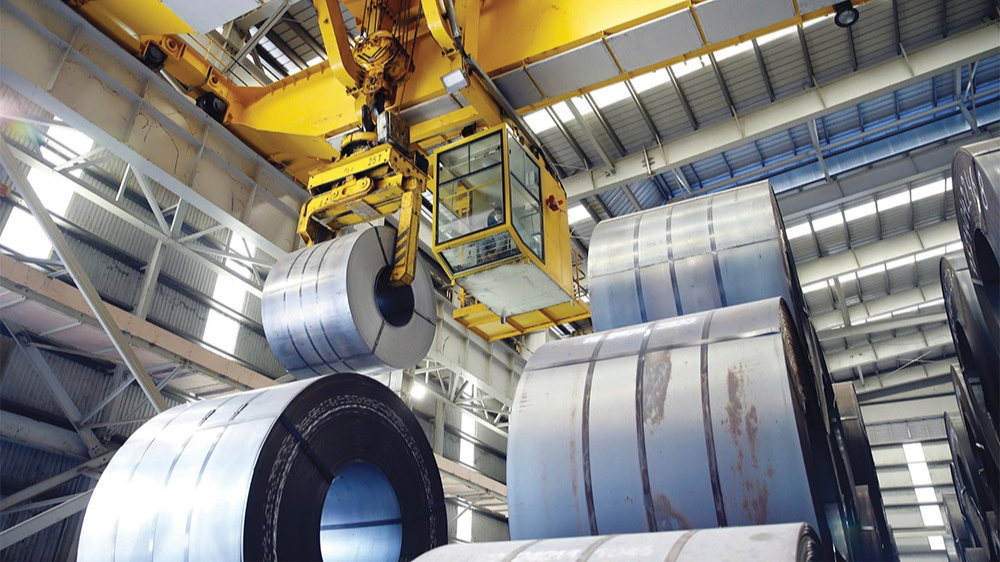
The product. The investigation covered corrosion-resistant steel coil: flat-rolled products of iron or non-alloy steel, and of other alloy steel, at least 600mm wide, plated or coated with zinc or aluminium-zinc, under Chapter 72 of the tariff (including subheadings 7210.61.20 and 7210.61.30). The product is mainly used by re-rollers and fabricators to make corrugated roof cladding.
The case. ArcelorMittal South Africa (AMSA) and Safal Steel, which together account for more than half of SACU production, applied in 2025. ITAC made a preliminary finding of dumping and material injury in October 2025, but did not impose provisional duties because safeguard duties already applied. Its final determination found dumping margins of 8.21% for Shandong Guanxian Foryune Composite Materials Co. Ltd and 57.84% for all other Chinese producers and exporters.
The legal instruments. SARS published a series of notices (R.7937 to R.7941) in Government Gazette 55424 of 18 September 2026, inserting the duties under Dumping Item 215.02 of Schedule 2 to the Customs and Excise Act, 1964, with effect from 18 September 2026.
The ramp. The anti-dumping duty rises step by step as the existing safeguard on the same products falls, so the combined burden on Chinese coated steel stays constant at 57.84%:
Period | Safeguard duty | Anti-dumping duty (China) | Total on Chinese goods |
|---|---|---|---|
18 Sep 2026 – 11 Jun 2027 | 52.34% | 5.5% | 57.84% |
12 Jun 2027 – 11 Jun 2028 | 37.34% | 20.5% | 57.84% |
12 Jun 2028 – 11 Jun 2029 | 22.34% | 35.5% | 57.84% |
From 12 Jun 2029 | None | 57.84% | 57.84% |
Shandong Guanxian Foryune has its own rate of 8.21% under a separate notice (R.7941).
Avoiding a double remedy. Interested parties argued that stacking anti-dumping duties on top of a safeguard would amount to a double remedy. ITAC designed the measure so that, while the two overlap, only the portion of the anti-dumping duty above the safeguard is payable. That is why the stepped rates add up to the 57.84% dumping margin instead of exceeding it.
The rebate. ITAC also extended rebate item 460.15/7210.61/01.06, so qualifying imports can obtain a rebate of the anti-dumping duty, subject to the rebate's conditions.
The planning point for importers. For safeguard purposes, the duty on these products falls each June. For Chinese-origin goods there is no saving: the anti-dumping leg rises by the same amount. Non-Chinese goods still benefit as the safeguard steps down.
ITAC Notice 4157: Phase Two of the Steel Tariff Review
How we got here: In 2025, ITAC launched a sweeping review of the tariff structure for steel and downstream metal products under tariff Chapters 72 (iron and steel), 73 (articles of iron or steel), 82 (tools) and 83 (miscellaneous base-metal articles). It also considered an import surveillance system. Phase one ended with ITAC Report No. 764, implemented by SARS on 15 May 2026. That raised duties on a long list of steel products, many to 10% or to WTO bound rates, and created permit-based rebates for products not made locally. The review drew 109 written submissions. Many asked for further duty increases, additional rebates and more products under import control, which led ITAC to open a second phase.
The preliminary determinations (Notice 4157, 18 September 2026). Comments are due by 16 October 2026.
Proposal | Detail |
|---|---|
Higher customs duties | Includes steel ropes and cables from 5% to 15%; certain seamless tubes and pipes from free to 15%; certain cold-rolled and stainless flat-rolled products from free to 10%. Wire, screws and bolts and other lines are also under consideration |
Import permit controls | New permit requirements for products including steel ingots, semi-finished steel, hot- and cold-rolled products, bars, rods, wire, nails, springs and cast articles |
New and amended rebates | Rebates for products not made in sufficient quantities locally, subject to ITAC permits; existing rebates for hot- and cold-rolled steel (headings 72.08 and 72.09) to be extended to cover anti-dumping and safeguard duties |
Rejected: re-roller quota | A proposed annual rebate quota of 85,000 tonnes of hot-rolled coil for re-rollers is provisionally rejected. ITAC found that unintended consequences would outweigh benefits, and its policy is not to grant rebates for products made locally in adequate capacity |
Rejected: other rebates | Several further rebate requests are also provisionally rejected |
The policy tension. ITAC's chief commissioner has acknowledged the tension at the heart of the review: protecting primary steel producers while keeping affordable inputs available to the much larger downstream manufacturing base. ITAC has also signalled that it is unlikely to consider new rebate applications until the second-phase comment period closes. That has raised concern about shortages of some long-steel products.
Two Smaller Amendments With Real Bite
4 September: South Korea added to the hot-rolled steel safeguard
South Africa already applies a safeguard duty on certain hot-rolled steel products under Chapter 72 (item 260.03 of Part 3 of Schedule 2). On ITAC's recommendation (Minute M04/2026), SARS added imports originating in or imported from South Korea to the countries that must pay it:
Period | Rate on Korean hot-rolled steel | Notice |
|---|---|---|
Up to and including 1 May 2027 | 11% | R.7874 |
2 May 2027 – 1 May 2028 | 9% | R.7875 |
The same declining rates already applied to other covered sources, such as Indonesia. Korean-origin hot-rolled steel within scope now carries the duty for the remaining life of the safeguard, closing an alternative source for importers seeking to avoid it.
11 September: Rebate exclusions for I and H sections
South Africa imposes anti-dumping duties on I and H sections and other angles and shapes of iron or non-alloy steel (subheadings 7216.32 and 7216.33) from China and Thailand, under Dumping Item 215.02. SARS amended those dumping items to list the rebate items that are excluded from the anti-dumping duties. In other words, importing under those rebate items no longer escapes the dumping duty.
The amendment is retrospective to 19 March 2026. Importers who cleared these sections under the listed rebate items since that date, without paying anti-dumping duty, should review their entries for possible exposure.
The Trade-Law Analysis: Three Tools, Three Rulebooks
South Africa is using three distinct legal instruments on steel at the same time. Each is governed by different rules, at home under the International Trade Administration Act and the Customs and Excise Act, and internationally under WTO agreements.
Tool | What it targets | WTO rules | Duration |
|---|---|---|---|
Anti-dumping duty | Imports from specific countries sold below normal value, causing material injury | Anti-Dumping Agreement: duty may not exceed the dumping margin | Normally five years, then sunset review |
Safeguard duty | Surges in imports from all sources causing serious injury, regardless of fair pricing | Agreement on Safeguards: must be temporary and progressively liberalised | Limited in time, with declining rates |
Ordinary customs duty and import controls | Tariff structure generally; permits for selected products | GATT: duties within bound rates; licensing rules | Indefinite until changed |
1. Stacking anti-dumping duties on a safeguard
The ITAC 778 design is the most legally interesting element. The WTO agreements do not expressly prohibit applying an anti-dumping duty and a safeguard to the same goods. But both remedies respond to injury from imports, and stacking them risks offsetting the same harm twice. By making only the excess of the anti-dumping duty over the safeguard payable during the overlap, ITAC keeps the combined burden at the dumping margin of 57.84%. The anti-dumping duty can never exceed the dumping margin, which keeps the measure within the Anti-Dumping Agreement's core ceiling.
The structure also has a policy effect. The safeguard must decline each year under WTO rules on progressive liberalisation. The anti-dumping ramp means Chinese-origin goods see no relief as it does. Critics may argue that this uses anti-dumping law to perpetuate safeguard-level protection. Supporters will respond that the protection is anchored in a verified dumping margin specific to China.
2. Country-specific application of safeguards
Safeguards are meant to apply to imports from all sources. The WTO Agreement on Safeguards nevertheless exempts developing-country exporters with small import shares, which is why safeguard notices list or exclude particular countries. Adding South Korea to the hot-rolled safeguard reflects ITAC's view, set out in Minute M04/2026, that Korean imports should now pay the duty. Affected exporters can test whether that decision follows the agreement's criteria.
3. Tariff increases and import permits
Raising ordinary duties is lawful under WTO rules as long as rates stay within South Africa's bound tariff commitments, and phase one already moved several lines up to bound levels. Import permits are more sensitive. WTO rules prohibit quantitative restrictions and require import licensing to be transparent and not more trade-restrictive than necessary. A permit system used for surveillance is easier to defend than one used to limit volumes. How ITAC administers the proposed permits will matter as much as the list itself.
4. Preferential trade and SACU
ITAC acts for the Southern African Customs Union, so tariff changes apply across SACU (South Africa, Botswana, Lesotho, Namibia and Eswatini). Higher most-favoured-nation duties do not automatically reach goods entering under preferential agreements, such as the SADC Free Trade Area or the EU–SADC Economic Partnership Agreement, if they meet rules of origin. Trade remedies, such as anti-dumping duties, can apply regardless of preferences. For importers, origin determination is therefore central to working out the real duty.
What It Means for Each Stakeholder
Primary steel producers (ArcelorMittal South Africa, Safal Steel and others)
The clear beneficiaries. Chinese coated steel now faces a combined 57.84% duty that will not fall when the safeguard steps down. The phase-two proposals would add further tariff protection, permit controls and the rejection of the re-roller rebate quota. The trade-off is that protection is easier to obtain than to keep: sunset reviews, rebate applications and downstream lobbying will keep testing it, and producers will be expected to show they can supply the market reliably at competitive prices.
Re-rollers and roof-sheeting fabricators
These firms buy coated or hot-rolled coil and turn it into roofing and cladding. They bear the cost most directly. Chinese coated coil is now effectively priced out at a 57.84% combined duty, and ITAC has provisionally rejected the 85,000-tonne hot-rolled coil rebate quota they sought. They should test whether the extended rebate item 460.15/7210.61/01.06 covers their imports, consider non-Chinese sources (which still pay the declining safeguard), and file submissions on Notice 4157 by 16 October.
Downstream manufacturers (construction, automotive, appliances, mining equipment)
Higher input costs feed through into everything made from steel, from wire and fasteners to pipes, tools and structural sections. ITAC itself has acknowledged the need to keep inputs available to downstream manufacturers, so well-evidenced submissions carry weight. They should quantify cost impacts, identify grades not made locally that could qualify for rebates, and engage before ITAC finalises phase two.
Importers and steel merchants
The compliance burden is rising sharply. Importers must determine origin precisely, apply the correct dumping item and safeguard rate, track the June step changes, check rebate eligibility, and possibly obtain import permits for a much longer list of products. The retrospective I and H section amendment shows that past entries can be reopened. Importers should audit entries since 19 March 2026 for those products, and since 18 September for Chinese coated steel.
Chinese exporters
All Chinese producers except Shandong Guanxian Foryune face a 57.84% total burden on coated steel for the foreseeable future. Their options are limited: request a review if circumstances change, or compete through products outside scope. Shipping through third countries to disguise origin would attract anti-circumvention scrutiny and penalties.
Shandong Guanxian Foryune Composite Materials
The only named producer with its own, much lower rate of 8.21%, reflecting its verified dumping margin. Its products become comparatively competitive in SACU, but it must maintain the pricing and cooperation on which that rate is based, since reviews can change it.
South Korean steel exporters and their buyers
Korean hot-rolled steel now pays the safeguard: 11% to 1 May 2027 and 9% to 1 May 2028. Buyers who switched to Korea to avoid the safeguard should re-cost their supply.
Construction and infrastructure sector
Roofing, structural steel, pipes and reinforcing products all feed into housing and infrastructure. Higher steel costs can raise project costs and squeeze fixed-price contracts. Contractors should review price-escalation clauses and procurement plans.
Consumers
The effect is indirect but real: roofing sheets, building materials, appliances and vehicles contain steel. Whether prices rise depends on how far local producers raise prices behind the protection.
Workers
Protection aims to preserve jobs in primary steel, where plant closures have been a recurring threat. Downstream employers warn that higher input costs could cost jobs in fabrication and manufacturing. The net employment effect is the core political question.
SACU neighbours
Botswana, Lesotho, Namibia and Eswatini share the tariff and trade remedies ITAC administers, so their importers and fabricators face the same higher costs with less influence over the decisions.
Trade lawyers and customs advisers
This is a busy period: submissions on Notice 4157 by 16 October, rebate and permit applications, origin and classification advice, audits of retrospective exposure, and preparation for reviews or challenges in the courts.
What to Watch
Date or milestone | Why it matters |
|---|---|
16 October 2026 | Deadline for comments on ITAC Notice 4157 (phase two of the steel tariff review) |
ITAC final report on phase two | Final duty increases, the import permit list and rebate decisions, followed by SARS implementation |
Rebate permit guidelines | How importers actually access duty relief for products not made locally |
1 May 2027 | Hot-rolled safeguard on Korea and other covered sources falls from 11% to 9% |
12 June 2027 | Coated-steel safeguard falls to 37.34%; the anti-dumping duty on Chinese goods rises to 20.5% |
12 June 2029 | Safeguard ends; the anti-dumping duty on Chinese coated steel reaches the full 57.84% |
Practical steps now:
Importers: map every steel SKU to origin, tariff line, dumping item and safeguard status; diarise the June and May step dates; and audit entries affected by the retrospective I and H section amendment.
Downstream manufacturers and re-rollers: prepare cost and supply evidence for Notice 4157 submissions, and identify grades not available locally for rebate applications.
Producers: support submissions with capacity and supply data to show the local market can be served.
Contractors: review escalation clauses and steel procurement timing for projects running into 2027–2029.
All: watch for anti-circumvention scrutiny of trade rerouted through third countries.
Frequently Asked Questions
What anti-dumping duties apply to Chinese coated steel from 18 September 2026? Under ITAC Report 778, 5.5% until 11 June 2027, rising to 20.5%, 35.5% and finally 57.84% from 12 June 2029. Shandong Guanxian Foryune Composite Materials has a separate rate of 8.21%.
Why does the anti-dumping duty start so low? Because a safeguard duty of 52.34% already applies. To avoid a double remedy, only the portion of the dumping duty above the safeguard is payable during the overlap, so the combined duty on Chinese goods stays at 57.84%.
What is ITAC Notice 4157? The preliminary findings of phase two of ITAC's steel tariff review, published on 18 September 2026. It proposes higher duties, import permit controls and rebate changes for products under Chapters 72, 73, 82 and 83. Comments are due by 16 October 2026.
Will re-rollers get a duty-free quota for hot-rolled coil? Not on current proposals. ITAC has provisionally rejected an 85,000-tonne annual rebate quota.
Is South Korean hot-rolled steel subject to the safeguard? Yes, from 4 September 2026: 11% until 1 May 2027 and 9% from 2 May 2027 to 1 May 2028.
What changed for I and H sections from China and Thailand? SARS listed the rebate items excluded from the anti-dumping duties on these products, retrospectively from 19 March 2026.
Citations
- 1.• Report No. 778: Investigation into the alleged dumping of flat-rolled products, ITAC
- 2.• Media release: ITAC imposes duties ranging from 8.21–57.84% on corrosion-resistant steel coil from China, ITAC
- 3.• Flat-rolled products of iron or non-alloy steel anti-dumping duties imposed, Freight News (September 2026)
- 4.• China Steel Anti-Dumping Duties: 18 September 2026 Amendments, Accounting Weekly
- 5.• SARS Customs Update: Chinese Steel Anti-Dumping Duties and Facility Codes, Accounting Weekly
- 6.• SA tightens screws on steel imports to shield local producers, BusinessDay (22 September 2026)
- 7.• SA imposes duties on specific steel from China, Eastern Cape Industrial News
- 8.• Review of tariff structure surveillance system for steel, Freight News (September 2026)
- 9.• Steel Review Round Two: Itac Proposes Further Tariff Increases, Rebates and Import Controls, XA Global Trade Advisors
- 10.• tralac Daily News, 25 September 2026, tralac
- 11.• Tariff Amendments 2026, SARS
- 12.• Hot-rolled steel products from South Korea added to the safeguard duty, Freight News (September 2026)
- 13.• Chinese and Thai iron or non-alloy steel anti-dumping duties, Freight News (September 2026)
- 14.• Very large steel review finally completed, XA Global Trade Advisors (May 2026)
Finish Reading the Full Story and Expert Analysis.
Get the latest legal & regulatory intelligence in South Africa
Wansom is AI and can make mistakes.