

Small-Scale Miners Drive Record Gold Deliveries to Zimbabwe's State Refinery, but the Price Gap Still Tempts Leakage
Summary
Record gold buying: Fidelity's purchases rose 20.68% year on year to 5.11 tonnes in August, bringing the year's total to 31.17 tonnes.
Small miners lead: small-scale miners supplied 22.38 tonnes, nearly 72%, including a 2026 monthly high of about 3.98 tonnes in August.
The target: Fidelity projects 50 tonnes for 2026; state media and industry cite 55 tonnes. August's pace points to about 51 tonnes.
The price gap: on 18 September, Fidelity's top rate was US$4,116.86 an ounce, about 5–6% below international spot, an incentive for informal sales.
The policy U-turn: a 90:10 US dollar/ZiG payment rule for small-scale miners was introduced on 27 February and suspended on 24 March, after March deliveries fell 30.8%.
MMCZ: nine-month sales reached US$4.74 billion (+101.8%), led by lithium at US$2.16 billion, although most came from concentrate that will be banned in January 2027.
Watch: September gold figures, and whether the 10% ZiG rule returns.
Zimbabwe's Two State Buyers
Zimbabwe channels almost all of its mineral exports through two state-designated institutions, each with a statutory monopoly over its segment of the market.
Fidelity Gold Refinery (FGR) | Minerals Marketing Corporation of Zimbabwe (MMCZ) | |
|---|---|---|
Legal basis | Gold Trade Act and Reserve Bank of Zimbabwe framework | Minerals Marketing Corporation of Zimbabwe Act |
Role | Sole authorised buyer, refiner and exporter of gold | Sole marketing agent for all other minerals |
Minerals | Gold | Including lithium, platinum-group metals (PGMs) and chrome |
How miners are paid | Gold price set daily against the world price, by grade and assay | Sales marketed through MMCZ, with a 1% marketing fee |
Linked policies | RBZ foreign-currency retention and surrender rules; gold reserves backing the ZiG currency | Export quotas and beneficiation rules, such as the lithium concentrate ban |
Why it matters. As the only legal buyer, Fidelity is both a market and an instrument of policy. The gold it buys supplies the Reserve Bank's reserves, which back the ZiG. Its buying price, and the currency in which it pays, decide whether miners sell into the formal system or to informal buyers who smuggle gold across borders.
A formalisation drive. Fidelity's general manager, Peter Magaramombe, has made formalising the artisanal and small-scale sector a priority, saying the refinery needs to know where gold is coming from and where it is going. Fidelity refines all gold delivered to it to between 99.5% and 99.99% purity, and is positioning itself as a regional precious-metals hub.
Record Deliveries, Driven by Small-Scale Miners
August 2026. Gold deliveries to Fidelity rose 20.68% year on year to 5.11 tonnes in August, from 4.24 tonnes in August 2025, according to figures released on 14 September. Small-scale miners delivered a year-to-date monthly high of about 3.98 tonnes, roughly three-quarters of the month's total.
Year to date. Cumulative purchases reached 31.17 tonnes in the eight months to August:
Supplier | January–August 2026 | Share |
|---|---|---|
Artisanal and small-scale miners | 22.38 tonnes | Nearly 72% |
Primary (large-scale) producers | 8.78 tonnes | About 28% |
Total | 31.17 tonnes | 100% |
The quarterly path:
Period | Deliveries | Small-scale share |
|---|---|---|
Q1 2026 | 9.31 tonnes | 69.92% |
Q2 2026 | 12.09 tonnes | — |
July–August 2026 | 9.77 tonnes | 76.1% |
The targets. Two figures circulate, and they come from different sources:
50 tonnes: Fidelity's own 2026 projection, an 11% increase on the 45 tonnes expected in 2025, assuming an average gold price of US$4,600 an ounce. The government is targeting at least 50 tonnes.
55 tonnes: the annual target cited in state media and industry reporting.
If deliveries held at August's pace of about 5.1 tonnes a month for the rest of the year, 2026 would close at roughly 51 tonnes. That puts 50 tonnes within reach, while 55 tonnes would need an average of about 6 tonnes a month from September. The Zimbabwe Mining Federation separately targets 45 tonnes from the small-scale sector alone.
Why small miners dominate. Small-scale and artisanal miners have become the backbone of Zimbabwe's formal gold supply, accounting for more than 70% of deliveries. That makes Fidelity's relationship with them, through price, payment currency and speed of payment, the single most important factor in how much gold enters the formal system.
The Price Gap, and the Currency Rule That Backfired
Fidelity pays below the world price
Fidelity publishes daily buying prices by gold category. On 18 September 2026:
Fidelity category | US$ per gram | US$ per ounce |
|---|---|---|
Fire assay cash (above 100g, no sample deduction) | 132.36 | 4,116.86 |
SG 90% and above | 131.66 | 4,095.08 |
SG 85% to below 90% | 130.27 | 4,051.85 |
SG 75% to below 80% | 127.48 | 3,965.07 |
The international spot price that day was around US$4,380 an ounce; Tanzania's Mining Commission, for example, quoted US$4,383.10. Fidelity's best rate was therefore about 5–6% below spot, depending on the reference price used, with lower grades further below.
Why the gap matters. Some discount is normal: it reflects refining, assay, transport and handling. But every percentage point between Fidelity's price and what an informal buyer can offer, especially across a border, is an incentive to smuggle. With small-scale miners supplying more than 70% of formal deliveries, the size of that gap directly shapes how much gold Zimbabwe captures.
The 90/10 currency rule: introduced and suspended within a month
Date | Development |
|---|---|
27 February 2026 | RBZ Monetary Policy Statement: small-scale miners to receive 90% in US dollars and 10% in ZiG, surrendering 10% of proceeds to the central bank. Previously they retained 100% in US dollars |
Early March 2026 | Fidelity implements the rule "with immediate effect" and asks miners for local-currency bank details |
March 2026 | Small-scale deliveries fall 30.8% month on month to 1,748.7 kg; industry sources cite the ZiG rule and payment disruptions |
24 March 2026 | RBZ's Monetary Policy Committee suspends the rule, citing implementation challenges and the fact that many miners are unbanked; 100% US-dollar payments restored |
What the RBZ was trying to do. Governor John Mushayavanhu explained that large-scale miners retain 70% of proceeds in foreign currency, while small-scale miners kept 100%. The authorities had seen arbitrage: large-scale gold being marketed through small-scale channels to avoid the surrender requirement. The 10% rule was meant to close that gap.
What the episode shows. The state buyer's position is fragile. A modest change in payment terms, 10% in a local currency that many miners could not easily use for imported inputs, coincided with a sharp drop in deliveries within weeks. The RBZ has signalled that the 90:10 framework is suspended, not abandoned, and will be reviewed over time.
Beyond Gold: MMCZ Sales Double, and Lithium Takes the Lead
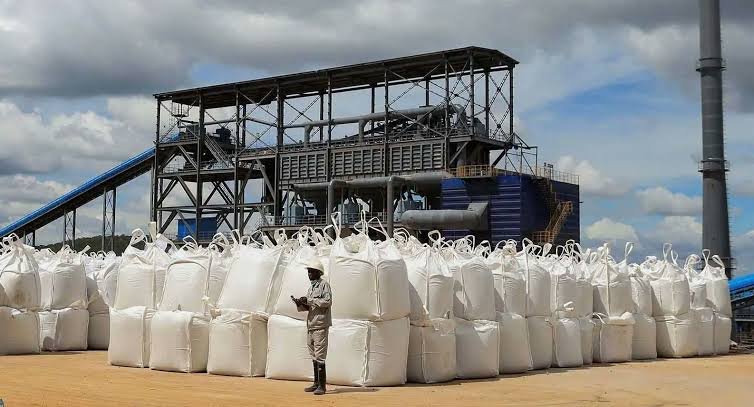
The second state channel, MMCZ, markets every mineral except gold and silver. Its latest figures, presented at a lithium media workshop in early October, show the non-gold basket growing even faster than gold.
Nine months to September 2026:
Measure | January–September 2026 | Change year on year |
|---|---|---|
Total MMCZ sales | US$4.74 billion | +101.8% (from US$2.347 billion) |
Volumes | 4.738 million tonnes | +23.4% |
September alone | US$685.03 million | +116.6% |
By mineral:
Mineral | Value | Share of sales | Note |
|---|---|---|---|
Lithium (spodumene, petalite, sulphate) | US$2.159 billion | 45.6% | Now the top earner |
of which spodumene concentrate | US$1.812 billion | — | Up 368.2%; average realised value about US$1,483 a tonne, from US$387 |
of which petalite | US$155.29 million | — | Up 583.3% |
of which lithium sulphate | US$190.52 million | — | 33,807 tonnes; no sales a year earlier |
PGMs | US$1.729 billion | 36.5% | Higher realised prices; furnace maintenance at Zimplats cut September dispatches |
Chrome, ferrochrome, coke, steel, granite, diamonds | — | — | Gains in value and volume |
What drives it. MMCZ attributes the surge to higher international prices, increased beneficiation, higher production, new markets and efforts to curb mineral leakages. General manager Dr Nomusa Moyo credited government-led beneficiation, pointing to the US$190.52 million from lithium sulphate as evidence that further processing is beginning to contribute.
The caveat. Most of lithium's growth still came from spodumene concentrate, the product that will be banned from January 2027. Part of the surge may reflect producers racing to export concentrate before the deadline. The real test of the beneficiation policy comes in 2027, when concentrate sales must give way to sulphate.
The Legal and Trade Analysis
1. State marketing monopolies
Zimbabwe's model, with a single state buyer for gold and a single state marketer for other minerals, gives the state control over the flow of foreign currency and mineral reserves. In trade-law terms, both bodies operate like state trading enterprises. Under GATT Article XVII, such bodies may hold exclusive rights, but should make purchases and sales on commercial considerations and in a non-discriminatory way. The model's legitimacy at home depends on the same thing: miners must see the state channel as a fair market, not a tax collector.
2. The price gap as an implicit levy
Fidelity's discount to world prices, about 5–6% at the top grade on 18 September, partly reflects refining, assay and logistics. Any margin beyond those costs works like an implicit levy on miners. The economic and legal risk is that an implicit levy, unlike a statutory royalty, is not set by Parliament, varies daily, and is invisible in the fiscal accounts, yet it determines whether gold enters the formal system or is smuggled out.
3. Currency surrender and monetary policy
Foreign-currency retention and surrender rules are set by the Reserve Bank of Zimbabwe under the exchange control framework, not by statute for each sector. That gives the central bank flexibility, as the February introduction and March suspension of the 90:10 rule showed. It also gives miners little predictability. The RBZ's stated reason, stopping large-scale miners from routing gold through small-scale channels, is legitimate. But the rule's impact on unbanked artisanal miners, who could not easily use ZiG to buy imported inputs, shows the cost of applying formal-sector tools to an informal sector.
4. Formalisation and traceability
With more than 70% of gold coming from small-scale miners, formalisation, traceability and anti-corruption controls at Fidelity are central to credibility with international buyers and refiners, who increasingly require responsible-sourcing assurance. Fidelity's integrity workshops and formalisation push are steps in that direction. The more formalised the supply chain, the more Zimbabwe's gold can command full value in international markets.
5. MMCZ and beneficiation policy
MMCZ's figures show the tension at the heart of Zimbabwe's mineral policy: earnings are rising fastest from the product being phased out, lithium concentrate. MMCZ's role will shift in 2027, from marketing concentrate to marketing sulphate and other processed products, with export quotas and beneficiation rules shaping what it can sell.
What It Means for Each Stakeholder
Artisanal and small-scale gold miners
Today: they supply about 72% of formal gold and are paid 100% in US dollars, after the 90:10 rule was suspended in March. The risks: a return of the ZiG portion, which the RBZ has said is suspended, not abandoned; a price gap of about 5–6% at the top grade; and pressure to formalise. What to do: open and maintain bank accounts, including local-currency accounts, so a reintroduced rule does not block payment. Register formally and keep records of production and sales.
Large-scale gold producers
Today: they retain 70% of proceeds in US dollars, with 30% in ZiG. The RBZ's concern about large-scale gold being routed through small-scale channels means more scrutiny of supply chains. What to do: keep clear separation and documentation of own production, and avoid arrangements that could be read as arbitrage.
Fidelity Gold Refinery
The task: sustain record deliveries by keeping prices competitive, paying promptly and building traceability. The September figures, due in October, will show whether August's pace held.
Reserve Bank of Zimbabwe
The dilemma: it needs gold and foreign currency to back the ZiG and build reserves, but tighter surrender rules risk pushing gold into informal channels. Any reintroduction of the 10% ZiG portion will need banking access for miners in place first.
Lithium, PGM and chrome exporters
Today: all sales run through MMCZ, which reports record sales led by lithium. What to do: lithium producers should plan for the shift from concentrate to sulphate in MMCZ's marketing from January 2027. PGM and chrome exporters should track MMCZ's market outlook and any beneficiation requirements extending to their minerals.
International buyers and refiners
Rising formal gold flows and MMCZ's role offer a single, documented counterpart. Buyers will expect responsible-sourcing evidence, especially for gold from small-scale miners.
Lawyers and advisers
The work includes compliance with gold marketing and exchange-control rules, structuring offtake through MMCZ, export-retention planning for producers, and responsible-sourcing due diligence for small-scale gold supply chains.
Key Dates
Date | Event |
|---|---|
27 February 2026 | RBZ introduces the 90:10 US dollar/ZiG payment rule for small-scale gold miners |
March 2026 | Small-scale gold deliveries fall 30.8% month on month |
24 March 2026 | RBZ suspends the 90:10 rule; 100% US dollar payments restored |
14 September 2026 | August delivery figures released: 5.11 tonnes, 31.17 tonnes year to date |
18 September 2026 | Fidelity's top buying rate about 5–6% below international spot |
Early October 2026 | MMCZ reports nine-month sales of US$4.74 billion, led by lithium; September gold figures due |
What to Watch
Milestone | Why it matters |
|---|---|
September and Q3 gold deliveries | Whether August's pace held, and progress towards 50–55 tonnes |
Any return of the 10% ZiG rule | The biggest policy risk to small-scale deliveries |
Fidelity's price gap to spot | The main lever on leakage |
MMCZ Q4 sales and the lithium shift | How quickly sulphate replaces concentrate in the export mix |
Formalisation and traceability measures | Credibility with international buyers |
Frequently Asked Questions
Who buys gold in Zimbabwe? Fidelity Gold Refinery is the sole authorised buyer, refiner and exporter of gold. The Minerals Marketing Corporation of Zimbabwe markets all other minerals.
How much gold has Fidelity bought in 2026? 31.17 tonnes in the eight months to August, including 5.11 tonnes in August, up 20.68% year on year.
How much comes from small-scale miners? 22.38 tonnes, nearly 72% of the year-to-date total.
What is Zimbabwe's 2026 gold target? Fidelity projects 50 tonnes; state media and industry reports cite a 55-tonne target.
How are small-scale miners paid? In US dollars. A rule requiring 10% in ZiG was introduced in February 2026 and suspended in March.
What did MMCZ sell in 2026? US$4.74 billion in the nine months to September, up 101.8%, with lithium (US$2.16 billion) overtaking PGMs as the top earner.
Citations
- 1.• Gold deliveries up 20.68%, Business Times (September 2026)
- 2.• Zimbabwe Gold Deliveries Rise 10% in August as Small-Scale Miners Lead, Mining Zimbabwe (September 2026)
- 3.• Zimbabwe gold deliveries hit 26 tonnes in 7 months, Bulawayo24 / The Herald (August 2026)
- 4.• Fidelity Gold Refinery Targets Regional Precious Metals Hub Status, Mining Zimbabwe
- 5.• Gold buying prices in Zimbabwe per gram/ounce, 18 September 2026, Mining Zimbabwe
- 6.• Mineral indicative prices for September 18, 2026, The Respondents (Tanzania)
- 7.• BREAKING: RBZ Imposes 10% Export Surrender on Small-Scale Gold Miners, Mining Zimbabwe (February 2026)
- 8.• Small-Scale Gold Miners to now Get 90% in USD, 10% in ZiG, Mining Zimbabwe (2 March 2026)
- 9.• Small-scale gold miners now back to 100% US dollars, Mining Zimbabwe (March 2026)
- 10.• Gold Deliveries Rise 8.2% in Q1 2026, but March Slump Reveals Policy Shock, Mining Zimbabwe
- 11.• Lithium Overtakes PGMs in Zim as Beneficiation Drives MMCZ Sales to US$4.74bn, Mining Zimbabwe (8 October 2026)
Finish Reading the Full Story and Expert Analysis.
Get the latest legal & regulatory intelligence in Zimbabwe
Wansom is AI and can make mistakes.