
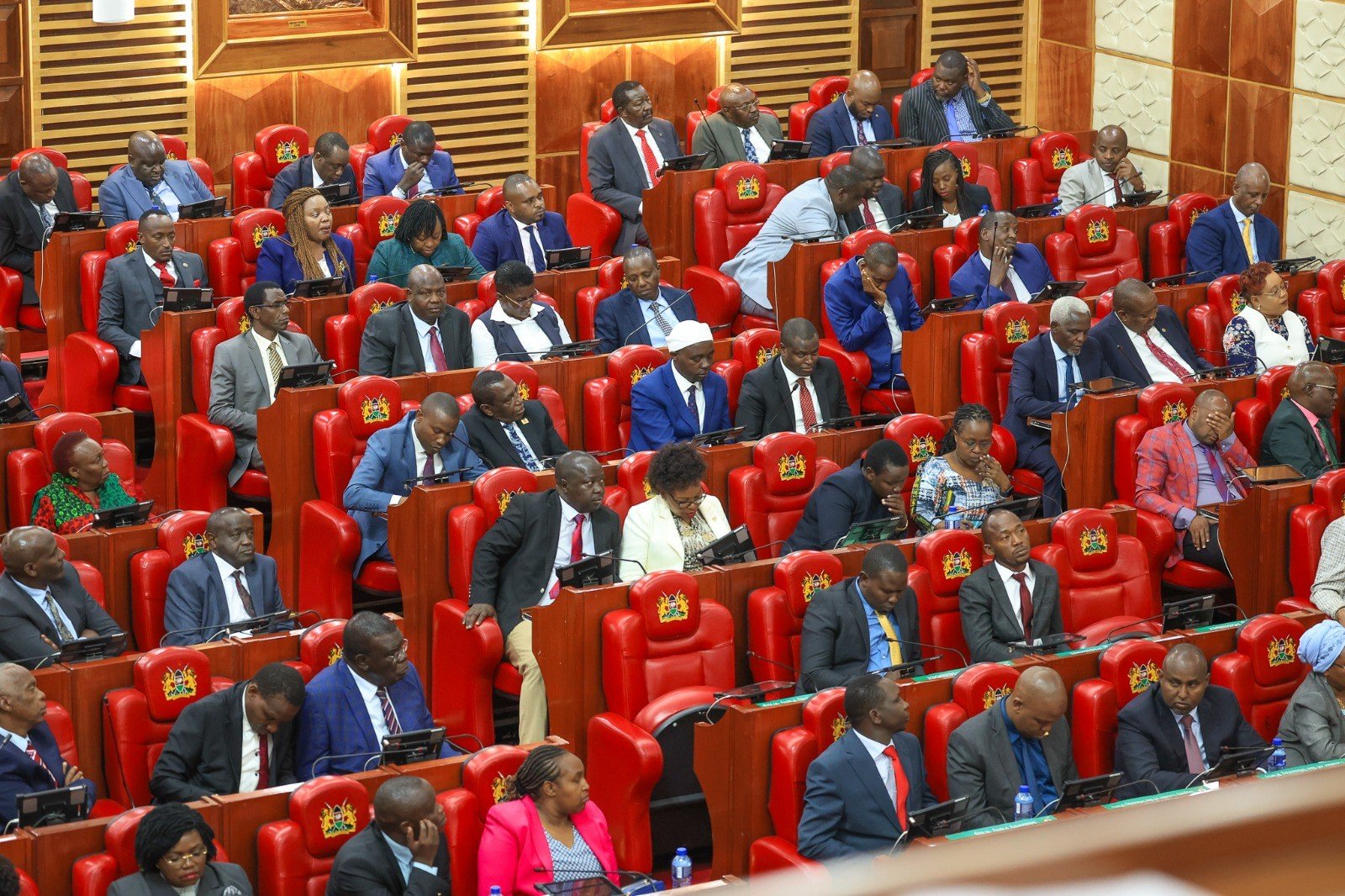
Parliament Must Approve the Bill: How Kenya’s High Court Rewrote the Rules of Public-Private Partnerships
The constitutional question behind the infrastructure deal
Public-private partnerships (PPPs) are often presented as a solution to a familiar government problem: how to build expensive infrastructure when public budgets are constrained. Under these arrangements, private investors can finance, develop or operate public infrastructure and recover their investment through user charges, government payments or other contractual mechanisms.
But the financing may be private while the risk is not.
A government can commit to future payments, guarantee a project's revenue, provide financial support or assume liabilities if a contract terminates. These obligations can extend across decades and bind future administrations. A project that appears to spare the public budget today may therefore create substantial financial exposure tomorrow.
That tension lay at the heart of Katiba Institute v National Assembly & 9 others, Petition E626 of 2024, decided by the High Court in Nairobi on 17 September 2026.
The Court examined whether Kenya's Public Private Partnerships Act, 2021, allowed the executive-led approval framework to authorise arrangements with public financial consequences without adequately involving Parliament.
Its answer established an important constitutional principle: the legal form of a transaction cannot remove the constitutional safeguards that apply to the public obligations it creates.
What the Court declared unconstitutional
The Court declared sections 59, 60 and 72(1) of the PPP Act unconstitutional to the extent that they failed to provide for parliamentary approval where a PPP creates expenditure, borrowing, guarantees, public debt or other forms of public liability for the national government.
The provisions form part of the statutory approval process for PPP projects and agreements. The judgment found that this process could not constitutionally exclude Parliament when the arrangements created the relevant public financial commitments.
The distinction is critical. The Court did not require Parliament to approve every PPP project as a project. Rather, Parliament must approve the expenditure and relevant financial obligations that the arrangement creates for the national government.
This reaches beyond conventional government borrowing. A state guarantee, an availability payment, a viability-gap contribution or a termination payment may expose public finances even when a private partner initially supplies the capital.
The government had argued, among other things, that existing reporting requirements and the statutory framework provided sufficient oversight. The Court rejected the proposition that reporting after the fact could substitute for the constitutionally required approval of public financial commitments.
That reasoning reflects a fundamental distinction in public finance: informing legislators that the state has assumed an obligation is not equivalent to obtaining the necessary parliamentary approval before that obligation is incurred.
Why the Constitution matters more than the financing label

The judgment draws on the constitutional architecture governing public finance in Kenya.
Article 201 establishes principles of openness, accountability and prudent, responsible financial management. Article 206 governs withdrawals from the Consolidated Fund, while Articles 220 and 221 address public financial planning and the budget process. Together, these provisions establish that public financial commitments must operate within constitutional controls.
The Court's concern was that a PPP could otherwise become a route through which the executive creates long-term financial obligations without the parliamentary involvement required by their substance.
Consider a hypothetical road project financed and operated by a private consortium. The government might not pay the construction cost upfront. But if it promises fixed payments over many years, guarantees minimum revenue or agrees to compensate the investor under specified termination conditions, it may have created a future financial obligation.
The arrangement is not fiscally neutral simply because the initial capital came from a private source.
This is the judgment's most consequential analytical move: it looks through the financing structure to the state's underlying exposure. The relevant question is not merely who provides the money at the beginning, but what the government has committed itself to pay, guarantee or potentially absorb.
That approach matters because contractual obligations can shift financial pressure into future budgets. Without appropriate scrutiny, today's infrastructure decision can reduce tomorrow's government's fiscal flexibility and constrain the public services it can fund.
Parliamentary oversight is therefore not an administrative obstacle external to the project. It is part of the constitutional process through which the public authorises and scrutinises the financial consequences of government action.
The dispute that exposed the problem
The petition arose against the backdrop of two controversial, privately initiated infrastructure proposals associated with the Adani Group: a proposed concession involving Jomo Kenyatta International Airport and an electricity-transmission project involving the Kenya Electricity Transmission Company (KETRACO).
Both proposals had been cancelled before the judgment was delivered. The government and other respondents argued that the cancellations weakened the basis for continuing the case.
The Court disagreed. It found that the underlying questions concerning public finance, procurement, accountability and the statutory allocation of power remained live and justified judicial determination.
That decision is significant in its own right. The cancellation of an individual transaction does not necessarily resolve a structural constitutional problem in the law governing similar transactions. If the legal framework remains unchanged, the same question may arise in another project.
The judgment therefore moved beyond the fate of two proposals to examine the rules under which future public-private arrangements could be approved.
This is what gives the decision its landmark character: the Court addressed the constitutional architecture behind the transactions rather than treating the controversy as an isolated dispute over particular projects.
What the judgment did not decide
The decision should not be read as a rejection of PPPs or private-sector participation in public infrastructure.
The Court declined to invalidate the statutory framework for privately initiated proposals merely because such proposals may involve departures from open competitive tendering. It recognised that alternative procurement methods can be legally permissible, provided their use remains within constitutional boundaries.
Article 227 of the Constitution requires public procurement to be fair, equitable, transparent, competitive and cost-effective. A privately initiated proposal does not become unconstitutional simply because it did not originate through an ordinary open tender. But neither does the PPP label exempt a procurement process from constitutional scrutiny.
Authorities must have objective grounds for departing from open competition, and the process must continue to satisfy the applicable constitutional standards. A proposal cannot be used as a device to favour a particular company, avoid proper scrutiny or undermine value for money.
The ruling thus addresses two distinct questions.
The first is whether a procurement route is legally permissible. The second is whether the resulting transaction creates public financial obligations that require parliamentary approval. Satisfying one requirement does not remove the other.
This distinction preserves room for innovative infrastructure financing while maintaining constitutional controls over both procurement and public expenditure.
The six-month suspension: Stability with a deadline
The Court suspended the effect of its declaration for six months, giving Parliament time to amend the affected provisions.
That remedy reflects the practical difficulty of constitutional litigation involving a national infrastructure framework. Immediate invalidation could create uncertainty across projects at different stages of development, disrupt administrative processes and complicate existing contractual arrangements.
By suspending the declaration, the Court sought to give the legislature an opportunity to repair the statutory framework without making the ruling immediately operative.
The suspension should not be confused with a finding that the provisions were constitutionally sound. The Court identified the constitutional defect; the delayed effect provides time for legislative correction.
Nor does the judgment itself establish that every existing project is automatically invalid. The effect on a particular project depends on its structure, stage, contractual commitments and the applicable legal framework. Those questions require project-specific analysis.
The six-month period nevertheless creates a clear legislative task. Parliament must determine how the required approval will work in practice: which financial commitments trigger it, at what stage approval must be obtained, how contingent liabilities should be treated, and how the process should interact with existing budgetary and PPP procedures.
A poorly designed amendment could replace one uncertainty with another. A workable framework must preserve meaningful parliamentary control without creating unnecessary duplication or leaving project participants unable to determine the required approval path.
The practical consequences for investors and government
The ruling changes the way PPP transactions must be assessed, particularly where the national government provides financial support.
For project sponsors, lenders and investors, the analysis cannot stop at the source of construction finance or the project's expected commercial returns. It must also consider the government's obligations throughout the life of the arrangement.
That includes direct payments, guarantees, revenue support, termination commitments and other instruments that may expose public finances. The legal character of each commitment matters: not every statement of government support necessarily creates the same liability, and the judgment does not eliminate the need to examine individual contracts.
For public authorities, the challenge is to identify fiscal exposure early enough for the appropriate approvals to be secured. Parliamentary involvement cannot be treated as a final administrative step after a transaction has already been structured around commitments that require authorisation.
For investors, this may mean longer planning and negotiation cycles while the legislation is amended and the approval process becomes clearer. However, that uncertainty should be distinguished from the longer-term effect of a transparent, constitutionally sound framework.
Clear approval requirements can improve legal predictability, reduce the risk of future disputes and strengthen confidence that public commitments have been properly authorised. Conversely, ambiguity over whether a guarantee or contractual payment requires approval can complicate financing, pricing and project delivery.
The judgment therefore presents both a compliance challenge and an opportunity to improve the institutional foundations of infrastructure investment.
The wider Commonwealth significance
For readers tracking landmark cases across Commonwealth jurisdictions, the decision raises a question that extends well beyond Kenya: how far can the executive commit the state financially without direct legislative authorisation?
Many governments face pressure to deliver infrastructure while operating under fiscal constraints. PPPs can mobilise private capital and expertise, but their contractual complexity can make public exposure less visible than conventional government borrowing or direct expenditure.
The Kenyan judgment offers a clear analytical lesson: the constitutional treatment of an obligation should not depend solely on how a government chooses to package the transaction. Where the state assumes expenditure, guarantees or other liabilities, the constitutional rules governing public finance remain relevant.
The judgment should not be treated as automatically binding on courts in other Commonwealth countries. Their constitutions, public-finance legislation and PPP frameworks differ. Its comparative value lies instead in the question it forces policymakers and courts to confront: whether existing oversight arrangements provide meaningful control before the state assumes long-term financial commitments.
It also demonstrates the role of constitutional litigation in examining the design of public institutions. The Court did not have to wait for a future project to fail or for a liability to materialise before addressing the legal framework that governs approval. It examined whether the statutory arrangement itself respected constitutional requirements.
The real test begins with Parliament
The judgment's ultimate impact will depend on the legislative response.
Parliament must reconcile two legitimate objectives: enabling the government to mobilise private capital for infrastructure, and ensuring that financial commitments made in the public's name remain subject to constitutional scrutiny.
The amendment process will need to clarify the approval trigger, the treatment of contingent liabilities, the timing of parliamentary involvement and the relationship between project approval and approval of the associated expenditure. It must also address how the revised framework applies to projects already in the pipeline without assuming that every existing arrangement has the same legal or fiscal characteristics.
For government agencies, the lesson is to assess public exposure as an integral part of project design. For investors, it is to treat constitutional approval as a substantive part of transaction risk, not merely a procedural box to be ticked. For Parliament, the task is to provide a framework that is both constitutionally faithful and operationally workable.
The High Court has not closed the door on public-private partnerships. It has insisted that the door to public financial commitments cannot be opened by the executive alone where the Constitution requires Parliament's approval.
That is the enduring significance of this decision: infrastructure can be privately financed, but the public obligations it creates must remain constitutionally accountable.
Citations
- 1.High Court judgment: Katiba Institute v National Assembly & 9 others [2026] KEHC 13501 (KLR)
- 2.Bowmans — Kenya: Constitutional challenge reshapes the PPP approval landscape
- 3.Dentons Hamilton Harrison & Mathews — High Court reshapes fiscal oversight of PPP projects
- 4.Capital FM — High Court declares parts of Kenya’s PPP law unconstitutional
- 5.Business Daily Africa — Court curbs Executive powers over PPP projects
- 6.Kenyans.co.ke — Government projects face uncertainty as High Court declares sections of PPP Act unconstitutional
Finish Reading the Full Story and Expert Analysis.
Get the latest legal & regulatory intelligence in Kenya
Wansom is AI and can make mistakes.