
Nigeria’s Petrol Supply Swings: Dangote’s July Slump, Rising Imports and the Limits of Fuel Self-Sufficiency
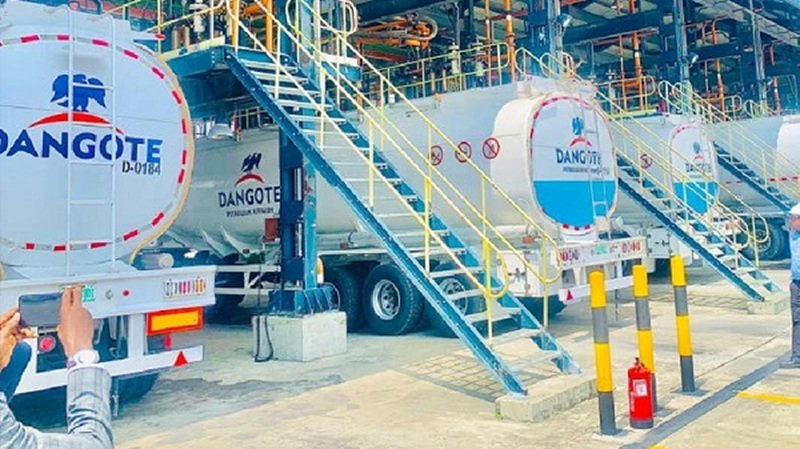
Nigeria’s transition towards greater domestic petrol production encountered a setback in July 2026. The Dangote Petroleum Refinery’s reported daily domestic petrol receipts fell to 25.8 million litres, down from 32.5 million litres in June. Over the same period, imported petrol increased from 18.1 million to 19.7 million litres per day.
The figures, published by the Nigerian Midstream and Downstream Petroleum Regulatory Authority (NMDPRA), appeared to show a reversal in a market where the country’s largest refinery has become a major source of locally supplied petrol. Total daily petrol receipts fell by 10%, from 50.6 million litres in June to 45.5 million litres in July. Legit.ng and Nairametrics reported the figures from the regulator’s July 2026 factsheet.
However, the July decline cannot be understood in isolation. The NMDPRA’s August factsheet, reported by Punch on 24 September, showed domestic petrol receipts rebounding to 35.9 million litres per day, while imports fell to 14.6 million litres. Total daily receipts recovered to 50.5 million litres. Punch’s report on the August data therefore changes the interpretation of the July figures: the evidence shows a sharp month-to-month swing, not a continuously deteriorating supply trend.
That distinction matters. A single month’s decline can reflect changing refinery performance, feedstock availability, operational schedules, stock movements or other factors. The figures alone do not establish which explanation was decisive.
The central question is not simply why Dangote supplied less petrol in July. It is what the monthly swings reveal about the reliability of Nigeria’s domestic supply system, the role imports continue to play, and the quality of the data used to assess the country’s progress towards fuel self-sufficiency.
What changed in July? The numbers behind the supply decline
The July factsheet reported three important changes in Nigeria’s daily petrol receipts.
Indicator | June 2026 | July 2026 | Reported change |
|---|---|---|---|
Domestic petrol receipts | 32.5 million litres/day | 25.8 million litres/day | −21% |
Imported petrol receipts | 18.1 million litres/day | 19.7 million litres/day | +9% |
Total petrol receipts | 50.6 million litres/day | 45.5 million litres/day | −10% |
Petrol stock sufficiency | 19.7 days | 22.4 days | Increased |
The first point is that imports increased, but not enough to offset the reduction in domestic receipts. The domestic decline amounted to 6.7 million litres per day, while imports increased by 1.6 million litres. As a result, total receipts fell by approximately 5.1 million litres per day.
This is the clearest interpretation supported by the data: imported petrol partly cushioned the domestic shortfall, but the increase did not fully replace the lost volume.
The second point is that a rise in imports does not necessarily mean the country experienced a physical fuel shortage. Imports are one component of supply; stock levels, consumption, distribution and regional availability also matter. The NMDPRA reported that petrol stock sufficiency increased from 19.7 days in June to 22.4 days in July, despite lower total receipts.
The third point is that the July figures are a measure of monthly flows, not a complete account of the fuel market. Daily receipts, refinery production, exports, consumption and stock inventories measure different things. They should not be treated as interchangeable indicators.
The July decline is therefore a genuine supply movement in the regulator’s reported figures. Whether it amounted to a wider supply crisis requires additional evidence about inventories, deliveries, prices and availability across Nigeria.
August changed the picture: domestic supply rebounded
The August data provide the most important qualification to the July story.
According to Punch, the NMDPRA’s August 2026 factsheet recorded domestic petrol receipts of 35.9 million litres per day, up from 25.8 million in July. That represents an increase of approximately 39%. Over the same period, imports fell by approximately 26%, from 19.7 million to 14.6 million litres per day.
Total daily petrol receipts rose from 45.5 million litres in July to 50.5 million in August, an increase of approximately 11%. Domestic receipts exceeded imports by 21.3 million litres per day in August.
Daily petrol receipts, June–August 2026 (million litres per day)
Month | Domestic receipts | Imports | Total receipts |
|---|---|---|---|
June | 32.5 | 18.1 | 50.6 |
July | 25.8 | 19.7 | 45.5 |
August | 35.9 | 14.6 | 50.5 |
The sequence is significant. Domestic receipts fell in July and recovered strongly in August. Imports moved in the opposite direction, rising during the July decline and falling during the August rebound.
This pattern is consistent with imports playing a balancing role when domestic receipts weaken. However, the monthly data do not establish that imports responded directly to the refinery’s supply decision, nor do they identify the contractual or operational decisions behind each change.
The figures also demonstrate why a headline about a 21% monthly decline needs a clear time frame. July was weaker than June, but August was stronger than July. The August rebound does not erase the July decline; it shows that the decline was not sustained into the following month.
Refinery output is not the same as petrol delivered to the domestic market

One of the most important distinctions in interpreting the figures is the difference between production and domestic receipts.
For July, the NMDPRA data reported by Legit.ng showed that Dangote produced an average of 25.9 million litres of petrol per day, while domestic receipts stood at 25.8 million litres per day. The refinery also recorded average capacity utilisation of 71.09%.
The production and domestic-receipt figures were close in July, but the concepts remain different. Production measures output from the refining process; domestic receipts measure volumes recorded as entering the domestic supply chain under the regulator’s reporting framework.
The distinction becomes even more important when exports and stocks are considered. The same reporting cited average petrol exports of 3.4 million litres per day and closing petrol stocks of 446.1 million litres for July. These figures describe separate flows and inventories. Without the regulator’s complete accounting definitions, they should not be combined mechanically into a single balance or treated as proof of where every litre went.
The August figures show another change in refinery performance. Punch, citing the August factsheet, reported average Dangote petrol production of 41.94 million litres per day, domestic supply of 35.87 million litres and exports of 9.73 million litres per day. The report also recorded average capacity utilisation of 105.21%.
The reported utilisation rate above 100% should be presented as the regulator’s figure, not automatically interpreted as a reporting error. Establishing exactly how the rate was calculated would require the factsheet’s methodology and the refinery’s relevant capacity definition.
The larger point is that a refinery can have a different profile across production, domestic deliveries, exports and stocks. A single production or utilisation figure does not by itself show how much petrol is available to consumers throughout Nigeria.
Crude feedstock: a relevant factor, but not a proven explanation
The July decline coincided with a reduction in crude oil receipts by domestic refineries.
According to the NMDPRA data reported by Legit.ng and ThisDay, crude receipts fell from 632,000 barrels per day in June to 585,000 barrels per day in July, a decline of approximately 8%. The July factsheet also recorded Dangote’s average capacity utilisation at 71.09%.
The parallel movement raises a reasonable question about feedstock availability. Refineries need a reliable supply of crude suited to their operating requirements. A reduction in crude receipts across domestic refineries could be relevant to overall refining activity.
But the figures do not prove that lower crude receipts caused Dangote’s 21% reduction in domestic petrol supply. The crude-receipt statistic covers domestic refineries collectively, while the petrol-supply statistic concerns Dangote’s domestic receipts. The two measures do not establish a direct causal link.
To determine whether feedstock constraints were responsible, the analysis would need refinery-specific crude deliveries, planned and unplanned maintenance schedules, processing rates, product yields, operating data and the timing of any disruptions.
The distinction matters for policy. If a decline is caused by inadequate or irregular crude supply, the response differs from one required for planned maintenance, changing product yields, commercial inventory decisions or distribution bottlenecks. The monthly totals alone do not distinguish between those explanations.
The available evidence supports a narrower conclusion: crude receipts to domestic refineries fell in July at the same time as domestic petrol receipts from Dangote declined. It does not establish why the refinery’s petrol deliveries fell.
Nigeria’s state-owned refineries were not producing in July
The July factsheet also reported that all three refineries owned by the Nigerian National Petroleum Company Limited (NNPC) were not producing during the month. This left Dangote as the only major active large-scale domestic refinery identified in the reporting on that period.
That matters because a domestic supply system with fewer operating sources has less diversity in its refining base. If the dominant source reduces its deliveries, other sources may not be able to expand output quickly enough to offset the change.
However, it would be inaccurate to conclude that the NNPC refinery shutdowns alone caused the rise in petrol imports. The reported import increase coincided with lower domestic receipts, but the data do not disclose the individual purchasing decisions, inventory positions or commercial contracts that determined import volumes.
The shutdowns also do not establish that the state-owned refineries were permanently unavailable. The factsheet describes their status in July. It should not be used to make claims about their operating status in later months without newer evidence.
The structural issue is more precise: during July, the reported absence of output from the three NNPC refineries meant the country’s large-scale domestic petrol supply was more dependent on Dangote’s deliveries. The August rebound demonstrated a recovery in domestic receipts, but it did not, by itself, resolve the broader question of how resilient the national refining system would be if a major facility reduced output again.
The longer-term comparison: July was still stronger than a year earlier
A month-on-month decline can obscure a different trend when the same month is compared across years.
ThisDay, citing the NMDPRA’s figures, reported that domestic refineries supplied an average of 16.5 million litres of petrol per day in July 2025, compared with 25.8 million litres per day in July 2026. It reported that imports fell from 36.1 million litres per day to 19.7 million over the same period.
On that comparison, domestic receipts in July 2026 were approximately 56% higher than a year earlier, while imports were approximately 45% lower. Total petrol receipts were also lower year on year, at 45.5 million litres per day in July 2026 compared with 52.6 million in July 2025.
This comparison changes the interpretation of the July decline. It indicates that the monthly setback occurred within a broader shift towards greater domestic supply and lower petrol imports than in July 2025.
It does not mean Nigeria had achieved fuel self-sufficiency. Imports still accounted for 19.7 million litres per day in July 2026, and the total volume of petrol receipts had declined compared with the previous year. Nor does the year-on-year comparison establish that domestic supply will continue to rise in subsequent months.
The more defensible conclusion is that Nigeria’s supply mix was changing, but not in a straight line. Domestic refining had become a larger part of the supply picture than a year earlier, while month-to-month volatility remained significant.
The demand data contain a discrepancy that should not be ignored
There is a material inconsistency in the published figures for petrol consumption in July.
The NMDPRA’s July factsheet, as reported by Nairametrics, put daily petrol consumption at 35.7 million litres, down from 47.4 million litres in June. The same July reporting said consumption was based on volumes trucked out into the domestic market.
However, Punch, reporting the NMDPRA’s August factsheet on 24 September, said petrol consumption fell by 14% from 48.3 million litres per day in July to 41.5 million litres in August. That retrospective July baseline of 48.3 million litres does not match the 35.7 million figure published in the July factsheet.
The difference is too large to dismiss as rounding. The reports reviewed here do not explain whether the regulator revised the July estimate, used a different measurement or classification, or applied another adjustment in the August factsheet.
This discrepancy has consequences for interpretation. If July consumption was 35.7 million litres per day, the month’s reported total receipts of 45.5 million litres were substantially above that measure. If the later 48.3 million figure is used, the relationship is reversed: consumption would exceed the reported receipts for July.
Those comparisons should not be used to infer a supply surplus or deficit until the figures’ definitions and revisions are reconciled. In particular, receipts and truck-out-based consumption may capture different stages of the supply chain, while inventories can change over the period. But the difference between the two reported consumption figures still requires clarification.
For a story built around supply reliability, this is not a minor technical issue. Policymakers, investors and consumers need to know whether apparent changes in supply reflect real market movements, stock adjustments or revisions to the underlying data.
The appropriate next step is to obtain the original July and August NMDPRA factsheets and seek clarification from the regulator on the July consumption baseline. Until then, the article should report the discrepancy explicitly rather than select whichever number best supports a preferred narrative.
Did the supply decline cause Dangote’s August price increase?
The July supply data appeared alongside a separate pricing development.
Legit.ng reported that Dangote increased its petrol gantry price by ₦20 per litre, from ₦1,165 to ₦1,185, effective at midnight on 21 August 2026. The publication also reported that some Lagos depots were selling at approximately ₦1,190–₦1,200 per litre at the time.
These facts provide context for the market, but they do not establish that the July supply decline caused the August price increase. The price adjustment took effect in August, and the available report does not supply a documented breakdown linking the decision to July’s production, crude receipts, imports or stock levels.
A sound price analysis would need to examine the refinery’s stated reason for the adjustment, crude and feedstock costs, exchange-rate effects where relevant, operating and logistics expenses, depot prices, wholesale contracts and retail price movements over the same period.
The difference between a refinery’s gantry price and a depot’s selling price is also not, on its own, a complete measure of the cost faced by consumers. Distribution, transport, storage and retail margins may affect the price paid at the pump.
It would therefore be premature to claim that the July decline made petrol more expensive for Nigerian consumers. The available sources establish that the refinery’s domestic receipts fell in July and that its gantry price increased in August. They do not establish a direct causal relationship between the two.
What the swings reveal about Nigeria’s fuel-security challenge
The July–August sequence illustrates why fuel security cannot be measured by refinery capacity alone.
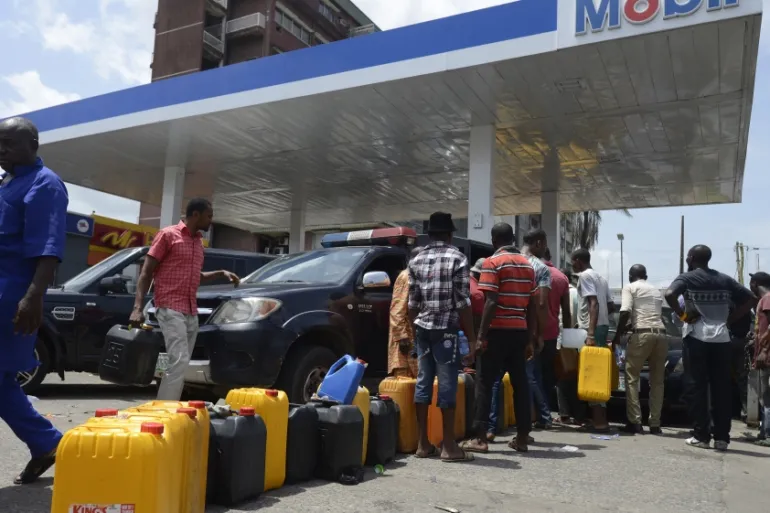
A country may have a large refinery, but national fuel availability also depends on actual operating performance, feedstock supply, product yields, domestic deliveries, imports, inventories and distribution. The monthly NMDPRA figures show that the balance between domestic receipts and imports can change substantially over a short period.
In July, imports increased while domestic receipts fell, yet reported petrol stock sufficiency improved to 22.4 days. In August, domestic receipts rose and imports fell, while petrol stock sufficiency increased slightly further to 22.9 days, according to Punch’s account of the August factsheet.
The regulator’s July factsheet states a minimum fuel-sufficiency threshold of 30 days. The reported 22.4 days in July and 22.9 days in August were below that threshold. These measures include stock at Dangote’s refinery, according to the factsheet.
That does not establish that Nigeria experienced an actual nationwide shortage during either month. Stock sufficiency is an indicator of how long recorded inventories could cover demand under the regulator’s methodology; it is not a direct measure of whether every locality had enough petrol at every point in time.
Nevertheless, the reported stock-cover figures show why domestic production and inventory resilience are related but distinct questions. A rebound in domestic receipts can reduce reliance on imports during a given month, but a robust supply system also needs adequate stocks and the ability to withstand disruptions.
The figures point to three practical priorities:
Reliable refinery operations: monthly reporting should make it possible to understand changes in output, capacity utilisation, domestic deliveries and exports.
Transparent stock and demand data: changes in consumption estimates and inventory cover should be explained, especially when one factsheet revises a prior month’s figures.
A clear role for imports: import volumes should be assessed against verified demand, stock positions, domestic receipts and distribution conditions rather than treated automatically as either a policy failure or proof of market necessity.
These are analytical implications of the data, not claims that any one policy change would guarantee lower prices or eliminate import dependence.
Conclusion: a volatile transition, not a settled outcome
Nigeria’s July 2026 petrol figures recorded a sharp reduction in Dangote’s domestic receipts and a corresponding rise in imports. Total petrol receipts fell, while recorded stock sufficiency increased. In August, domestic receipts rebounded, imports declined and total receipts recovered.
The data therefore show a changing supply mix rather than a one-directional retreat from domestic refining. Compared with July 2025, domestic petrol receipts were higher and imports lower in July 2026, even though total receipts were also lower year on year.
What remains unresolved is why the monthly swings occurred. The reduction in crude receipts and the shutdown of the NNPC refineries provide relevant context, but the published figures do not establish a direct cause for Dangote’s July decline. Nor do they establish that the July decline caused the August price increase or resulted in a nationwide shortage.
The discrepancy between the July and August factsheets’ reported July consumption figures is an additional reason for caution. A credible assessment of Nigeria’s fuel transition needs consistent definitions, transparent revisions and data that allow supply, demand and stocks to be compared accurately.
For now, the evidence supports a clear conclusion: domestic refining has become more important to Nigeria’s petrol supply, but monthly performance can still fluctuate sharply, imports remain part of the market, and the quality of the underlying data matters to any serious assessment of fuel security.
Citations
- 1.NMDPRA July 2026 factsheet — Copy hosted by StudyLib. The regulator’s July report provides the underlying figures for receipts, refinery performance, fuel stocks and consumption. The copy reviewed here is hosted by a third party rather than the regulator.
- 2.Legit.ng, 25 August 2026 — Petrol Supply from Dangote Drops, Refinery Announces New Price. July domestic receipts, imports, crude receipts, NNPC refinery status and the reported gantry-price increase.
- 3.Nairametrics, 25 August 2026 — Nigeria’s petrol consumption drops 25% in July — NMDPRA. July supply and consumption figures, stock sufficiency and refinery output.
- 4.ThisDay, 25 August 2026 — Dangote’s Petrol Supply Falls 21% to 25.8m Litres/day as Imports Rise 9%. July figures and year-on-year comparison.
- 5.Punch, 24 September 2026 — Dangote supplied 71% of Nigeria’s August petrol – NMDPRA report. August receipts, production, imports, stock sufficiency and the different July consumption baseline reported in the August factsheet.
Finish Reading the Full Story and Expert Analysis.
Get the latest legal & regulatory intelligence in Nigeria
Wansom is AI and can make mistakes.