
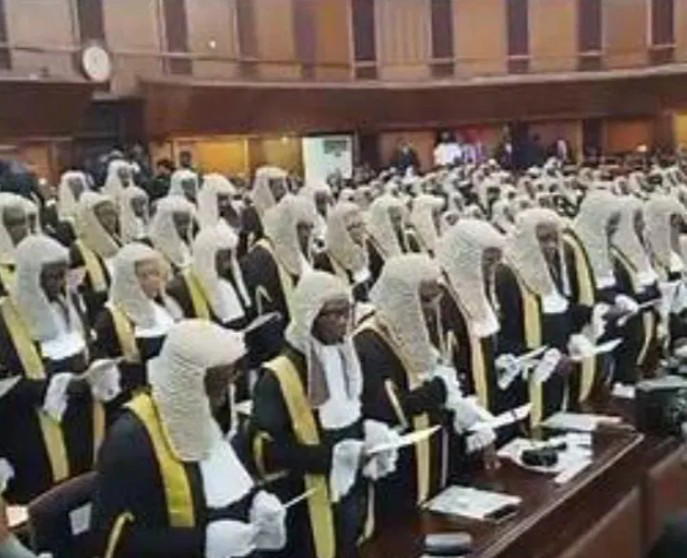
Nigeria Court of Appeal: Deregistration Order Set Aside
Summary
- The Nigerian Court of Appeal has set aside a Federal High Court ruling that ordered the deregistration of the African Democratic Congress (ADC) and four other political parties.
- This decision has sparked concerns about 'judicial rascality' in Nigeria, with critics labeling the use of court judgments as arbitrary and unjustified.
- The move highlights the importance of appealing court judgments, particularly in high-stakes cases like deregistration orders.
- Lawyers should take note of this development and consider advising their clients to prepare for potential appeals.
- The ruling underscores the need for greater judicial accountability and transparency in Nigeria's electoral process.
Court of Appeal Sets Aside Deregistration Order
This decision has sparked concerns about 'judicial rascality' in Nigeria, with critics labeling the use of court judgments as arbitrary and unjustified.
In a recent decision, the Nigerian Court of Appeal has overturned an earlier ruling by the Federal High Court that ordered the deregistration of the African Democratic Congress (ADC) and four other political parties. The move has sparked concerns about the use of court judgments in Nigeria. This is not the first time such a situation has arisen, with critics labeling it 'judicial rascality.'
The deregistration order was initially issued by the Federal High Court, but the Court of Appeal has now set it aside, leaving many to wonder about the implications for the affected parties and the broader electoral landscape.
Legal Context
The decision by the Court of Appeal is significant in light of recent developments in Nigeria's electoral law. The deregistration of political parties has been a contentious issue, with many arguing that it undermines democratic principles. The Federal High Court's initial ruling was seen as a major blow to the affected parties, but the Court of Appeal's reversal has provided some relief. However, the move has also raised questions about the role of the judiciary in electoral matters and the need for greater transparency and accountability.
Why It Matters
The ruling by the Court of Appeal has significant implications for lawyers and their clients involved in similar cases. The decision highlights the importance of appealing court judgments, particularly in high-stakes cases like deregistration orders. Lawyers should take note of this development and consider advising their clients to prepare for potential appeals. Furthermore, the move underscores the need for greater judicial accountability and transparency in Nigeria's electoral process.
Practical Implications
Lawyers should watch for the implications of this ruling on future court challenges to deregistration orders, and consider advising clients with similar cases to prepare for potential appeals.
Source
How does this affect your business?
Get an AI analysis of this article grounded in your jurisdictions, practice areas, and any policy documents you've uploaded to Wansom.
Wansom is AI and can make mistakes.