
Nigeria Appeal Court Restores NDC Registration Ahead of 2027
A political party’s status turns on a procedural question
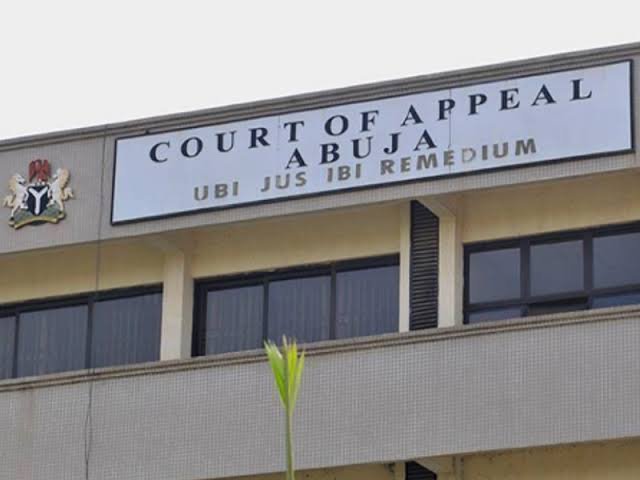
On 18 September 2026, the Court of Appeal in Abuja set aside a Federal High Court judgment from Lokoja that had nullified an earlier order directing the Independent National Electoral Commission (INEC) to register the Nigeria Democratic Congress (NDC).
The appellate court ruled by a majority of two to one. Justices Mohammed Danjuma and Muslim Sule Hassan formed the majority, while Justice Okon Abang dissented.
The immediate consequence was significant: the June 2026 decision that had unsettled the NDC’s registration could no longer stand. The earlier order of 10 December 2025, directing INEC to register the party, was restored in legal effect.
But the case was not simply about whether the NDC should be permitted to contest the 2027 elections. It concerned a fundamental question of judicial procedure: when a court has delivered a final judgment, can that same court later set it aside because another party says it should have been heard before the original decision was made?
The Court of Appeal’s majority answered that question in the NDC’s favour. Its reasoning centred on the limits of a court’s authority to revisit its own final decisions and on the legal basis for the Peace Movement Party’s intervention.
The distinction is important. The appellate court did not newly register the NDC. It removed the judgment that had set aside the earlier registration order, restoring the legal position created by that original decision.
How the dispute unfolded
The legal battle developed in three stages.
10 December 2025: The original registration order
The Federal High Court in Lokoja directed INEC to register the NDC as a political party after a dispute over the Commission’s refusal to recognise it. The proposed party symbol was central to the registration process.
INEC subsequently recognised the party pursuant to the court order. That recognition gave the NDC a legal basis on which to organise and prepare for the 2027 election cycle.
26 June 2026: The registration order is set aside
The Peace Movement Party (PMP) approached the Lokoja court, arguing that it had an interest in the dispute because of the contested logo and should have been joined in the original proceedings.
Justice Isah Dashen accepted that argument. The court concluded that the original proceedings had been defective because an allegedly interested party had not been heard. It set aside the December 2025 judgment, restored the parties to their pre-judgment positions and directed that the matter be heard afresh with the relevant parties involved.
That decision threatened the legal foundation on which the NDC’s recognition rested.
18 September 2026: The Court of Appeal reverses the decision
The NDC appealed. The Court of Appeal allowed the appeal by a two-judge majority, setting aside the Lokoja judgment. It also rejected the challenge concerning the NDC’s logo.
Justice Abang disagreed. His dissent supported the lower court’s decision to address the interests of a party that had not participated in the original proceedings.
The split illustrates that the case involved competing procedural principles, not merely a disagreement over the political merits of the NDC’s registration.
The central legal principle: a court cannot ordinarily appeal against itself
The majority’s reasoning turned on the distinction between correcting a judgment through a recognised legal procedure and reopening a final decision as though the original court were an appellate court reviewing its own work.
Under the doctrine commonly described as functus officio, a court generally exhausts its authority over a matter once it has finally decided it. The doctrine protects finality: litigants should not ordinarily face the possibility that a final judgment will be reopened at the same level simply because a party is dissatisfied with its consequences.
That principle does not mean a court can never revisit an earlier order. The law recognises limited circumstances in which a court may correct errors, address procedural irregularities or set aside certain orders. The availability of such powers depends on the nature of the order, the applicable procedural rules and the circumstances of the case.
The key question in the NDC dispute was whether the Lokoja court had a proper legal basis to set aside its own earlier final judgment after the PMP complained that it had not been joined.
The Court of Appeal’s majority held that the lower court had improperly revisited its earlier decision. In effect, the majority rejected the route used to undo the registration order.
This is a consequential distinction. A party that believes a judgment is legally wrong or that its interests have been affected by proceedings may have legitimate grounds to seek relief. But the existence of a grievance does not automatically establish that the court which delivered the original judgment can reopen it in the manner requested.
The appropriate remedy depends on the legal framework and the procedural posture of the case. The principle of finality would be weakened if a court could routinely reverse its own final judgments whenever a new objection arose.
The difficult question of an absent party
The PMP’s complaint raised another important principle: the right to be heard.
The general rule of fair hearing is that a person whose legal interests may be directly affected by judicial proceedings should have a proper opportunity to present their case. A court may face serious procedural difficulties if it makes an order affecting a person who should have been joined but was not given an opportunity to participate.
That was the foundation of the PMP’s argument. It claimed an interest in the logo used in the NDC’s registration process and maintained that it should have been included in the original litigation.
The Lokoja court accepted the argument, treating the omission as a defect serious enough to set aside the earlier judgment and require a fresh hearing.
The Court of Appeal’s majority rejected the lower court’s approach. Reports of the decision indicate that the majority also rejected the challenge relating to the logo and questioned the PMP’s position in the dispute.
The legal tension is worth understanding. Fair hearing is not a licence to disregard the rules governing jurisdiction, final judgments or the proper route for challenging a decision. Equally, the principle of finality cannot simply erase a genuine legal right to be heard where the law requires a party’s participation.
Courts must determine how those principles interact in the circumstances of each case. Here, the appellate majority concluded that the Lokoja court’s intervention could not stand.
The dissent demonstrates that the issue was not entirely straightforward. Justice Abang considered the lower court justified in addressing the position of a party that had not participated in the original proceedings. His disagreement matters because it identifies the competing procedural concern that underpinned the case.
A dissent, however, does not displace the majority’s operative decision. The Court of Appeal’s order is the outcome that governs unless it is subsequently altered through a lawful process.
Why the logo dispute mattered
A political party’s logo may appear to be a minor administrative detail, but symbols are part of the formal identity through which parties seek registration and are recognised by electoral authorities.
Where two organisations claim a right to use the same or a similar symbol, the dispute can raise questions about registration requirements, ownership claims, administrative decisions and the legal interests of competing parties.
In the NDC case, the PMP’s claim concerning the logo supplied the basis for its argument that it should have been heard before the original registration order was made.
The resulting litigation turned that dispute into a question about the validity of the judicial process itself. The issue was no longer only whether the logo could lawfully be used. It became whether the alleged omission of the PMP justified setting aside a final judgment that had directed INEC to register the NDC.
The Court of Appeal’s decision rejected the route taken by the Lokoja court and restored the earlier registration order.
That does not mean that every conceivable dispute about party symbols has been resolved for all purposes. The ruling addressed the challenge before the court. It should not be interpreted as a universal ruling on ownership of political symbols or on every registration dispute INEC might face.
The dissent: why the disagreement matters
Justice Abang’s dissent deserves attention because it exposes the strongest competing argument in the case.
The position supporting the Lokoja judgment was that the original proceedings had failed to include a party whose interests were materially implicated. From that perspective, allowing the registration order to stand without addressing the alleged omission could leave a potentially affected party without an adequate opportunity to be heard.
The majority took a different view of the lower court’s power to revisit its final judgment and rejected the decision that had undone the NDC’s registration order.
The disagreement therefore involved more than a difference in judicial preference. It concerned the relationship between procedural fairness and finality, and the limits on a court’s authority after it has delivered a final decision.
For litigants, the lesson is that a claim of exclusion from earlier proceedings does not, by itself, settle the question of which remedy is available. A court must also consider jurisdiction, the nature of the earlier order and the procedure authorised by law.
For the NDC, the majority decision removed the immediate legal obstacle created by the June judgment. For the wider legal system, the case illustrates why procedural rules matter: they determine not only who can be heard, but also how judgments can be challenged and when litigation must come to an end.
What the decision means for the 2027 elections
The NDC’s registration dispute arrived at a consequential moment in Nigeria’s electoral calendar. Political parties must organise their structures, select candidates and prepare for the administrative requirements associated with an election.
An unresolved challenge to a party’s legal recognition can create uncertainty across those activities. It may raise questions about whether the party can participate in electoral processes, whether its candidates can be processed by INEC and whether resources committed to campaign preparations rest on a secure legal foundation.
By setting aside the June judgment, the Court of Appeal restored the legal effect of the earlier order directing INEC to register the NDC. The immediate obstacle to the party’s recognised status was therefore removed at the appellate level.
The ruling is politically significant because the NDC has been associated in reporting on the 2027 race with Peter Obi’s presidential ambitions. However, the legal decision itself concerned the party’s registration and the procedural validity of the Lokoja court’s intervention. It did not determine the merits of any presidential candidacy, guarantee electoral success or resolve every possible dispute about the party’s compliance with electoral law.
Nor should the decision be read as proof that every step taken by the NDC before the judgment is immune from challenge. Individual questions about nominations, candidate eligibility or compliance with other legal requirements must be considered under the rules applicable to them.
The judgment restores a legal platform from which the party can proceed. It does not predetermine the outcome of the election.
What remains important after the judgment
The decision is a victory for the NDC in the immediate registration dispute, but its significance extends beyond one party.
First, it underscores that the finality of judgments is a core feature of judicial administration. Courts must have lawful authority to revisit their decisions; otherwise, litigants could face repeated uncertainty over matters already decided.
Second, it highlights the importance of joining the appropriate parties to litigation. A dispute over whether someone should have been heard can become consequential when a judgment affects registration, political participation or competing claims to a symbol.
Third, it shows why electoral administration and judicial procedure are inseparable. INEC’s recognition of a political party can depend on legal decisions, while the validity and finality of those decisions can determine whether the party is able to plan confidently for an election.
Finally, the divided judgment is a reminder that the legal route to resolving a dispute can be as important as the underlying substantive claim. The PMP’s complaint about its absence from the original proceedings was a serious procedural argument, but the Court of Appeal majority concluded that it did not justify the Lokoja court’s decision to set aside the earlier judgment.
Conclusion: restored registration, not a guaranteed political victory
The Court of Appeal’s 18 September decision restored the legal effect of the December 2025 order directing INEC to register the Nigeria Democratic Congress. By a 2–1 majority, it set aside the Lokoja judgment that had undone that order and rejected the challenge concerning the party’s logo.
The ruling gives the NDC a clearer legal basis for its preparations ahead of the 2027 elections. Its broader significance lies in the judicial principles at stake: the limits of a court’s power to revisit its own final judgments, the right of affected parties to be heard, and the need to use legally appropriate procedures to challenge judicial decisions.
The party has survived this particular legal challenge. Whether it can translate that restored status into electoral success is a separate political question. The judgment settles the immediate dispute at the Court of Appeal level; it does not settle the election itself.
Citations
- 1.BusinessDay, “Appeal Court restores NDC registration, clears 2027 hurdle,” 20 September 2026.
- 2.https://businessday.ng/life/article/appeal-court-restores-ndc-registration-clears-2027-hurdle/
- 3.TheCable, “Appeal court nullifies judgment voiding NDC registration,” 18 September 2026.
- 4.https://www.thecable.ng/appeal-court-nullifies-judgment-voiding-ndc-registration/
- 5.Channels Television, “2027 Election: Appeal Court Validates Registration Of NDC As Political Party,” 18 September 2026.
- 6.https://www.channelstv.com/2026/09/18/2027-election-appeal-court-validates-registration-of-ndc-as-political-party/
- 7.Nairametrics, “Appeal Court reverses deregistration of Peter Obi’s NDC in 2-1 judgement,” 18 September 2026.
- 8.https://nairametrics.com/2026/09/18/appeal-court-reverses-deregistration-of-peter-obis-ndc-in-2-1-judgement/
Finish Reading the Full Story and Expert Analysis.
Get the latest legal & regulatory intelligence in Nigeria
Wansom is AI and can make mistakes.