
Nigeria and the AfCFTA: 24-Hour Certificates of Origin, a Domestication Bill and a Seat at the Head of the Table
Summary
Faster certificates: AfCFTA Certificates of Origin now take about 24 hours, down from more than five days, after the Nigeria Customs Service digitised registration, verification and certification.
Non-tariff barriers: NACO facilitated the resolution of eight reported NTB cases between the Q2 and Q3 meetings.
Domestication Bill: a draft AfCFTA Domestication Bill, presented at a public hearing on 30 July 2026, is before the House Committee on Commerce. Under section 12 of the Constitution, the AfCFTA has no force of law in Nigeria until it is enacted.
Leadership: Minister Oduwole is Chairperson of the Bureau of the AfCFTA Council of Ministers, which NACO says places Nigeria in charge of all AfCFTA institutional committees.
Also reported: five Nigerian firms have applied to the AfCFTA Adjustment Fund, and Nigeria launched the ADAPT digital trade initiative and hosted the 18th Council of Ministers meeting.
For stakeholders: faster certificates make preferences usable, but origin must still be proven on verification. NTBs should be reported formally, and the Domestication Bill is the legal milestone to track.
The Q3 Central Coordination Committee Meeting
The forum. Nigeria coordinates its AfCFTA implementation through a Central Coordination Committee (CCC) of ministries, agencies and private-sector bodies, supported by the Nigeria AfCFTA Coordination Office (NACO). The committee meets quarterly to track progress. Its 2026 third-quarter meeting took place in Abuja in early September, with Minister of Industry, Trade and Investment Dr Jumoke Oduwole in attendance. NACO's National Coordinator and Chief Executive, Patience Okala, presented the quarter's results.
The headline message. The Minister challenged the perception that Nigerian goods are not competitive in Africa, saying Nigerian entrepreneurs are doing particularly well across the continent and that non-oil exports have grown strongly on the back of intra-African trade.
What was reported for Q3 2026:
Area | Result |
|---|---|
Certificates of Origin | Processing time cut from more than five days to 24 hours |
Non-tariff barriers | Eight reported cases resolved since the Q2 meeting |
Legal framework | Draft AfCFTA Domestication Bill before the House Committee on Commerce |
Leadership | Oduwole elected Chairperson of the Bureau of the AfCFTA Council of Ministers |
Finance | Five Nigerian businesses have applied for financing under the AfCFTA Adjustment Fund |
Events | AfCFTA Week, the HerAfCFTA event for women-owned businesses, the 18th Council of Ministers meeting in Abuja and the AfCFTA Digital Trade Forum in Lagos |
Digital trade | Launch of ADAPT (Africa Digital Access and Public Infrastructure for Trade) to support the Digital Trade Protocol |
Challenges still on the table. NACO named the practical obstacles still facing Nigerian businesses: non-tariff barriers, access to finance, product standards, logistics and inadequate market information.
Certificates of Origin in 24 Hours
Why the certificate matters. AfCFTA tariff preferences are not automatic. Goods qualify for reduced or zero duties in another state party only if they meet the agreement's rules of origin, set out in Annex 2 to the Protocol on Trade in Goods. Broadly, the goods must be wholly obtained in the exporting country or sufficiently transformed there. The Certificate of Origin is the document that proves it. Without one, the importing country charges its ordinary (most-favoured-nation) tariff, and the AfCFTA advantage disappears.
What changed. Processing time for AfCFTA Certificates of Origin in Nigeria has been cut from more than five days to 24 hours. NACO attributes the improvement to the digitisation and automation of three stages handled by the Nigeria Customs Service:
Stage | What it covers |
|---|---|
Registration | Exporters and products registered as eligible to apply |
Verification | Checks that products meet the AfCFTA rules of origin |
Certification | Issue of the Certificate of Origin |
Why it matters commercially. Five days of waiting for paperwork on every consignment is a real cost: goods sit in warehouses, buyers wait, and perishables lose value. A 24-hour turnaround brings Nigeria in line with exporters' shipping schedules, and makes AfCFTA preferences realistic for smaller exporters who cannot absorb delays. NACO has said the broader aim is to increase the number of Nigerian businesses trading under the AfCFTA and expand Nigerian products' presence in African markets.
The legal fine print. A faster certificate does not change the substantive rules. Exporters must still be able to prove origin if the importing country's customs authority verifies the certificate later, typically through production records, supplier declarations and bills of materials. Speed at issue makes record-keeping at source more important, not less: a certificate issued in 24 hours on inadequate evidence can be rejected on verification, and preferential duty reclaimed.
Non-Tariff Barriers: Eight Cases Resolved
What NTBs are. Non-tariff barriers are obstacles to trade other than tariffs: unjustified import bans or permits, duplicative testing, discriminatory standards, excessive fees, border delays, roadblocks and arbitrary documentary demands. For many African traders they are a bigger practical obstacle than the tariffs the AfCFTA removes.
The legal mechanism. The AfCFTA addresses them through Annex 5 on Non-Tariff Barriers to the Protocol on Trade in Goods. It provides for:
an online reporting mechanism, through which businesses can report a barrier they face in another state party;
national focal points in each state party to receive and act on complaints; and
a step-by-step resolution process, starting with bilateral engagement between the countries concerned and escalating through AfCFTA committees if needed.
What Nigeria reported. Between the Q2 and Q3 meetings, NACO facilitated the resolution of eight reported NTB cases affecting businesses trading under the AfCFTA, with a detailed report presented to the committee.
Why it matters. Each resolved case shows the reporting route works, which is the main incentive for businesses to use it. For traders, the lesson is practical: a barrier that is reported formally, with evidence, can be resolved through the AfCFTA process. One that is only complained about informally usually is not.
What remains. NACO still lists NTBs among the main challenges, alongside finance, standards, logistics and market information. Eight resolved cases is progress, but the pipeline is ongoing.
The AfCFTA Domestication Bill: The Legal Step That Matters Most
Why Nigeria needs it. Nigeria follows a dualist approach to treaties. Under section 12(1) of the 1999 Constitution, no treaty between Nigeria and another country has the force of law in Nigeria unless the National Assembly has enacted it into law. The Supreme Court confirmed the principle in Abacha v. Fawehinmi (2000). Nigeria has signed and ratified the AfCFTA Agreement, so it is bound internationally. But until the agreement is domesticated, Nigerian courts cannot apply its provisions directly, and businesses cannot rely on them as rights enforceable in Nigeria.
Where the bill stands:
Date | Step |
|---|---|
30 July 2026 | Minister Oduwole presents the AfCFTA Domestication Bill at a House of Representatives public hearing, one of 13 commerce-related bills heard in that series |
September 2026 | NACO reports the draft Bill before the House Committee on Commerce for consideration |
Next | Committee report, passage in both chambers, and presidential assent |
What the bill is meant to do. The Minister described the bill as the legal foundation for implementing Nigeria's AfCFTA commitments. It will set out a clear governance architecture for meeting trade, customs and regulatory obligations under the agreement while safeguarding national economic interests. In practice, domestication typically:
gives the agreement and its protocols the force of law;
designates the agencies responsible for each obligation, such as customs, standards, trade remedies and NTB resolution;
provides a legal basis for implementing regulations; and
clarifies how AfCFTA obligations relate to existing Nigerian statutes.
Why businesses should care. Once domesticated, AfCFTA commitments, including tariff schedules, rules of origin, trade-remedy rules and obligations to remove barriers, become part of Nigerian law. Importers and exporters could invoke them before Nigerian agencies and courts. How the domesticated agreement interacts with other Nigerian statutes would then be a question of Nigerian law, not only of international obligation, which gives businesses a clearer basis to argue for consistent treatment.
Nigeria at the Head of the AfCFTA Table
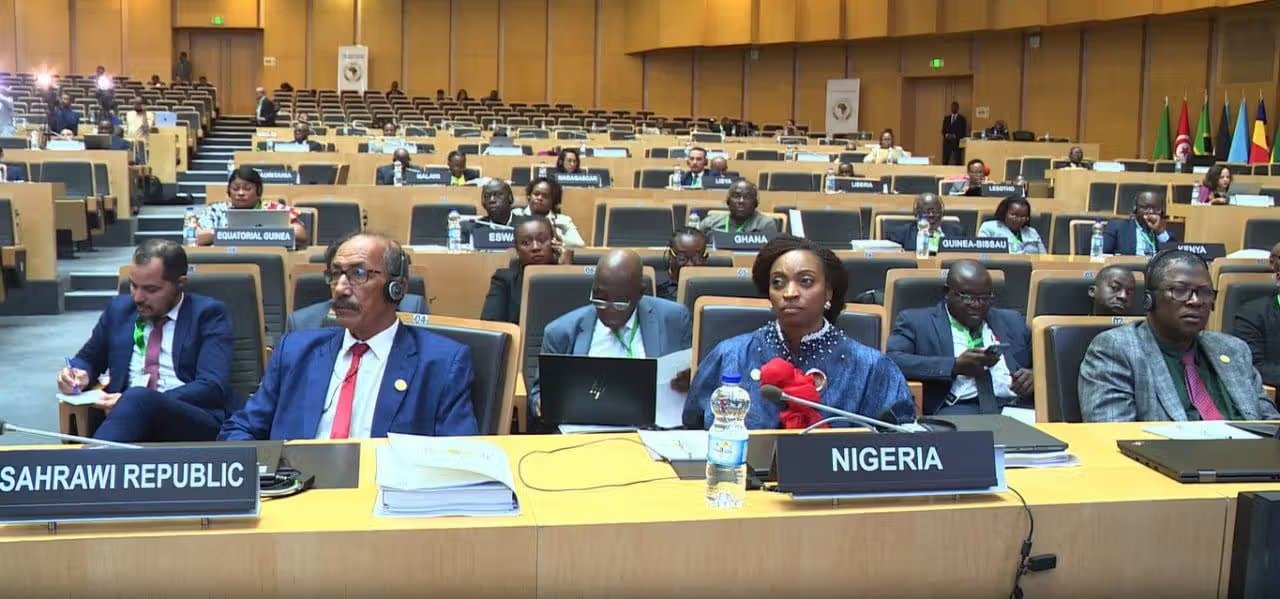
The election. Minister Oduwole has been elected Chairperson of the Bureau of the AfCFTA Council of Ministers. According to NACO, the position places Nigeria in charge of all AfCFTA institutional committees. Nigeria also hosted the 18th meeting of the Council of Ministers in Abuja during the quarter.
Where the Council sits. The AfCFTA Agreement creates a layered institutional structure:
Institution | Role |
|---|---|
Assembly of Heads of State and Government (African Union) | Highest decision-making body, providing strategic direction |
Council of Ministers | Ministers responsible for trade; takes decisions, oversees implementation and reports to the Assembly |
Committee of Senior Trade Officials | Implements Council decisions; oversees technical committees |
AfCFTA Secretariat (Accra) | Administrative support and day-to-day implementation |
The Council of Ministers is where the agreement's practical work comes together: tariff schedules, rules of origin, trade in services, investment, competition, digital trade and the operation of committees.
What the chair can and cannot do. The chair steers agendas, convenes meetings and helps broker consensus among more than 50 state parties. It cannot impose outcomes; AfCFTA decisions are generally taken by consensus. But agenda-setting matters. Nigeria now has a stronger voice in which issues move forward, including outstanding rules-of-origin questions, the treatment of goods from special economic zones, and digital trade implementation.
A credibility question. Chairing the Council while Nigeria has not yet domesticated the agreement creates a visible gap. Passing the Domestication Bill during the chairmanship would strengthen Nigeria's hand in pressing other state parties on implementation.
What Stakeholders Should Know, and Worry About
Nigerian exporters, especially MSMEs
The opportunity: a Certificate of Origin in 24 hours removes one of the biggest administrative excuses for not using AfCFTA preferences. The worry: speed at issue does not protect you on verification. If the importing country's customs authority questions origin, you must prove it from your own records. What to do: confirm that each product meets the AfCFTA rules of origin for its tariff line. Keep production records, bills of materials and supplier declarations, and register products with the Nigeria Customs Service in advance. Check that the destination country has published its AfCFTA tariff schedule for your product.
Traders facing barriers in other African markets
The opportunity: eight NTB cases resolved shows the AfCFTA reporting route works. The worry: unreported barriers stay unresolved. What to do: report barriers formally through the AfCFTA online NTB mechanism, and copy NACO with evidence such as dates, documents, fees charged and officials involved.
Importers into Nigeria
The worry: AfCFTA works both ways. As partner-country goods gain preferential access, Nigerian competitors face more competition, and importers face verification of the origin of goods they claim AfCFTA preference for. What to do: check that suppliers' certificates are genuine and that goods meet origin rules before claiming preference. Wrongly claimed preferences can be recovered with penalties.
Manufacturers competing with imports
The worry: greater intra-African competition as tariffs fall, and possible circumvention through partner countries. What to do: follow the AfCFTA rules on trade remedies and safeguards, and the Domestication Bill's provisions on who administers them, to know how to seek protection against dumped or surging imports.
Investors and multinationals
The worry: until the Domestication Bill passes, AfCFTA commitments are not directly enforceable in Nigerian courts. The opportunity: a domesticated agreement, combined with Nigeria's chairmanship of the Council of Ministers, would give investors a clearer, more predictable legal basis for regional supply chains centred on Nigeria. What to do: engage the House Committee on Commerce on the bill's content, especially agency responsibilities and dispute routes.
Logistics providers, customs brokers and freight forwarders
The opportunity: faster certification removes a bottleneck in export clearance. What to do: integrate with the Nigeria Customs Service's digital certification system, and help MSME clients prepare origin documentation correctly first time.
Digital and services businesses
The opportunity: the ADAPT initiative and the AfCFTA Digital Trade Protocol point to new rules for cross-border digital trade. What to do: watch how the Domestication Bill and later regulations implement digital trade commitments, including data, e-payments and digital identity.
Women-owned businesses
The opportunity: NACO's HerAfCFTA event is aimed specifically at women-owned businesses trading under the AfCFTA. What to do: use NACO's programmes and the AfCFTA Adjustment Fund, where five Nigerian businesses have already applied.
Lawyers and trade advisers
The immediate work is helping clients use AfCFTA origin rules and NTB procedures. Next comes contributing to the Domestication Bill's design, then advising on rights and remedies once it becomes law.
What to Watch
Milestone | Why it matters |
|---|---|
House Committee on Commerce report on the Domestication Bill | The first concrete step towards making the AfCFTA enforceable Nigerian law |
Passage in both chambers and presidential assent | Completes domestication under section 12 of the Constitution |
Implementing regulations | Allocation of responsibilities for customs, standards, trade remedies and NTBs |
Q4 Central Coordination Committee meeting | Whether the 24-hour certificate standard holds, and how many further NTB cases are resolved |
Council of Ministers agenda under Nigeria's chairmanship | Progress on outstanding rules of origin, special economic zone goods and digital trade |
Frequently Asked Questions
How long does an AfCFTA Certificate of Origin take in Nigeria now? About 24 hours, down from more than five days, after the Nigeria Customs Service digitised registration, verification and certification.
Why is a Certificate of Origin needed? It proves goods meet AfCFTA rules of origin, which is the condition for preferential tariffs in other AfCFTA countries.
Is the AfCFTA part of Nigerian law? Not yet. Under section 12 of the Constitution, a treaty must be enacted by the National Assembly to have the force of law. A draft AfCFTA Domestication Bill is before the House Committee on Commerce.
How can businesses report non-tariff barriers? Through the AfCFTA online NTB reporting mechanism, with copies to the Nigeria AfCFTA Coordination Office. Nigeria resolved eight reported cases between the second and third quarters of 2026.
What is Nigeria's role in AfCFTA leadership? Minister Jumoke Oduwole has been elected Chairperson of the Bureau of the AfCFTA Council of Ministers, which, according to NACO, puts Nigeria in charge of all AfCFTA institutional committees.
Citations
- 1.• Nigerian Goods Competitive, AfCFTA Certificate Processing Now 24 Hours, Leadership via AllAfrica (9 September 2026)
- 2.• Nigeria Cuts AfCFTA Export Certificate to 24 Hours As Trade With Africa Grows, ThisDay via AllAfrica (10 September 2026)
- 3.• Nigeria Cuts AfCFTA Export Certificate to 24 Hours As Trade with Africa Grows, ThisDay
- 4.• Nigeria Cuts AfCFTA Certificate Processing Time to 24 Hours to Help MSMEs, MSME Africa
- 5.• Nigeria Cuts AfCFTA Certificate Processing To 24 Hours, Targets More Exporters, The Will (9 September 2026)
- 6.• In Abuja, Jumoke Oduwole backs bill to domesticate the AfCFTA in Nigerian law, Capmad
Finish Reading the Full Story and Expert Analysis.
Get the latest legal & regulatory intelligence in Nigeria
Wansom is AI and can make mistakes.