
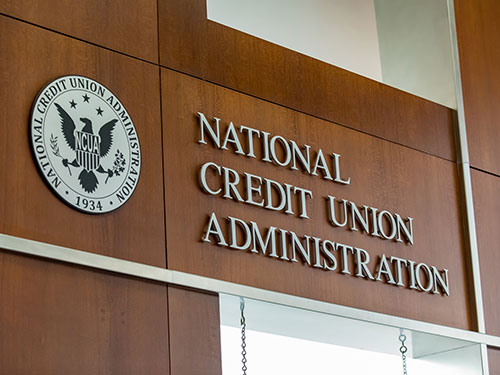
NCUA: Deregulation Project Final Rules Simplify Credit Union Compliance
Summary
- The NCUA announced four final rules on November 13, 2026, as part of its Deregulation Project.
- These rules eliminate or amend regulations concerning nondiscrimination, advertising, consumer privacy, and residential mortgage loan originator registration.
- The NCUA eliminates 12 CFR 701.31, 12 CFR Part 716, and 12 CFR Part 761, along with 12 CFR 741.223, due to redundancy or obsolescence.
- The NCUA amends 12 CFR Part 740 to remove the requirement for federally insured credit unions to include the official NCUA advertising statement in advertisements.
- Despite these regulatory updates, credit unions' substantive obligations under federal laws such as the Fair Housing Act, Equal Credit Opportunity Act, Gramm-Leach-Bliley Act, and SAFE Act remain fully in force.
What Happened
The NCUA's actions primarily clarify regulatory authority and streamline compliance frameworks, rather than altering the fundamental scope of required conduct for credit unions.
The National Credit Union Administration (NCUA) unveiled four final rules on November 13, 2026, marking a significant step in its ongoing Deregulation Project. This initiative systematically reviews NCUA regulations to ensure they effectively promote the safety, soundness, and resilience of credit unions. The recently finalized rules address diverse areas including nondiscrimination requirements, the accuracy of advertising and notice of insured status, the privacy of consumer financial information, and the registration of residential mortgage loan originators.
These NCUA Deregulation Project final rules aim to streamline the regulatory landscape for federal credit unions, reducing unnecessary burdens while maintaining essential oversight. The changes reflect an effort to modernize compliance expectations and eliminate provisions that have become obsolete or redundant due to evolving legal frameworks and industry practices. Credit Union regulatory simplification is a core objective of these updates.
Regulatory Streamlining
Among the key changes, the NCUA eliminates 12 CFR 701.31, which previously outlined nondiscrimination requirements. This regulation was deemed outdated, having last seen substantive revisions in 2001, and largely duplicated existing mandates under other federal laws. Its removal is intended to reduce confusion without altering federal credit unions’ obligations under the Fair Housing Act (FHA) or the Equal Credit Opportunity Act (ECOA).
Additionally, the NCUA amends 12 CFR Part 740, which governs the accuracy of advertising and the notice of insured status. This amendment simplifies requirements for federally insured credit unions (FICUs) by removing the mandate to include the official NCUA advertising statement in advertisements, a requirement the Board found overly prescriptive and ill-suited for modern advertising methods. While the official NCUA sign requirement and the general obligation for accurate, non-misleading advertising persist, this change offers a degree of flexibility. The NCUA also eliminates 12 CFR Part 716, concerning the privacy of consumer financial information. This part contained an outdated cross-reference to the Consumer Financial Protection Bureau's (CFPB) privacy regulation. Following the Dodd-Frank Act, which transferred Gramm-Leach-Bliley Act rulemaking authority to the CFPB in 2011, Part 716 served primarily as a transitional aid and is no longer necessary. Similarly, the NCUA eliminates 12 CFR Part 761 and 12 CFR 741.223, which pertained to the registration of residential mortgage loan originators. These provisions directed credit unions to the CFPB's Regulation G, as the Dodd-Frank Act also transferred SAFE Act rulemaking authority to the CFPB. Like Part 716, these sections were retained for transitional purposes and are now considered obsolete, contributing to Federal Credit Union compliance updates.
Enduring Obligations
A critical aspect of these regulatory adjustments is that while the NCUA has eliminated or amended several regulations to reduce redundancy and simplify compliance, the underlying substantive obligations under federal laws remain fully in effect. For instance, despite the elimination of 12 CFR 701.31, credit unions must continue to adhere to the nondiscrimination requirements of the Fair Housing Act and the Equal Credit Opportunity Act. Similarly, the removal of 12 CFR Part 716 does not diminish credit unions' responsibilities regarding the privacy of consumer financial information, which continue to be governed by the CFPB’s Regulation P.
Furthermore, the elimination of 12 CFR Part 761 and 12 CFR 741.223 does not alter credit unions’ duties concerning the registration of residential mortgage loan originators. These obligations persist under the SAFE Act and the CFPB’s Regulation G. Federally insured credit unions must also continue to comply with all other applicable advertising requirements, even with the amendment to 12 CFR Part 740. The NCUA's actions primarily clarify regulatory authority and streamline compliance frameworks, rather than altering the fundamental scope of required conduct for credit unions.
Why It Matters
These NCUA Deregulation Project final rules represent a targeted effort to modernize and rationalize the regulatory environment for credit unions. By removing outdated and duplicative rules, the NCUA aims to foster greater efficiency and reduce administrative burdens, allowing credit unions to focus more resources on serving their members. This approach to Credit Union regulatory simplification is designed to clarify which agency holds primary rulemaking authority for specific areas, particularly where responsibilities shifted to the CFPB after the Dodd-Frank Act.
For credit unions and their legal counsel, these updates underscore the importance of understanding the distinction between NCUA-specific regulations and broader federal statutes. While the NCUA is simplifying its own rulebook, the core legal duties imposed by federal laws like the FHA, ECOA, Gramm-Leach-Bliley Act, and SAFE Act, often implemented through CFPB regulations, remain unchanged and require ongoing vigilance. The changes provide a clearer regulatory path but demand continued adherence to the foundational legal requirements governing their operations.
Practical Implications
Credit unions and their legal counsel should be aware that while NCUA has eliminated or amended several regulations to reduce redundancy and simplify compliance, the underlying substantive obligations under federal laws like the Fair Housing Act, Equal Credit Opportunity Act, Gramm-Leach-Bliley Act (via CFPB Regulation P), and SAFE Act (via CFPB Regulation G) remain fully in effect. The changes primarily clarify the regulatory authority and streamline the compliance framework, rather than altering the scope of required conduct.
Source
How does this affect you?
Get an AI analysis of this article grounded in your jurisdictions, practice areas, and any policy documents you've uploaded to Wansom.
Finish Reading the Full Story and the Expert Analysis.
Get the latest legal & regulatory intelligence in United States
Wansom is AI and can make mistakes.