
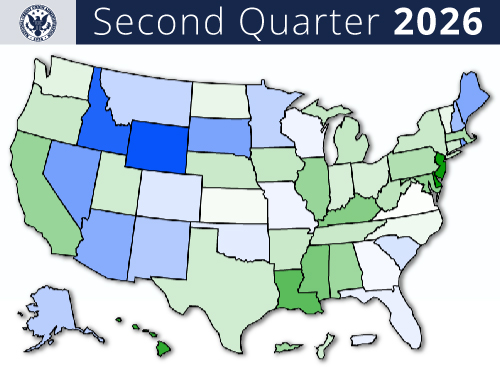
NCUA: Releases Comprehensive 2026 Q2 State Credit Union Data
Summary
- The National Credit Union Administration released its second quarter 2026 state-level credit union data report on September 23, 2026.
- Highlights from the report are derived from the NCUA's "2026 Q2 U.S. Map Review."
- This review tracks performance indicators for federally insured credit unions across all 50 states and the District of Columbia.
- The report also includes data on two key state-level economic indicators: the unemployment rate and home prices.
- Compliance officers and legal counsel should utilize this data to assess performance, identify risks, and inform strategic planning.
What Happened
For compliance officers and legal counsel advising credit unions, the release of the NCUA 2026 Q2 state credit union data presents a critical opportunity for diligent review and strategic assessment.
The National Credit Union Administration (NCUA) recently made public its comprehensive second quarter 2026 state-level credit union data report. This significant release, issued from Alexandria, VA, on September 23, 2026, provides a detailed snapshot of the financial health and operational trends within the credit union sector across the United States. The information contained within this NCUA 2026 Q2 state credit union data is crucial for understanding the broader landscape affecting these financial institutions.
The highlights from this extensive publication are drawn directly from the agency's "2026 Q2 U.S. Map Review," a specialized component designed to offer granular insights. This particular review is instrumental in presenting a clear, state-by-state analysis, covering all fifty states and the District of Columbia. The availability of this National Credit Union Administration Q2 2026 report allows stakeholders to delve into specific regional performance metrics, offering a localized perspective on the overall US credit union industry trends 2026.
Understanding the Data's Scope
The core function of the NCUA’s Quarterly U.S. Map Review is to systematically track a variety of performance indicators pertinent to federally insured credit unions. This tracking mechanism ensures that a consistent and comparable set of metrics is available for institutions operating under federal oversight. The data encompasses a wide array of operational and financial health markers, providing a robust foundation for analysis of federally insured credit union performance data.
Beyond internal credit union metrics, the report also integrates vital external economic factors. Specifically, the "2026 Q2 U.S. Map Review" includes information on two particularly important state-level economic indicators: the prevailing unemployment rate and current home prices. The inclusion of these credit union economic indicators Q2 2026 underscores the NCUA's recognition of the profound impact that broader economic conditions have on the financial stability and operational environment of credit unions, allowing for a more holistic assessment of the US credit union industry trends 2026.
Legal and Compliance Implications
For compliance officers and legal counsel advising credit unions, the release of the NCUA 2026 Q2 state credit union data presents a critical opportunity for diligent review and strategic assessment. This detailed information enables institutions to benchmark their own performance against state-level averages and identify how their operational metrics compare to those of their peers within the same geographic and economic context. Such an analysis is fundamental for maintaining regulatory adherence and proactive risk management.
The integration of state-level economic indicators, such as unemployment rates and home prices, within the NCUA U.S. Map Review 2026 Q2, is particularly valuable. Legal and compliance teams can leverage this data to identify potential regulatory risks that might arise from shifts in local economic conditions, or conversely, pinpoint opportunities for growth and strategic adjustments. Understanding these credit union economic indicators Q2 2026 allows for more informed strategic planning and robust risk management frameworks, ensuring that credit unions are well-positioned to navigate the evolving landscape of the US credit union industry trends 2026. This proactive engagement with the National Credit Union Administration Q2 2026 report is essential for safeguarding institutional stability and ensuring long-term compliance.
Practical Implications
Compliance officers and legal counsel advising credit unions should review this NCUA data to assess their institution's performance against state-level benchmarks and identify potential regulatory risks or opportunities related to economic indicators like unemployment and home prices, informing strategic planning and risk management.
Source
How does this affect you?
Get an AI analysis of this article grounded in your jurisdictions, practice areas, and any policy documents you've uploaded to Wansom.
Finish Reading the Full Story and the Expert Analysis.
Get the latest legal & regulatory intelligence in United States
Wansom is AI and can make mistakes.