
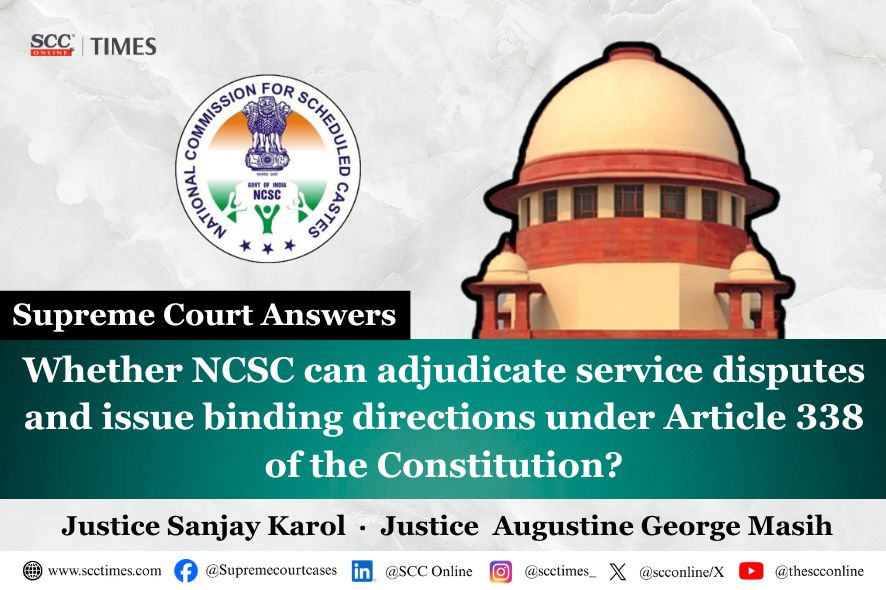
NCSC powers under Article 338 of the Indian Constitution clarified by Supreme Court
Summary
- The Supreme Court ruled that the National Commission for Scheduled Castes (NCSC) does not have the power to make orders or issue binding directions in furtherance of evidence it receives.
- Article 338 of the Indian Constitution grants the NCSC broad powers, but the court's decision has limited its adjudicative authority in service disputes.
- The ruling may impact clients seeking redressal through the NCSC and highlights the importance of understanding the commission's powers under Article 338.
What Happened
While the NCSC can requisition documents and receive evidence, it cannot use this information to make binding orders or directions.
In a recent ruling, the Indian Supreme Court clarified the scope of powers held by the National Commission for Scheduled Castes (NCSC) under Article 338 of the Constitution. The court's decision has significant implications for service dispute resolution in India. Specifically, the court ruled that NCSC does not have the authority to make orders or issue binding directions in furtherance of evidence it receives.
The ruling was made in response to a petition filed by an aggrieved party seeking guidance on the NCSC's jurisdiction. The court's decision has sparked debate among legal experts regarding the limitations of the NCSC's powers.
Legal Context
Article 338 of the Indian Constitution grants the NCSC broad powers to investigate and address grievances related to Scheduled Castes. However, the Supreme Court's ruling has shed light on a critical distinction between the NCSC's investigative authority and its adjudicative power. While the NCSC can requisition documents and receive evidence, it cannot use this information to make binding orders or directions.
This limitation is crucial in the context of service disputes, where parties often rely on the NCSC to resolve their grievances through binding decisions. The Supreme Court's ruling has effectively narrowed the scope of the NCSC's powers in this regard.
Why It Matters
The Supreme Court's decision has significant implications for lawyers and clients seeking redressal through the NCSC. With the court limiting the commission's ability to resolve service disputes, parties may need to explore alternative avenues for dispute resolution. This development underscores the importance of understanding the nuances of the NCSC's powers under Article 338.
As the Indian legal landscape continues to evolve, this ruling serves as a reminder that even seemingly broad constitutional provisions can be subject to interpretation and limitation by the judiciary.
Practical Implications
Lawyers should note that the Supreme Court's ruling limits NCSC's ability to resolve service disputes, which may impact clients seeking redressal through this commission.
Source
Source: Original reporting via SCC Times
How does this affect your business?
Get an AI analysis of this article grounded in your jurisdictions, practice areas, and any policy documents you've uploaded to Wansom.