
Mrima Hill: Kenya’s Critical Minerals Ambition Meets the Test of Local Processing and Community Consent
Issue | What the evidence shows |
|---|---|
Bidding process | The government received 13 initial expressions of interest. The field was reported at seven in July and six in September. TUKO reported on October 5 that six companies had submitted bids. |
International competition | US-led, Chinese and Australian interests are involved. Two US-led consortiums were confirmed by officials, but the government had not publicly released a complete shortlist in the reporting reviewed. |
Mineral potential | Official 2026 tender materials identify niobium and rare-earth elements as the principal targets, with indicated and inferred resource estimates published for both. |
Headline valuation | The widely quoted US$62.4 billion figure is an older estimate of in-ground mineral value, not a bankable project valuation or a forecast of government revenue. |
Local processing | The government wants bidders to create more value in Kenya. Officials have also discussed a separate process for processing and refinery infrastructure, but the existence of a policy announcement does not prove that the infrastructure is funded or contracted. |
Community and environmental risks | Mrima Hill is a sacred site and forest area. Concerns include cultural heritage, land and livelihoods, biodiversity, and the need to assess thorium and other radiological risks. |
Project status | The tender has advanced beyond the initial expression-of-interest stage, but a final development award, bankable feasibility study, construction decision and commercial production must not be treated as completed milestones. |
A strategic mineral tender becomes an international contest
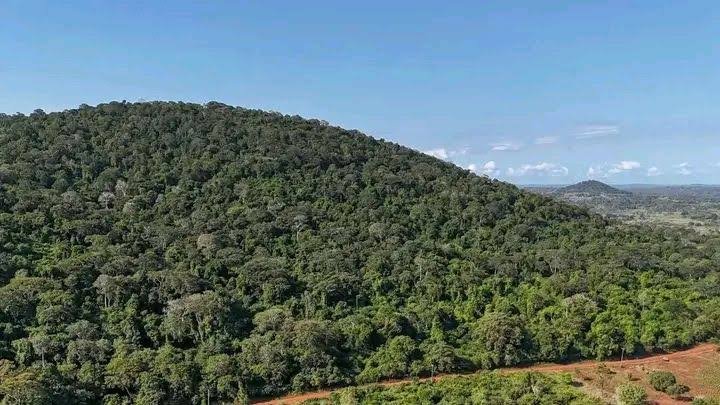
Mrima Hill, in Kwale County on Kenya’s southern coast, has emerged as a focal point in the international competition for critical minerals. The deposit is prospective for niobium and rare-earth elements used in industrial alloys, permanent magnets, electronics and other advanced applications.
On September 9, 2026, Principal Secretary for Mining Harry Kimtai confirmed that the field of applicants had narrowed to six. Reuters reported that the government had received 13 expressions of interest initially, while officials said two of the six remaining contenders were US-based. Chinese and Australian interests were also involved.
The field had already changed earlier in the process. In July, reports described seven shortlisted groups. The Australian RareX–Iluka consortium and US-led Mrima Earth Limited consortium, led by Critical Metals Corp, publicly announced their progression to the next stage. The later reduction to six should therefore be understood as an update to a process that had already narrowed—not as the first shortlist announcement.
The government had not published the full list of shortlisted bidders in the reporting reviewed. This is an important limitation: the nationalities and identities of some contenders are reported through company statements and media accounts, rather than a complete official shortlist that readers can independently examine.
By October 5, TUKO reported that six companies had submitted bids before the October 2 deadline. The precise status of each bid and the evaluation process should be confirmed against subsequent official procurement notices before reporting a winner.
Who has publicly identified themselves?
Two bidders have made their progression public.
Mrima Earth Limited consortium: US-listed Critical Metals Corp announced in July that it was leading a consortium shortlisted for the next stage. The company has promoted a vision that could eventually span mining, concentrate production, separated rare-earth oxides and, in the longer term, permanent-magnet manufacturing. These are the consortium’s stated ambitions, not evidence that all those facilities have been financed or will be built in Kenya.
Critical Metals has presented its financial position and technical team as advantages. Those statements are relevant to its proposal, but claims about available capital, construction readiness and future production should be assessed against audited financial information, binding financing commitments and the detailed tender submission—not accepted solely from promotional announcements.
RareX–Iluka consortium: Australian-listed RareX and Iluka Resources announced that their consortium had advanced to the request-for-proposal stage in July. Their proposed model combines development and initial processing in Kenya with access to Iluka’s planned Eneabba rare-earth refinery in Western Australia.
RareX has also described potential domestic value chains for other products, including niobium, phosphate and manganese. Its earlier proposal included an offtake term sheet with Iluka, subject to further conditions. An offtake arrangement can provide a prospective buyer and a route to market, but it is not the same as a final mining licence, a completed feasibility study or a guarantee that production will begin.
These announcements demonstrate that bidders have different approaches to the value chain. They do not establish which proposal is technically, financially or environmentally superior.
Why Washington and Beijing care about Mrima Hill
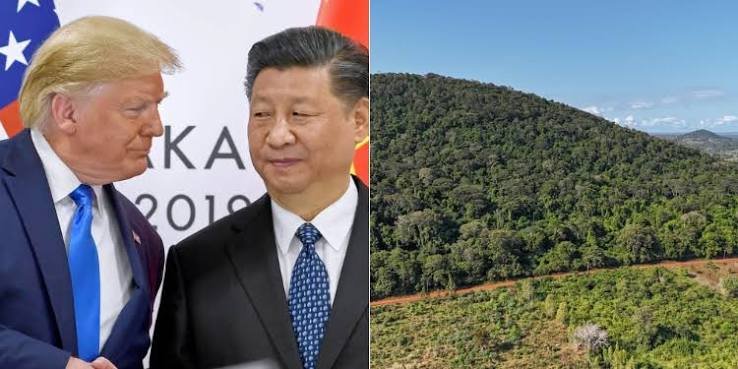
The competition reflects a wider strategic issue: rare-earth supply chains are concentrated, especially at the processing and separation stages.
Rare-earth elements are a group of 17 chemically similar elements. Several are important to high-performance permanent magnets, which are used in electric vehicles, wind turbines, industrial motors and some defence technologies. Niobium is a different critical mineral, used mainly as an alloying element to improve the strength and other properties of steel, with additional applications in advanced materials.
The strategic significance of Mrima Hill is therefore not simply that it contains valuable minerals. It could, if successfully developed, provide another source of raw materials for supply chains that governments and manufacturers want to diversify.
On September 9, US Assistant Secretary of State for African Affairs Frank Garcia said Washington was prepared to help Kenya develop a transparent mining sector that respects communities and strengthens supply chains. The US International Development Finance Corporation (DFC) has supported a broader pipeline of critical-mineral projects, reflecting Washington’s interest in diversifying supply away from China.
Kenya’s President William Ruto welcomed the prospect of US support and linked local processing to jobs and industrial development.
The diplomatic dimension became more explicit later in September. Semafor reported that Mining Cabinet Secretary Hassan Ali Joho described discussions with US government departments as being at a very advanced stage. The discussions included potential refineries and processing plants in Kenya, possible supply to the US market and talks with prospective buyers.
Joho also indicated that a workable partnership could require infrastructure support, port access, special economic zones and tax incentives.
Those remarks describe ongoing negotiations, not a completed bilateral minerals agreement. As of the latest reporting reviewed, no final public deal setting out all financing commitments, processing obligations, offtake volumes, tax incentives and government guarantees had been established.
The difference between geopolitical interest and a bankable project
Government interest can help attract financing, technical expertise and potential buyers. It does not eliminate the commercial risks of mining and refining.
A bankable project needs credible evidence of recoverable resources, metallurgical performance, operating costs, capital requirements, infrastructure access, environmental compliance and a viable route to market. It also needs contracts that clearly allocate risks among the government, developer, financiers, processors and customers.
The presence of US and Chinese bidders may increase Kenya’s negotiating options. But competition between foreign powers does not itself guarantee favourable terms for Kenya. The outcome will depend on what each bidder commits to deliver, how those commitments are enforced and how much economic value remains in the country.
What is actually known about the mineral resource?
One of the most repeated figures in coverage of Mrima Hill is that it contains around 105 million tonnes of mineralised material. Headlines have also placed a value of approximately US$62.4 billion on the deposit.
Both figures require careful interpretation.
The 105-million-tonne figure is not the whole story
The 105.3-million-tonne figure is associated with an older inferred niobium resource estimate, reported at an average grade of approximately 0.65% niobium pentoxide (Nb₂O₅). It should not be described as a proven reserve of 105 million tonnes of commercially recoverable niobium, nor as a single estimate that captures every mineral at the site.
Kenya’s 2026 tender materials publish more detailed estimates for niobium and total rare-earth oxides (TREO). The official project description gives the following figures:
Resource category | Niobium | Total rare-earth oxides |
|---|---|---|
Indicated | 5.8 million tonnes at 1.41% Nb₂O₅ | 48.7 million tonnes at 4.4% TREO |
Inferred | 17.5 million tonnes at 1.41% Nb₂O₅ | 110.7 million tonnes at 5.61% TREO |
The figures are reported with applicable cut-off grades. They describe mineralised material in different categories and for different commodities; the tonnages should not simply be added together to produce one total deposit size. The same geological system can contain more than one mineral of interest, and resource reporting depends on the commodity, cut-off grade, geological model and estimation method.
The distinction between indicated and inferred resources is also important. Indicated resources have a higher level of geological confidence than inferred resources. Neither category automatically establishes that the material can be mined profitably. Mineral reserves require additional technical and economic evaluation and the application of relevant modifying factors.
The government’s own tender terms call for further exploration and detailed assessment of geology, grades, mineral recovery, mining plans, costs, environmental issues and commercial viability. That is a strong indication that the project still needs work before a definitive investment decision.
Why the US$62.4 billion figure is not a project valuation
The US$62.4 billion figure frequently cited in coverage of Mrima Hill traces back to an older estimate of the deposit’s gross in-ground mineral value. Such a calculation can multiply estimated quantities by assumed market prices. It does not automatically account for the cost of extracting, separating and refining the minerals, building infrastructure, financing the project, managing waste, meeting environmental requirements or transporting products to customers.
Rare-earth deposits are particularly sensitive to mineralogy and processing performance. Two deposits with similar headline tonnages can have very different economics because their mineral composition, distribution of individual elements, impurities and recovery rates differ.
A gross in-ground value is therefore not equivalent to:
the amount a company would pay for the project;
the amount of revenue the mine will generate;
the value of a mining licence;
the amount of tax or royalties Kenya will collect; or
the net present value of a developed mine and refinery.
The same caution applies to claims that the deposit is worth KSh8 trillion or more. Those figures are useful as an indication of why the deposit attracts attention, but they are not a substitute for a current bankable feasibility study.
What is still needed: updated resource validation, mineralogical and metallurgical test work, a credible mine plan, recovery estimates for each saleable product, capital and operating cost estimates, and a feasibility study that incorporates environmental and social obligations.
Kenya’s local-processing ambition: What it could mean in practice
Kenya wants to move beyond exporting raw mineral material and capture more of the economic value associated with processing. Mrima Hill has become a prominent test of that ambition.
The policy objective is straightforward: raw ore typically captures only part of the value chain. Depending on the mineral and its processing requirements, additional stages can include beneficiation, concentration, chemical separation, refining, production of intermediate materials and manufacture of final components.
Each stage can bring additional employment, technical capabilities, supplier opportunities and tax revenue. But the number of stages that can be developed competitively in Kenya depends on the quality of the resource, available energy and water, industrial infrastructure, capital costs, technical skills, scale and access to customers.
Mining and processing are not the same activity
A mine may extract ore and perform initial processing to produce a concentrate. A refinery or separation plant may then turn that material into more commercially useful chemical products. Further downstream, manufacturers may produce metals, alloys, magnet materials or finished components.
These stages have different technical requirements and economics. A requirement for local beneficiation does not automatically mean that every downstream stage, from ore to finished permanent magnet, must take place in the same country.
For Mrima Hill, the government will need to define precisely what it means by local value addition. Relevant questions include:
What processing must be carried out in Kenya before material can be exported?
Must the winning bidder build a plant itself, or can it enter a partnership with a separate processor?
What minimum capacity, production milestones and local-content obligations will apply?
How will the government verify that the promised facilities are built and used?
What happens if a refinery is delayed or becomes commercially unviable?
How will the project handle intermediate products that require specialised refining elsewhere?
These details matter because vague commitments can make a proposal sound ambitious without establishing an enforceable path to delivery.
The separate refinery tender
Joho has discussed a second tender focused on standalone mineral processing and refinery infrastructure, with a timeline of within six months. This should be treated as a reported government plan rather than an already-issued procurement.
The idea could allow the government to separate two investment decisions: who develops the mineral resource and who finances and operates processing infrastructure. In principle, a dedicated processing tender could attract specialist companies that do not wish to operate a mine, or allow a processor to serve more than one project.
But a separate refinery would still need secure feedstock, power, water, transport, skilled workers, environmental approvals, financing and buyers for its products. A refinery cannot be economically justified merely by announcing a tender; its economics depend on the material it can process, its recovery rates, throughput, operating costs and saleable output.
The two tender processes must also be coordinated. A mine developer needs certainty about what processing facilities will exist and when they will be available. A processor needs certainty about the volume, quality and timing of mineral feedstock. If those decisions are made independently, the government risks selecting a mine and refinery that are not commercially compatible.
As of October 12, the sources reviewed did not establish that the separate processing tender had been formally published or that a refinery had reached financial close.
Rare earth processing is technically demanding
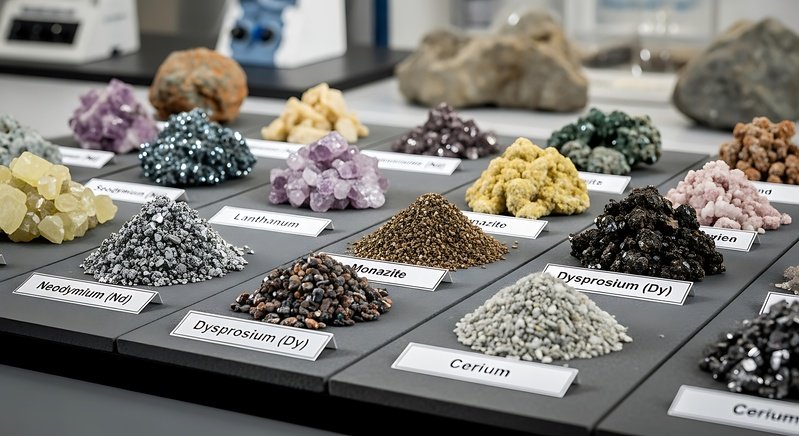
The case for local value addition is strong in principle, but rare-earth processing is not a simple extension of conventional ore treatment.
Rare-earth elements occur together in mineral deposits, and separating them into individual products can require multiple stages of physical and chemical processing. The appropriate flowsheet depends on the minerals present, their chemical composition, impurities, recovery characteristics and the quality required by buyers.
A project may therefore need to progress through several steps:
Mineral characterisation: Determine which minerals host the rare earths and niobium, how the elements are distributed and what impurities are present.
Beneficiation: Test whether the valuable minerals can be concentrated economically while reducing unwanted material.
Chemical extraction and separation: Establish how the concentrate can be processed into saleable products, including whether the process creates difficult waste streams.
Product qualification: Demonstrate that the resulting materials meet customer specifications and can be sold under commercially viable contracts.
Environmental and safety management: Assess water demand, chemical handling, waste disposal, radiation where relevant, rehabilitation and long-term monitoring.
A successful pilot test does not necessarily prove that a process will work at commercial scale. Scale-up can introduce different recovery rates, energy requirements, equipment constraints and operating costs. These issues need to be resolved through test work and engineering before the project is presented as a ready-to-build refinery.
The proposed local-processing model should therefore be judged by measurable milestones: completed test work, an engineering design, environmental approval, committed financing, construction progress and verified production—not simply by the presence of a processing plant in a bidder’s vision statement.
The sacred forest and the community-consent question
The commercial debate is only one part of the Mrima Hill story. The site is also a culturally significant landscape for the Digo community and a forest area with ecological importance.
Community concerns reported during the tender process include whether residents have received sufficient information, whether livelihoods and land rights could be affected, and how sacred sites would be protected. The South Coast Residents’ Association has also documented longstanding concerns about the environmental assessment of earlier mining proposals, including the need to investigate radiological risks.
These are not peripheral issues that can be postponed until after a preferred bidder is selected. They affect whether a project can lawfully and sustainably proceed.
Sacred heritage and land rights
Mrima Hill is recognised as a sacred kaya site. For communities that attach spiritual and cultural significance to the landscape, the impact of mining cannot be measured only in hectares disturbed or compensation paid.
The project will need a clear process for identifying sacred areas, understanding community priorities, determining whether parts of the site should be excluded from development and ensuring that consultation takes place before decisions become irreversible.
A developer’s commitment to community engagement is useful, but it is not proof that consent has been secured or that all concerns have been addressed. Engagement must be documented, inclusive and meaningful, including for people who may not hold formal land titles but depend on the area for their livelihoods or cultural practices.
The government also needs to clarify how county authorities, community representatives and relevant cultural institutions will participate in decisions.
Environmental impact and radioactive minerals
The mineral system has been reported to contain thorium, a naturally occurring radioactive element. Its presence does not, by itself, establish that mining would cause harmful exposure. The risk depends on concentrations, mineral distribution, the mining and processing method, the movement of dust and water, waste characteristics and the quality of safety controls.
Nevertheless, radiological assessment must be part of the project’s technical and environmental work. The government’s earlier terms of reference for a comprehensive feasibility study specifically called for assessment of radioactivity in the project area and adjacent settlements, alongside environmental and social studies.
Before development, the relevant studies should establish baseline radiation levels, identify pathways by which workers or nearby residents could be exposed, assess the handling and storage of waste, and define monitoring and mitigation measures. Independent review and transparent publication of the results would help communities evaluate the risks.
Other environmental questions include forest disturbance, biodiversity, water use, erosion, chemical management, waste storage, rehabilitation and the potential cumulative impacts of mining and processing facilities.
The project’s environmental and social assessment should be based on the proposed mine and processing design, not on a generic promise that development will be sustainable.
What to watch next
The next phase should provide evidence that the project is moving from a politically significant tender to a technically and commercially credible development.
Tender outcome: Confirmation of the successful bidder and publication of the evaluation process and material terms.
Resource verification: New technical work and an independently supportable resource and reserve position.
Processing tender: Publication of the separate tender, if pursued, including capacity requirements, funding structure and feedstock arrangements.
US–Kenya minerals discussions: A formal agreement that clarifies the parties’ obligations, financing, processing commitments and any offtake arrangements.
Environmental and social assessment: A project-specific assessment addressing biodiversity, water, waste, radiological risks and cultural heritage.
Community engagement: Evidence that residents and relevant local institutions have been consulted meaningfully, with clear arrangements for grievances, compensation and protection of sacred areas.
Financing and construction readiness: Binding financing commitments, engineering milestones and the relevant licences before any claims that the project is ready for construction.
Local value addition: Measurable evidence that processing facilities are being developed and that promised employment, supplier participation and skills transfer are materialising.
Conclusion: Mrima Hill is a test of value creation, not just mineral ownership
Mrima Hill has attracted attention because it combines a prospective critical-mineral deposit with an international contest over supply chains and a Kenyan policy ambition to build more domestic processing capacity.
The tender could help Kenya develop technical expertise, create industrial opportunities and capture a greater share of the value generated by its mineral resources. But the frequently quoted headline valuations do not establish the project’s economic viability, and geopolitical interest does not guarantee that financing, refining capacity or downstream manufacturing will materialise.
The decisive questions are practical: Can the deposit be developed profitably? Can processing be done competitively and safely in Kenya? Will the final agreement create enforceable obligations rather than aspirational promises? And can the government protect the forest, respect the site’s cultural significance and address community concerns transparently?
If Kenya can answer those questions credibly, Mrima Hill could become an important test of its critical-minerals strategy. If it cannot, the tender risks becoming another example of a valuable geological prospect whose commercial, environmental and governance challenges prove harder than the headline figures suggest.
Citations
- 1.Kenya Government Advertising Agency — Mrima Hill expression-of-interest notice — Official tender notice and terms of reference.
- 2.State Department for Mining — Mrima Hill tender documents — Government tender listings and procurement information.
- 3.Government of Kenya — March 31, 2026 MyGov publication — Project location, geological setting and the official 2026 resource estimates.
- 4.Kenya Mining Investment Handbook 2025 — Broader mineral-sector context and the older estimate commonly associated with Mrima Hill.
- 5.Reuters — US says it will help develop Kenya’s critical minerals processing, September 9, 2026 — Confirmation of six remaining contenders and US support for domestic processing.
- 6.South China Morning Post — How Kenya’s sacred Mrima Hill became a new front in US–China minerals rivalry, September 27, 2026 — Geopolitical and cultural context.
- 7.Semafor — Kenya in advanced talks with US on critical minerals deal, September 28, 2026 — Joho’s remarks on processing plants, refinery discussions, incentives and the tender timetable.
- 8.TUKO — Inside the proposed US–Kenya critical-minerals processing partnership, September 22, 2026 — Bidder composition, government statements and reported legal challenge.
- 9.TUKO — Mrima Hill bids and strategic minerals, October 5, 2026 — Reporting that six companies submitted bids and discussion of local processing.
- 10.The Star — Australian consortium advances in Mrima Hill tender, October 2, 2026 — RareX–Iluka’s progression and project proposal.
Finish Reading the Full Story and Expert Analysis.
Get the latest legal & regulatory intelligence in Kenya
Wansom is AI and can make mistakes.