
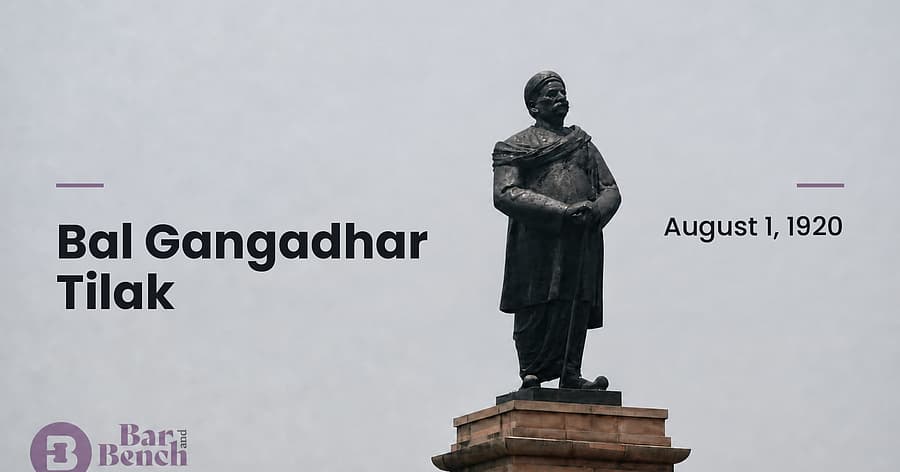
Bombay High Court: Lokmanya Tilak's Sedition Trials Under Section 124A IPC
Summary
- Lokmanya Tilak was charged with sedition under section 124A IPC for publishing articles inciting disaffection against British rule.
- Tilak's trial marked one of the earliest uses of this section against a prominent freedom fighter.
- The verdict and sentencing of Tilak set a precedent for the prosecution of dissenters under section 124A IPC.
- While Section 124A IPC has been repealed and replaced by Section 152 of the Bharatiya Nyaya Sanhita (BNS), its historical use as a tool for suppressing free speech in India has significant implications for those who challenge authority.
What Happened
Tilak was charged with sedition under section 124A IPC and tried before a nine-member jury in the Bombay High Court.
Lokmanya Tilak's sedition trials under section 124A IPC are a significant chapter in India's struggle for independence. In June 1897, Tilak published two articles in his Marathi weekly Kesari: a report on the Shivaji festival and a poem titled 'Shivaji's utterances.' These publications were seen as inciting disaffection against British rule, leading to the assassination of Plague Commissioner W.C. Rand just days later.
Tilak was charged with sedition under section 124A IPC and tried before a nine-member jury in the Bombay High Court. The trial was presided over by Justice Strachey, who accepted the majority verdict despite three Indian jurors voting in favor of Tilak. As a result, Tilak was sentenced to 18 months rigorous imprisonment.
The details of this trial are documented in Queen Empress v. Bal Gangadhar Tilak, ILR (1897) 22 Bom 112.
Legal Context
Section 124A IPC, which was used to prosecute Tilak, defines sedition as an act that 'excites or attempts to excite feelings of disaffection towards the Government established by law in British India.' This provision has been a contentious tool for suppressing dissent and free speech in India. The trial of Tilak marked one of the earliest uses of this section against a prominent freedom fighter.
Tilak's case also highlights the colonial-era judicial system, where Indian jurors were often outnumbered by European judges and jurors. This imbalance had significant implications for the outcome of trials like Tilak's, where the majority verdict ultimately decided his fate.
Why It Matters
The sedition trials of Lokmanya Tilak set a precedent for the prosecution of freedom fighters and journalists under section 124A IPC. This provision, though now repealed and replaced, has historically been used as a tool for suppressing dissent in India, often with far-reaching consequences for those who dared to challenge authority. The Supreme Court of India put Section 124A on temporary hold in May 2022, freezing all pending trials, appeals, and fresh FIRs, and it has since been replaced by Section 152 of the Bharatiya Nyaya Sanhita (BNS).
Lawyers advising clients on freedom of speech and expression must be aware of this legal context and its implications for their cases. The legacy of Tilak's trials continues to shape the landscape of free speech in India, making it essential for lawyers to understand the historical precedents that have led to the current state of sedition laws, now governed by the BNS.
Practical Implications
This case sets a precedent for the prosecution of freedom fighters and journalists under sedition laws, which lawyers should be aware of when advising clients on freedom of speech and expression.
Source
How does this affect your business?
Get an AI analysis of this article grounded in your jurisdictions, practice areas, and any policy documents you've uploaded to Wansom.
Wansom is AI and can make mistakes.