
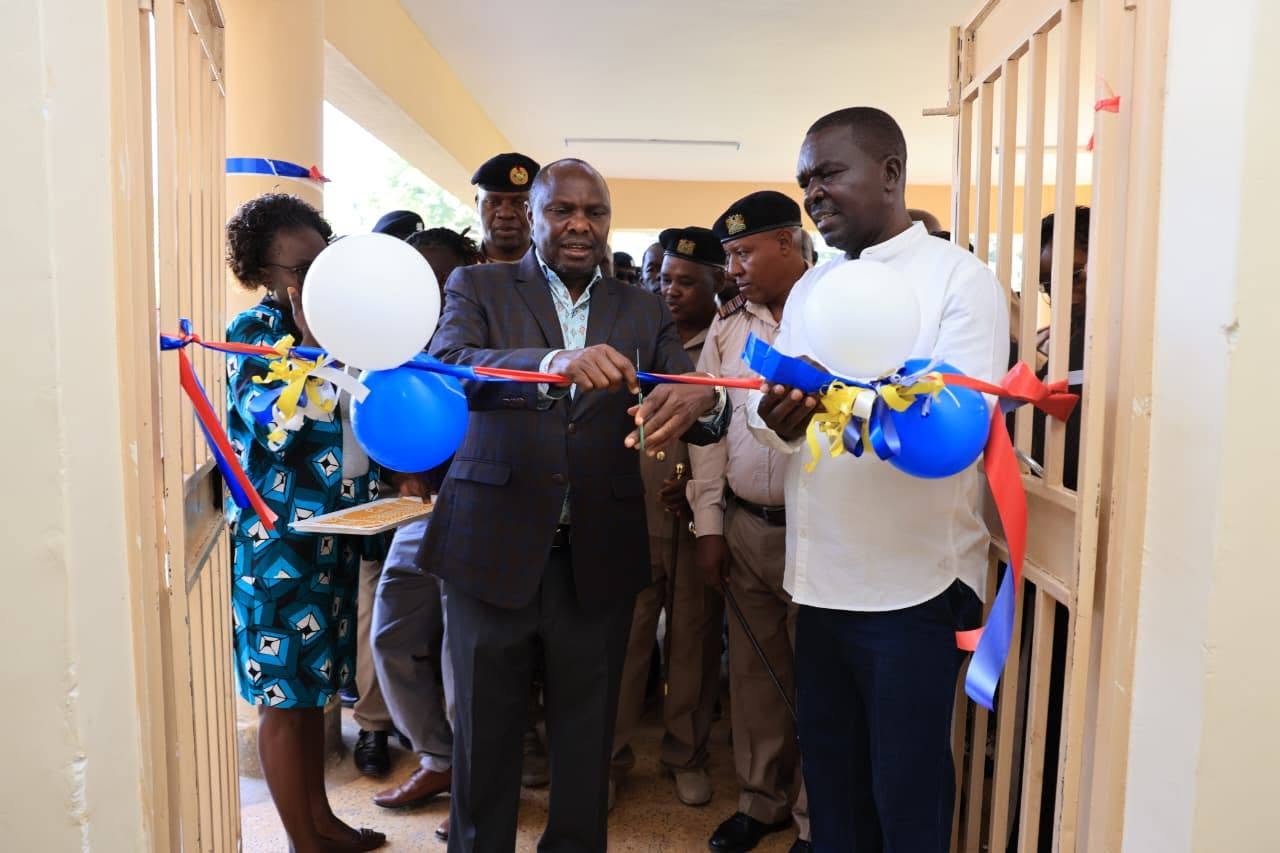
Koskei opens Navakholo Police Headquarters, DCC office in Kakamega
Abstract
The recent inauguration of the Navakholo Police Headquarters and the Office of the Deputy County Commissioner (DCC) in Kakamega County signifies a strategic enhancement of state presence and administrative coordination at the local level in Kenya. This development, spearheaded by the Head of Public Service, Felix Koskei, aims to bolster security operations and streamline national government functions within the devolved system. For legal professionals, this move underscores the ongoing evolution of Kenya's governance architecture, necessitating a nuanced understanding of the interplay between national security organs, national government administrative officers, and county governments under the Constitution of Kenya, 2010, and relevant statutes. It highlights the continuous efforts to improve access to justice and public service delivery, while also raising questions about accountability and inter-agency collaboration.
Introduction
The official opening of the new Navakholo Police Headquarters and the Office of the Deputy County Commissioner (DCC) in Navakholo Town, Kakamega County, by the Head of Public Service, Felix Koskei, marks a significant step in strengthening state presence and administrative coordination at the local level in Kenya. This initiative is part of a broader government strategy to enhance security operations and improve the delivery of national government services closer to the citizenry. The establishment of these facilities is intended to deepen the reach of law enforcement and administrative oversight, particularly in areas that may have historically experienced gaps in state services.
Background
Kenya's governance framework is anchored in the Constitution of Kenya, 2010, which ushered in a devolved system of government alongside a reformed national security sector. Chapter Fourteen of the Constitution transformed the police from a 'force' to a 'service,' emphasizing democratic policing, adherence to the rule of law, respect for human rights, and subordination to civilian authority. This constitutional mandate is operationalised through the National Police Service Act, 2011, which details the composition, functions, powers, and command structure of the National Police Service (NPS), including provisions for community policing. Complementing this is the Independent Policing Oversight Authority (IPOA) Act, 2011, which established IPOA as a civilian oversight body tasked with investigating police misconduct and promoting accountability.
Simultaneously, the Constitution established a two-tier system of government, with national and county governments being distinct yet interdependent. The County Governments Act, 2012, gives effect to Chapter Eleven of the Constitution, outlining the powers, functions, and responsibilities of county governments. However, certain national government functions remain deconcentrated to the local level, coordinated by national government administrative officers. The National Government Co-ordination Act, 2013, provides the administrative and institutional framework for this coordination, establishing roles such as the Deputy County Commissioner (DCC). The DCCs, as representatives of the national government, are responsible for coordinating national government functions at the county level and other decentralised units.
Analysis
The opening of new police headquarters and DCC offices in Navakholo highlights the ongoing interplay between devolution and deconcentration in Kenya's governance. While county governments exercise devolved functions as outlined in the Fourth Schedule of the Constitution, national government administrative officers like the DCCs perform deconcentrated national functions. This distinction is crucial for legal practitioners, as it clarifies jurisdictional boundaries and accountability lines. The police, as a national security organ, operate under national legislation, even when their presence is localised.
The enhanced presence of the NPS through new facilities is intended to improve security and access to justice, a fundamental right enshrined in Article 48 of the Constitution. However, the effectiveness of this increased presence hinges on adherence to constitutional principles of human rights, rule of law, and accountability. The Independent Policing Oversight Authority (IPOA) plays a vital role in ensuring police accountability, investigating complaints, and monitoring police operations. Legal practitioners often engage with IPOA in cases of alleged police misconduct, and the decentralisation of police services may lead to more localised oversight engagements.
Furthermore, the coordination between the national government administrative officers (DCCs) and the National Police Service, as well as with the county government structures, is critical. The National Government Co-ordination Act, 2013, aims to facilitate this, but practical challenges in inter-agency coordination and potential overlaps in mandates can arise. Kakamega County, like others, has its own legal frameworks and policies, such as the Kakamega County Finance Act, 2023, and the Kakamega County Natural Resources Management Act, 2022, which define local administration and resource management. Legal professionals must navigate these multi-layered legal and administrative structures, particularly when advising clients on matters involving public administration, land use for public facilities, or interactions with law enforcement.
While the objective of these new facilities is to bring services closer to the people, challenges such as corruption, institutional inefficiencies, and a lack of public trust in some police operations persist. The constitutional mandate for police professionalism and accountability, as per Article 244, remains a work in progress. The establishment of physical infrastructure must be accompanied by robust enforcement of legal provisions and a commitment to human rights to truly enhance public confidence and access to justice.
Conclusion
The opening of the Navakholo Police Headquarters and DCC office represents a tangible commitment by the Kenyan government to strengthen its administrative and security footprint at the grassroots level. For legal practitioners, this development underscores the dynamic nature of Kenya's public law landscape, requiring continuous engagement with the constitutional framework, the National Police Service Act, 2011, the Independent Policing Oversight Authority Act, 2011, and the National Government Co-ordination Act, 2013. Understanding the distinct yet interdependent roles of national and county governments, and the specific mandates of national government administrative officers and the police, is paramount.
Practitioners should anticipate increased interaction with these local state organs and be prepared to advise clients on matters ranging from administrative compliance to human rights issues in policing. The ongoing efforts to enhance access to justice and accountability within the security sector will continue to shape legal practice, demanding vigilance and advocacy to ensure that the expansion of state presence translates into improved rule of law and protection of fundamental freedoms for all citizens. Monitoring the effectiveness of these new facilities in fostering inter-agency cooperation and upholding constitutional values will be crucial for the legal community.
Citations
- 1.Constitution of Kenya, 2010
- 2.National Police Service Act, 2011 (No. 11A of 2011)
- 3.Independent Policing Oversight Authority Act, 2011 (No. 35 of 2011)
- 4.County Governments Act, 2012 (No. 17 of 2012)
- 5.National Government Co-ordination Act, 2013 (No. 1 of 2013)
- 6.Kakamega County Finance Act, 2023 (No. xx of 2023)
- 7.Kakamega County Natural Resources Management Act, 2022 (No. 5 of 2022)
- 8.Local Policing Accountability in Kenya - CHRIPS
- 9.County Governments Act No. 17 of 2012 - World Bank
- 10.STRENGTHENING POLICING OVERSIGHT AND INVESTIGATIONS IN KENYA - APCOF
- 11.INDEPENDENT POLICING OVERSIGHT AUTHORITY ACT
- 12.Chapter FOURTEEN - Kenya
- 13.The Independent Policing Oversight Authority
- 14.POLICE ACCOUNTABILITY AND HUMAN RIGHTS.Addressing Impunity and Strengthening Legal Reinforcement in Kenya. - Record Of Law
- 15.County Governments Act, 2012 | PolicyVault.Africa
- 16.Constitution of Kenya – Chapter Fourteen, Part One - Naftalys Advocates LLP
- 17.County Governments Act in Kenya - sheriaplex.com
- 18.National Police Service Act - ICNL
- 19.National Police Service Act, 2011 | judy.legal
- 20.National Police Service Act Overview | PDF | Police | Inspector General - Scribd
- 21.THE COUNTY GOVERNMENTS Act, 2012 - ConstitutionNet
- 22.National Police Service Act, 2011 | PolicyVault.Africa
- 23.THE COUNTY GOVERNMENTS ACT
- 24.The police, the people, the politics: Police accountability in Kenya - GSDRC
- 25.Kenya 2010 - Constitute Project
- 26.Common Standards for Policing in Eastern Africa: Kenya | APCOF
- 27.Between Order and Liberty: Reimagining Police Accountability in Kenya's Constitutional Democracy - Scholar Media Africa
- 28.The Constitution Of Kenya: Chapter 14 - National Security (Article 238-247) - Text & Audio
- 29.Chapter Fourteen - National Security - Kenya Law Reform Commission (KLRC)
- 30.Kenya: Act No. 35 of 2011, Independent Policing Oversight Authority Act, 2011 - Refworld
- 31.Police Reforms : Kenya - Commonwealth Human Rights Initiative
- 32.Decentralisation and inclusion in Kenya - Kabarak University
- 33.REPUBLIC OF KENYA THE SENATE THIRTEENTHPARLIAMENT | THIRD SESSION …………………………………………………… 4 - cabinet office
- 34.National Government Co-ordination Act, 2013 (No. 3 of 2013). - ECOLEX
- 35.Decentralization and Local Governance: Lessons from Kenya and Uganda
- 36.Intergovernmental Profile: Kenya - Decentralization Net
- 37.KAKAMEGA COUNTY RISK MANAGEMENT POLICY - KIPPRA Repository
- 38.FACT SHEETS ON DECENTRALISATION IN AFRICA: - Dullah Omar Institute
- 39.National Government Co-ordination Act No. 1 of 2013 - World Bank
- 40.LEGAL LITERACY WILL DECONGEST POLICE STATIONS AND PRISIONS
- 41.National Government Coordination Act | PolicyVault.Africa
- 42.National Government Co-ordination Act, 2013 - judy.legal
- 43.National Government Co-ordination Act (No 1 of 2013) | The Kenyan Parliament Website
- 44.AN ADVISORY OPINION ON THE RELATIONSHIP BETWEEN THE NATIONAL GOVERNMENT, COUNTY GOVERNMENTS AND COUNTY COMMISSIONERS. The Commis - The Commission on Administrative Justice
- 45.Police reform in Kenya: “A drop in the ocean” - Amnesty International
- 46.Action plan – Kakamega, Kenya, 2024 – 2027 | Open Government Partnership
- 47.ACCESS TO JUSTICE IN KENYA
- 48.High Court suspends implementation of various clauses of security law - The Standard
- 49.Republic of Kenya Public Service Commission - Elgeyo Marakwet County
- 50.Kenya's justice system under strain amid rising mob justice, overcrowded prisons
- 51.PUBLIC PERCEPTIONS AND EXPERIENCES ON THE ACCESS TO CRIMINAL JUSTICE IN KENYA - Crime research Centre
- 52.Kenya Gazette Supplement No. xx (Kakamega County Acts No. xx)
- 53.Kenya Gazette Supplement No. 11 (Kakamega County Acts No. 5)
- 54.SID-MA03 - County Appointment Descriptions by Scouting Ireland - Issuu
- 55.County Government Structure in Kenya | icma.org
How does this affect your business?
Get an AI analysis of this article grounded in your jurisdictions, practice areas, and any policy documents you've uploaded to Wansom.
Wansom is AI and can make mistakes.