
Kenya University Funding 2026: Old Model Stays for Now
Kenya's September 2026 University Intake: Why New Students Are Still on the Old Funding Model And What Changes When Parliament Acts
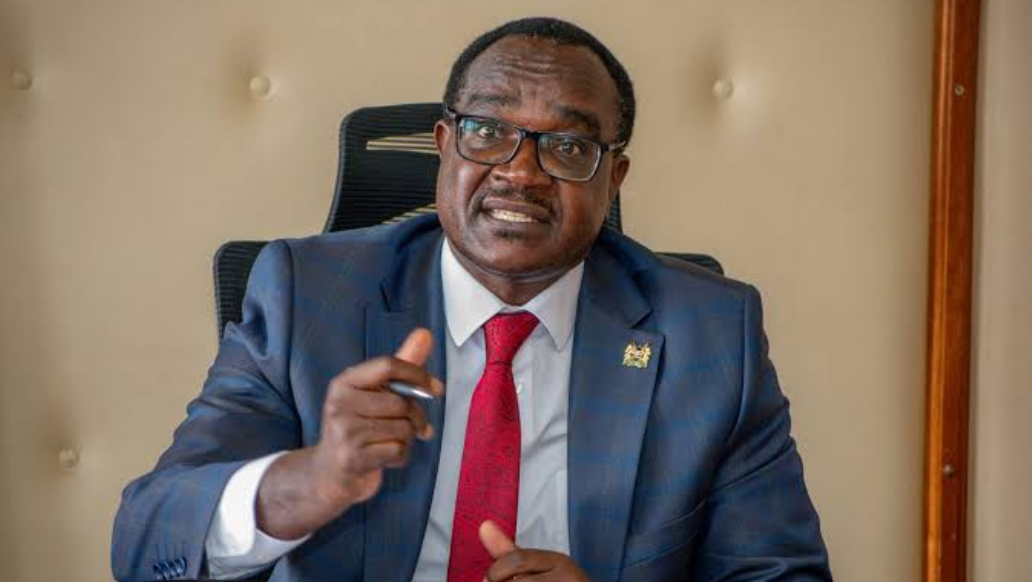
On the surface, CS Julius Ogamba's latest remarks read like a routine reassurance to anxious parents: relax, the money is coming. Underneath it is a much bigger story about how Kenya is trying to run two university funding systems at once — an old one still processing hundreds of thousands of applications, and a new one that exists in law only as a bill still sitting in Parliament. Here's what is actually happening to first-year funding this September, and what changes once the legislation passes.
The Headline Fact: The New Model Isn't Law Yet, So the Old One Still Runs
Pay close attention to the sequencing in Ogamba's statement. He did not say the new funding framework has started. He said first-years admitted this September will be funded under the existing Student-Centred Funding Model (SCFM), and that the shift to the new system only happens once Parliament passes the Tertiary Education, Placement and Funding Bill, 2026 into law. Until that happens, the new model has no legal basis to disburse a single shilling.
Why it matters: Parents who took President Ruto's earlier promise of full government funding "from September" at face value now face a gap between political announcement and legislative reality. The clarification effectively resets expectations — the new system is coming, but not yet, and not without an Act of Parliament behind it.
From First Years to Sixth Years: What the Transition Actually Covers
Ogamba was specific about scope, not just timing. Once the Bill becomes law, the transition will not be limited to incoming first-years — it is meant to sweep in students already partway through their studies, across multiple types of institutions.
"During this time, the first years will be admitted using the existing model. Once the new model becomes operational, as at the time the Bill becomes law, we will transition all our tertiary students, from first years to sixth years at universities, KMTC, TVETs and Teacher Training Colleges, into that model."
Why it matters: This isn't a first-year-only reform. It's designed to eventually collapse Kenya's current patchwork, where students who enrolled before 2023 are financed through the older Differentiated Unit Cost (DUC) model, and those from 2023 onward are financed through the SCFM — into a single national framework, provided the Bill actually becomes law.
The Application Deadline Extension: A Practical Lifeline, Not a Policy Shift
Separately from the framework debate, the Ministry has given first-time applicants more breathing room. The original application window for government funding closed on August 31, 2026, with 789,422 applications already received by that point. Recognising that some eligible students had missed that window, the Ministry extended it to September 21, 2026, but applications submitted in this extended period are still processed under the current SCFM, not the pending new model.
Why it matters: The extension solves an access problem (students who missed the deadline), not the underlying uncertainty about which funding model they'll ultimately sit under for the rest of their degree.
Key Facts at a Glance
Element | Detail |
|---|---|
Cabinet Secretary | Julius Migos Ogamba, Ministry of Education |
Current funding model | Student-Centred Funding Model (SCFM), introduced 2023 |
Proposed new model | Universal funding framework under the pending Bill |
Enabling legislation | Tertiary Education, Placement and Funding Bill, 2026 |
Legislative status | Before Parliament; not yet passed into law |
Original funding application deadline | August 31, 2026 |
Extended deadline | September 21, 2026 |
Applications received by original deadline | 789,422 |
Funds already disbursed to continuing students | Sh22.12 billion |
Institutions covered by planned transition | Universities, KMTC, TVETs, Teacher Training Colleges |
Ogamba's clarification | Coast Region Educational Assessment and Resource Centre, Mombasa County — Friday, September 4, 2026 |
Ruto's related announcement | Kajiado County tour, Thursday, September 3, 2026 — new model to begin "next semester," not the current intake |
Which Students Are Under Which Model Right Now
Student cohort | Funding model currently applied |
|---|---|
Enrolled before 2023 | Differentiated Unit Cost (DUC) model |
Enrolled 2023 to present | Student-Centred Funding Model (SCFM) |
September 2026 first-years | SCFM initially, pending transition |
All cohorts, after Bill becomes law | New universal framework (per Ogamba's stated plan) |
What This Means for Different Stakeholders
For newly admitted first-years and their parents: Do not wait on the new model to plan finances for this semester — funding decisions for September admissions are being made under the existing SCFM. Applications should be submitted before the September 21 deadline regardless of what happens with the Bill, since processing continues under the current system either way.
For continuing students: The Sh22.12 billion already disbursed applies to continuing students, not new applicants, so this isn't new money arriving on top of what's already in the pipeline for returning learners.
For institutions and administrators: Ogamba indicated that funds for first-years would likely reach institutions "probably by next week" once the ongoing assessment of applicants concludes — but he stopped short of giving a fixed disbursement date, and registration at some institutions has reportedly stalled because scholarship funds haven't yet landed.
For students facing informal charges: Some learners have reported being asked to pay varying amounts toward fees while institutions wait for funding clarity. That practice sits outside the government's own framework, since the Ministry maintains that applications and assessments are still being processed centrally.
For lawmakers and the Bill's progress: The entire timeline hinges on Parliament. Support exists among some MPs — Nyaribari Masaba MP Daniel Manduku has said lawmakers intend to pass the Bill so students can study under scholarships throughout their university years — but until it clears Parliament and is signed into law, the "existing model first, new model later" arrangement Ogamba described remains the operative reality.
Frequently Asked Questions
Will students joining university this September get government funding under the new model? No. Ogamba has confirmed that September 2026 first-years will be funded under the existing Student-Centred Funding Model, not the pending new framework.
When does the new funding model actually take effect? Only once Parliament passes the Tertiary Education, Placement and Funding Bill, 2026, into law. President Ruto has separately said the new arrangement would begin "next semester" rather than during the current intake.
Has the funding application deadline changed? Yes. The deadline for first-time university and TVET applicants was extended from August 31 to September 21, 2026. Applications in this window are still processed under the current SCFM.
Is there money available for first-year students right now? Ogamba says funds have been set aside and that disbursement to institutions is expected "probably by next week," pending completion of the applicant assessment process — though he did not give a guaranteed date.
Which students will the eventual transition to the new model cover? Per Ogamba, the plan covers all tertiary students — from first-years through sixth-years — across universities, KMTC, TVETs, and Teacher Training Colleges, once the new model is operational.
Why are some students unable to complete registration? Some learners have reported that they cannot finish academic registration because scholarship funds have not yet been released to their institutions, a direct consequence of the ongoing assessment and disbursement timeline.
The Bigger Picture
What's playing out is less a funding U-turn than a sequencing problem: a political announcement of universal funding arrived ahead of the legislation needed to actually operate it, leaving the Ministry to run the existing SCFM as a holding pattern for an entire admission cycle. That holding pattern isn't cost-free, it's the reason parents are fielding conflicting fee demands, students are stuck mid-registration, and institutions are managing enrolment without certainty over which funding regime their students will ultimately sit under for the rest of their studies.
For now, the practical guidance is straightforward even if the policy picture isn't: apply for funding under the current system before September 21, expect disbursement to move on the Ministry's own assessment timeline rather than a fixed date, and treat the transition to a universal model as contingent on the Tertiary Education, Placement and Funding Bill, 2026, actually clearing Parliament, not on any date previously floated on the campaign trail.
Citations
- 1.This article is based on reporting from: Kenyans.co.ke, Nation Africa, Education News Kenya, The Kenya Times, People Daily, and The Online Kenyan covering statements by Education Cabinet Secretary Julius Migos Ogamba and President William Ruto between late August and early September 2026. It is provided for informational purposes only.
Finish Reading the Full Story and Expert Analysis.
Get the latest legal & regulatory intelligence in Kenya
Wansom is AI and can make mistakes.