
Kenya's Local Content Bill and the Push to Close Small Trade to Foreigners: A Trade-Law Analysis
Summary
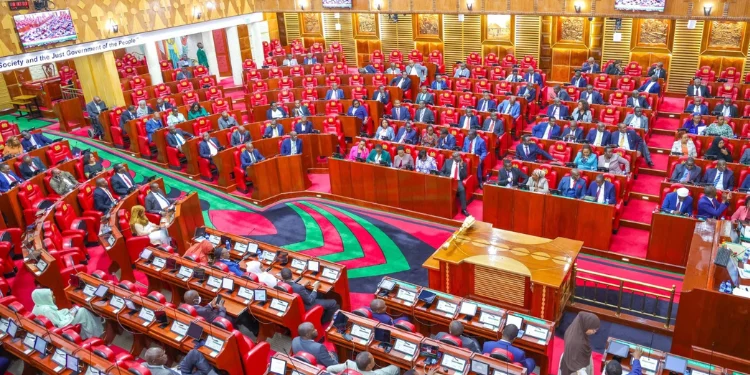
The bill: the Local Content Bill, 2025, a private member's bill by Laikipia Woman Representative Jane Kagiri, was published on 16 October 2025. It was debated at Second Reading in April 2026 and now awaits the Committee of the Whole House.
What it requires of foreign companies: at least 60% local sourcing, at least 80% Kenyan workforce including management, and local sourcing of farm produce. Financial, insurance, construction, transport, logistics and security services are covered, and penalties reach Sh100 million plus at least one year's jail for CEOs.
The September push: on 2 September the President asked for the bill to be expanded to list activities closed to foreigners and directed that it be fast-tracked. After backlash, the 7 September deadline became a 90-day regularisation window.
The legal position today: there is no statutory ban on foreigners in small trade. Existing immigration and licensing rules are what can be enforced.
A second bill: the Micro and Small Enterprises (Amendment) Bill promotes local MSE products, does not restrict foreigners, and is still in committee.
Trade-law risks: a nationality-based ban sits uneasily with the EAC right of establishment. The 60% sourcing rule resembles local content requirements prohibited by the WTO TRIMs Agreement, and the bill raises constitutional questions on equality, public participation and criminal liability.
The Bills and Where They Stand
Two private members' bills, both before the National Assembly's Departmental Committee on Trade, Industry and Cooperatives chaired by Ikolomani MP Bernard Shinali, are now at the centre of the government's push to reserve small-scale trade for Kenyans.
The Local Content Bill, 2025
Sponsored by Laikipia County Woman Representative Jane Kagiri, this is the more advanced of the two, and the one the President has named as the vehicle for his plan.
Date | Stage |
|---|---|
16 October 2025 | Bill published |
26 November 2025 | First reading; committed to the Trade, Industry and Cooperatives Committee |
April 2026 | Committee report tabled; Second Reading debate on 15, 16, 22 and 29 April |
2 September 2026 | President calls for the bill to be expanded and fast-tracked |
Next step | Committee of the Whole House, where clause-by-clause amendments are made |
Then | Third Reading, presidential assent, and publication |
The committee stage is the stage at which any new list of activities closed to foreigners would have to be added to the text.
The Micro and Small Enterprises (Amendment) Bill
Sponsored by Manyatta MP Gitonga Mukunji, this bill was published on 20 June 2025, read a first time on 1 October 2025 and committed to the same committee. Nearly a year on, the committee has not tabled its report. The bill would require the Micro and Small Enterprises Authority to promote the marketing, development and branding of goods and services from micro and small enterprises. It is a promotion measure, and in its current form it does not restrict foreign participation.
What about a "Trade Bill"?
When the President referred to a trade bill in Parliament, he identified it himself as the Local Content Bill. The separate National Trade Development Bill, 2025 is a different measure and is not the vehicle the President described. In practice, any statutory rule closing small trade to foreigners would have to come through amendments to the Local Content Bill, or through new legislation.
What the Local Content Bill Would Require
As drafted, the bill is a local content law for foreign companies, not a ban on foreign traders. It regulates how foreign companies operating in Kenya buy, hire and subcontract.
Key definitions (Clause 2):
Local content is the value added to the Kenyan economy through procuring locally available services, goods, supplies and workforce.
A local company is one incorporated in Kenya under the Companies Act and wholly or majority owned by Kenyan citizens. A Kenyan-incorporated subsidiary of a foreign group would therefore not count as local.
The core obligations:
Obligation | What the bill provides |
|---|---|
Local sourcing (Clause 3) | A foreign company must source at least 60% of locally manufactured goods, and services, from local companies, where those goods and services meet prescribed standards |
Workforce | At least 80% of a foreign company's workforce must be Kenyan citizens, employed at management and all other levels, with fair labour practices and fair remuneration |
Covered services (Clause 4) | Financial, insurance, construction, transport, warehousing, logistics and security services, plus any others the Cabinet Secretary determines |
Agriculture | Foreign companies to source agricultural produce from Kenyan farmers |
Capacity building | Where local goods or services fall short of the standards, foreign companies must provide technical and other capacity-building support to local suppliers |
Existing contracts | Contracts in force at commencement continue for their unexpired term |
Sanctions | Fines of up to Sh100 million for a company, and imprisonment of at least one year for the chief executive officer |
The stated rationale. The sponsor argues that the lack of a comprehensive local content framework has held back local industry, as foreign-incorporated companies buy goods, services and labour from foreign suppliers. She also argues that foreign investment has created too few jobs for Kenyan youth, and that local sourcing would support farmers, curb tax evasion and address transfer pricing.
How it compares with existing local content rules. Kenya already applies sector-specific local content rules, notably in petroleum and mining, and preference schemes in public procurement. This bill would be different in kind. It would apply horizontally, to foreign companies across the economy, and attach criminal liability for individual executives.
September 2026: A Presidential Push, and a Retreat
The announcement. On 2 September 2026, addressing micro, small and medium-sized traders at State House, President William Ruto said that low-capital activities such as hawking, kiosks and small retail should be reserved for Kenyans. Large-scale foreign investment remains welcome. He said the Local Content Bill should be expanded to list businesses foreigners may not do by law. He also directed Majority Leader Kimani Ichung'wah and Trade Cabinet Secretary Lee Kinyanjui to fast-track it, and ordered authorities to act against foreign-run small businesses from 7 September.
The backlash and the softening:
Date | Development |
|---|---|
2 September | President announces crackdown, effective 7 September |
2–7 September | Hundreds of Burundians queue at their Nairobi embassy for travel documents; Burundi's foreign ministry reports dispossession and violence against its traders |
By 10 September | The five-day ultimatum is replaced by a 90-day window to regularise immigration status and business permits; Prime Cabinet Secretary Musalia Mudavadi warns against harassment |
10 September | Uganda's EAC Affairs Minister Rebecca Kadaga welcomes the regularisation approach; Tanzania says it is studying whether the targeted businesses fall within the EAC Common Market Protocol |
12 September | The President says lawful foreign traders and workers remain welcome |
What is law today, and what is not.
There is no statutory ban on foreigners operating hawking, kiosk or small retail businesses. The Local Content Bill does not currently contain one, and it has not been passed.
What can be enforced now are existing immigration and licensing rules: work permits, business permits and county trade licences. That is what the 90-day window addresses. Foreign traders who are properly documented and licensed are operating lawfully.
A statutory ban would require amendments at the Committee of the Whole House, a Third Reading and assent. Amendments of that scope would also test the limits of what can be added to a bill at committee stage without fresh public participation.
A pointed precedent. In mid-2025, Tanzania issued a licensing order reserving 15 business activities for its citizens. Kenya responded by raising the matter at the highest level. Mudavadi said the regime threatened regional integration and criminalised lawful investment, and the President, then EAC Chair, engaged President Samia Suluhu Hassan directly. Kenya's own push now raises the same questions from the other side.
The Trade-Law Fault Lines
Both the bill as drafted and the proposed expansion raise questions under Kenya's international commitments and its Constitution. They engage different rules, however, so it helps to take them separately.
1. The EAC Common Market Protocol (proposed small-trade ban)
The East African Community Common Market Protocol, in force since 2010, commits Partner States to the free movement of persons, workers, services and capital. It also grants the right of establishment: nationals and companies of one Partner State may set up and run economic activities in another. It is built on a principle of non-discrimination on grounds of nationality among Partner States.
Issue | Why it matters |
|---|---|
Reserving hawking, kiosks and small retail for Kenyans | A blanket nationality-based reservation applied to Ugandans, Tanzanians, Burundians, Rwandans and other EAC citizens is difficult to reconcile with the right of establishment, unless it falls within limits or exceptions in Kenya's own schedules of commitments under the Protocol |
Enforcing existing permits | Requiring all foreigners to hold valid immigration and business documents is far easier to defend, which is why the government has reframed the policy as regularisation |
Remedies | Partner States can raise the matter through EAC mechanisms. Under the EAC Treaty, residents of Partner States may also bring references to the East African Court of Justice challenging measures as inconsistent with the Treaty |
Tanzania's response, that it is studying whether the targeted businesses fall within the Protocol, frames the legal question precisely.
2. WTO rules (the 60% local sourcing clause)
The Local Content Bill's sourcing requirement is a different kind of problem. Under the WTO Agreement on Trade-Related Investment Measures (TRIMs), members may not apply investment measures inconsistent with the national treatment obligation in GATT Article III. The agreement's illustrative list expressly includes measures that require an enterprise to purchase or use products of domestic origin. A legal requirement that foreign companies source 60% of goods locally fits that description closely. For services, the General Agreement on Trade in Services (GATS) applies national treatment only in sectors a country has scheduled, so the exposure depends on Kenya's commitments in financial, insurance, transport and other covered services.
3. AfCFTA and investment treaties
Kenya has ratified the African Continental Free Trade Area Agreement and champions it publicly. Its services and investment instruments are built on non-discrimination and progressive liberalisation. Some of Kenya's bilateral investment treaties may also protect foreign investors against discriminatory treatment or unexpected regulatory burdens. Investors with treaty protection would examine those clauses closely if the bill were enacted without carve-outs.
4. The Constitution
Three domestic issues are likely to be argued:
Equality and non-discrimination (Article 27): whether nationality-based distinctions are reasonable and justifiable limitations under Article 24.
Public participation (Articles 10 and 118): substantial amendments introduced at the Committee of the Whole House, such as a new list of reserved activities, can be challenged where they were not subjected to public participation.
Criminal liability (Article 50): a mandatory minimum prison term for chief executives, regardless of personal fault, raises fair-trial and proportionality questions.
5. Uncertain drafting
Several core terms would need clarification before the bill is workable: "foreign company", whether a Kenyan-incorporated subsidiary of a foreign group is covered, how the 60% is measured (by value, volume or category), and the "prescribed standards" that local goods must meet. Workable regulations would be essential to compliance and enforcement.
What It Means for Each Stakeholder
Foreign small traders, hawkers and kiosk operators
Today, no law bars a foreign national from running a small business in Kenya. What matters now is documentation. Traders need a valid immigration status and work authorisation, a county business permit and any other licence their activity requires. The 90-day window, which runs into early December, is the opportunity to put those in order. If the Local Content Bill is later amended to reserve specific activities for Kenyans, documented traders could still be affected, so they should watch the committee stage closely. EAC citizens may also have arguments under the Common Market Protocol that other foreigners do not.
Kenyan small traders and MSMEs
The push is aimed at protecting them from what the President described as unfair competition in low-capital trade. In the short term, the practical gains come from enforcement of existing licensing rules rather than new law. The Micro and Small Enterprises (Amendment) Bill would add promotion and branding support from the MSE Authority, but it is not yet out of committee. There is a risk as well: Kenyan traders working elsewhere in the region could face retaliatory restrictions.
Foreign-owned companies operating in Kenya
This is the group the Local Content Bill, as drafted, actually targets. If enacted, it would require them to:
source at least 60% of goods and services locally, and buy farm produce from Kenyan farmers;
ensure at least 80% of their workforce, including management, are Kenyan citizens;
support local suppliers that do not yet meet the required standards; and
accept exposure to fines of up to Sh100 million, with mandatory jail terms for their CEOs.
Financial services, insurance, construction, transport, warehousing, logistics and security firms are expressly in scope. Companies should map their procurement and staffing against these thresholds now, so they understand the cost and transition needs before the law is settled.
Kenyan suppliers, manufacturers and farmers
The 60% sourcing rule is designed to create demand for local goods and services, and the agriculture clause would guarantee a market for Kenyan produce. To benefit, suppliers will need to meet the "prescribed standards" the bill relies on, consistently and at scale. Where they cannot, foreign companies would be obliged to help them build capacity. For well-prepared local firms, that is an opportunity for long-term contracts and technology transfer.
Kenyan job-seekers and workers
The 80% citizen-workforce rule aims to convert foreign investment into Kenyan jobs at every level, including management. Its value will depend on enforcement and on whether firms can find skilled Kenyans for specialist roles. Mandatory quotas may also push some firms to automate or relocate regional roles elsewhere.
Foreign investors and multinationals considering Kenya
The signals are mixed. The government insists Kenya is open to large-scale investment, but a horizontal local content law with criminal penalties would raise the cost and risk of operating in Kenya, especially for service businesses. Investors should factor the bill into market-entry plans, examine whether investment-treaty protections apply, and engage through industry associations during the committee stage.
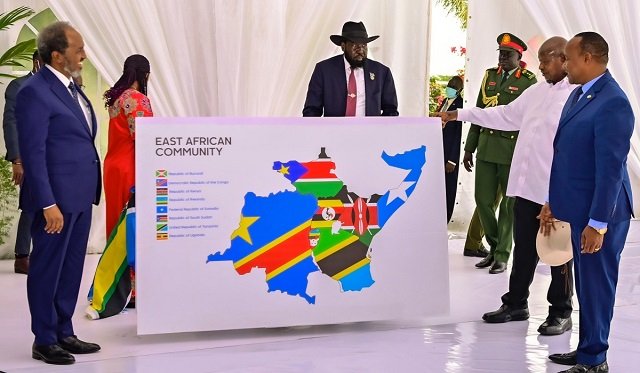
EAC Partner States and their citizens
For Uganda, Tanzania, Burundi, Rwanda and others, the issue is whether Kenya honours the right of establishment it has promoted elsewhere. Partner States can pursue the matter through EAC mechanisms, and individuals or organisations can consider references to the East African Court of Justice. Kenya's response to Tanzania's 2025 licensing restrictions will be cited back at it.
County governments
Counties issue business permits and regulate hawking. In practice, they are the front line of enforcement. They need clear guidance to apply rules lawfully and without discrimination, and to avoid harassment of documented foreign traders, which the government itself has warned against.
Lawyers and compliance advisers
The immediate work is regularisation: immigration, work permits and licensing for foreign clients within the 90-day window. The medium-term work is assessing the Local Content Bill's effect on clients' procurement, employment and contracts, and preparing submissions or challenges on its compatibility with EAC, WTO and constitutional obligations.
What to Watch
Milestone | Why it matters |
|---|---|
House Business Committee scheduling of the Local Content Bill | Signals whether the fast-tracking the President directed is happening |
Amendments tabled for the Committee of the Whole House | The first concrete text of any list of activities reserved for Kenyans, and of changes to the 60% and 80% thresholds |
End of the 90-day regularisation window (early December 2026) | The point at which enforcement against undocumented traders is likely to intensify |
Committee report on the Micro and Small Enterprises (Amendment) Bill | Whether the second bill is also adapted to carry restrictions |
EAC-level responses | Formal positions from Partner States, the EAC Secretariat or a reference to the East African Court of Justice |
Regulations under the bill, if enacted | How "foreign company", the 60% measure and "prescribed standards" are defined in practice |
Practical steps now:
Foreign traders: regularise immigration status and licences within the 90-day window, and keep copies of all documents at the business premises.
Foreign-owned companies: run a gap analysis of local sourcing and citizen employment against the 60% and 80% thresholds, and engage through business associations in the committee stage.
Kenyan suppliers: prepare evidence of compliance with standards and capacity to supply at scale.
Advisers: track the Order Paper and prepare submissions on the bill's compatibility with EAC, WTO and constitutional requirements.
Frequently Asked Questions
Is it illegal for foreigners to run small businesses in Kenya? No. There is currently no law reserving hawking, kiosks or small retail for Kenyans. Foreigners must, however, comply with existing immigration, work permit and business licensing rules.
What is the Local Content Bill, 2025? A private member's bill by Laikipia Woman Representative Jane Kagiri. It would require foreign companies in Kenya to source at least 60% of goods and services locally, employ a workforce at least 80% Kenyan, and face fines of up to Sh100 million, with jail for CEOs, for non-compliance.
Where is the bill in Parliament? It has passed Second Reading debate, held in April 2026, and is awaiting the Committee of the Whole House.
Will the bill ban foreigners from small trade? Not as drafted. The President has asked for it to be expanded to list activities closed to foreigners, but that would require amendments at the committee stage, followed by passage and assent.
What is the 90-day window? After backlash to the original 7 September deadline, the government gave foreign traders 90 days to regularise their immigration status and business permits.
Does the EAC allow Kenya to restrict traders from other member states? The EAC Common Market Protocol grants citizens of Partner States the right of establishment and prohibits nationality-based discrimination, subject to each state's schedules and exceptions. A blanket reservation of small trade for Kenyans would face serious challenge under it.
Citations
- 1.• Ruto turns to Parliament to lock foreigners out of small trade, Nation (September 2026)
- 2.• Kenya now shifts to 90-day regularisation after foreign traders backlash, The Observer (10 September 2026)
- 3.• Kenya: Ruto's foreign traders crackdown stokes xenophobia fears, The Africa Report (14 September 2026)
- 4.• Kenya's foreign-trader crackdown exposes an economic fault line, Semafor (9 September 2026)
- 5.• Concern raised over crackdown on foreign small-scale traders, The Standard
- 6.• Ruto retreats on foreign trader crackdown, Africa Briefing (12 September 2026)
- 7.• Ruto's foreign trader crackdown triggers rush by Burundians to leave Kenya, IGIHE via WebRwanda (7 September 2026)
- 8.• Kenya engages Tanzania on 'discriminatory' licensing rules, AllAfrica (1 August 2025)
Finish Reading the Full Story and Expert Analysis.
Get the latest legal & regulatory intelligence in Kenya
Wansom is AI and can make mistakes.