
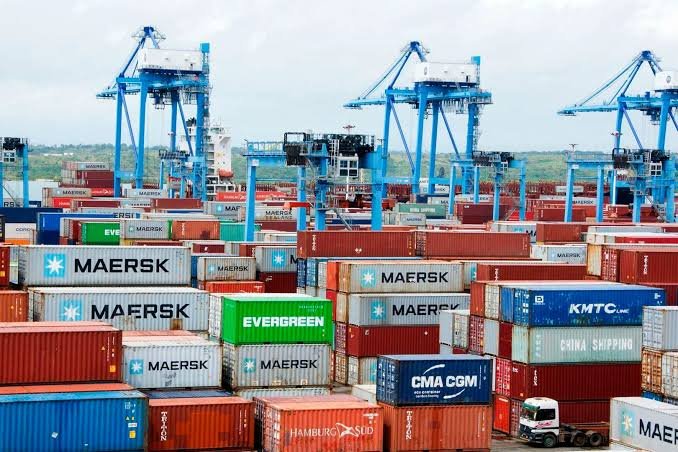
Kenya's Customs Squeeze: Export Declarations, Car Valuation Disputes and EAC Tariff Moves
Summary
Section 23B, Tax Procedures Act (from 1 September 2026): importers must obtain and keep for five years an official export declaration from the country of export. Without it, KRA can reject declared value, origin or cost.
Port disruption: KIFWA, clearing agents and car dealers report stalled releases, especially of vehicles and cargo shipped before 3 August. KRA says the rule is statutory and cannot be suspended, but will keep engaging.
Pre-shipment link: the Advance Cargo Declaration, mandatory for containerised cargo since 3 August, already requires the export declaration before loading.
Car valuation: the CRSP dispute remains before the court, and KRA declined to comment on 7 September.
EAC Gazette, 4 September: overstayed goods at ICD Nairobi and Mombasa CFS Cluster A1 face online auction in October. Kevian Kenya received a 12-month remission at 10% duty on 1,500 tonnes of beverage inputs.
FY2026/27 CET: mobile phones rise to 25% in Kenya for one year, with higher rates on vehicles, steel, furniture and more, and lower rates on rice, lithium-ion batteries and worn clothing.
Trade law: the measures engage the WTO rules on customs valuation (transaction value, no minimum values) and trade facilitation (consultation, transit), and the primacy of EAC customs law.
Section 23B in Practice: The Export Declaration Rule Meets the Port
The rule. Since 1 September 2026, Section 23B of the Tax Procedures Act, inserted by the Finance Act, 2026, has required anyone importing goods into Kenya to obtain and keep, for at least five years, an export declaration, export entry, customs export certificate or equivalent document issued by the competent authority in the country of export. It must identify the exporter and importer, describe the goods, and state their value, tariff classification and country of export. It must be produced to KRA on demand. Without it, KRA may reject the declared value, cost or origin and reassess.
The pre-shipment link. The rule works alongside KRA's Advance Cargo Declaration (ACD) system, mandatory for containerised cargo from 3 August 2026. Under the ACD, the commercial invoice, freight invoice, bill of lading and export declaration must be lodged, and a validated ACD reference placed on the bill of lading, before the cargo is loaded at origin. In practice, the export declaration is now needed at two points: before shipment, for the ACD, and at clearance, under Section 23B.
The disruption. Within days of commencement, the Kenya International Freight and Warehousing Association (KIFWA), clearing agents and motor-vehicle dealers reported stalled releases at Mombasa:
Complaint | Detail |
|---|---|
Legacy cargo | Much of the cargo being cleared was shipped before 3 August 2026, when the export declaration requirement was introduced, and arrived without one |
Motor vehicles | Dealers argue imported vehicles already carry an export certificate from the country of origin, which should be enough |
Transit cargo | Delays affect cargo bound for Uganda, Rwanda, Burundi, South Sudan, eastern DRC and northern Tanzania |
Costs | Delays translate into storage, demurrage and detention charges, at a port that handled 45.45 million tonnes in 2025 |
Guidance | Agents asked KRA for formal written guidance and release of pre-requirement consignments |
KRA's position (7 September 2026). In a statement from the Commissioner for Customs and Border Control, KRA acknowledged the industry's concerns, but said the requirement is anchored in Section 23B and cannot be suspended administratively. It committed to continue engaging stakeholders to find "practical and lawful solutions".
A pattern of climbdowns elsewhere. The firmness on Section 23B contrasts with the consolidated-cargo valuation benchmark. After protests by small importers and presidential intervention, the government kept the benchmark at Sh2.5 million instead of raising it to Sh3.2 million, and promised to reduce it to Sh2 million. The difference is legal: the benchmark is an administrative tool, while Section 23B is statute.
Motor Vehicle Valuation: The CRSP Dispute Remains in Court

What CRSP is. KRA values imported used vehicles using the Current Retail Selling Price (CRSP) schedule: a list price for each make and model, depreciated by age. Where an invoice value is also available, KRA has used the higher of the two. The CRSP figure drives import duty, excise duty and VAT on every used car landed in Kenya.
How the dispute unfolded:
Date | Development |
|---|---|
2019 | Last CRSP list before the current revision, covering roughly 3,000 models |
22 May 2025 | KRA circular forwarding an updated CRSP list of more than 5,200 models |
30 May 2025 | Public notice: new schedule to apply from 1 July 2025 |
June 2025 | Car Importers Association of Kenya (CIAK) and another petitioner sue, alleging lack of meaningful public participation under Articles 10, 47 and 201 of the Constitution |
30 June 2025 | High Court suspends the circular and notice pending hearing |
2025–2026 | Courts fault the revision for inadequate public participation; KRA undertakes fresh consultations with CIAK, the Kenya Auto Bazaar Association, KIFWA and others |
7 September 2026 | KRA declines to comment on vehicle valuation because the matter is before the court |
Where it stands. The valuation question remains unresolved in court, and KRA's current schedule is the July 2025 list. Separately, the Tax Appeals Tribunal has faulted KRA in individual cases where it could not show how a vehicle's value was arrived at, including a dispute over a Mercedes-Benz.
Why it overlaps with Section 23B. Motor-vehicle dealers are hit twice. The export declaration requirement holds up vehicle releases at Mombasa, and the unresolved CRSP dispute leaves the duty on those vehicles uncertain. For a dealer, both the timing and the cost of clearance are in question.
EAC Gazette, 4 September 2026: Three Kenya Notices
Because Kenya's customs law is the East African Community Customs Management Act, 2004 (EACCMA), key customs actions appear in the EAC Gazette rather than the Kenya Gazette. The 4 September issue carried three notices affecting Kenya.
Overstayed goods headed for auction
Under section 42(1) of EACCMA, goods left uncleared in customs custody can be deemed abandoned after notice, then disposed of. The Commissioner of Customs and Border Control, Dr Lilian Nyawanda, issued two such notices:
Notice | Location | Deadline to enter and remove goods | Inspection | Online auction (ibid.kra.go.ke) |
|---|---|---|---|---|
EAC/305/2026 | Inland Container Depot, Nairobi | 30 days from 4 September (about 4 October 2026) | 15–16 October 2026 | 19–23 October 2026 |
EAC/306/2026 | Container Freight Stations, Mombasa (Cluster A1) | 30 days from 4 September (about 4 October 2026) | 22–23 October 2026 | 26–30 October 2026 |
The lists of affected goods are published on KRA's website. Owners who do not lawfully enter and remove their goods within 30 days lose them; the goods are treated as abandoned to Customs.
The overlap with Section 23B. Cargo stuck at Mombasa for want of an export declaration accrues storage charges and, if left long enough, risks falling into this disposal regime. Importers with goods on the lists, or close to the overstay threshold, need to resolve documentation quickly.
Duty remission for Kevian Kenya (EAC/307/2026)
The EAC Council of Ministers, under section 140 of EACCMA and the EAC Customs Management (Duty Remission) Regulations, 2008, approved a remission for Kevian Kenya Limited:
Element | Detail |
|---|---|
Input | HS 2106.90.20: preparations used in manufacturing beverages and food |
Quantity | 1,500 metric tonnes |
Duty rate | 10%, in place of the full Common External Tariff rate |
Duration | 12 months |
Finished products | Fruit juices and nectars, fruit drinks, fruit-flavoured drinks, carbonated soft drinks, energy drinks and malts |
Signed by | Rt Hon Rebecca Kadaga, Chairperson, EAC Council of Ministers |
Duty remission is how the EAC lets an individual manufacturer import specified inputs at a reduced rate, under strict quantity and end-use conditions, without changing the tariff for everyone. Because the remission is tied to named products and quantities, misuse or diversion can lead to recovery of the remitted duty and penalties.
Background: The FY2026/27 Common External Tariff Changes
The September measures sit on top of the annual EAC tariff reset. The EAC Gazette Vol. AT 1 No. 16 of 30 June 2026 amended the Common External Tariff (CET) with effect from 1 July 2026. For Kenya, the main changes were:
Direction | Products |
|---|---|
0% | Goods imported for the direct and exclusive use of approved public-private partnership infrastructure projects |
Up (to 25%) | Mobile phones, tariff headings 8517.13.00 and 8517.14.00, from 0% to 25% for one year |
Up | Optical fibre cables (8544.70.00); road tractors, trailers and semi-trailers (8701, 8716); iron and steel and articles (Chapters 72 and 73); gas containers (7311.00.10); LPG stoves (7321.11.00); lubricants and greases (2710.19.51/52); crude palm oil (1511.10.00); motor vehicles (8702–8704); baby diapers (9619.00.90); furniture (9403); selected wood panels (4410–4412) |
Up (to 10%) | Certain recorded software media (8523.29.20, 8523.49.10, 8523.80.10), from 0% |
Down | Lithium-ion batteries (8507.60.00); rice (1006); worn clothing (6309.00.10); dates (0804.10.00) for January and February 2027 |
Remissions | One-year remissions on inputs for smart devices (including laptops and tablets), leather goods, animal feeds and other approved industrial uses |
Maintained | Stay of the conditions attached to duty remission for completely knocked-down motorcycle kits, so assemblers keep the remission |
The Fifth Schedule to EACCMA was also amended to exempt goods imported for official use by national intelligence agencies, and specialised paper imported by airlines for printing boarding passes.
Why it matters alongside September. Higher CET rates on vehicles, steel, phones and furniture raise the stakes of customs valuation. Every shilling added to the customs value, whether through a CRSP schedule, a rejected invoice under Section 23B, or a reassessment, now attracts more duty. That multiplies the financial effect of the documentation and valuation disputes now playing out.
The Trade-Law Analysis

1. Customs valuation: transaction value versus reference prices
Kenya applies customs valuation through EACCMA, whose valuation rules follow the WTO Customs Valuation Agreement. The primary method is transaction value: the price actually paid or payable for the goods. Customs may reject a declared value only where it has reasons to doubt its truth or accuracy, after giving the importer a chance to justify it. Even then, it must move through the agreement's alternative methods in sequence. Arbitrary or fictitious values and minimum customs values are prohibited.
That framework bears on each September issue:
Measure | Valuation question |
|---|---|
Section 23B export declaration | As a verification tool, an official export document is a legitimate way to test whether a declared value is true, and is broadly consistent with the doubt-and-justify procedure. The risk lies in treating its absence as automatic grounds to reject value, without the procedural steps the agreement requires |
CRSP for used vehicles | A fixed schedule of retail-based values operates close to a reference or minimum value. The litigation has focused on public participation, but the deeper trade-law question is whether CRSP displaces transaction value in a way the agreement does not allow |
Consolidated-cargo benchmark | KRA itself describes the benchmark as a reference point, not a fixed price. To stay lawful, it must remain a risk indicator rather than the assessed value |
2. Trade facilitation and transit
The WTO Trade Facilitation Agreement requires members to publish trade rules promptly, give traders a reasonable opportunity to comment before new requirements take effect, minimise documentation formalities, and accept copies where possible. Article V of GATT, reinforced by the Facilitation Agreement, protects freedom of transit. Section 23B took effect a month after the ACD made the export declaration a pre-shipment requirement, with cargo already at sea. That timing, and the reported delays to transit cargo for Uganda, Rwanda, Burundi, South Sudan and the DRC, are the kind of friction these rules are designed to prevent. Formal transitional guidance for cargo shipped before 3 August, and recognition of vehicle export certificates as "equivalent" documents, would align practice more closely with them.
3. EAC law and national customs measures
Customs in Kenya is governed by regional law, EACCMA, and the EAC Treaty gives Community law precedence over national law on matters within its scope. Section 23B is a national tax statute that adds a documentary requirement at the customs stage. Domestically, it is an Act of Parliament in force. But neighbouring states moving goods through Mombasa could argue that unilateral national requirements burdening the Northern Corridor should be coordinated through EAC customs procedures.
4. Remission and tariff policy
The Kevian remission and the CET changes show the EAC's standard tools for supporting local manufacturing: reduced duty on inputs, higher duty on competing finished goods. Remissions are lawful under EACCMA, but they are firm-specific. Competitors without remissions may face higher input costs, so transparency about eligibility matters for fair competition.
What It Means for Each Stakeholder
Importers (general cargo)
Every consignment now needs an official export declaration from the country of export: before shipment for containerised cargo under the ACD, and at clearance and on audit for five years under Section 23B. Without one, KRA can reject the declared value and reassess, and cargo can sit at the port accruing charges. Build the document into every purchase order, check that its value, description and HS code match the commercial invoice, and keep it on file. Watch the overstayed-goods lists: cargo left uncleared risks being deemed abandoned and auctioned in October.
Motor vehicle dealers and car importers
Dealers face a double squeeze: release delays under Section 23B, and duty uncertainty while the CRSP dispute is before the court. Higher CET rates on vehicles (8702–8704) since 1 July add to the cost. Practical priorities: obtain export declarations as well as export certificates from Japan, the UAE, the UK and other source markets; press through associations such as CIAK and KABA for formal recognition of export certificates as "equivalent" documents; and follow the court case, which will determine how future vehicles are valued.
Clearing agents and freight forwarders
Agents carry the operational risk. They need clear written guidance from KRA, especially for cargo shipped before 3 August. They should screen documents before vessels arrive and advise clients of the overstay deadlines. KIFWA's engagement with KRA is the main channel for practical solutions; individual agents should document delays and costs in case of later disputes.
Foreign exporters and suppliers
Suppliers selling to Kenya must now provide their own country's export declaration with shipping documents, and file it in advance for ACD purposes. Suppliers who cannot or will not provide it risk losing Kenyan customers. The declaration's details must match the invoice exactly.
Regional traders and transit cargo owners
Ugandan, Rwandan, Burundian, South Sudanese and Congolese importers using Mombasa have been caught in the delays. They should coordinate documentation with forwarders before shipment, and raise transit-specific problems through their national revenue authorities and EAC channels.
Small importers using consolidated cargo
The reprieve on the consolidated-cargo benchmark, held at Sh2.5 million with a promised cut to Sh2 million, is significant. But Section 23B still applies to their goods, and consolidators need export documents covering each consignment.
Manufacturers
The CET changes favour local producers of steel products, furniture, wood panels, lubricants, LPG stoves and vehicles, while duty remissions, like Kevian's, lower input costs for approved firms. Manufacturers that rely on imported inputs should consider applying for remission. Those competing with remission holders should watch for consistency in how remissions are granted.
Kevian Kenya and beverage competitors
Kevian can import 1,500 tonnes of beverage and food preparations at 10% duty for 12 months, for named juice, soft-drink, energy-drink and malt products. It must use the inputs only for those products and within the approved quantity. Competing beverage makers may want to examine whether they qualify for similar remissions.
Bidders at customs auctions
The October online auctions on ibid.kra.go.ke (ICD Nairobi on 19–23 October; Mombasa CFS Cluster A1 on 26–30 October, with inspections the week before each) are an opportunity for buyers. They should inspect goods during the stated windows and check any conditions attached to specific lots.
Consumers
Higher duties on phones, vehicles, furniture and some household goods, together with clearance costs, can feed through into retail prices. Lower duties on rice, lithium-ion batteries and worn clothing work the other way. Stronger valuation checks are meant to protect compliant traders and local industry from under-declared imports.
Lawyers and trade advisers
Work now includes structuring import documentation, challenging reassessments that reject transaction value without due process, advising on CRSP exposure pending the court's decision, recovering goods before they are auctioned, and preparing remission applications. The WTO valuation and facilitation rules and EAC law provide the framework for arguing for proportionate implementation.
Frequently Asked Questions
What does Section 23B of the Tax Procedures Act require? From 1 September 2026, importers must obtain and keep for at least five years an export declaration, export entry, customs export certificate or equivalent document from the country of export. It must show the exporter, importer, description, value, tariff classification and country of export, and be produced to KRA on demand.
Will KRA suspend the export declaration requirement? KRA says it cannot, because the requirement is set by statute. It has committed to continue engaging stakeholders on implementation.
How does the Advance Cargo Declaration relate to Section 23B? The ACD, mandatory for containerised cargo from 3 August 2026, requires the export declaration and other documents to be lodged before cargo is loaded at origin. Section 23B makes the same document a legal requirement for clearance and post-clearance audit.
What is happening with the CRSP for used cars? KRA's revised CRSP schedule has been challenged in court over inadequate public participation. KRA declined to comment on 7 September because the matter is before the court.
What happens to goods left at ICD Nairobi or Mombasa CFSs? Under EAC notices EAC/305/2026 and EAC/306/2026, listed goods not entered and removed within 30 days of 4 September 2026 are deemed abandoned. They will be auctioned online in October 2026.
Did the EAC change Kenya's import duty on mobile phones? Yes. From 1 July 2026, mobile phones under headings 8517.13.00 and 8517.14.00 attract 25% duty in Kenya for one year, up from 0%.
Citations
- 1.• KRA defends new import rules amid cargo clearance row, The Star (7 September 2026)
- 2.• KRA Defends Export Declaration Requirement Amid Cargo Clearance Concerns, Kenyans.co.ke (7 September 2026)
- 3.• Clearing agents protest new export declaration rule by Kenya taxman, The EastAfrican
- 4.• KRA says new export declaration rule backed by law, Radio Kaya
- 5.• KRA defends cargo clearance rule amid complaints from clearing agents and vehicle dealers, Eastleigh Voice
- 6.• KRA Explains New Import Rules Affecting Cargo and Car Dealers, Nairobi Wire (September 2026)
- 7.• High Court Halts KRA's New CRSP Schedule for Used Car Imports, Kenyans.co.ke (30 June 2025)
- 8.• Importers of second hand cars sue KRA over new CRSP values, Bizna Kenya (June 2025)
- 9.• EAC Legal Notice No. EAC/305/2026, overstayed goods at ICD Nairobi, Kenya Revenue Authority
- 10.• EAC Legal Notice No. EAC/306/2026, overstayed goods at CFS Mombasa Cluster A1, Kenya Revenue Authority
- 11.• EAC Legal Notice No. EAC/307/2026, duty remission for Kevian Kenya Limited, Kenya Revenue Authority
- 12.• Kenya: Corporate – Other taxes, PwC Worldwide Tax Summaries (reviewed 17 July 2026)
- 13.• Kenya ACD Is Mandatory From 3 August 2026, ITR Dubai
Finish Reading the Full Story and Expert Analysis.
Get the latest legal & regulatory intelligence in Kenya
Wansom is AI and can make mistakes.