
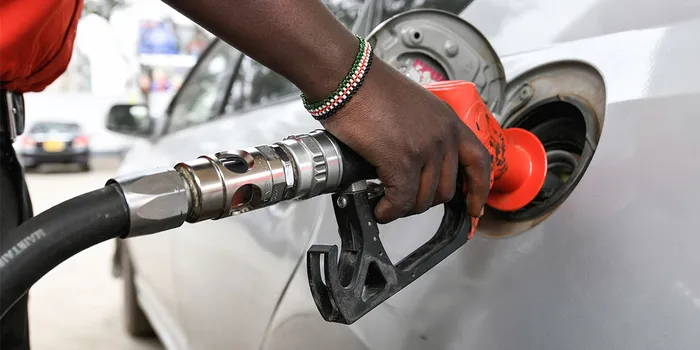
Kenya’s 8% Fuel VAT at a Crossroads: What Happens When the Tax Relief Expires?
Kenya’s fuel market faces two connected deadlines in October: the end of the current regulated price cycle and the end of the temporary legal instrument supporting the reduced VAT rate on petroleum products.
The Energy and Petroleum Regulatory Authority (EPRA) set maximum retail prices for the period from 15 September to 14 October 2026. In Nairobi, the current prices are KSh214.03 per litre for super petrol, KSh217.86 for diesel and KSh191.38 for kerosene. The next review is due on 14 October, with revised prices expected to take effect on 15 October.
The temporary VAT rate is governed by Legal Notice No. 128, published in the Kenya Gazette Supplement on 14 July. Issued by the Cabinet Secretary for the National Treasury under Section 6(1) of the Value Added Tax Act, it reduced VAT on specified petroleum products from 16% to 8%, effective from 15 July through 14 October 2026.
The schedule covers premium motor spirit (petrol), illuminating kerosene and automotive gas oil (diesel). The legal notice does not establish an open-ended reduction: it gives the measure a defined end date.
What exactly is Parliament being asked to do?
On 9 October, the National Assembly invited members of the public, businesses and other stakeholders to submit memoranda on the Tax Laws (Amendment) Bill, 2026. The Bill is sponsored by Majority Leader Kimani Ichung’wah and proposes changes to the VAT Act and the Excise Duty Act. The public-participation deadline is Tuesday, 13 October, at 5 p.m.
The stated policy objective is to provide for an 8% VAT rate on petroleum products, cushioning consumers against the effect of higher international fuel prices. The Bill also includes a separate proposal concerning the calculation of excise duty on tiles.
The distinction between the current legal instrument and the proposed legislation is critical.
The existing legal instrument: Legal Notice No. 128 establishes an 8% VAT rate for the specified period ending 14 October.
The proposed legislation: The Tax Laws (Amendment) Bill is intended to place an 8% rate into legislation, but it remains a Bill during the public-participation and parliamentary process.
The next EPRA review: EPRA must calculate the maximum prices for the new cycle under the applicable legal and pricing framework. The fact that Parliament is considering the Bill does not, by itself, determine which VAT rate will apply to prices effective 15 October.
The National Assembly’s own Bills page lists the Tax Laws (Amendment) Bill, 2026. The public notice reported by Kenyans.co.ke and its subsequent report on the proposed VAT legislation describe the measure and consultation timetable.
Editorial and legal caution: Publication of a Bill is not enactment. The decisive evidence for a continuing rate would be the enacted legislation or a valid further legal notice, not the proposal’s stated intention. The precise commencement provision and final wording should be checked against the gazetted text before reporting that the 8% rate has been made permanent.
How Kenya arrived at the temporary 8% rate
The reduction was part of the government’s response to the sharp rise in international fuel costs associated with the conflict in the Middle East.
In April 2026, the government reduced VAT on petroleum products from 16% to 13%, then lowered it further to 8%, effective from 16 April. The measure was intended to cushion consumers after a substantial increase in fuel prices.
According to the figures reported by Kenyans.co.ke, EPRA estimated that reducing VAT from 13% to 8% lowered the pump price by KSh9.37 per litre for petrol and KSh10.21 for diesel. Those figures illustrate that VAT changes can materially affect the regulated price, although the final pump price continues to depend on the other components of EPRA’s formula.
The temporary rate was subsequently extended for another three months through Legal Notice No. 128, running from 15 July to 14 October. The extension maintained the reduced rate while global fuel-market conditions remained uncertain.
Why the VAT deadline matters for pump prices
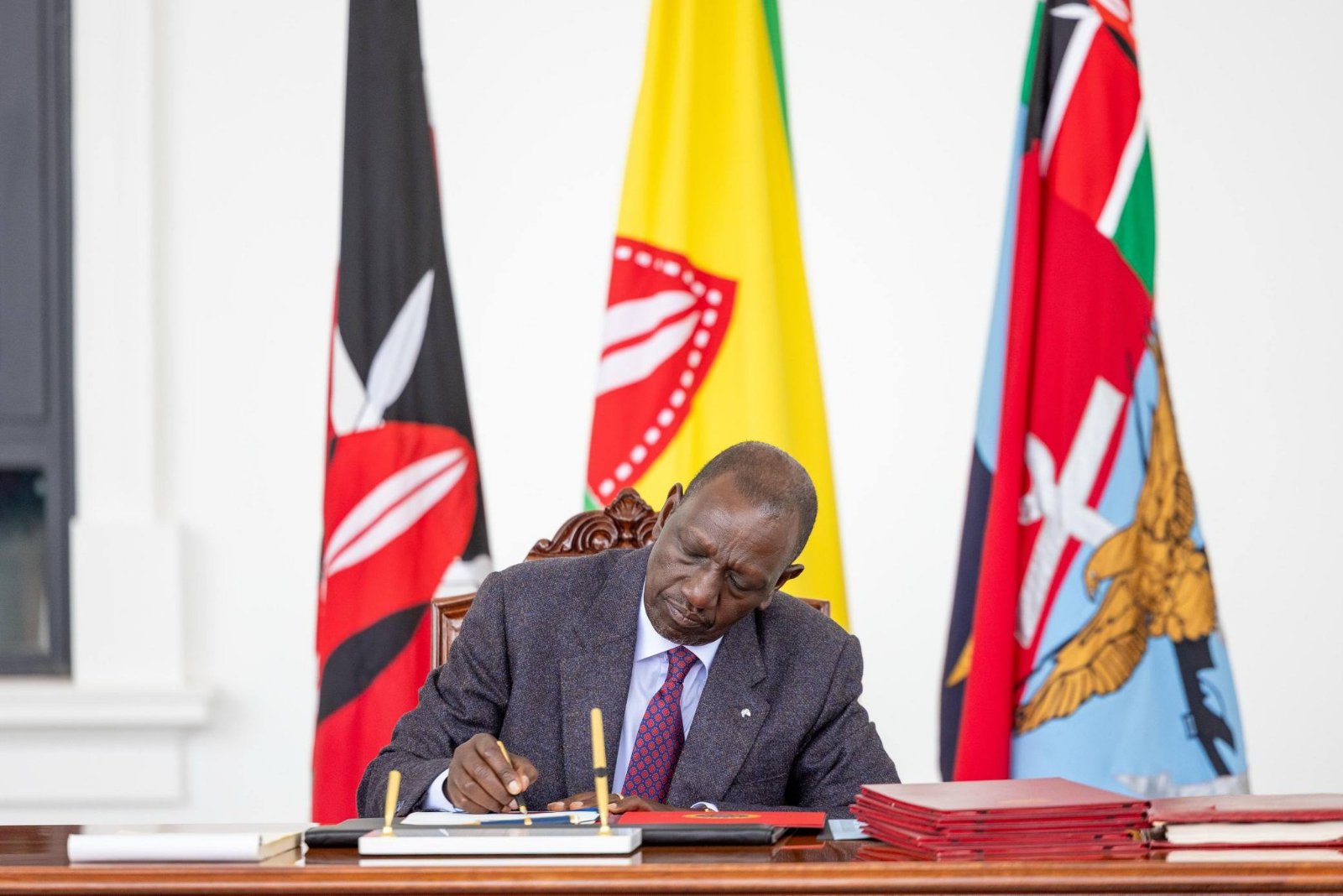
VAT is one component of the regulated fuel price. EPRA’s formula also accounts for imported-product costs, exchange rates, transport, storage and distribution costs, approved margins and other applicable taxes and levies.
That means a VAT change does not translate into a fixed, identical increase in the pump price for every fuel. The effect depends on the taxable value used in the calculation and the movement of the other components between monthly reviews.
The distinction is particularly important in the current market because petrol, diesel and kerosene do not always experience the same import-cost movements. In the September review, the reported landed cost of petrol declined, while diesel and kerosene costs increased. EPRA nevertheless held the Nairobi maximum retail prices at KSh214.03, KSh217.86 and KSh191.38, respectively.
If the VAT rate changes, that change will be incorporated into the price calculation alongside those other movements. A higher VAT rate can push prices upward relative to an otherwise identical calculation at 8%, but it does not allow a reliable forecast of the final price without the full price build-up.
What if the rate returns to 16%?
If the temporary 8% rate expires without a valid extension or replacement measure, the standard 16% rate becomes the relevant baseline under the VAT Act, subject to the applicable law and any further government action. That would create upward pressure on the tax component of fuel prices.
It is important, however, not to present a hypothetical VAT increase as an automatic forecast of the next pump price.
A change in the tax rate is only one input into EPRA’s calculation. International product prices, the exchange rate, freight and supply-chain costs, levies, margins and any stabilisation support may also change. These factors can amplify or offset the effect of the VAT change on the final retail price.
The correct question for consumers is therefore not simply whether VAT rises from 8% to 16%, but how much of that change appears in the complete October–November price build-up.
A transparent review would show the VAT component separately and explain the contribution of the other material changes. That would allow consumers and businesses to distinguish a tax-driven increase from changes arising elsewhere in the fuel-supply chain.
The government’s fiscal trade-off
The reduced rate provides relief at the pump, but it also means that the government collects less VAT than it would at the standard rate, assuming the same taxable base and other conditions.
This is not an abstract concern. President William Ruto said in May that the government had committed KSh28.19 billion to fuel-price support through stabilisation measures and tax relief in the April–May and May–June pricing cycles. He said that, during the May–June cycle alone, the government used KSh7.7 billion to stabilise prices and forewent KSh8 billion in VAT revenue.
These figures refer to the specific pricing cycles described by the President. They should not be treated as the total fiscal cost of the VAT reduction through October, nor should the entire KSh28.19 billion be described as lost tax revenue: the stated support package included both stabilisation measures and tax relief.
The policy choice is therefore between providing immediate relief to consumers and preserving public revenue. A lower VAT rate can moderate the price paid at the pump, but it narrows the revenue collected through that tax compared with a higher-rate counterfactual.
The longer the measure remains in force, the more important it becomes to publish the realised revenue impact and explain how the government intends to balance consumer support with its other spending and financing needs.
Who benefits from the reduced rate?
The direct benefit is the reduction in the VAT component of the price of the specified fuels, assuming the reduction is reflected in the regulated price calculation.
Motorists and businesses that purchase petrol or diesel can benefit directly. Diesel also matters to freight transport, agriculture, construction and other commercial activities, meaning changes in its price can affect the cost of moving goods and operating equipment.
Kerosene has a distinct household role, particularly for people who rely on it for cooking or lighting. Its inclusion in the temporary VAT measure means that it receives the same headline tax rate, although the monetary effect differs with its price and taxable base.
The indirect benefits are less certain. Lower fuel costs can ease pressure on transport fares and distribution expenses, but a VAT reduction does not guarantee that every business will lower its charges. Firms may face other cost increases, and the extent of any pass-through depends on competitive conditions and their operating costs.
Nor is a general fuel-tax reduction necessarily the most targeted way to support the households most exposed to rising living costs. Some of the benefit goes to high-volume users and commercial activity, while households that buy little fuel directly may depend on the extent to which savings flow through to transport and retail prices.
These are reasons to evaluate the policy on both consumer and fiscal grounds, rather than assuming that every shilling of VAT relief translates into an equal improvement in household welfare.
What the Bill could mean for policy certainty
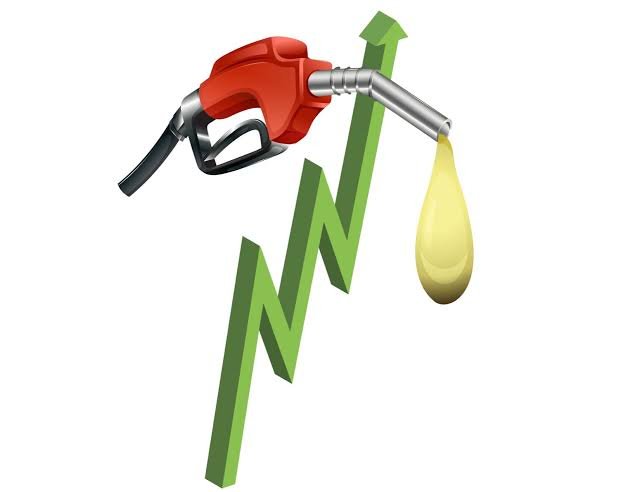
The current approach relies on a temporary legal instrument with a defined end date. Such an arrangement allows government to respond quickly to an emergency, but it creates a recurring decision point when the measure expires.
A legislative provision that establishes the 8% rate more durably would reduce uncertainty over the VAT rate itself, depending on the final wording and commencement provisions. It would not eliminate volatility in international petroleum prices or the exchange rate, and it would not prevent EPRA from adjusting maximum prices when other costs change.
The policy implications depend on the legislation’s final design. If the rate is set for a defined period, another expiry date will eventually require attention. If it is made open-ended, the government would need to account for the longer-term revenue implications and any future decision to revise the rate.
A clear law would also need to make the relationship between the VAT rate, any power to extend a temporary measure and the applicable commencement date unambiguous. That is important for consumers, fuel suppliers, tax administrators and the regulator.
What to watch on 13 and 14 October
Three developments will determine how the story should be updated.
1. The end of public participation. The National Assembly’s stated deadline for memoranda on the Tax Laws (Amendment) Bill is 5 p.m. on 13 October. The public submissions and subsequent committee report may help clarify the proposal’s final form and the issues raised by stakeholders.
2. The legal status of the 8% rate. Before describing the reduced rate as continuing beyond 14 October, check whether the Bill has advanced through the necessary parliamentary stages and whether the relevant legislation has been enacted and commenced. Also check for a valid further Gazette notice extending the existing arrangement.
3. EPRA’s new price notice. The next review is due on 14 October, with the new maximum prices taking effect on 15 October. The notice and accompanying price build-up should be checked for the VAT rate applied and the way it interacts with import costs, taxes, levies, margins and any stabilisation measures.
These are separate processes. Parliament determines the legal framework; the Cabinet Secretary may exercise powers conferred by law; and EPRA calculates the regulated maximum prices under the applicable rules. One process should not be treated as a substitute for evidence from another.
Conclusion
Kenya’s temporary 8% fuel VAT rate has reached a decisive point. The current legal notice runs only through 14 October, the same date as EPRA’s next scheduled price review, while Parliament is considering a Bill intended to provide for the reduced rate in legislation.
The immediate question is whether a valid legal basis for 8% VAT will apply to the next pricing cycle. The broader question is how long Kenya can maintain fuel-price relief while managing the resulting reduction in public revenue.
The outcome matters because VAT changes can affect petrol, diesel and kerosene prices, but the final impact will depend on the full pricing calculation and the law in force. A Bill’s publication is not the same as enactment, and a change in VAT should not be presented as a guaranteed pump-price movement without the supporting EPRA calculation.
For consumers and businesses, the next review is therefore more than a monthly price announcement. It is a test of how Kenya balances emergency cost-of-living relief, legal certainty and the public-finance cost of maintaining lower fuel taxes.
Citations
- 1.EPRA — maximum retail petroleum prices, 15 September–14 October 2026
- 2.Kenya Revenue Authority — Legal Notice No. 128, VAT rate of 8% through 14 October
- 3.National Assembly — Bills page
- 4.Kenyans.co.ke — proposed 8% fuel VAT and public-participation deadline
- 5.President of Kenya — fuel-price support and VAT revenue figures
- 6.EPRA — pump-price formula
Finish Reading the Full Story and Expert Analysis.
Get the latest legal & regulatory intelligence in Kenya
Wansom is AI and can make mistakes.