
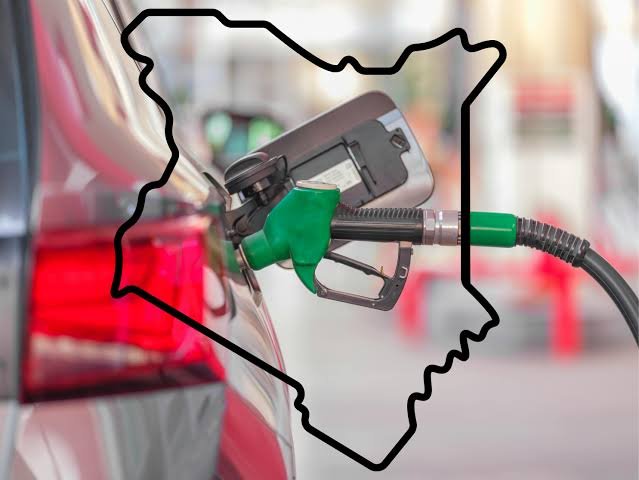
Kenya Holds Fuel Prices Steady: What EPRA’s September Freeze Reveals About Import Costs, Taxes and the Cost of Living
On 14 September, the Energy and Petroleum Regulatory Authority (EPRA) announced that maximum retail prices for super petrol, automotive diesel and kerosene would remain unchanged for the following 30 days.
For Nairobi, the prices effective from midnight on 15 September were:
Product | Maximum price per litre |
|---|---|
Super petrol | KSh 214.03 |
Automotive diesel | KSh 217.86 |
Kerosene | KSh 191.38 |
The same prices that applied during the preceding August–September cycle were retained. These are regulated maximum retail prices, rather than a requirement that every station charge exactly the same amount below the cap. The applicable ceiling varies by town to reflect the regulated pricing structure and distribution costs.
The official notice was issued under Section 101(y) of the Petroleum Act 2019 and Legal Notice No. 192 of 2022, which form part of Kenya’s petroleum-pricing framework. The published prices include applicable VAT and excise duty.
The real story is in the import costs
The most important detail in this review is that the underlying costs of the three fuels moved in different directions.
According to the figures reported in EPRA’s review, the average landed cost of imported super petrol declined by 7.87%, from US$948.92 to US$874.26 per cubic metre between July and August 2026.
Diesel moved in the opposite direction, with its landed cost increasing by 11.86%. Kerosene also became more expensive at the import stage, recording a 9.71% increase to US$1,003.87 per cubic metre.
The result was an unusual combination: petrol became cheaper to import, while diesel and kerosene became more expensive, yet none of the three retail prices changed.
This matters because landed cost is one of the key inputs into Kenya’s monthly price calculation. It represents the cost of imported petroleum products at the relevant point in the supply chain, expressed in Kenyan shillings per litre under EPRA’s pricing methodology.
A fall in landed cost does not automatically produce an equivalent fall at the pump. The regulated price also incorporates other approved costs and margins, transportation, taxes and levies, and VAT. Conversely, a rise in import costs does not necessarily translate into an immediate increase of the same percentage at retail.
The September decision therefore delivered price stability, not a uniform reduction in the cost of fuel.
How Kenya’s regulated fuel-pricing system works
Kenya’s fuel prices are not determined solely by the international crude-oil price. The country imports its petroleum requirements in refined form, exposing domestic prices to international product markets, freight and supply-chain costs, and movements in the exchange rate.
EPRA calculates maximum wholesale and retail prices using a regulated formula. The wholesale component includes the landed cost of imported products and approved costs associated with handling, storage, transport, inventory financing, wholesale margins and applicable taxes. The retail calculation adds approved transport and retail-margin components, alongside VAT as applicable.
This framework has two important implications.
First, the price of crude oil alone cannot explain a monthly pump-price decision. Refined petrol, diesel and kerosene can move differently in international markets because demand, refining capacity, product availability and trading conditions vary by product.
Second, the exchange rate matters because imported petroleum is priced internationally, while consumers pay in Kenyan shillings. A weaker shilling can raise the domestic cost of imported products even when their dollar prices are stable. A stronger shilling can have the opposite effect.
The monthly review therefore reflects a set of costs and policy parameters rather than a simple one-to-one relationship between crude oil and pump prices.
Why petrol users did not receive a price cut
The 7.87% decline in petrol’s landed cost created the possibility of downward pressure on the pump price. EPRA nevertheless retained the maximum price at KSh 214.03 per litre.
That means motorists received price certainty, but no reduction in the regulated petrol price during this cycle.
The distinction is important. A lower import cost is not the same as a lower final retail price because other components of the pricing formula remain relevant. The published decision alone does not establish precisely how much of the petrol-cost reduction was offset by other components, nor does it demonstrate that any one tax or margin caused the price to remain unchanged.
To explain the decision fully, the most useful evidence would be a product-by-product comparison of the August and September price build-ups. That would show how landed cost, transport, margins, taxes, levies and any applicable stabilisation adjustments changed between reviews.
Without that comparison, it would be misleading to conclude that the petrol-price freeze was caused by excessive taxation, retailer margins or a particular government intervention. Those are questions for the detailed price calculations, not conclusions that can be drawn from the unchanged headline price alone.
Diesel and kerosene: the other side of the price freeze
For diesel and kerosene, the decision had a different implication.
Both products recorded higher landed costs, yet their Nairobi maximum retail prices remained at KSh 217.86 and KSh 191.38 per litre, respectively. In this case, consumers were protected from a potential increase in the regulated price during the review period.
Diesel is particularly important because it is widely used in freight transport, commercial vehicles, agriculture, construction and industrial operations. Changes in diesel costs can affect businesses beyond those that buy fuel directly. If transport operators face higher operating costs, some of that pressure may eventually reach wholesale distribution, food delivery, construction inputs and other goods.
Kerosene has a different household role. Its price matters to consumers who use it for cooking, lighting or other domestic purposes. For lower-income households that depend on kerosene, a price increase can absorb a meaningful share of available spending.
However, the absence of a pump-price increase should not be confused with proof that the underlying supply costs did not rise. The landed-cost figures indicate that they did. The unchanged retail prices show only that the maximum prices published for the cycle were held steady.
Price stability is not the same as lower inflation

Holding fuel prices steady can help make transport and household energy costs more predictable for a month. It can also reduce the risk of a sudden fuel-driven cost increase being passed through immediately to consumers.
But the wider inflation effect depends on several factors. Fuel is only one component of transport and production costs. Businesses also face expenses related to wages, financing, rent, imported inputs, maintenance and distribution.
Moreover, the timing of price changes matters. If the cost of imported fuel rises but the pump price does not change during one review, that does not establish that the pressure has disappeared. It may be reflected in other pricing components, managed through an explicit policy mechanism, or become relevant in a later review. The published headline prices do not, by themselves, identify which explanation applies.
For that reason, a single month of unchanged prices should not be treated as proof that inflationary pressure has ended. It is better understood as a period in which the regulated maximum retail prices remained stable despite movements in the underlying import costs.
Taxes remain a central part of the price
The September–October prices were inclusive of VAT and reflected the applicable excise-duty rates adjusted for inflation. EPRA referred to the relevant tax legislation and the VAT treatment specified in Legal Notice No. 128 of 14 July 2026.
Taxes matter because they are incorporated into the regulated price calculation. However, the total pump price also includes import and supply-chain costs, approved margins and other components. A proper assessment of the tax burden requires the published price build-up, rather than treating the entire difference between the landed cost and pump price as tax.
The tax question also has a public-finance dimension. Reducing a fuel tax can provide relief to consumers, but it reduces revenue collected through that tax unless offset elsewhere. Keeping a tax in place preserves the applicable revenue stream, but it may increase the amount consumers pay compared with a scenario in which the tax is reduced.
Neither outcome can be assessed in isolation from the international price environment, the exchange rate and the government’s wider fiscal position.
The September price freeze was not, in itself, evidence that taxes had been reduced. EPRA stated that the prices included VAT and the applicable excise rates. Any claim that a specific tax change funded or caused the freeze would need additional documentary support.
What the previous review tells us
The preceding pricing cycle offers useful context. In August, EPRA reduced diesel’s Nairobi maximum price by KSh 5 per litre, from KSh 222.86 to KSh 217.86. Petrol remained at KSh 214.03 and kerosene at KSh 191.38.
Contemporary reporting attributed the decision to additional government stabilisation support of KSh 938 million, which helped keep petrol and kerosene prices unchanged. That intervention illustrates how government support can affect the outcome of a monthly review.
However, the August support measure should not automatically be treated as the explanation for the September decision. To establish whether a new stabilisation injection, an adjustment carried over from the previous cycle or another pricing component contributed to the September freeze, the detailed September price build-up would need to be examined.
The distinction matters for accountability. If prices are held down through an explicit fiscal intervention, the public should be able to understand its amount, duration, funding mechanism and beneficiaries. If prices remain stable because other components of the pricing formula move in the opposite direction to landed costs, that should be visible in the published calculations as well.
What the unchanged prices mean for consumers
For a Nairobi motorist buying 50 litres of super petrol, the regulated maximum price translates to KSh 10,701.50. The same volume of diesel costs KSh 10,893, while 50 litres of kerosene costs KSh 9,569 at the published maximum rates.
These calculations do not mean that every consumer buys fuel in those quantities. They illustrate the direct cost at the regulated price and provide a useful basis for comparing future reviews.
For businesses, the main immediate benefit is predictability. Transport operators and other fuel-intensive enterprises could plan around unchanged maximum prices for the cycle, although their actual costs also depend on fuel consumption, supplier arrangements and other operating expenses.
For households, stable prices may help avoid an immediate increase in direct fuel spending. But the effect on fares, food prices and other everyday costs depends on whether fuel-price changes are passed through to those markets and how other business expenses evolve.
The distributional impact is therefore broader than the price of a litre at the pump. It includes how transport operators, businesses and households experience the costs of moving people and goods around the country.
The next review: what deserves scrutiny
The September–October decision raises several questions that are worth following in subsequent monthly reviews.
First, will lower petrol import costs eventually be reflected in pump prices? The next review should show whether petrol’s lower landed cost persists and how other components of the formula move.
Second, will diesel and kerosene costs continue to rise? If their import costs remain elevated, the next price calculation will help reveal whether the pressure is temporary or persistent.
Third, what explains the difference between landed-cost movements and retail prices? Publishing and comparing detailed monthly price build-ups makes it possible to distinguish the effects of import costs, taxes, approved margins and any stabilisation measures.
Fourth, how transparent are any government support measures? Where stabilisation support is used, disclosure of its value and mechanism would help the public assess the fiscal cost alongside the benefit to consumers.
These are not merely technical questions. They determine whether the monthly pricing system is understandable to the public and whether consumers can trace the relationship between international fuel costs, taxes and the final price they pay.
Conclusion
Kenya’s September–October fuel-price freeze delivered a month of stability at the pump, but the underlying market was not moving uniformly. Petrol’s landed cost fell, while diesel and kerosene costs increased. EPRA retained all three Nairobi maximum prices, leaving consumers with certainty rather than a petrol-price reduction or a diesel and kerosene increase.
The episode demonstrates why Kenya’s fuel prices cannot be understood through international oil prices alone. Import costs, exchange rates, taxes, distribution expenses and the regulated pricing formula all matter.
The central test for the next review is not simply whether pump prices rise or fall. It is whether the published cost breakdown clearly explains how changes in imported fuel costs are translated into regulated retail prices and whether any policy intervention used to moderate those changes is transparent about its benefits and costs.
For consumers and businesses, that transparency is essential to understanding what drives fuel prices and what a monthly freeze actually achieves.
Citations
- 1.EPRA — official maximum retail prices, 15 September–14 October 2026
- 2.EPRA — pump-price formula
- 3.Citizen Digital — September–October price review and landed-cost movements
- 4.HapaKenya — announcement of unchanged prices
- 5.The Kenya Times — preceding August–September review and reported stabilisation support
Finish Reading the Full Story and Expert Analysis.
Get the latest legal & regulatory intelligence in Kenya
Wansom is AI and can make mistakes.