
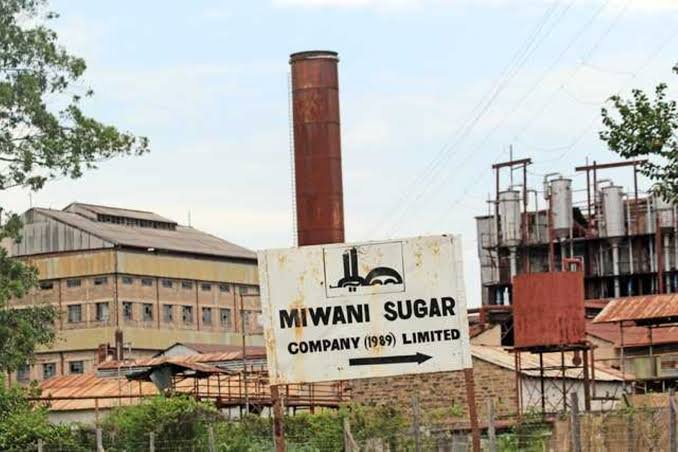
Kenya Bars Millers From Importing Sugar as Oversupply Strains Local Market
Abstract
Kenya's Ministry of Agriculture and Livestock Development has directed local sugar millers to stop importing sugar, citing a doubling of monthly domestic production to over 80,000 metric tonnes and arguing that local cane should be processed before imported supplies are used. The directive responds to a domestic oversupply crisis in which farmers in western Kenya and Nyanza have threatened to uproot mature cane after factories declined deliveries, and some Homa Bay growers have shifted to jaggery production.
Introduction
Millers warn they may suspend operations as warehouses fill with unsold stock, and blame cheaper imports for undercutting demand for local sugar. In parallel, Agriculture Cabinet Secretary Mutahi Kagwe has launched a multi-stakeholder revival plan for the dormant Kwale International Sugar Company (KISCOL), involving debt clearance of KSh66 million owed to farmers and resettlement of roughly 15,000 squatters occupying nearly 7,000 acres of factory land.
Background
Kenya's sugar sector operates within East African Community tariff commitments and a history of import quota disputes among EAC member states, and a unilateral import bar by a Principal Secretary raises questions about the legal instrument being used and its durability against miller resistance or trade challenge. The same week, Cabinet Secretary Mutahi Kagwe announced a separate but connected initiative: a multi-agency committee to revive KISCOL, a private mill idled for years by land disputes, unpaid farmer debts, and insecurity.
Kenya's sugar sector is regulated principally under the Crops Act, 2013 and the Sugar Act regulatory framework administered by the Kenya Sugar Board (formerly the Agriculture and Food Authority's Sugar Directorate), which oversees licensing, cane pricing, and industry development. The legal requirement that millers pay farmers within five days of cane delivery is established under sectoral regulations enforced by the Board, and chronic non-compliance with this requirement has been a recurring driver of farmer disengagement from cane farming across multiple growing seasons.
Kenya's sugar import policy operates within the framework of the East African Community Common External Tariff and periodic COMESA and EAC safeguard measures, under which Kenya has historically negotiated import quotas to bridge domestic production shortfalls, particularly during years of low output. The Common Market for Eastern and Southern Africa (COMESA) safeguard arrangement has previously allowed Kenya extended access to duty-free sugar imports specifically because of chronic domestic undersupply, a justification the current directive now reverses given the reported production increase.
Analysis
For sugar millers currently reliant on imported supplies to supplement local cane processing, the directive requires an immediate operational adjustment: sourcing exclusively from local cane deliveries, which assumes cane supply is actually sufficient and evenly distributed across milling capacity.
Conclusion
Kenya's sugar sector is being managed through two parallel interventions this month, an import restriction aimed at protecting domestic millers and farmers, and a revival effort aimed at restoring idle capacity at Kwale. Both share the same underlying vulnerability: neither has yet demonstrated the legal and institutional durability needed to hold. The import directive's legal basis remains untested against miller resistance, and KISCOL's revival depends on resolving a land dispute far larger and more sensitive than the debt clearance accompanying it. Decision-makers should watch the next few months not for further announcements, but for whether either initiative survives contact with the specific implementation problems, miller compliance and land resettlement, that have undermined similar efforts in this sector before
Citations
- 1.Crops Act, No. 16 of 2013 (Kenya), sugar sector regulatory framework.
- 2.Kenya Sugar Board regulatory framework governing cane pricing, milling licensing, and farmer payment timelines.
- 3.East African Community Common External Tariff and associated trade policy framework.
- 4.Common Market for Eastern and Southern Africa (COMESA) sugar safeguard arrangement.
- 5.Ministry of Agriculture and Livestock Development (Kenya), directive on sugar import restrictions, July 2026.
- 6.Kenya Sugar Board, Kwale International Sugar Company Ltd. Revival Committee, terms of reference, 2026.
- 7.Government of Kenya, sugar mill concessioning agreements for Nzoia, Chemelil, South Nyanza, and Muhoroni Sugar Companies, 2024/2025.
Finish Reading the Full Story and the Expert Analysis.
Get the latest legal & regulatory intelligence in Kenya
Wansom is AI and can make mistakes.