
KEBS Rewrites Kenya's Quality Rulebook: Five Draft Standards Regulations Before Parliament
Summary
The five drafts: Product Certification; Scientific and Industrial Metrology; Testing and Designation of Laboratories; Handling of Conditionally Released and Rejected Imports; and Market Surveillance Regulations, 2026, all under the Standards Act.
Status: consulted on from May 2026 and reviewed at the committee's pre-publication retreat in September. Regulatory Impact Statements for two of them were notified in the Gazette of 4 September 2026. None has yet been gazetted as law.
Key changes: a legal basis for the S-Mark and Diamond Mark, with a public register, recalls and mark suspension; mandatory calibration and licensed calibration providers; designated labs and a 14-day test-certificate timeline; a 5% bank guarantee for conditionally released imports; and supply-chain market surveillance.
The controversy: MPs, led by Chair Samuel Chepkonga and Garissa Township MP Mohamed Dekow, questioned "covert operations" and urged transparent "impromptu inspections".
Trade law: the package must meet WTO TBT disciplines on non-discrimination, necessity and notification, and preserve EAC recognition of certification and testing. It gains importance now that KEBS's pre-export inspection contracts lapsed in February 2026.
Stakeholders: importers, manufacturers, SMEs, retailers, labs, calibration providers, hospitals, exporters, consumers and EAC partners all face new obligations or opportunities.
How These Rules Are Being Made
The five instruments are subsidiary legislation under the Standards Act (Cap. 496), the statute that establishes the Kenya Bureau of Standards (KEBS). Unlike a bill, regulations are made by the Cabinet Secretary, here the CS for Investments, Trade and Industry. Parliament's role is scrutiny, not enactment.
The path to law:
Step | What happens | Where the KEBS drafts stand |
|---|---|---|
1. Drafting and consultation | KEBS prepares drafts and holds public participation | Drafts circulated from May 2026; regional consultations held |
2. Regulatory Impact Statement (RIS) | Under the Statutory Instruments Act, 2013, a regulation likely to impose significant costs on the community must be accompanied by an RIS, and its availability notified in the Gazette | Notice of RIS for the Product Certification and Metrology Regulations published in the Kenya Gazette of 4 September 2026 |
3. Pre-publication scrutiny | The National Assembly's Committee on Delegated Legislation examines whether drafts comply with the Constitution and the parent Act, and stay within delegated powers | All five reviewed at a retreat in September 2026 |
4. Publication | The CS gazettes the final instrument as a Legal Notice | Not yet done for any of the five |
5. Post-publication scrutiny | The instrument is tabled in Parliament, and the committee may recommend annulment | Pending |
The scrutiny retreat. The committee, chaired by Ainabkoi MP Samuel Chepkonga, examined eight instruments in all: the five KEBS regulations, the Fertiliser and Animal Foodstuffs (Fertiliser) Regulations, 2026, the Privileges and Immunities (Ford Foundation) Order, 2026, and draft regulations under the Civil Aviation Act. Its central test is legality: whether each instrument is grounded in the parent Act and consistent with constitutional rights.
The Five Draft Regulations, Explained
1. Standards (Product Certification) Regulations, 2026
What it does: replaces the Standardisation Marks (Permits and Fees) Regulations of 1977, the first overhaul of product certification rules in almost five decades. It gives formal legal footing to:
the Standardization Mark (S-Mark), mandatory for products covered by compulsory Kenya Standards; and
the Diamond Mark of Quality, a voluntary higher-tier mark.
It creates a public register of certified products, and gives KEBS express powers to stop the sale or distribution of non-compliant goods, order recalls and suspend certification marks. KEBS says it also aims to simplify procedures and lower some certification costs for SMEs.
In plain terms: a product's quality mark becomes a legally defined permit with clear conditions. Buyers will be able to check it publicly, and KEBS will be able to withdraw it quickly.
2. Standards (Scientific and Industrial Metrology) Regulations, 2026
What it does: designates KEBS as Kenya's National Metrology Institute. It makes calibration mandatory for specified medical, industrial and environmental equipment, and requires calibration service providers to be licensed and registered by KEBS.
In plain terms: hospital monitors, industrial gauges, scales used in production and environmental measuring instruments must be checked against traceable standards, by licensed providers only.
3. Standards (Testing and Designation of Laboratories) Regulations, 2026
What it does: makes KEBS laboratories the national reference laboratories. It sets requirements for designating external laboratories, including accreditation, proficiency testing, quality control, reporting and regular assessment. It also introduces standard sample-handling procedures and a 14-day timeline for issuing test certificates.
In plain terms: only properly accredited and designated labs' results will count for certification, and testing should become faster and more predictable.
4. Standards (Handling of Conditionally Released and Rejected Imports) Regulations, 2026
What it does: governs imports released before full conformity checks are complete. Importers of conditionally released goods would have to lodge a bank guarantee equal to 5% of the customs value. Goods that fail would face prescribed procedures for reworking, destruction or re-export.
In plain terms: if KEBS lets goods out of the port before testing is finished, the importer puts money on the line. Goods that fail must be fixed, destroyed or shipped out under set rules.
5. Standards (Market Surveillance) Regulations, 2026
What it does: creates uniform procedures for KEBS investigations, inspections, sampling, testing and enforcement once goods are on the market. It provides for tracking products through the supply chain, corrective measures (rework, recycling, withdrawal and recall), and the release of goods found compliant. It is the most contested of the five, because it refers to "covert operations".
In plain terms: KEBS checks goods in shops and warehouses, not just at the border, and can trace and pull unsafe products.
"Covert Operations": The Point MPs Pushed Back On
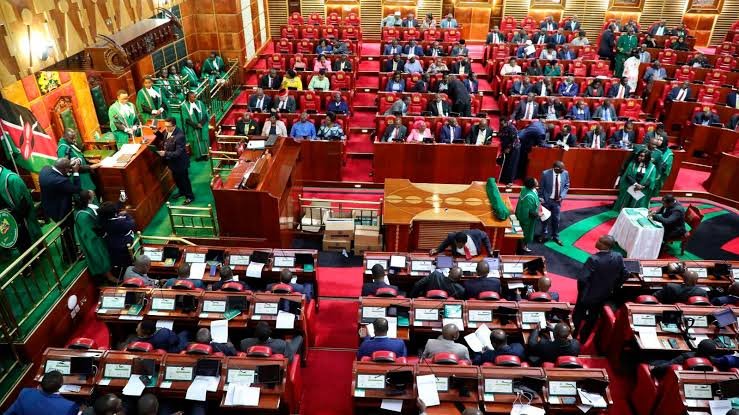
The sharpest exchange at the retreat concerned a single term in the draft Market Surveillance Regulations.
The question. Garissa Township MP Mohamed Dekow asked why a public regulator needed powers described as "covert operations".
KEBS's answer. Officials explained that the term covers inspectors visiting vendors without notice, buying products as an ordinary customer would, and sending them for testing. This is a standard market-surveillance technique sometimes called test purchasing.
The committee's view.
Member | Position |
|---|---|
Samuel Chepkonga (Chair, Ainabkoi) | KEBS is a public body that must act transparently; replace "covert operations" with "impromptu inspections" |
Pauline Lenguris (Samburu County) | Advance notice could undermine enforcement, since traders may change conduct before inspectors arrive |
Julius Sunkuli (Kilgoris) | Simplify the language so ordinary Kenyans understand their rights and obligations |
Robert Gichimu (Vice-Chair) | Regulations should be accessible to all stakeholders, not only lawyers |
The committee directed KEBS to ensure enforcement is transparent, accountable and firmly grounded in law, protecting consumers while safeguarding businesses' rights during inspections.
Why the wording matters legally. Subsidiary legislation can only exercise powers the parent Act confers. Inspection powers that touch privacy (Article 31), property (Article 40) and fair administrative action (Article 47) must be clearly defined and proportionate. Unannounced test purchases are a recognised regulatory tool, but a vague reference to "covert operations" invites challenge on whether it authorises more, such as surveillance or entry without authority. Precise drafting protects both businesses and KEBS's own enforcement actions from being overturned.
The Trade-Law Dimension
Standards and conformity rules are among the most powerful trade tools a country has. They can protect consumers and build export credibility, but they can also act as non-tariff barriers. The five regulations sit inside three layers of trade law.
1. The WTO Agreement on Technical Barriers to Trade (TBT)
The TBT Agreement governs mandatory product requirements (technical regulations) and the procedures used to check compliance (conformity assessment). Its core disciplines apply directly to KEBS's package:
TBT principle | How it bears on the regulations |
|---|---|
Non-discrimination | Imported products must be treated no less favourably than local ones in certification, testing and surveillance |
No unnecessary obstacles | Procedures should not be stricter or slower than needed to give adequate confidence of conformity |
Transparency and notification | New technical regulations and conformity assessment procedures with a significant trade effect should be notified to the WTO in draft, with time for comments from trading partners |
Recognition of foreign results | Members are encouraged to accept conformity assessment results from other members where they offer equivalent assurance |
The 5% bank guarantee for conditionally released imports is the provision most likely to attract scrutiny from trading partners. It applies at the border, so KEBS will need to show that it is proportionate and that locally made goods face equivalent assurance requirements. KEBS has framed the package as strengthening oversight of both imported and locally manufactured goods.
2. The East African Community
The EAC Standardisation, Quality Assurance, Metrology and Testing Act, 2006, harmonises standards and requires Partner States to recognise each other's certification and testing within the EAC framework. KEBS officials have described the S-Mark as recognised across the EAC and as an aid to cross-border trade. The new rules will need to keep that recognition working. A Ugandan or Tanzanian product certified by its national bureau, or tested in a recognised lab, should not face duplicate Kenyan certification or designation demands that the EAC regime forbids. Any such duplication could be raised as a non-tariff barrier under the EAC Elimination of Non-Tariff Barriers Act, 2017.
3. The import-control context
KEBS's Pre-Export Verification of Conformity (PVoC) contracts, under which third-party inspectors certified goods before shipment, expired on 8 February 2026. KEBS then urged importers to test goods in accredited laboratories before import. With less checking done abroad, more of the conformity burden shifts to Kenya's border and market. That explains why the conditional-release, laboratory and market surveillance regulations matter so much now: they become the main legal basis for controlling substandard imports.
4. Under AfCFTA
The African Continental Free Trade Area's annex on technical barriers to trade follows the same logic as the WTO rules. It encourages harmonisation, mutual recognition and transparency. Kenya's new regime will be judged against those commitments as continental trade grows.
What It Means for Each Stakeholder
Importers and traders
Importers face the most direct financial change. If goods are released before testing is complete, a bank guarantee of 5% of customs value will tie up credit lines. Goods that fail could be reworked, destroyed or re-exported at the importer's cost. With pre-export inspection lapsed, importers should test goods in accredited labs before shipping, secure the Diamond Mark where it can ease clearance, and price guarantee and rejection risk into landed costs. Clear, written procedures should, however, make outcomes at the port more predictable than ad hoc decisions.
Local manufacturers
Manufacturers gain a modernised certification system and potentially lower costs for SMEs, but also tighter obligations. Certification marks become legally defined permits that KEBS can suspend, and products will be listed on a public register. Recalls and stop-sale orders gain an express legal basis. Production equipment covered by the metrology rules must be calibrated by licensed providers. Well-run manufacturers benefit from a level playing field against substandard imports.
SMEs and informal producers
KEBS says the reforms aim to simplify compliance and lower certification costs for small businesses. Whether that holds will depend on the final fee schedules and on how mandatory calibration and testing requirements are applied to small producers. The committee's call for plain language is especially important for this group.
Retailers, wholesalers and distributors
Market surveillance moves enforcement into shops and warehouses. Expect unannounced inspections and test purchases, product traceability requests and corrective orders, including withdrawals and recalls. Distributors should keep supplier documentation, such as certification marks and test reports, so they can show due diligence quickly.
Testing laboratories
Private labs whose results are used for certification must be accredited, designated by KEBS, take part in proficiency testing and submit to regular assessment. KEBS labs become the national reference point. For accredited labs this is a market opportunity; for others it is a compliance deadline. The 14-day timeline for test certificates sets a service standard for all.
Calibration service providers
A new licensing and registration regime applies. Providers will need KEBS licences, demonstrable traceability to international standards and qualified staff. Demand should rise as calibration becomes mandatory for specified equipment.
Hospitals and healthcare providers
Specified medical equipment will need regular calibration by licensed providers. That improves patient safety and diagnostic accuracy, but adds recurring compliance costs and record-keeping duties.
Industrial and environmental operators
Factories, utilities and firms that monitor emissions or effluent will need certified calibration of specified instruments. That strengthens the evidential value of their readings in environmental compliance and disputes.
Consumers
Consumers stand to benefit most: a public register to verify certified products, legal recall powers, and more checks on goods already on shelves. The success of the reforms will be measured in fewer substandard goods reaching homes.
Exporters
Internationally credible labs, metrology and certification help Kenyan goods gain acceptance abroad. KEBS argues that stronger lab regulation will improve recognition of Kenyan test results in regional and export markets.
EAC partners and foreign suppliers
Neighbouring states and foreign manufacturers will watch for duplicate certification, testing or designation demands that could act as non-tariff barriers. They will also expect notification and comment opportunities consistent with WTO TBT practice.
Lawyers and compliance advisers
The immediate work is reviewing the drafts against the Standards Act, the Constitution and trade commitments, and preparing submissions before publication. After gazettement, clients will need compliance programmes covering certification, calibration, lab designation, guarantees and inspection protocols, along with advice on challenging enforcement that exceeds the regulations.
What to Watch
Milestone | Why it matters |
|---|---|
The Committee on Delegated Legislation's formal report | Whether it recommends changes, including dropping "covert operations", before publication |
Gazettement as Legal Notices | The point at which the rules become binding; check for any commencement or transition period |
Regulatory Impact Statements | Gazetted for the Product Certification and Metrology Regulations; stakeholders can use them to test cost estimates |
Fee schedules | Whether certification, designation and calibration fees fall for SMEs as promised |
Any WTO TBT notifications | Whether trading partners have a formal window to comment |
Implementation of the 5% guarantee | How KEBS administers guarantees, releases them and handles disputes |
Practical steps now:
Importers: model the cost of a 5% guarantee, line up pre-shipment testing in accredited labs, and review supply contracts so foreign suppliers bear rejection risk.
Manufacturers: audit certification marks and calibration records, and prepare for public listing on the register.
Labs and calibration providers: begin accreditation and licensing preparations, and check that procedures can meet the 14-day certificate timeline.
Retailers and distributors: build supplier compliance files and an inspection-response protocol.
All: engage KEBS and the committee before publication; once gazetted, changes are harder to secure.
Frequently Asked Questions
Are the new KEBS regulations in force? No. All five are drafts. They have been through public consultation and pre-publication scrutiny by Parliament's Committee on Delegated Legislation, but none has yet been gazetted as a Legal Notice.
What are the five regulations? The Standards (Product Certification), (Scientific and Industrial Metrology), (Testing and Designation of Laboratories), (Handling of Conditionally Released and Rejected Imports), and (Market Surveillance) Regulations, 2026.
What changes for importers? Goods released before conformity checks are complete would require a bank guarantee of 5% of customs value. Non-compliant goods could be reworked, destroyed or re-exported.
What is the Diamond Mark of Quality? A voluntary KEBS mark indicating higher quality assurance. The new certification regulations would give it, and the mandatory Standardization Mark, a formal legal basis.
Why did MPs object to "covert operations"? They said a public regulator should act transparently, and asked KEBS to describe unannounced inspections and test purchases as "impromptu inspections" grounded clearly in law.
Do calibration providers need a licence? Under the draft metrology regulations, yes. Calibration service providers would need KEBS licences, and calibration would be mandatory for specified medical, industrial and environmental equipment.
Citations
- 1.• Lawmakers question KEBS planned use of 'covert operations' during market inspections, The Standard (30 September 2026)
- 2.• KEBS proposes tougher regulations on imported goods, TV47 (16 September 2026)
- 3.• KEBS seeks tougher controls on substandard imports under new regulations, Eastleigh Voice
- 4.• Push to strengthen regulation of imported, locally manufactured products, The Standard
- 5.• KEBS proposes tougher rules on product quality and laboratory testing, Eastleigh Voice
- 6.• KEBS seeks public views on new rules to improve quality of Kenyan products, People Daily
- 7.• Kenya: Updated product regulations, Product Compliance Institute (2 July 2026)
- 8.• KEBS releases new import rules following expiry of inspection contracts, People Daily (February 2026)
Finish Reading the Full Story and Expert Analysis.
Get the latest legal & regulatory intelligence in Kenya
Wansom is AI and can make mistakes.