
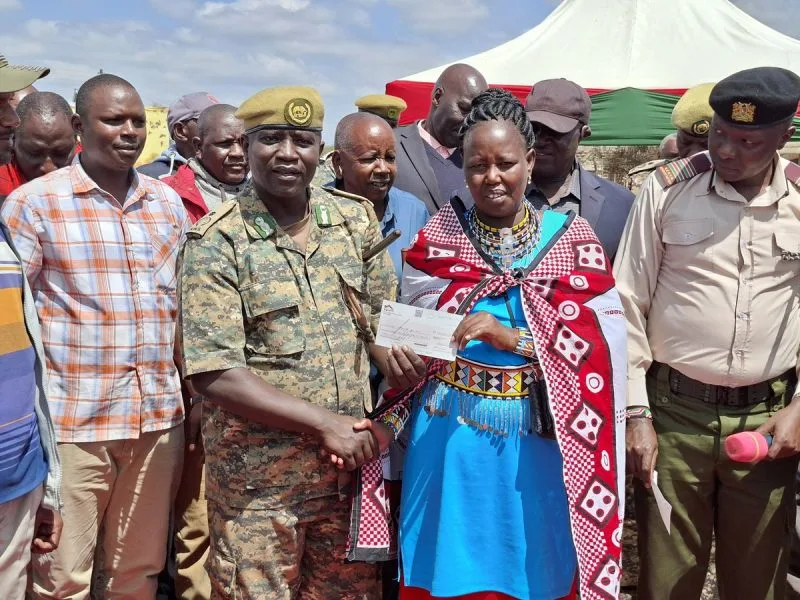
Kajiado County Receives KSh 49.8 Million Compensation from Kenyan Government
Abstract
The Kenyan government recently disbursed KSh 49.8 million to 187 human-wildlife conflict victims in Kajiado County, underscoring its commitment to addressing a persistent challenge. This payout reflects ongoing efforts under the recently enacted Wildlife Conservation and Management Act, 2025, which replaced the 2013 framework. The new legislation aims to streamline the compensation process, increase payout limits, and enhance community participation. Despite these legislative advancements and the introduction of a digital claims system, significant hurdles remain, including a substantial backlog of claims, funding shortfalls, and bureaucratic inefficiencies that continue to impact affected communities across Kenya.
Introduction
The recent disbursement of KSh 49.8 million to 187 victims of human-wildlife conflict in Kajiado County by the Kenyan government highlights a critical and ongoing legal and social challenge in wildlife-rich regions. This financial redress, reported by Capital FM Kenya, signifies the State's renewed commitment to mitigating the severe economic and personal toll exacted by interactions between humans and wildlife. Such conflicts, often resulting in loss of life, injury, and destruction of property, have historically strained relations between conservation efforts and community livelihoods.
This development comes against the backdrop of significant legislative reforms, particularly the enactment of the Wildlife Conservation and Management Act, 2025, which superseded the 2013 framework. The new Act introduces a more robust compensation scheme and procedural improvements designed to address long-standing grievances. This article will delve into the current legal landscape governing human-wildlife conflict compensation in Kenya, examining the provisions of the 2025 Act, the administrative mechanisms in place, and the persistent challenges faced by practitioners and victims in navigating this complex system.
Background
The legal framework for human-wildlife conflict compensation in Kenya has evolved significantly over the years, reflecting a growing recognition of the need to balance wildlife conservation with community welfare. Historically, compensation under the repealed Wildlife (Conservation and Management) Act, Chapter 376, was often meager and the process cumbersome, leading to widespread dissatisfaction. The Wildlife Conservation and Management Act, 2013, marked a pivotal shift, substantially raising compensation payments and expanding the types of losses eligible for redress, including human injury, fatality, and damage to private property such as crops and livestock.
However, the 2013 Act, despite its improvements, still faced considerable implementation challenges, including a burgeoning backlog of claims and administrative delays. Recognizing these persistent issues, the government recently enacted the Wildlife Conservation and Management Act, 2025, which now serves as the primary legislation. This new Act establishes a two-tier compensation system and sets out specific compensation caps, aiming to provide a more efficient and equitable mechanism for addressing human-wildlife conflict. The Kenya Wildlife Service (KWS) remains the principal agency responsible for wildlife management and plays a crucial role in the initial stages of the compensation process, including incident verification and reporting.
Analysis
The Wildlife Conservation and Management Act, 2025, introduces a structured compensation framework designed to enhance efficiency and fairness. Under the new Act, claims for personal injury or death, as well as crop, livestock, or property damage, are processed through a two-tier system. Initially, a County Wildlife Compensation Committee (CWCC) is responsible for receiving and verifying claims within its jurisdiction. For personal injury or death, victims or their families must lodge a claim with the CWCC within 12 months of the incident, while claims for crop, livestock, or property losses must be filed within 30 days.
Upon verification, the CWCC submits its findings and recommendations to a Ministerial Wildlife Compensation Committee, which then makes the final decision on compensation. The Act specifies compensation caps: KSh 5 million for death, KSh 3 million for injury occasioning permanent disability, and up to KSh 1 million for other injuries. Compensation for property losses, such as crop or livestock destruction, is determined based on the extent of the damage. Dissatisfied claimants have the right to appeal the Ministerial Committee's award to the National Wildlife Tribunal within thirty days.
Despite these legislative improvements, significant practical challenges persist. A major concern is the substantial backlog of compensation claims, with thousands of cases, some dating back to 2014, still pending. This backlog has been attributed to funding gaps, bureaucratic delays, and the previously manual and cumbersome claims processing system. The government has acknowledged these issues and has begun piloting a new digital compensation scheme in hotspot counties, including Kajiado, to streamline reporting, evaluation, approval, and disbursement processes, with the aim of settling claims within three months.
However, the Act also stipulates conditions under which claims may be rejected. These include instances where the victim or property owner failed to take reasonable measures to protect themselves or their property from wildlife damage, where land use practices are inconsistent with the area's ecosystem-based management plan, or due to a lack of sufficient evidence to prove a wildlife attack. These provisions place a significant evidential burden on claimants and require careful adherence to reporting timelines and protective measures, which can be challenging for communities living in close proximity to wildlife. The ongoing efforts to clear the backlog and implement the digital system are crucial steps towards realizing the full potential of the 2025 Act in fostering harmonious human-wildlife coexistence.
Conclusion
The recent KSh 49.8 million payout in Kajiado County, while a positive step, underscores the ongoing complexities and the substantial need for effective human-wildlife conflict resolution in Kenya. The Wildlife Conservation and Management Act, 2025, represents a significant legislative advancement, offering a more structured and generous compensation scheme than its predecessors. However, the success of this framework hinges on its efficient implementation, particularly in addressing the inherited backlog of claims and ensuring timely disbursements.
For legal practitioners, advising clients on human-wildlife conflict claims now requires a thorough understanding of the 2025 Act's specific provisions, including the updated compensation caps, strict reporting timelines, and the two-tier committee structure. Emphasis must be placed on meticulous documentation and adherence to protective measures to strengthen claims and avoid rejection. Practitioners should closely monitor the national rollout and effectiveness of the new digital compensation system, as it promises to significantly impact the speed and transparency of the process. Continued advocacy for adequate funding and administrative capacity within the Kenya Wildlife Service and the compensation committees will be vital to ensure that the legislative intent translates into tangible relief for affected communities, fostering a more sustainable coexistence between humans and wildlife.
Citations
- 1.Wildlife Conservation and Management Act, 2013 (No. 47 of 2013)
How does this affect your business?
Get an AI analysis of this article grounded in your jurisdictions, practice areas, and any policy documents you've uploaded to Wansom.