
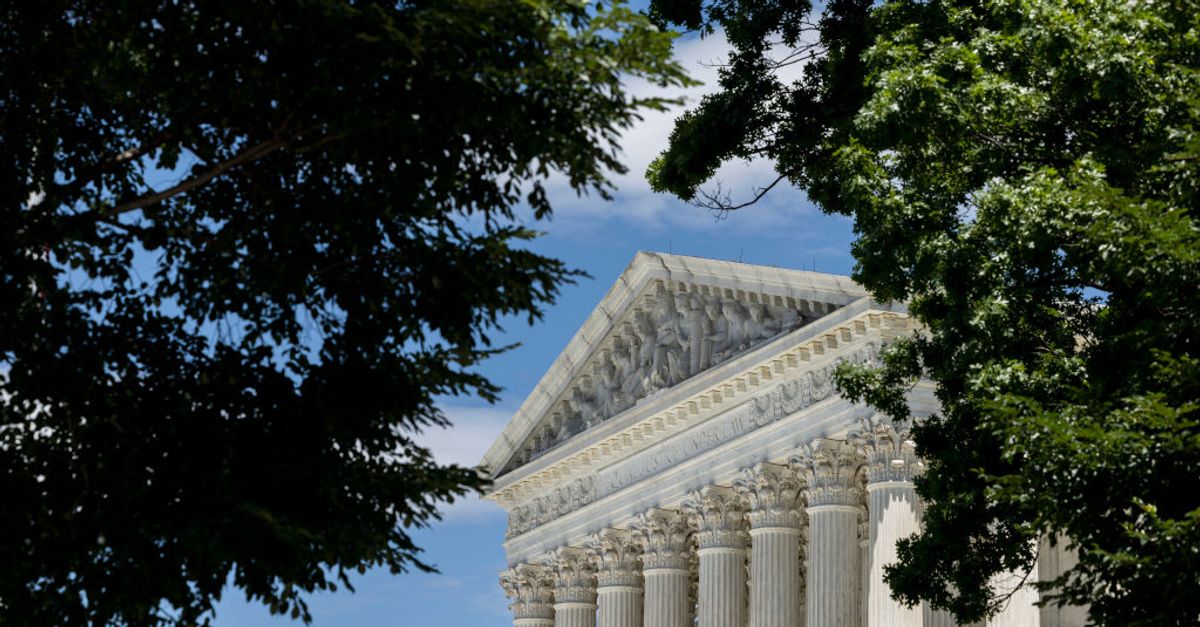
Justices urged to stop Texas from enforcing age-verification and parental-consent law on apps
Abstract
The Supreme Court of the United States has been urged to intervene in a legal challenge against the Texas App Store Accountability Act (Senate Bill 2420), a state law imposing stringent age-verification and parental-consent requirements for minors accessing apps and in-app content. A student group and a technology trade association filed emergency applications on the interim docket, seeking to reinstate federal court orders that had previously blocked the law's enforcement. The Act, which became effective on January 1, 2026, mandates that app stores verify the age of all users and require parental consent for minors' app downloads and in-app purchases. This legal battle highlights significant First Amendment concerns regarding freedom of speech, privacy, and the practical burdens placed on digital platforms, setting a potential precedent for similar state-level internet regulations across the nation.
Introduction
The digital landscape in the United States is increasingly becoming a battleground for state-level regulation aimed at protecting minors online, often clashing with established constitutional principles. At the forefront of this conflict is the Texas App Store Accountability Act, enacted as Senate Bill 2420 (SB 2420), which mandates comprehensive age verification and parental consent for minors using mobile applications. This legislation, which took effect on January 1, 2026, has sparked a significant legal challenge, culminating in an urgent appeal to the Supreme Court of the United States to halt its enforcement.
Two key plaintiffs, the Computer & Communications Industry Association (CCIA) and Students Engaged in Advancing Texas (SEAT), have petitioned the Supreme Court on its interim docket, requesting the restoration of federal court injunctions that had previously blocked the law. Their petitions argue that SB 2420 infringes upon fundamental First Amendment rights, including freedom of speech and the right to anonymity, while also imposing impractical and burdensome requirements on app stores and developers. This article will delve into the provisions of the Texas App Store Accountability Act, examine the constitutional arguments raised against it, and discuss the broader implications of this ongoing legal saga for digital platforms and internet governance.
Background
The Texas App Store Accountability Act (SB 2420) is part of a broader legislative effort in Texas, often referred to as the Securing Children Online through Parental Empowerment (SCOPE) Act (House Bill 18), designed to safeguard minors from perceived online harms. While certain provisions of HB 18 had earlier effective dates, the specific requirements targeting app stores under SB 2420 became effective on January 1, 2026. The Act defines an "App Store" broadly to include any publicly available internet website, software application, or electronic service that distributes software applications from a developer to a mobile device user.
Under SB 2420, app stores operating in Texas are required to implement commercially reasonable methods to verify the age of each user upon account creation, categorizing them into groups such as under 13, 13-15, 16-17, and 18 or older. For users identified as minors (under 18), the law mandates that their accounts be affiliated with a verified parent or legal guardian's account. Crucially, parental consent is then required for every app download or in-app purchase made by the minor. The Act also includes provisions for data privacy, such as minimizing data collection, deleting personal data used for age verification, and enhancing security for transmitted personal information. The stated legislative intent behind these measures is to empower parents and protect minors from harmful content and exploitative data collection practices, a sentiment echoed by similar legislation in at least sixteen other states, including California, Utah, and Louisiana.
Analysis
The legal challenge to the Texas App Store Accountability Act centers primarily on its alleged violations of the First Amendment. Opponents argue that the law's age-verification and parental-consent mandates constitute an unconstitutional restriction on protected speech, creating a chilling effect on both minors' access to information and developers' ability to disseminate content. The U.S. District Court for the Western District of Texas, presided over by Judge Robert Pitman, initially granted a preliminary injunction against several key provisions of the broader SCOPE Act (HB 18), including monitoring, filtering, age verification, and targeted advertising requirements. The court found that these provisions were content-based regulations, subject to strict scrutiny, and were likely unconstitutional due to being overbroad, overly restrictive, and not the least restrictive means to achieve the state's objectives.
The district court's reasoning highlighted that the law's restrictions on access to lawful online content "exclusively target speech" and would effectively compel online businesses to censor broad categories of speech for both minors and adults. Furthermore, the requirement for age verification and parental consent for every app download or in-app purchase was deemed to impose significant practical and financial burdens on app stores and developers, potentially leading to a reduction in available content or a complete withdrawal from the Texas market. The plaintiffs also raised concerns about data privacy and security, arguing that mandating the collection of sensitive personal information for age verification creates new targets for hackers and predators.
However, the Fifth Circuit Court of Appeals subsequently stayed the preliminary injunction, allowing the Texas App Store Accountability Act (SB 2420) to take effect. This decision prompted the emergency applications to the Supreme Court, with the plaintiffs arguing that the Fifth Circuit's ruling misunderstands First Amendment precedent. They contend that the law effectively deputizes app stores to police access to vast amounts of online speech, requiring all Texans to verify their age before downloading even basic applications like weather apps or news sources, and demanding individual parental consent for every minor's download or in-app purchase. While the Supreme Court's 2025 decision in *Free Speech Coalition v. Paxton* addressed age restrictions on *sexual material* that minors have no constitutional right to access, legal experts argue that its reasoning is limited and does not extend to the broader categories of protected speech implicated by the Texas App Store Accountability Act. The ongoing litigation underscores the tension between state efforts to protect minors and established First Amendment protections, particularly given the federal Children's Online Privacy Protection Act (COPPA), which primarily regulates data collection from children under 13 but does not impose such broad age-gating requirements for all online content.
Conclusion
The Supreme Court's consideration of the emergency applications against the Texas App Store Accountability Act marks a critical juncture in the evolving legal landscape of internet regulation. The outcome of this interim docket request will not only determine the immediate enforceability of Texas's law but could also signal the Court's broader stance on state-led efforts to control online content and access for minors. The arguments presented highlight fundamental questions about the scope of First Amendment protections in the digital age, the practical feasibility of universal age verification, and the appropriate balance between parental empowerment and individual rights.
For legal practitioners, this case underscores the increasing complexity of advising clients in the technology sector. Companies operating app stores or developing applications must closely monitor these developments, as a patchwork of differing state laws could create significant compliance burdens and legal risks. Regardless of the Supreme Court's immediate decision on the injunction, the underlying constitutional challenges will continue to be litigated, likely shaping the future of digital privacy, free speech, and online safety regulations across the United States. Attorneys should prepare clients for an environment of heightened scrutiny and potential litigation, emphasizing the need for robust legal analysis and adaptable compliance strategies in this rapidly changing regulatory domain.
Citations
- 1.Texas House Bill 18 (HB 18)
- 2.Texas Senate Bill 2420 (SB 2420)
- 3.Texas Business and Commerce Code, Chapter 509
- 4.Children's Online Privacy Protection Act (COPPA), 15 U.S.C. §§ 6501–6506
- 5.Reno v. American Civil Liberties Union, 521 U.S. 844 (1997)
- 6.Moody v. NetChoice, LLC, 144 S. Ct. 2383 (2024)
- 7.Free Speech Coalition v. Paxton (Supreme Court, 2025)
How does this affect your business?
Get an AI analysis of this article grounded in your jurisdictions, practice areas, and any policy documents you've uploaded to Wansom.
Wansom is AI and can make mistakes.