
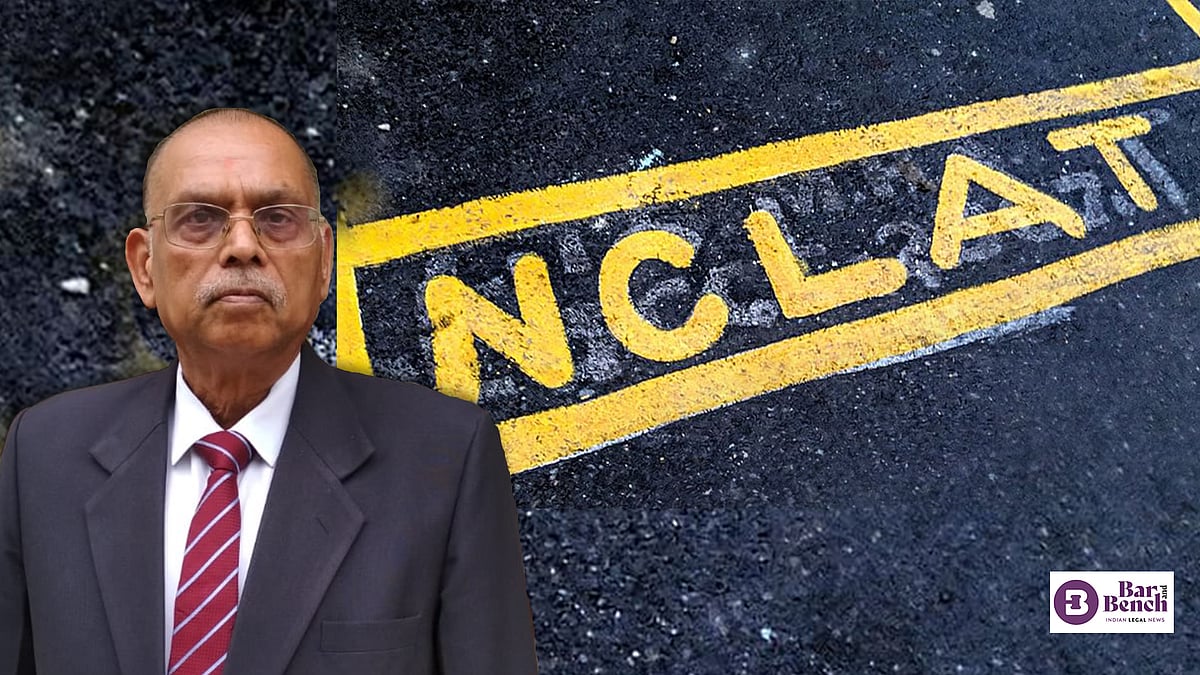
Justice Ashok Bhushan demits office as NCLAT Chairperson after nearly five-year tenure
Abstract
Justice Ashok Bhushan has concluded his nearly five-year tenure as the Chairperson of the National Company Law Appellate Tribunal (NCLAT), demitting office on July 4, 2026, upon reaching the age of 70. Appointed in November 2021 and re-appointed in 2025, Justice Bhushan presided over a crucial period for the NCLAT, significantly shaping jurisprudence across corporate law, insolvency, and competition matters. His leadership was instrumental in addressing complex issues arising under the Insolvency and Bankruptcy Code, 2016, the Companies Act, 2013, and the Competition Act, 2002, reinforcing the tribunal's role as a pivotal appellate authority in India's economic regulatory framework. His departure marks the end of a tenure characterised by efforts to streamline processes and deliver clarity in an evolving legal landscape.
Introduction
Justice Ashok Bhushan, a distinguished legal figure, has demitted office as the Chairperson of the National Company Law Appellate Tribunal (NCLAT) on July 4, 2026, after a significant tenure spanning nearly five years. His departure, occasioned by his attainment of 70 years of age, marks a pivotal moment for India's corporate and insolvency resolution landscape. The NCLAT stands as a critical appellate body, tasked with adjudicating appeals arising from decisions of the National Company Law Tribunal (NCLT), the Insolvency and Bankruptcy Board of India (IBBI), and the Competition Commission of India (CCI).
Justice Bhushan's leadership at the helm of the NCLAT has been instrumental in navigating the complexities of modern corporate governance and insolvency law. His tenure saw the resolution of numerous high-stakes cases, contributing substantially to the clarity and consistency of legal principles in these dynamic fields. This article delves into the statutory framework governing the NCLAT, highlights key aspects of Justice Bhushan's contributions, and considers the implications of his departure for legal practitioners and the future trajectory of corporate jurisprudence in India.
Background
The National Company Law Appellate Tribunal (NCLAT) was constituted by the Central Government under Section 410 of the Companies Act, 2013, becoming operational on June 1, 2016. It serves as the primary appellate forum for aggrieved parties challenging orders passed by the National Company Law Tribunal (NCLT). The NCLAT's jurisdiction was significantly expanded with the enactment of the Insolvency and Bankruptcy Code (IBC), 2016, effective December 1, 2016, making it the appellate authority for NCLT orders under Section 61 of the IBC. The IBC itself was introduced to consolidate and amend laws relating to the reorganisation and insolvency resolution of corporate persons, partnership firms, and individuals in a time-bound manner, aiming to maximise asset value and promote entrepreneurship.
Further broadening its mandate, the NCLAT also assumed appellate jurisdiction over decisions issued by the Competition Commission of India (CCI) and the National Financial Reporting Authority (NFRA). This came into effect from May 26, 2017, following amendments introduced by the Finance Act, 2017, which merged the erstwhile Competition Appellate Tribunal (COMPAT) with the NCLAT. The Chairperson of the NCLAT, as per Section 413(4)(a) of the Companies Act, 2013, holds office for a term of five years and is eligible for re-appointment, but cannot continue beyond the age of 70 years. This statutory framework underscores the NCLAT's multifaceted role as a crucial quasi-judicial body overseeing critical aspects of India's economic regulatory landscape.
Analysis
Justice Ashok Bhushan's tenure as NCLAT Chairperson, commencing on November 8, 2021, and concluding on July 4, 2026, was marked by his profound impact on the interpretation and application of India's corporate, insolvency, and competition laws. His leadership provided stability and direction to the tribunal during a period of intense activity, particularly concerning the evolving jurisprudence under the Insolvency and Bankruptcy Code, 2016. He was re-appointed in 2025, continuing his service until he reached the statutory retirement age of 70 years.
Among the significant pronouncements during his chairmanship, the NCLAT, in *IDBI Bank Ltd. v. Hemangi Patel*, 2025 SCC OnLine NCLAT 1263, upheld the NCLT's decision to reject a Section 95 IBC application against a personal guarantor on grounds of limitation, reinforcing the importance of strict adherence to statutory timelines. In *Dheeraj Raikhy v. Raheja Developers Ltd.*, 2023 SCC OnLine NCLAT 1404, the tribunal affirmed that a single allottee could not trigger insolvency proceedings under Section 7 of the IBC, aligning with the Supreme Court's pronouncements on the threshold requirements for initiating corporate insolvency resolution processes. Another notable decision in *Maharashtra State Electricity Distribution Co. Ltd. v. Ravi Sethia*, 2025 SCC OnLine NCLAT 382, clarified that electricity, being an essential service under Section 14(2) of the IBC, cannot be disconnected during the Corporate Insolvency Resolution Process (CIRP) even if dues remain unpaid.
Justice Bhushan also presided over cases that addressed the procedural integrity of the insolvency regime. In a matter concerning *Three C Projects Pvt. Ltd.*, the NCLAT set aside an NCLT order that had replaced a Resolution Professional chosen by the Committee of Creditors, asserting that the adjudicating authority cannot overstep its jurisdiction by acting as a 'moral guardian' and substituting the commercial wisdom of the CoC. Furthermore, the NCLAT, under his leadership, tackled the complex interplay between the IBC and other statutes, notably ruling that the moratorium under Section 14 of the IBC cannot shield assets alleged to be 'proceeds of crime' from attachment under the Prevention of Money Laundering Act (PMLA), 2002, as both laws operate in distinct statutory domains. Beyond specific judgments, Justice Bhushan actively worked to enhance the efficiency of the NCLAT, including efforts to streamline virtual hearing formats and reduce delays between NCLT and NCLAT proceedings. Prior to his NCLAT role, he also served as the Chairman of the Ravi Beas River Tribunal, established under the Inter-State River Water Disputes Act, 1956, to adjudicate water-sharing disputes, showcasing his diverse judicial experience.
These decisions and administrative efforts underscore a tenure focused on upholding the legislative intent of the relevant statutes, ensuring procedural fairness, and providing much-needed clarity in areas of law that are fundamental to India's economic stability and growth.
Conclusion
Justice Ashok Bhushan's retirement from the NCLAT Chairpersonship marks the end of an impactful era for the tribunal. His nearly five-year tenure has been critical in solidifying the NCLAT's position as a robust appellate authority, particularly in the nascent yet rapidly evolving fields of insolvency and competition law. Practitioners will remember his commitment to a principled interpretation of statutes, which has provided greater certainty and predictability in corporate dispute resolution. His emphasis on procedural discipline and timely disposal of cases has also set a high standard for the tribunal's functioning.
The departure of a Chairperson with such extensive experience from both the Supreme Court and specialized tribunals inevitably creates a void. The legal community will keenly watch the appointment of his successor and the continuity of the NCLAT's trajectory in maintaining judicial consistency and efficiency. For legal professionals, the precedents set during Justice Bhushan's tenure will continue to guide strategy and advice in corporate insolvency, company law, and competition matters. The NCLAT's ongoing role in balancing creditor rights, promoting corporate rescue, and ensuring fair market competition remains paramount, necessitating strong and insightful leadership to navigate future legal challenges and uphold the integrity of India's economic regulatory framework.
Citations
- 1.Companies Act, 2013
- 2.Insolvency and Bankruptcy Code, 2016
- 3.Competition Act, 2002
- 4.Finance Act, 2017
- 5.Inter-State River Water Disputes Act, 1956
- 6.Prevention of Money Laundering Act, 2002
- 7.IDBI Bank Ltd. v. Hemangi Patel, 2025 SCC OnLine NCLAT 1263
- 8.Dheeraj Raikhy v. Raheja Developers Ltd., 2023 SCC OnLine NCLAT 1404
- 9.Maharashtra State Electricity Distribution Co. Ltd. v. Ravi Sethia, 2025 SCC OnLine NCLAT 382
- 10.Provident Fund Commr. v. Mamta Binani, 2026 SCC OnLine NCLAT 619
- 11.NCLAT (Salaries, Allowances and other Terms and Conditions of Service of Chairperson and other Members) Rules, 2015