
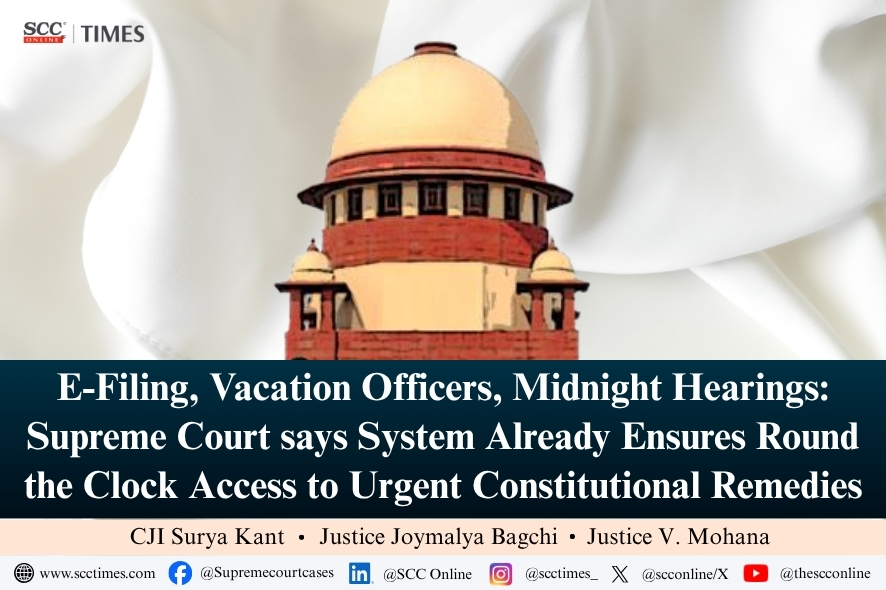
Supreme Court Ensures Round-the-Clock Access to Urgent Constitutional Remedies in India
Summary
- The Supreme Court has clarified that its existing judicial framework is sufficient to provide round-the-clock access to urgent constitutional remedies.
- E-filing, virtual hearings, and urgent listing mechanisms are already in place to ensure timely access to justice in cases involving imminent threats to life, liberty, and other fundamental rights.
- Lawyers and compliance officers can rely on the existing judicial framework to ensure timely access to constitutional remedies in cases involving imminent threats to life, liberty, and other fundamental rights.
What Happened
The court emphasized that e-filing, virtual hearings, and urgent listing mechanisms are already in place, ensuring timely access to justice in cases involving imminent threats to life, liberty, and other fundamental rights.
In a significant ruling, the Supreme Court of India has clarified that its existing judicial framework is sufficient to provide round-the-clock access to urgent constitutional remedies. The court's decision comes in response to concerns raised by various stakeholders about the adequacy of the current system. Notably, the court emphasized that e-filing, virtual hearings, and urgent listing mechanisms are already in place, ensuring timely access to justice in cases involving imminent threats to life, liberty, and other fundamental rights.
Legal Context
The Supreme Court's ruling is a significant development in the context of India's judicial system. The court has been at the forefront of implementing technology-driven reforms, including e-filing and virtual hearings, to improve access to justice. However, concerns had been raised about the adequacy of these measures, particularly in cases involving urgent constitutional remedies. The court's decision is a clear indication that it is committed to ensuring timely access to justice, even during non-working hours or when vacation officers are on duty.
Why It Matters
The Supreme Court's ruling has significant implications for lawyers and compliance officers who handle cases involving imminent threats to life, liberty, and other fundamental rights. With the existing judicial framework in place, they can rely on the system to ensure timely access to constitutional remedies. This is particularly important in cases where every minute counts, such as those involving human rights violations or public interest litigations. The ruling also underscores the importance of technology-driven reforms in improving access to justice and ensuring that the judiciary remains responsive to the needs of citizens.
Practical Implications
Lawyers and compliance officers should take note of this ruling, which means they can rely on the existing judicial framework to ensure timely access to constitutional remedies in cases involving imminent threats to life, liberty and other fundamental rights.
Source
Source: Original reporting via SCC Times
How does this affect your business?
Get an AI analysis of this article grounded in your jurisdictions, practice areas, and any policy documents you've uploaded to Wansom.
Wansom is AI and can make mistakes.