
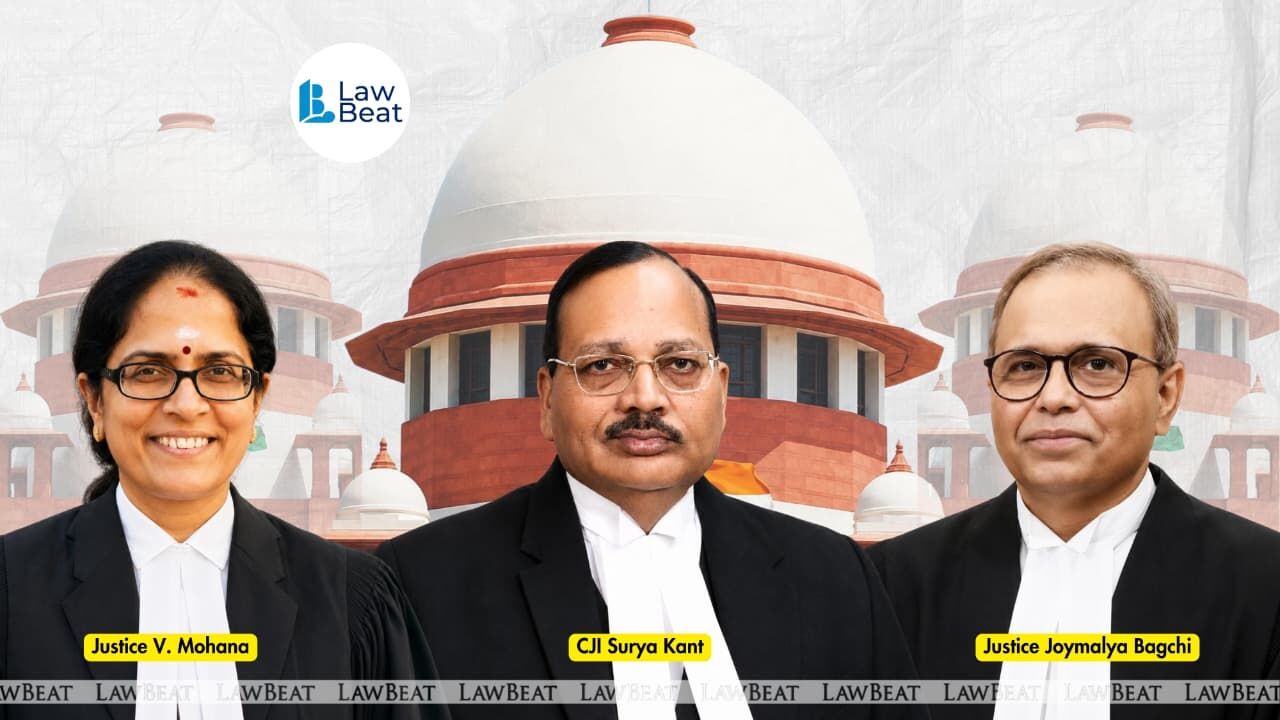
Supreme Court Examines Challenge to BNS BNSS Provisions
Summary
- The Supreme Court has taken up a petition challenging various provisions of the Bharatiya Nyaya Sanhita (BNS) and Bharatiya Nagarik Suraksha Sanhita (BNSS).
- The plea targets Section 152 of the BNS, which criminalizes acts 'endangering the sovereignty, unity, and integrity of India.'
- The petitioner argues that this provision is violative of Articles 14, 19(1)(a), and 21 of the Constitution.
- The Supreme Court's examination of these provisions will have significant implications for the country's legal framework.
Supreme Court Examines Challenge to BNS BNSS Provisions
This new provision is nothing short of a 'repackaged sedition law,' bearing the same constitutional infirmities as the colonial-era Section 124A of the Indian Penal Code.
The Supreme Court has taken up a petition challenging various provisions of the Bharatiya Nyaya Sanhita (BNS) and Bharatiya Nagarik Suraksha Sanhita (BNSS), two new laws enacted in 2023. The plea, led by Senior Advocate Meneka Guruswamy, argues that these provisions are overly broad and vague, potentially infringing on fundamental rights such as free speech and expression.
The petition specifically targets Section 152 of the BNS, which criminalizes acts 'endangering the sovereignty, unity, and integrity of India.' This provision has been likened to a 'repackaged sedition law,' bearing similarities with the colonial-era Section 124A of the Indian Penal Code. The petitioner contends that this new provision is violative of Articles 14, 19(1)(a), and 21 of the Constitution.
The Supreme Court's examination of these provisions comes at a critical juncture, as another constitutional challenge has been filed against Section 152 of the BNS. This challenge, led by Major General (Retd.) S.G. Vombatkere, argues that the provision is nothing short of a 'toolkit for arbitrary State action.'
Relevant Legal and Regulatory Context
The Bharatiya Nyaya Sanhita and Bharatiya Nagarik Suraksha Sanhita are two new laws enacted in 2023, aimed at reforming the country's legal framework. These laws came into force on July 1, 2024. Section 152 of the BNS is a key provision that has raised concerns among lawyers and activists. This section criminalizes acts 'endangering the sovereignty, unity, and integrity of India,' with punishment up to life imprisonment for those found guilty.
The provision has been criticized for its vagueness and broad language, which could potentially be used to stifle free speech and expression. The petitioner argues that this provision is nothing short of a 'repackaged sedition law,' bearing the same constitutional infirmities as the colonial-era Section 124A of the Indian Penal Code.
The Supreme Court's examination of these provisions will have significant implications for the country's legal framework, particularly with regards to free speech and expression.
Why It Matters
The Supreme Court's examination of the challenge to BNS BNSS provisions is a critical development in India's ongoing debate on free speech and expression. The court's decision will have far-reaching implications for the country's legal framework, particularly with regards to the criminalization of acts deemed 'endangering the sovereignty, unity, and integrity of India.'
The case highlights the need for clear and precise language in laws that impact fundamental rights. The petitioner's argument that Section 152 is a 'toolkit for arbitrary State action' underscores the importance of ensuring that laws are not used to stifle dissent or suppress legitimate forms of expression.
As the Supreme Court deliberates on this critical issue, lawyers and activists will be watching closely for potential implications on the constitutionality of provisions in Bharatiya Nyaya Sanhita and Bharatiya Nagarik Suraksha Sanhita.
Practical Implications
Lawyers should watch for potential implications of the Supreme Court's examination on the constitutionality of provisions in Bharatiya Nyaya Sanhita and Bharatiya Nagarik Suraksha Sanhita, particularly Section 152, which may impact free speech and expression in India.
Source
Source: Original reporting via [Source]
How does this affect your business?
Get an AI analysis of this article grounded in your jurisdictions, practice areas, and any policy documents you've uploaded to Wansom.
Wansom is AI and can make mistakes.