
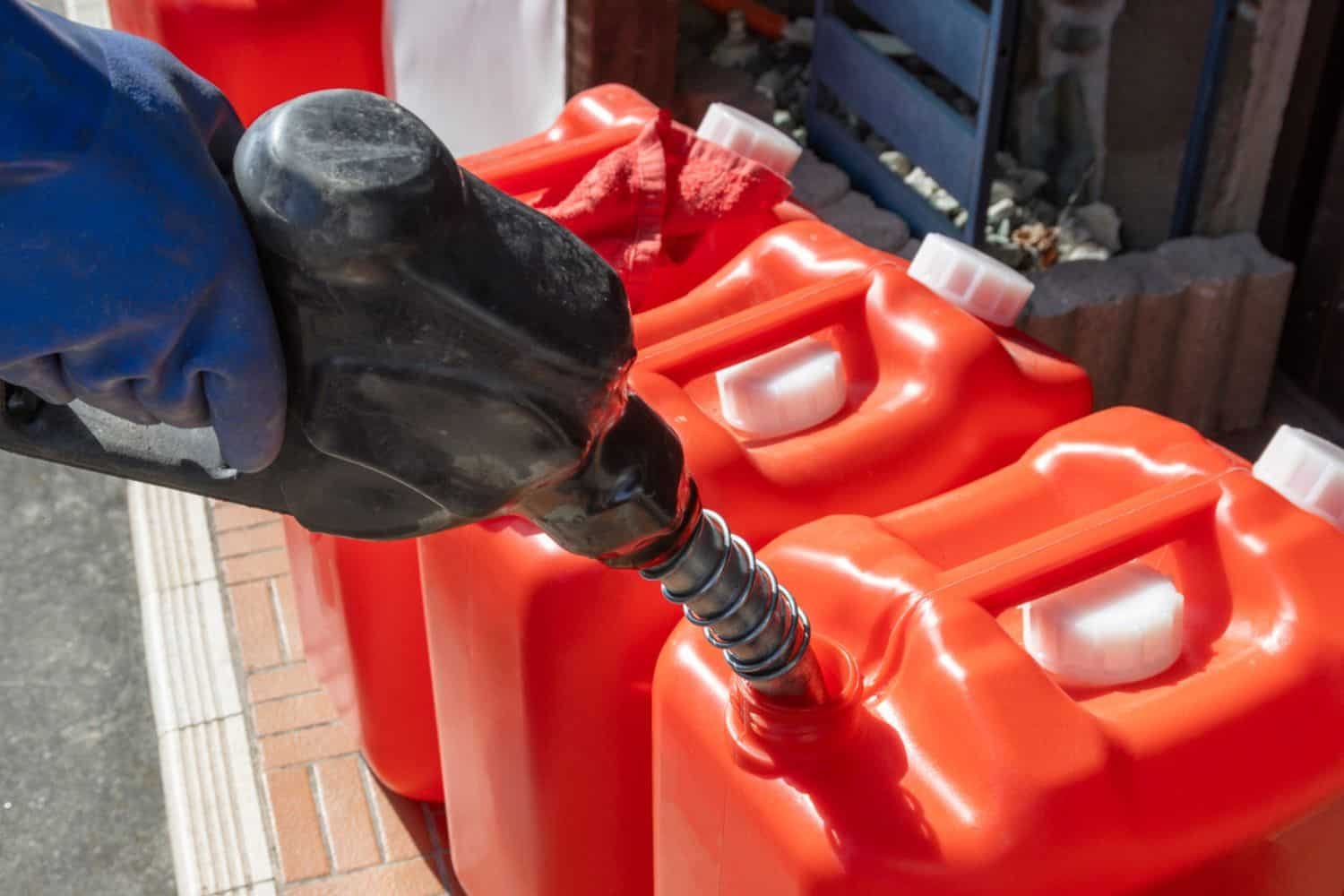
How Much Fuel You Can Legally Store at Home in Cape Town: The 200-Litre Certificate Threshold, Explained
What the Law Actually Says About Storing Fuel at Home
South African motorists are bracing for the highest petrol and diesel prices in the country's history next month, which is pushing some households toward stockpiling fuel. Doing so without understanding the applicable by-law carries real legal and insurance exposure, but the rule itself is narrower and simpler than some recent reporting has suggested.
We obtained and read the primary legal text: the City of Cape Town's Community Fire Safety By-law, 2002, as amended. Section 37(6) states plainly that a person may not store or use a flammable liquid of any danger group in excess of 200 litres, or a flammable gas in excess of 100kg, unless they have obtained a flammable substance certificate from the controlling authority, the City's Chief Fire Officer or delegate. This single 200-litre threshold applies regardless of whether the liquid is petrol or diesel; the by-law does not set a separate, lower volume limit specific to petrol.
This corrects a detail that has circulated in other reporting. A widely cited account, sourced to City of Cape Town officials speaking to a motoring publication, claimed petrol storage above 40 litres specifically requires a dedicated "flammable store" structure, while diesel could be stored up to 200 litres without one because of its higher flash point. That distinction does not appear in the gazetted by-law text itself. It's possible it derives from a separate technical standard the by-law references elsewhere (such as SANS 10131, which governs the physical design of flammable-liquid storage), but we could not verify that claim against a primary source, so we are not repeating it as settled law. The only volume figure we can confirm directly from the gazetted instrument is 200 litres.
What Happens Above 200 Litres
If a resident does exceed 200 litres, Section 38 of the by-law sets out the certificate process:
The application goes to the controlling authority (the Chief Fire Officer or delegate).
A certificate must be renewed whenever the quantity or class of substance stored changes.
Suppliers may not legally deliver more than 200 litres of flammable liquid, or 100kg of flammable gas, to a premises without proof the recipient holds a valid certificate.
Where a certificate is required, the storage installation itself must meet the "flammable store" construction standard in Section 49, specific requirements covering flooring, ventilation, fire-rated doors, signage, and fire-extinguisher placement.
Penalties for Non-Compliance
Section 55 of the by-law states that contravening any provision, or failing to comply with a compliance notice issued under it, is an offence carrying a maximum fine or imprisonment as prescribed in the Fire Brigade Services Act, 1987. The by-law does not specify a rand amount directly — the applicable penalty scale sits in the national Act, not the local by-law.
This Is Cape Town-Specific
Every municipality sets its own flammable-substance and fire-safety rules through its own by-law. TopAuto, the outlet that first reported on this, said Johannesburg and eThekwini (Durban) did not respond to its enquiries on their equivalent thresholds. Residents outside Cape Town should not assume the 200-litre figure applies to them — it is specific to this one by-law, and other metros may set different limits.
A further discrepancy worth noting: the South African Insurance Association (SAIA) has separately indicated that, generally, no more than 25 litres of fuel should be stored at a residential property — a lower figure than Cape Town's 200-litre certificate threshold. An insurance policy can impose a stricter condition than a by-law does, so homeowners need to satisfy both tests, not just the legal minimum.
What the Insurance Industry Is Saying, a Position, Not a Ruling
PSG Insure is an insurance intermediary, not a regulator, and its public guidance reflects a risk-management position, not a legal requirement in itself. Ryno de Kock, PSG Insure's Head of Distribution, said stockpiling fuel at residential properties carries risks that homeowners and motorists often underestimate.
"These requirements are designed to reduce the risk of accidental fires, spills and other incidents that could endanger people and property," de Kock said, referring to the existing municipal and occupational safety framework rather than any new rule.
De Kock added that non-compliance with applicable regulations and an insurer's own underwriting requirements "could affect insurance cover and the way an insurer would assess a claim" following an incident. For businesses, he said there is generally no fixed volume cap, provided storage meets insurer underwriting standards and local by-laws, though those requirements again vary by municipality.
The Price Backdrop: Why This Is Coming Up Now
Mid-September data from the CEF shows petrol under-recovering by roughly R2.01 to R2.02 a litre for 93 unleaded and R2.14 for 95 unleaded. If those conditions hold until the Minister's official adjustment, inland 95 petrol could reach approximately R29.06 a litre, and inland 0.005%-sulphur diesel could approach R32.09 a litre, both above the previous 2026 records set in June and May respectively.
These are projections, not confirmed prices. Other outlets tracking the same CEF data in the same week put the October petrol increase anywhere from roughly R1.88 to R2.14 a litre, depending on the exact date the underlying data was captured. The only figure that matters legally is the one the Minister of Mineral and Petroleum Resources gazettes at month-end; nothing is final until then.
Compliance Implications / What This Means for Your Business
Who must act, and what changes: Nothing changes in the law itself. Cape Town residents and businesses storing fuel remain subject to the same 200-litre certificate threshold that already applied before this fuel price cycle. The obligation is to check the existing local limit before increasing storage volumes, not to prepare for a new rule.
Financial and operational exposure: Exceeding 200 litres without a flammable substance certificate risks a statutory fine or imprisonment under the Fire Brigade Services Act, separate from any insurance consequence. Separately, non-compliant storage can give an insurer grounds to reduce or decline a claim tied to a fire, spill, or related loss, even where the fuel storage did not directly cause the incident, if it is found to have contributed to the loss.
Realistic compliance timeline: This is not a deadline-driven filing. Businesses and households in Cape Town planning to increase fuel storage ahead of the October price move should, before doing so: (1) confirm whether the intended volume exceeds 200 litres and, if so, apply for a flammable substance certificate before storing; (2) contact their insurance adviser to confirm the policy's own storage conditions, which may be stricter than 200 litres; and (3) ensure any storage structure meets the Section 49 flammable-store construction requirements where a certificate is required.
What remains uncertain or pending: The exact October pump price is not yet confirmed, the Minister's gazetted announcement is expected around 7 October 2026. Johannesburg's and eThekwini's specific storage-volume thresholds remain unconfirmed in available reporting. The previously reported 40-litre petrol-specific threshold could not be verified against the by-law's gazetted text and should not be treated as confirmed law.
Citations
- 1.Community Fire Safety By-law, 2002 (City of Cape Town) — primary source, read directly. Published Western Cape Provincial Gazette 5832, 28 February 2002; amended by Community Fire Safety Amendment By-laws in 2006 and 2007. Full text: openbylaws.org.za/akn/za-cpt/act/by-law/2002/community-fire-safety. Key provisions cited: Section 37(6) (200-litre/100kg threshold), Section 38 (certificate process), Section 49 (flammable store construction standard), Section 55 (offences and penalties).
- 2.Fire Brigade Services Act, 1987 (Act 99 of 1987) — national statute under which by-law penalties are prescribed; referenced directly in Section 55 of the by-law.
- 3.Central Energy Fund (CEF) daily under-recovery tracking — basis for all October price projections cited. No official DMPR/ministerial price gazette for October 2026 has been published yet; all petrol/diesel figures above are projections pending the Minister's month-end announcement.
- 4.PSG Insure and South African Insurance Association (SAIA) guidance — industry risk-management positions, not legal instruments; cited to attribute the insurance-claims risk and the 25-litre residential figure.
- 5.Secondary reporting relied on: TopAuto, "Warning for South Africans keeping petrol at home" (14 Sept 2026) and "How much petrol you are legally allowed to store at home in South Africa" (29 March 2026, sourcing City of Cape Town Fire and Rescue Services spokesperson Jermaine Carelse and Deputy Mayor Alderman Eddie Andrews — the 40-litre claim originates here and is not independently confirmed); BusinessTech, "Highest petrol prices in South Africa's history coming next month" and "Warning to anyone thinking of stockpiling fuel at home in South Africa"; InboundSA, "Petrol price warning: R2-plus hike expected in October" (mid-September CEF data, most recent available at time of writing).
Finish Reading the Full Story and the Expert Analysis.
Get the latest legal & regulatory intelligence in South Africa
Wansom is AI and can make mistakes.