
Guinea’s $300 Million Glencore Bauxite Deal Opens a New Test for State-Owned Mining and Local Alumina Processing
Abstract
Key fact | Details |
|---|---|
Companies | Nimba Mining Company (NMC) and Glencore |
Agreement signed | September 7, 2026, in Paris |
Public announcement | September 14; NMC’s press release was published September 17 |
Financing | More than US$300 million in pre-financing |
Annual marketing volume | 10–12 million tonnes of bauxite |
Contract duration | Five years |
Total contracted volume | 50–60 million tonnes |
NMC’s ownership | Wholly owned by the Guinean state |
Current production target | 10 million tonnes in 2026, rising to 12 million tonnes annually from 2027, according to NMC |
Downstream ambitions | Feasibility studies for a proposed 1.2-million-tonne-per-year alumina refinery |
Potential next phase | Discussions with Glencore on alumina refining, energy and other strategic investments |
Central question | Can Guinea turn a large raw-bauxite marketing agreement into a broader domestic processing and industrialisation strategy? |
A five-year agreement gives Nimba a major commercial foundation
On September 7, 2026, Guinea’s state-owned Nimba Mining Company and Glencore signed a five-year bauxite offtake and pre-financing agreement in Paris, following an international tender process.
The agreement provides more than US$300 million in pre-financing and gives Glencore the right to market between 10 million and 12 million tonnes of Nimba’s bauxite annually over five years. That amounts to a total contracted volume of between 50 million and 60 million tonnes.
Agreement component | Commercial significance |
|---|---|
Pre-financing of more than US$300 million | Provides financing linked to Nimba’s bauxite production and commercial arrangements. |
Annual marketing of 10–12 million tonnes | Establishes a substantial sales channel for Nimba’s output. |
Five-year term | Gives the company greater visibility over sales volumes and cash flows during its production ramp-up. |
International tender | NMC says the agreement followed a competitive tender process. |
Glencore’s role | Combines financing with commodity marketing and access to international commercial networks. |
The agreement is significant because Nimba is not simply a mining company seeking a buyer for individual shipments. It is a state-owned enterprise trying to establish an integrated operation linking extraction, rail transport, port infrastructure and exports.
In its announcement, Nimba said the agreement would provide visibility over sales volumes and cash flows, linking its production ramp-up to identified market outlets.
For Glencore, the deal secures long-term access to a large volume of Guinean bauxite and strengthens its position in the aluminium supply chain.
The financing figure should nevertheless be described precisely. NMC and Glencore have announced more than US$300 million in pre-financing. That is not necessarily the same as an unrestricted cash grant, a government loan or a US$300 million equity investment. The public announcements cited here do not disclose the complete financing schedule, pricing formula, repayment mechanics or all commercial terms.
Those details matter because the agreement’s ultimate economic value to Guinea will depend not only on its headline size, but also on the price received for the bauxite, financing costs and the obligations attached to future shipments.
Nimba is expanding from a restarted mine into a national mining platform
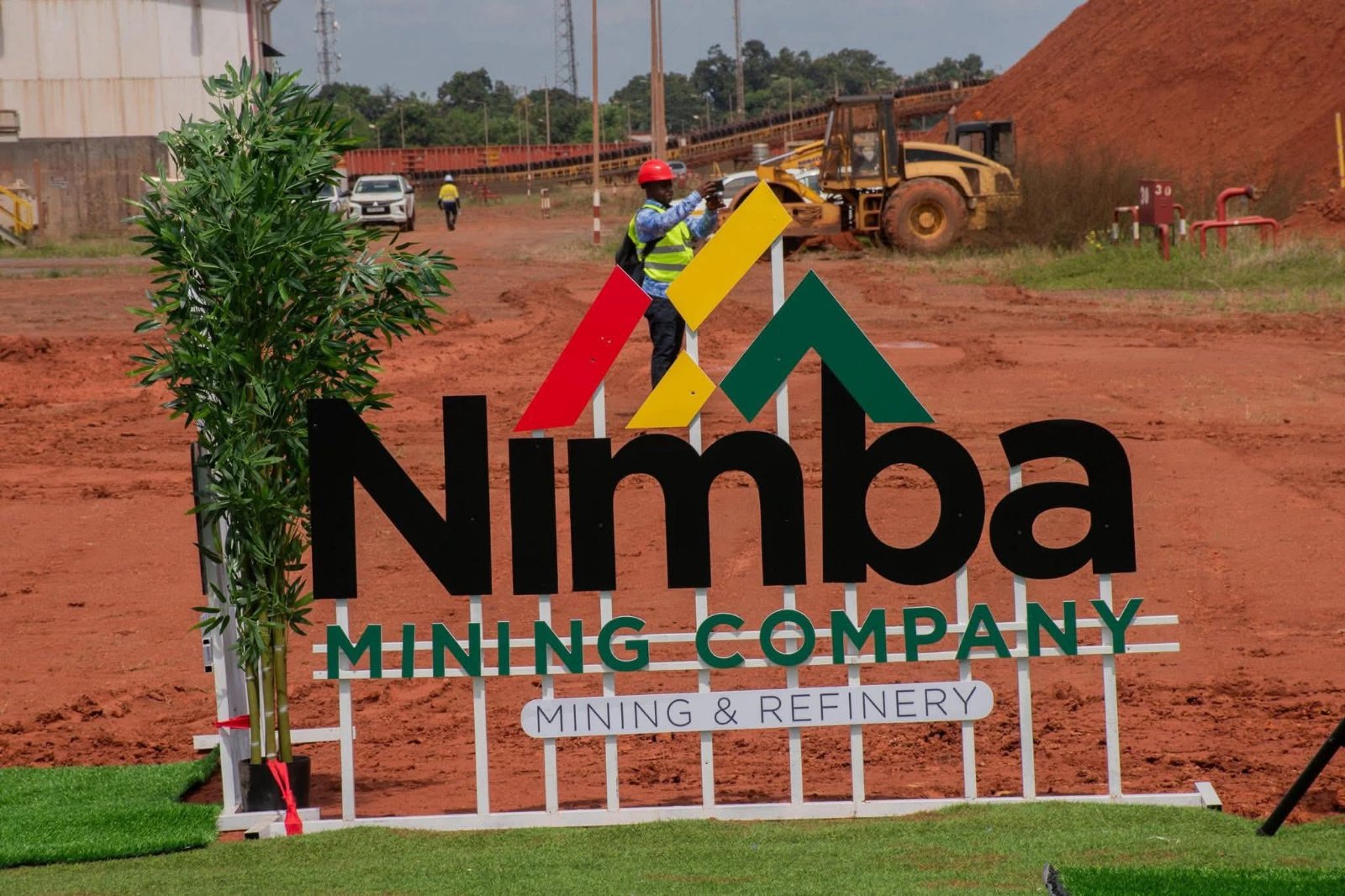
Nimba Mining Company was established in August 2025 as a wholly state-owned Guinean mining company. Its immediate operating focus is the Tinguilinta bauxite mine and the infrastructure needed to move ore to export markets through Kamsar.
The company’s progress over its first year illustrates the scale of the restart effort.
Operational milestone | Reported position |
|---|---|
End of 2025 | More than 1 million tonnes of bauxite shipped |
First half of 2026 | More than 4 million tonnes exported, according to NMC’s August and September updates |
2026 target | 10 million tonnes |
Target from 2027 | 12 million tonnes annually |
Refinery development | Feasibility studies for a proposed 1.2-million-tonne-per-year alumina refinery |
The company’s operating model includes the Tinguilinta mine, a 92-kilometre railway corridor and port facilities at Kamsar. Restoring this chain was necessary to restart exports and build the capacity required to fulfil a large offtake commitment.
NMC reported in September that it had exported more than four million tonnes during 2026 and employed 381 people directly, 98% of whom were Guinean. It also reported 1,928 permanent subcontractor staff across mining, rail, port, logistics and technical operations.
These figures provide an indication of the employment and operational footprint surrounding the project. They should not, however, be treated as a measure of net new employment created by the Glencore agreement itself.
The US$300 million-plus arrangement adds a commercial layer to this operational recovery. With a large portion of output covered by a marketing agreement, Nimba has a more defined route to market as it works towards its production targets.
The challenge is execution: maintaining output, transport reliability and export capacity while meeting the agreement’s volumes over the five-year period.
The Glencore deal could become a gateway to alumina refining
The most consequential potential development may lie beyond the bauxite agreement.
On September 14, Reuters reported that Guinea’s Mines Minister, Bouna Sylla, said the government was discussing further investment opportunities with Glencore in alumina refining, energy and other strategic sectors. Sylla described the bauxite agreement as a possible starting point for broader cooperation.
Glencore, according to Reuters, had indicated strong interest in expanding its business in Guinea. The company declined to comment further to the news agency.
These are discussions, not a confirmed joint investment or a final decision to build an alumina refinery with Glencore.
That distinction is important. The current contract concerns pre-financing and marketing bauxite. A refinery would require a separate investment decision, engineering work, reliable electricity, water, transport, financing and a clear commercial case.
Nimba has already stated that it is undertaking feasibility studies for a proposed alumina refinery with annual capacity of 1.2 million tonnes. Its corporate plan identifies local processing as a major route to increasing value creation and developing skilled employment.
Stage | Current position | What must happen next |
|---|---|---|
Bauxite mining | Operating at Tinguilinta | Sustain production and meet ramp-up targets |
Export logistics | Mine, rail and Kamsar port form the operating chain | Maintain sufficient rail and port capacity for contracted volumes |
Bauxite marketing | Five-year Glencore agreement signed | Execute shipments under the agreed commercial terms |
Alumina refinery | NMC says feasibility studies are under way | Establish technical feasibility, capital cost, energy needs and project economics |
Possible Glencore investment | Government discussions reported by Reuters | Agree on a defined project, investment structure and binding commitments |
This sequence shows why the offtake agreement matters, but also why it should not be confused with an industrialisation agreement.
The Glencore contract can help secure commercial outlets and support Nimba’s ramp-up. It does not, by itself, finance or guarantee a refinery.
Guinea’s industrial challenge: exporting bauxite versus producing alumina
Bauxite is the principal raw material used to produce alumina, which is then processed into aluminium through a separate energy-intensive industrial process.
Exporting bauxite allows Guinea to earn revenue from extraction and sales. Producing alumina domestically would add another stage of industrial activity within the country and could create demand for additional technical services, infrastructure and skilled labour.
The difference is strategically important for a country seeking to capture more value from its mineral resources.
Export-led model | Domestic-processing model |
|---|---|
Revenue primarily linked to mining and raw-ore sales | Revenue opportunities extend to refining and higher-value products |
Depends on international buyers and shipping arrangements | Also depends on reliable energy, industrial water, transport and refinery operations |
Can generate employment in extraction and logistics | Could expand employment in engineering, processing and industrial services |
Requires mining, rail and port infrastructure | Requires those systems plus substantial additional industrial infrastructure |
Exposed to bauxite prices and export-market conditions | Exposed to bauxite and alumina prices, energy costs and refinery economics |
The industrial-processing model offers potential benefits, but it is not automatically more profitable in every circumstance. Alumina refineries require substantial capital investment and dependable electricity, and their viability depends on operating costs, market conditions and financing terms.
That is why feasibility studies matter. A refinery should be assessed against its full capital and operating requirements, not only the policy objective of processing more minerals locally.
Guinea’s immediate task is therefore twofold: use the current marketing agreement to support bauxite operations and determine whether a refinery can be developed on commercially sustainable terms.
Why energy investment is central to the next phase
The government’s discussions with Glencore reportedly include energy projects alongside alumina refining. This is not incidental.
Refining bauxite into alumina requires a reliable industrial energy supply. A project can have access to ore and export infrastructure yet remain commercially unviable if electricity is too expensive, unreliable or insufficient.
For Guinea, the energy question links mining policy to broader infrastructure development.
A refinery proposal would need to establish:
the expected electricity demand and available supply;
the cost and reliability of power over the project’s operating life;
the financing and ownership structure of any new energy infrastructure;
the logistics needed to supply the refinery and transport its products; and
whether the refinery can compete with existing international alumina producers.
The current public statements establish that energy investment is being discussed. They do not yet identify a specific power project, its capacity, financing, ownership or construction timetable.
The next meaningful milestone would be a defined project proposal with disclosed technical and commercial parameters, rather than another general expression of interest.
The legal context: Nimba’s convention and Guinea’s Mining Code
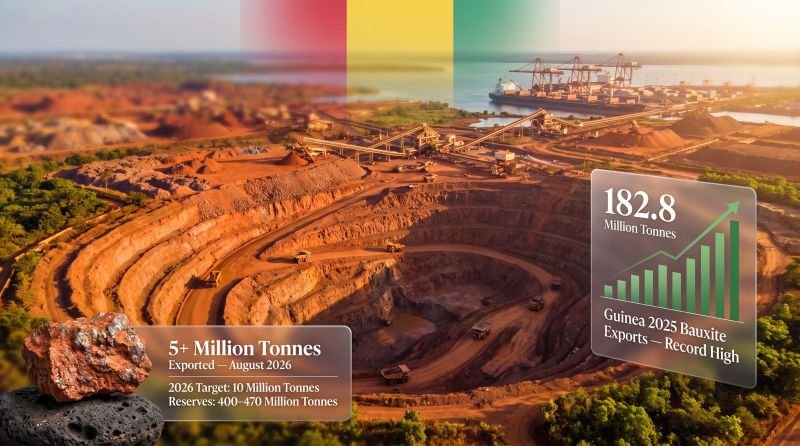
Nimba’s mining convention was signed on August 3, 2026, and approved by decree, according to the company’s August 6 announcement. The convention sets out the rights and obligations of the state and Nimba and provides the framework for the company’s mining operations.
This milestone followed the withdrawal of Guinea Alumina Corporation’s mining concession in August 2025. Guinea’s authorities said the withdrawal was linked to non-compliance with obligations under the mining framework and the company’s underlying convention.
These are separate events: GAC’s concession was withdrawn in 2025; Nimba’s mining convention was signed in 2026. The public material cited here does not justify describing them as a single transaction completed on the same date.
What the Mining Code says
Guinea’s Mining Code, originally adopted as Law L/2011/006/CNT and amended by Law L/2013/053/CNT, establishes rules for state participation, mining taxes and domestic processing.
The code’s provisions are more specific than a general statement that every mining project automatically pays the same royalty or gives the state the same ownership interest.
Legal issue | What the published code provides | Why it matters |
|---|---|---|
Free-carried state participation | Article 150 provides for a non-dilutable free-carried state interest of up to 15% for a bauxite mining title, subject to the applicable legal framework. | Establishes a form of state participation without requiring the state to fund that initial interest. |
Additional state participation | The code also sets out provisions for additional paid state participation, with different percentages depending on the mineral and whether the project is integrated with alumina production. | The total state participation structure may differ between a standalone bauxite operation and an integrated bauxite-alumina project. |
Mining and export taxes | The code establishes extraction and export tax provisions, with rates and calculation methods that vary by mineral and applicable conditions. | The applicable liability should be calculated from the specific legal provisions and project terms rather than a generic royalty range. |
Domestic processing | The code encourages local processing and prioritises domestic processing units in the supply of raw minerals; it also provides for a tax-rate increase in specified circumstances where processing-infrastructure commitments are not met. | Links the fiscal framework to Guinea’s objective of developing more processing capacity at home. |
Project-specific convention | Nimba’s convention sets out fiscal, customs, environmental and social arrangements for its operations. | The actual convention is needed to determine the detailed terms applying to Nimba. |
One important qualification is necessary. Although the supplied background says Nimba’s convention falls under standard Mining Code rules without special tax exemptions, the public company announcement reviewed for this article does not reproduce the complete convention or itemise all tax and customs terms. That means a categorical claim that the convention contains no special exemptions cannot be independently established from that announcement alone.
The same caution applies to royalty figures. The code contains mineral-specific calculation methods; a broad range such as 0.15%–0.5% should not be presented as the definitive bauxite rate without identifying the exact provision and calculation basis.
For publication, the strongest approach is to distinguish the general statutory framework from the specific terms of Nimba’s convention. Obtaining the full convention would allow a more precise comparison with GAC’s previous arrangement.
What the agreement means for Guinea’s state-owned mining model
Nimba’s agreement with Glencore offers an example of how a state-owned mining company can work with an international commodities group without selling the company itself.
Nimba remains wholly owned by Guinea, while Glencore receives the commercial role of pre-financing and marketing a large share of its bauxite output under the agreement.
This structure gives the state company access to financing and international marketing capabilities while retaining ownership of the enterprise.
But state ownership alone does not guarantee that the country will capture the greatest possible economic benefit. That depends on the quality of the commercial terms, the cost of financing, the efficiency of operations, fiscal obligations and how revenue is managed.
Potential benefit | What will determine whether it is realised |
|---|---|
More predictable sales | Performance under the five-year marketing agreement and continued demand for Guinean bauxite |
Financing for operations | The cost, repayment terms and conditions of the pre-financing |
Increased export capacity | Reliable mine, rail and port operations |
More domestic employment | Recruitment, skills development and the use of Guinean suppliers |
Greater industrial value | Whether the proposed refinery reaches a viable investment decision and enters operation |
Stronger state participation | Transparent financial reporting, governance and clear measurement of public benefits |
The agreement should therefore be judged on more than the headline financing amount. Over time, the relevant measures will include actual export volumes, realised sales revenue, financing costs, fiscal contributions, local employment and the progress of downstream projects.
Timeline: how the Nimba–Glencore partnership developed
Date | Milestone |
|---|---|
August 4, 2025 | Guinea creates Nimba Mining Company as a wholly state-owned mining enterprise. |
August 2025 | The government withdraws Guinea Alumina Corporation’s mining concession. |
November–December 2025 | Nimba reports its first major shipment milestones as the mine, rail corridor and Kamsar port operations restart. |
August 3, 2026 | Nimba’s mining convention is signed and approved by decree. |
August 6, 2026 | Nimba publicly announces the convention and its production ramp-up plans. |
September 7, 2026 | Nimba and Glencore sign the five-year pre-financing and offtake agreement in Paris. |
September 14, 2026 | Reuters reports that Guinea is discussing possible alumina refining and energy investment with Glencore. |
September 17, 2026 | Nimba publishes its official announcement of the Glencore agreement. |
What to watch next
Actual shipments against the contract: Whether Nimba can deliver 10–12 million tonnes annually under the marketing agreement as production increases.
Financing terms and transparency: Whether further disclosures clarify the pre-financing structure, repayment arrangements and economic terms.
The alumina feasibility study: Whether Nimba publishes a technical and financial assessment for its proposed 1.2-million-tonne-per-year refinery.
A formal Glencore investment proposal: Whether discussions about refining and energy result in a defined project, binding agreement and disclosed investment commitment.
Domestic power infrastructure: Whether Guinea can secure reliable and competitive energy for additional mineral processing.
The complete mining convention: Whether the full legal text becomes available for scrutiny of its fiscal, customs, processing and state-participation provisions.
Local economic benefits: Whether production growth translates into measurable employment, supplier development, fiscal revenue and technical skills in Guinea.
Conclusion
Nimba Mining Company’s agreement with Glencore is a major commercial milestone for Guinea’s state-owned mining strategy. More than US$300 million in pre-financing and a five-year marketing arrangement covering 50–60 million tonnes of bauxite give the company a defined commercial framework as it expands production.
The next question is whether the partnership can move beyond raw-material exports. Guinea’s discussions with Glencore about alumina refining, energy and other strategic investments point towards a broader industrial ambition, while Nimba’s proposed refinery offers a potential route to retaining more value within the country.
That second phase remains uncertain. The existing contract is an offtake and pre-financing agreement, not a confirmed refinery investment. Its impact will depend on operational delivery, financing costs and whether the proposed downstream projects can be made technically and commercially viable.
For Guinea, the test is clear: turn a large bauxite marketing agreement into a reliable source of revenue and a foundation for domestic industrial development, without confusing announced ambitions with investments that have yet to be committed.
Citations
- 1.Nimba Mining Company: Official announcement of the Glencore agreement — September 17, 2026.
- 2.Reuters: Guinea discusses alumina and energy investments with Glencore — September 14, 2026.
- 3.Linklaters: Advises Glencore on bauxite offtake and pre-financing agreement — September 23, 2026.
- 4.Nimba Mining Company: Mining convention and production plans — August 2026.
- 5.GuinéeLex / Library of Congress: Mining Code and 2013 amendment overview.
- 6.Guinéenews: Withdrawal of Guinea Alumina Corporation’s concession — August 4, 2025.
Finish Reading the Full Story and Expert Analysis.
Get the latest legal & regulatory intelligence in Guinea
Wansom is AI and can make mistakes.