
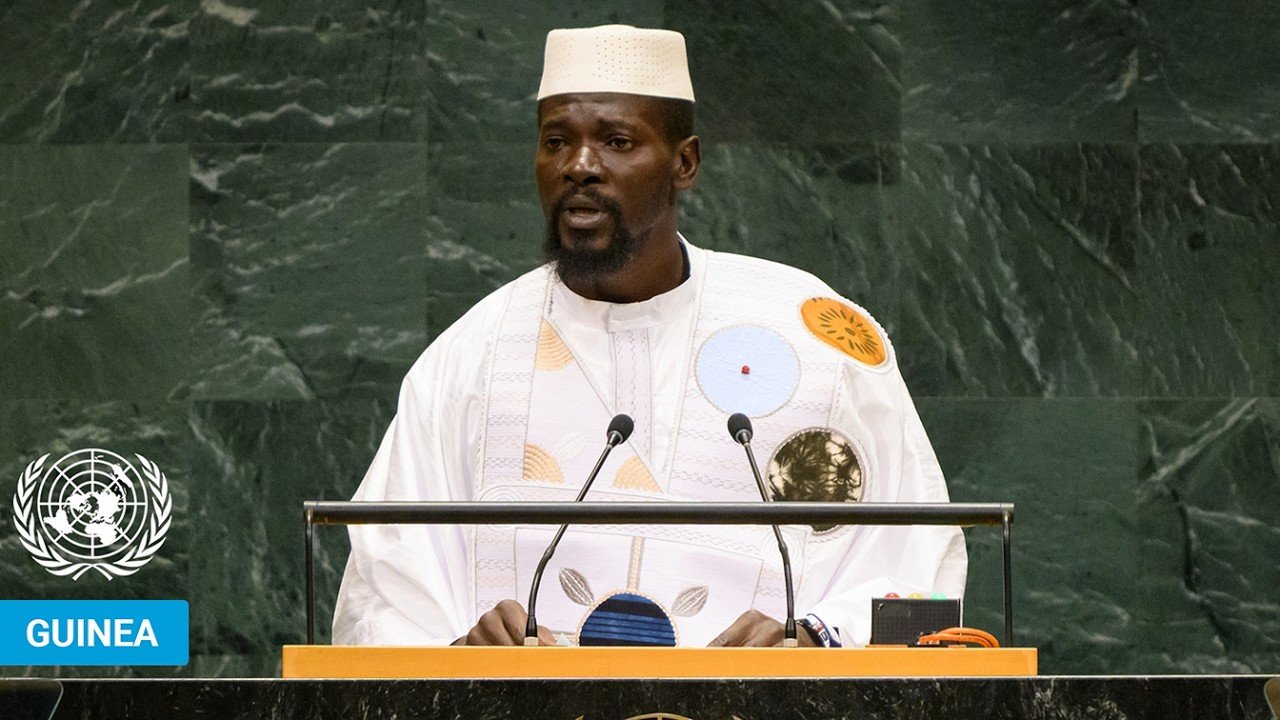
Guinea and the UN’s Critical Minerals Initiative: What International Support Could Mean for Mining Reform
Abstract
Issue | What is established |
|---|---|
UN announcement | September 23, 2026 |
Initiative | Country Support Mechanism on Critical Energy Transition Minerals |
Purpose | Tailored technical assistance to help resource-rich developing countries build responsible, resilient mineral value chains |
Potential areas of support | Value addition, diversification, traceability, transparency, environmental safeguards and benefit-sharing |
Guinea’s policy context | Domestic mineral processing, improved mining governance and stronger local economic participation |
Major processing example | Chalco’s alumina refinery project in Boffa, for which construction was launched in June 2026 |
Legal qualification | The UN initiative does not itself amend Guinea’s Mining Code or establish that specific statutory obligations have been fulfilled |
Key question | How will technical support translate into measurable changes in domestic processing, governance and community outcomes? |
What the UN’s new mechanism is designed to do
The Country Support Mechanism forms part of the wider UN Task Force on Critical Energy Transition Minerals, which builds on the Secretary-General’s work on equitable and responsible mineral value chains.
The mechanism is intended to turn international recommendations into practical, country-level assistance. According to UN materials, its approach includes access to a roster of experts, rapid-response support for governments and coordination through UN Resident Coordinators and country teams.
The broader agenda covers five connected priorities:
Value addition and economic diversification: helping countries develop processing and related industries rather than relying exclusively on raw mineral exports.
Traceability and transparency: improving the ability to track minerals and strengthen accountability across the value chain.
Environmental safeguards: addressing the environmental consequences of extraction and processing.
Benefit-sharing: improving how economic gains are distributed among governments, businesses, workers and communities.
Circularity and material efficiency: encouraging more efficient use of minerals and resources throughout their life cycle.
For Guinea, these themes overlap with longstanding policy questions about bauxite exports, alumina refining, state participation, local suppliers and the management of mining-related environmental and social impacts.
An important qualification: The UN’s announcement confirms that the mechanism was launched. The public material reviewed for this article does not independently establish the complete list of six initial beneficiary countries or the specific assistance package allocated to Guinea. Those details should be confirmed through a country-specific UN announcement before describing Guinea’s selection or support commitments as final.
Why the initiative matters for Guinea’s bauxite industry
Guinea has substantial bauxite resources, but extracting and exporting bauxite does not capture the same industrial value as processing it into alumina and, further downstream, aluminium.
Domestic processing can create demand for energy, engineering, industrial services, transport, technical training and specialised suppliers. It can also introduce new environmental-management requirements, particularly around energy consumption, water use and the handling of refinery residues.
The government has been advancing projects intended to increase this domestic capacity.
Chalco’s Boffa alumina refinery
On June 13, 2026, Guinea officially launched construction of an alumina refinery project in Boffa developed by Chalco Guinea Company, part of China’s Chinalco group.
Guinean government sources reported an investment of approximately US$1 billion and planned production capacity of 1.2 million tonnes of alumina annually. These are announced project figures; they should not be treated as proof that the facility is already operational or producing at its intended capacity.
Project dimension | Reported position |
|---|---|
Location | Boffa, Guinea |
Developer | Chalco Guinea Company, associated with Chinalco |
Construction launch | June 13, 2026 |
Announced investment | Approximately US$1 billion |
Planned capacity | 1.2 million tonnes of alumina per year |
Relevance | An example of Guinea’s push to expand domestic mineral processing |
A functioning refinery could help Guinea capture more value from bauxite before it enters international markets. But the eventual benefits will depend on construction and commissioning, reliable energy and water supplies, commercial viability, environmental controls and the extent to which Guinean workers and suppliers participate.
The UN mechanism could be relevant to these wider policy challenges if Guinea receives tailored assistance. There is, however, no basis in the sources reviewed to claim that the UN has committed to finance the Chalco project or that the refinery is being delivered under the new mechanism.
What Guinea’s Mining Code actually says about processing
The original draft linked the domestic-processing agenda to Article 77 of Guinea’s Mining Code. That reference needs correcting.
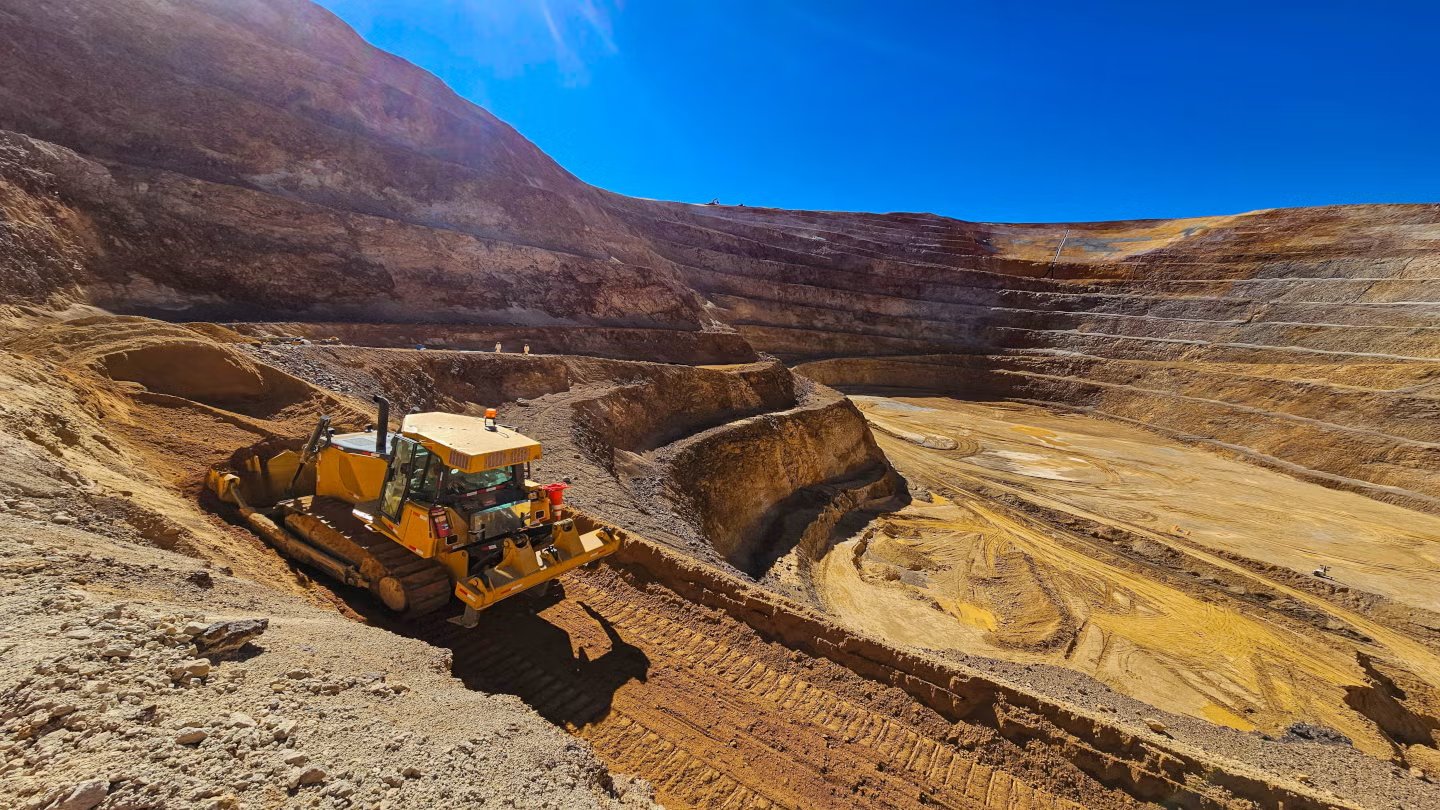
Article 77 concerns renewal of mining titles, not a general requirement to construct domestic processing plants. The more relevant provision in the amended Mining Code is Article 139, which encourages the establishment of domestic facilities for conditioning, treatment, refining and processing mineral substances. It also establishes priority supply to processing facilities located in Guinea, subject to the applicable rules and implementing arrangements.
This distinction matters because the legal basis for local processing should be identified accurately. A policy objective, a statutory provision, a project-specific mining convention and an implemented regulatory requirement are not interchangeable.
The table below separates the legal framework from the practical developments cited in the original brief.
Regulatory issue | Relevant legal or policy reference | What can be established |
|---|---|---|
Domestic mineral processing | Article 139 of the amended Mining Code | The Code addresses domestic processing facilities and priority supply to local processing units |
State participation | Article 150 of the amended Mining Code | Provides for state participation, with percentages varying by mineral and project type |
Community development | Article 130 and related provisions | Requires a Local Development Convention for eligible mining-title holders |
Bauxite-to-alumina industrialisation | Chalco Boffa project | Construction was officially launched in June 2026; this is a project development, not proof of universal compliance with the Code |
Raw-gold export restrictions | Separate presidential decrees and implementing procedures | A distinct regulatory framework; it should not be attributed solely to Article 139 |
Rail services and localisation | Wabtec–CTG agreement | Includes training, local-capability development and partnerships with Guinean businesses; published terms do not establish specific statutory quotas |
State participation: not a single percentage for every project
Article 150 also requires more precision than a general statement that the state always holds a 15% free-carried interest plus an optional 20% paid stake.
The Code’s state-participation provisions vary according to the mineral and the nature of the project. The framework lists 15% free-carried participation and a potential additional 20% cash participation for bauxite projects, while an integrated bauxite–alumina project has a different allocation: 5% free-carried participation and a potential additional 30% cash participation, subject to the relevant legal and contractual terms.
This means project-specific conventions and ownership structures must be examined before drawing conclusions about the state’s actual stake or whether a particular obligation has been fulfilled.
Nimba Mining Company (NMC), for example, describes itself as wholly owned by the Guinean state. Its ownership structure should not be used as proof that a separate 15% statutory participation requirement has been enforced in the same way across other mining projects.
Local content: the distinction between community development and employment quotas
Local participation is another area where the legal references need to be precise.
Article 130 concerns a Local Development Convention between the holder of a mining exploitation title and the community living on or near the mining title. Its stated purpose is to support transparent management of the local development contribution and strengthen community capacity to plan and implement development programmes.
It should not be described, on its own, as a blanket national employment quota or a general obligation to award contracts to domestic suppliers. Any claim about specific local employment percentages, supplier quotas or training requirements needs to be tied to the particular statutory provision, regulation, mining convention or contract that establishes it.
The Wabtec–Compagnie du TransGuinéen (CTG) agreement announced on September 21, 2026, offers a useful example of a project incorporating localisation commitments. Wabtec said its services agreement, worth more than US$700 million, includes workforce training, maintenance and logistics support, remote diagnostics, and partnerships with Guinean businesses. It did not publicly specify a percentage of local procurement or a mandatory employment quota in the announcement.
This is relevant to Guinea’s industrial-development agenda, but the contract’s localisation language should not be presented as proof that particular provisions of the Mining Code have been implemented.
Environmental and social governance: where technical support could help
The expansion of domestic mineral processing creates opportunities but also brings environmental and social responsibilities.
For an alumina refinery, one important issue is bauxite residue, commonly known as red mud. This residue is generated during alumina production and requires appropriate containment, monitoring and long-term management. Water use, energy supply, waste management and the effects of industrial facilities on nearby communities are also relevant.
Community compensation and consultation are similarly important where mining or industrial projects affect land, livelihoods or local infrastructure. Their legal requirements depend on the applicable national laws, permits, environmental and social assessments, and project-specific commitments.
The UN mechanism’s broader focus on responsible and sustainable mineral value chains creates a potential channel for expert support in these areas. Yet it would be premature to say that the initiative has already introduced new red-mud rules for Guinea, ordered compensation for a particular community or committed to a specific environmental programme.
The practical questions are whether country-level support will be requested and delivered, which institutions will participate, and whether it will result in stronger technical capacity, monitoring and enforcement.
How the initiative fits with Guinea’s other mining reforms
The UN announcement comes amid several developments that illustrate the range of Guinea’s mining-policy priorities.
Development | Date | Relevance to the wider industrialisation agenda |
|---|---|---|
Chalco Boffa refinery construction launched | June 13, 2026 | Expands planned domestic alumina-processing capacity |
Nimba Mining Company’s mining convention | Signed August 3, announced August 6, 2026 | Establishes a legal framework for NMC’s bauxite operations |
NMC–Glencore bauxite agreement | Signed September 7, announced September 17, 2026 | Provides more than US$300 million in pre-financing and marketing arrangements for 10–12 million tonnes of bauxite annually over five years |
Wabtec–CTG rail services agreement | September 21, 2026 | Supports the Simandou railway fleet and includes a localisation component |
UN Country Support Mechanism launched | September 23, 2026 | Creates a new channel for coordinated technical assistance to resource-rich developing countries |
Refined-gold export procedure announced | October 2, 2026 | Adds administrative controls to Guinea’s separate gold-export framework |
The NMC–Glencore agreement concerns bauxite marketing and pre-financing; it is not, by itself, evidence that bauxite is being processed into alumina domestically. Likewise, the gold-export measures belong to a separate regulatory framework, and the Wabtec contract concerns rail services rather than mineral processing.
Together, these developments illustrate why the policy challenge extends beyond mineral extraction. Guinea’s ability to retain more value depends on how mining rights, industrial investment, infrastructure, local participation, environmental safeguards and export oversight work in practice.
What to watch next
The significance of the UN initiative will become clearer as country-level support is defined and delivered. For Guinea, the key indicators are:
Official confirmation of participation: A UN or Guinean government announcement specifying Guinea’s status in the first cohort and the areas in which support will be provided.
A defined assistance programme: Identification of the responsible UN entities, participating ministries, technical priorities and delivery timetable.
Processing capacity: Progress on the Boffa refinery, including construction milestones, commissioning plans and the infrastructure needed for sustained operation.
Implementation of the Mining Code: Clear evidence of how Articles 139 and 150 are being applied through regulations, mining conventions and project-specific arrangements.
Local economic participation: Published data on Guinean employment, skills transfer, domestic procurement and community-development spending.
Environmental performance: Evidence of effective monitoring, residue management, community engagement and compliance with project-specific environmental obligations.
Measurable outcomes: Data showing whether domestic processing, local supplier participation and mineral-sector value added are increasing.
These indicators would help distinguish an international policy announcement from changes that can be measured in Guinea’s industrial capacity and local economic outcomes.
Conclusion
The UN’s Country Support Mechanism on Critical Energy Transition Minerals creates a new avenue for technical cooperation on the governance and development of mineral value chains. Its emphasis on value addition, responsible production and local benefits aligns with Guinea’s broader efforts to expand domestic processing and improve mining-sector oversight.
The Chalco refinery project in Boffa provides a concrete example of the country’s planned downstream industrial capacity. Guinea’s Mining Code also contains provisions relevant to processing, state participation and community development, although their application varies by legal provision and project.
The next step is to establish precisely what support Guinea will receive and how that assistance will connect to national priorities. The measure of success will not be the launch announcement alone, but whether the work helps strengthen institutions, support viable domestic processing, improve environmental and social safeguards, and deliver demonstrable benefits for Guinean workers and communities.
Citations
- 1.United Nations — September 23, 2026: Announcement of the Country Support Mechanism on Critical Energy Transition Minerals.
- 2.https://www.un.org/en/climatechange/press-materials
- 3.United Nations — Task Force on Critical Energy Transition Minerals: Terms of reference describing the task force’s mandate and country-support approach.
- 4.https://www.un.org/sites/un2.un.org/files/untf-cetm_terms_of_reference.pdf
- 5.Guinea Ministry of Mines and Geology — June 14, 2026: Official report on the launch of construction of Chalco’s Boffa alumina refinery.
- 6.https://mines.gov.gn/industrialisation-miniere-la-guinee-lance-la-construction-de-la-troisieme-raffinerie-dalumine-post-independance/
- 7.Guinea Presidency — May 21, 2026: Announcement concerning agreements for the Chalco refinery project.
- 8.https://presidence.gov.gn/mise-en-oeuvre-du-programme-simandou-2040-agriculture-industrie-alimentaire-et-commerce-la-transformation-locale-des-ressources-saccelere-en-guinee-avec-la-signature-des-accords-relatifs/
- 9.GuinéeLex — Amended Mining Code, Law L/2013/053/CNT: Legal text, including Article 139 on processing and Article 150 on state participation.
- 10.https://guineelex.com/decrets-arretes/decret-d-2013-075-prg-sgg
- 11.Guinea Mining Insights — Article 150: Breakdown of the state-participation percentages by mineral and project type.
- 12.https://www.guineamininginsights.com/guinea-mining-code/title-iv-rights-and-obligations-relating-conduct-activities-relating-mines-and-quarries/chapter-ix-state-participation-onsite-mineral-processing-and-promotion-mining-activity/article-150-i-percentages-and-terms-relating-participation
- 13.Nimba Mining Company — August 2026: Company announcement on its mining convention and state ownership.
- 14.https://www.nimbamining.gn/en/news/nimba-mining-company-secures-its-mining-convention-and-celebrates-its-fi/
- 15.Nimba Mining Company — September 2026: Announcement of its bauxite marketing and pre-financing agreement with Glencore.
- 16.https://nimbamining.gn/en/news/nimba-mining-company-et-glencore-concluent-un-partenariat-strategique-pour-la-co/
- 17.Wabtec — September 21, 2026: Announcement of the more-than-US$700 million CTG rail services agreement and its localisation commitments.
- 18.https://ir.wabteccorp.com/news-releases/news-release-details/wabtec-and-la-compagnie-du-transguineen-sign-700-million-plus
Finish Reading the Full Story and Expert Analysis.
Get the latest legal & regulatory intelligence in Guinea
Wansom is AI and can make mistakes.