

Ghana Suspends the GH¢1 Diesel Levy: Can Two Months of Relief Shield Consumers Without Deepening the Energy-Sector Debt Problem?
Ghana’s latest diesel intervention is about more than a one-cedi tax suspension. It is a decision to change how the government cushions consumers from rising fuel costs while temporarily suspending a revenue stream established to address longstanding financial pressures in the energy sector.
The government’s arrangement for October and November maintains a combined GH¢2-per-litre intervention on diesel. Previously, the entire reduction was delivered through lower statutory margins. Under the revised arrangement, GH¢1 comes from reduced statutory margins and another GH¢1 from suspending the Energy Sector Shortfall and Debt Repayment Levy, commonly called the D-Levy.
The move followed warnings that diesel prices could rise sharply at the beginning of October. The Chamber of Petroleum Consumers (COPEC) projected an increase of 22.91%, from GH¢18.24 to GH¢22.42 per litre, attributing the expected rise largely to higher international petroleum prices and a weaker cedi against the US dollar.
The government responded with several measures. Alongside the levy suspension, Sentuo Oil Refinery and Tema Oil Refinery agreed to maintain the prices at which they sold petroleum products to bulk distribution companies at the previous pricing-window levels. The National Petroleum Authority (NPA) said the interventions were intended to keep diesel below GH¢20 per litre rather than allow it to approach the projected GH¢22 threshold.
The intervention raises three questions. How much protection does a GH¢2-per-litre measure provide against a large market-driven increase? What does suspending a levy mean for the energy-sector financing it supports? And does the experience demonstrate a workable approach to temporary fuel-price relief or the difficulty of balancing consumer protection against structural financial obligations?
What exactly has the government changed?
The revised arrangement took effect on 1 October and is scheduled to run through 30 November 2026.
Component | Previous arrangement | October–November arrangement |
|---|---|---|
Relief through reduced statutory margins | GH¢2/L | GH¢1/L |
Relief through D-Levy suspension | GH¢0/L | GH¢1/L |
Combined diesel intervention | GH¢2/L | GH¢2/L |
Duration of D-Levy suspension | Not applicable | 1 October–30 November |
Source: Citi Newsroom, The Herald Ghana and the reported government directive covered by 3News.
The distinction between the individual components and the combined intervention is essential.
The government has not increased the total stated diesel relief from GH¢2 to GH¢3 per litre. Nor has it withdrawn the entire previous intervention. Instead, it has replaced half of the margin-based support with a temporary suspension of the levy.
This changes the way the relief is delivered and the source of the associated cost. Reduced statutory margins affect the margin component of the fuel-price structure. Suspending the D-Levy removes a specific tax charge from diesel during the designated period.
The reported directive specifies that the suspension applies to the additional GH¢1 component imposed under the Energy Sector Levies (Amendment) Act, 2025, Act 1141. Other applicable levies, rates and charges continue to be collected.
That limitation matters. The announcement should not be interpreted as the removal of all energy-sector levies from diesel, much less as a general fuel-tax holiday covering every petroleum product.
The distinction also matters for petrol users. The October–November D-Levy suspension described in the directive applies to diesel. It does not establish an equivalent suspension for petrol.
For diesel consumers, the stated benefit remains GH¢2 per litre. But the broader economic implications depend on how the levy suspension is accounted for, whether the relief is reflected in retail prices, and what happens when the temporary arrangement expires.
Why diesel became the immediate policy concern
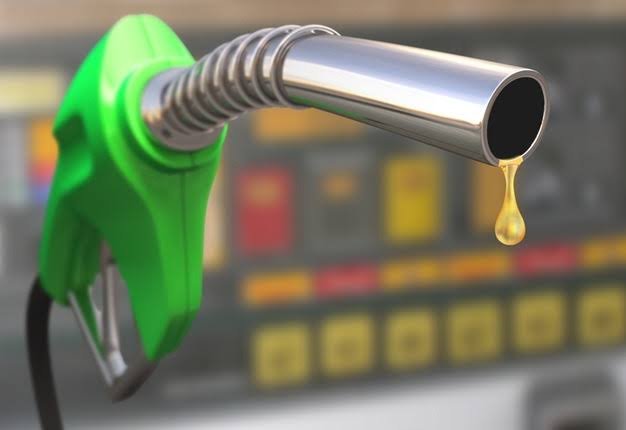
The intervention followed COPEC’s forecast of a particularly sharp increase in diesel prices during the first October pricing window.
The Chamber projected petrol to rise by 5.21%, from GH¢16.90 to GH¢17.78 per litre, while diesel was expected to rise by 22.91%, from GH¢18.24 to GH¢22.42.
COPEC attributed the expected increases to higher international petroleum prices and a marginal depreciation of the cedi against the US dollar. Its statement reported that crude oil had increased from US$103.07 to US$124 per barrel during the relevant period, while the cedi weakened from an average interbank rate of GH¢11.4830 to GH¢11.6211 per dollar.
Those figures describe the market conditions underpinning the forecast; they should not be confused with a confirmed nationwide average retail price after the government’s intervention.
Diesel is particularly significant because it is widely used in commercial transport, freight, agriculture, mining, construction and manufacturing. An increase in diesel costs can affect more than private motorists. It can raise the cost of moving goods, operating machinery and providing transport services.
The government’s response therefore had a broader economic rationale. Limiting diesel-price increases could reduce pressure on businesses whose operating costs are closely linked to diesel, while potentially limiting the extent to which those costs are passed on to consumers.
But the scale of the intervention should be kept in perspective. A GH¢2-per-litre reduction can cushion a price increase; it cannot eliminate the effects of a major change in international petroleum prices or the exchange rate.
The policy was designed to moderate the domestic impact of the shock, not to remove Ghana’s exposure to international fuel markets.
The government intervened before the GH¢22 forecast became the benchmark
The distinction between a forecast and an actual price outcome is central to assessing this intervention.
COPEC’s GH¢22.42 estimate was a projection for the first pricing window of October. The government subsequently announced that the combination of levy suspension and refinery-price commitments would keep diesel below GH¢20 per litre.
On 13 October, reporting on the NPA’s second-half October price floors placed the diesel minimum at GH¢17.09 per litre for 16–31 October. The reported petrol floor was GH¢16.09 per litre.
These figures suggest that the GH¢22 threshold did not become the relevant minimum-price benchmark for the second half of October. However, a price floor is not the same as an average retail price or a record of what every consumer paid at the pump. It is also not directly comparable with COPEC’s forecast without accounting for the different periods and measures.
The government’s intervention was only one possible influence on the final outcome. International prices, currency movements, refinery selling prices, distribution costs, margins and other price components can all affect retail fuel prices.
It would therefore be premature to attribute the difference between the forecast and the later price floor entirely to the government’s intervention. A proper assessment would compare the realised price build-up with a credible estimate of what the price would have been without the measures.
Still, the sequence provides an important early test of the policy. The government announced a specific intervention to prevent diesel from reaching a projected threshold, and the later reported price floor was below that threshold.
The next task is to establish how much of the difference came from the levy suspension and refinery commitments, how much reflected market movements, and how the resulting benefit was distributed between businesses and consumers.
The D-Levy is not an ordinary general-purpose tax
The strongest reason to examine the suspension closely is the levy’s stated purpose.
Ghana’s Energy Sector Shortfall and Debt Repayment Levy was designed to mobilise revenue for financial obligations within the energy sector. The levy supports the Energy Sector Support Account, through which funds have been used to address sector shortfalls and repay accumulated legacy debt.
The government’s 2025 Annual Report on the Management of the Energy Sector Support Account provides a useful measure of the scale of the financing challenge.
According to the report, the levy generated approximately GH¢8.81 billion in 2025. An additional GH¢1.26 billion was available from other balances, bringing the total funds available in the account to GH¢10.07 billion.
Of the available funds, GH¢9.82 billion was utilised. The report recorded GH¢6.32 billion for energy-sector shortfalls and GH¢3.52 billion for the repayment of legacy debt.
The same reporting indicates that the levy proceeds were insufficient to meet the sector’s full financing needs. The government supplied a further GH¢12.85 billion from the Treasury Main Account to cover obligations associated with energy-sector shortfalls and legacy debt.
These figures reveal the tension at the heart of the October decision. The levy is a source of financing for a sector whose obligations have exceeded the amount raised through the levy itself.
Suspending a component of the levy on diesel may reduce the cost burden on consumers in the short term, but it also means that the suspended component will not be collected on the affected diesel volumes during the suspension period.
That does not automatically mean that the government will fail to meet energy-sector obligations. The fiscal effect depends on the volume of diesel affected, the duration of the suspension, any replacement funding, other revenue sources and the government’s wider financing arrangements.
However, the suspension creates a legitimate question: if the levy was introduced to address a financing gap, how will the government account for the revenue temporarily forgone?
The answer matters because the objective of consumer relief and the objective of energy-sector financial stability are not necessarily incompatible, but they require a credible financing plan.
The underlying energy-sector problem is much larger than the suspended levy
Ghana’s energy-sector financial challenges did not begin with the October fuel-price shock. The International Monetary Fund’s 2026 analysis describes persistent gaps between sector revenues and costs, including tariff, distribution and collection weaknesses.
The IMF estimated the energy-sector shortfall at approximately US$1.4 billion, or 1.2% of GDP, in 2025, down from US$1.6 billion, or 1.4% of GDP, in 2024.
It also reported that outstanding payables to independent power producers and fuel suppliers remained substantial at the end of 2025, despite declining from an earlier peak.
The IMF’s analysis is important because it cautions against treating the energy-sector financing challenge as a problem that can be solved by a single levy. The sector’s financial position is affected by the cost of supply, tariff structures, distribution performance, collection rates, currency movements and the use of more expensive liquid fuels for electricity generation.
The levy is one source of funding for those obligations. Its suspension on diesel for two months does not, on its own, resolve or recreate the underlying structural problems.
Nor does it establish that the suspension will materially worsen those problems. The magnitude of the effect depends on the amount of revenue forgone and how the government manages the resulting financing requirement.
The distinction is important. The policy question is not whether consumers should receive relief or whether the energy sector should be financially sustainable. Both objectives matter. The question is how to deliver temporary relief without creating a new and unmanaged financing gap.
That requires transparent reporting on the cost of the suspension and how the government plans to maintain the funding of existing obligations.
Why the levy was introduced in the first place

The policy history helps explain why the government is now suspending a levy it previously considered necessary.
In June 2025, Parliament passed an amendment to the Energy Sector Levies framework that increased the Energy Sector Shortfall and Debt Repayment Levy on selected petroleum products. The measure was intended to raise additional revenue to help settle energy-sector arrears and support a more reliable power supply.
The revised levy structure took effect in July 2025. The additional charge was intended to strengthen the resources available to address energy-sector shortfalls and legacy debts.
The government’s subsequent annual report indicates that the levy generated substantial revenue, but not enough to meet all the sector’s obligations. The Treasury therefore had to provide additional resources.
This history creates a difficult policy trade-off.
On one side, high fuel costs can place pressure on transport operators, businesses and households, particularly when diesel prices rise sharply over a short period. Temporary relief can help prevent some of that pressure from being passed through immediately.
On the other side, the levy is linked to a financing problem that has implications for the reliability and financial sustainability of electricity supply. Reducing its collection may ease one cost pressure while making another funding requirement more difficult to meet unless an alternative source is available.
The October suspension is temporary, and its effect should be judged in that context. It would be inaccurate to conclude that two months of suspension will undo the progress made in addressing energy-sector debts. It would be equally inaccurate to assume that the suspension has no fiscal consequences simply because it is temporary.
The more relevant question is whether the government has a clear plan for the revenue affected during October and November and for the levy’s status after 30 November.
Who benefits from the intervention?
The direct benefit is easiest to calculate for users purchasing diesel. If the full GH¢2-per-litre intervention is reflected in the price they pay, a buyer purchasing 50 litres would receive a reduction of GH¢100 compared with a price structure without that intervention.
That is an illustration of the stated per-litre relief, not proof that every station’s price is GH¢2 lower than it otherwise would have been. The final retail price depends on other components and on how the intervention is implemented.
The broader distribution of benefits is more complicated.
Commercial transport and freight
Diesel is a major operating input for many transport and logistics businesses. Lower diesel costs can reduce the immediate pressure on freight operators, bus companies, delivery services and other businesses that depend on diesel-powered vehicles.
Whether customers benefit depends on the extent to which operators pass through the savings. Some businesses may reduce charges, while others may use the relief to offset higher costs elsewhere or protect their margins.
The government’s intervention therefore creates the potential for indirect consumer benefits, but those benefits should not be assumed to equal the full per-litre relief.
Agriculture and food distribution
Agricultural machinery, some irrigation systems and the transport of agricultural inputs and produce depend on fuel. Higher diesel costs can therefore raise production or distribution expenses.
A reduction in diesel costs may moderate that pressure. But food prices also depend on weather, input costs, storage, labour, competition and market conditions. The levy suspension alone cannot guarantee lower food prices.
A rigorous assessment would monitor transport and agricultural input costs during the intervention period rather than attribute subsequent food-price movements to the policy without further evidence.
Mining, construction and manufacturing
Diesel is used in heavy equipment, commercial vehicles and industrial operations. The relief may therefore benefit firms in sectors where fuel is a substantial operating expense.
The extent of the benefit will vary. A company that uses large quantities of diesel may receive a greater direct benefit than a business with limited fuel consumption. The effect on production costs will also depend on how much fuel contributes to total expenditure.
Households and public transport users
Households that purchase diesel directly can benefit from the reduction. Other households may benefit indirectly if transport operators and businesses pass some of the savings through to fares or prices.
However, the policy is not a targeted cash transfer to low-income households. The direct benefit depends on diesel consumption, and households that do not purchase diesel may receive little immediate direct relief.
The available sources do not provide an income-group breakdown of the beneficiaries or quantify how much of the relief has reached consumers through transport fares and retail prices. Any claim that the intervention primarily benefits poorer or wealthier households would require additional distributional evidence.
The transport-fare question: relief at the pump does not guarantee cheaper journeys
The timing of the intervention is important because COPEC’s diesel forecast came alongside an 8% increase in transport fares that had already been announced.
The sequence raises a practical question: if diesel prices are moderated after fares have increased, will transport operators reverse the fare adjustment?
The answer cannot be assumed. Transport fares are influenced by fuel costs, vehicle maintenance, spare parts, financing, labour, route conditions and other operating expenses. A change in one input does not automatically produce an equal and immediate change in fares.
Operators may also have made fare decisions based on the prices they expected to face at the beginning of October. If those prices do not materialise, there may be pressure to reconsider the adjustment, but the final outcome depends on the relevant fare-setting arrangements and the decisions of transport operators.
The government’s intervention could reduce the fuel-cost pressure that prompted some of the fare concerns. Whether that translates into lower fares requires separate evidence.
This is an important measure of the policy’s effectiveness. A reduction in the levy can be recorded directly in the price structure. The extent to which it reduces the cost of commuting or transporting goods must be assessed through observed prices and fares.
The government’s refinery commitments are a separate part of the intervention
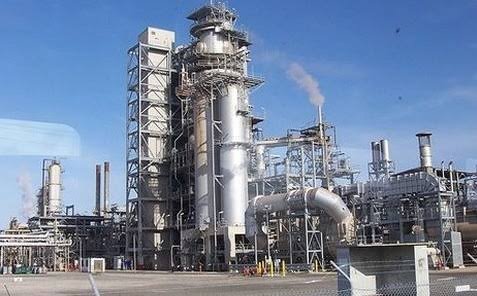
The levy suspension was not the only measure announced to moderate the expected diesel increase.
According to Citi Newsroom, the NPA said Sentuo Oil Refinery and Tema Oil Refinery had agreed to maintain the prices at which they sold petroleum products to bulk distribution companies at the levels recorded during the previous pricing window.
This commitment matters because domestic refinery selling prices are part of the chain through which fuel reaches the market. Holding those prices steady can help limit the immediate increase in costs faced by bulk distributors.
But the commitment should not be confused with a permanent cap on every component of the retail price. Retail prices also reflect other costs and components, and the reported arrangement related to the refineries’ selling prices to bulk distributors.
The combined approach temporarily suspending the levy, maintaining a reduced statutory-margin intervention and securing refinery-price commitments shows that the government sought to address several parts of the price build-up rather than rely on the levy suspension alone.
It also makes attribution more difficult. If retail diesel prices remain below the feared threshold, analysts will need to separate the effects of the tax change, the margin reduction, refinery commitments and movements in international markets.
Without that breakdown, it is not possible to say how much of the final price outcome was caused by any single measure.
What happens after 30 November?
The suspension is scheduled to end on 30 November 2026. The government has indicated that further instructions on the status of the additional levy will be communicated later.
That creates uncertainty for businesses planning fuel purchases and for policymakers assessing the cost of continued relief.
If the levy resumes immediately after the suspension, the levy component of diesel prices would return, all else being equal. But that would not guarantee an equivalent increase in the final retail price: other components may rise or fall at the same time.
If the suspension is extended, consumers could receive continued relief, but the government would need to account for the additional revenue not collected and the effect on the financing objectives associated with the levy.
A third possibility is that the government changes the form of support again. Any such change would need to be assessed against its fiscal cost, its effect on retail prices and the financing needs of the energy sector.
The most important information to watch is therefore not just whether the levy returns. It is whether the government publishes a transparent assessment of the intervention’s cost, explains the financing arrangements for the suspended revenue and sets out the post-November policy.
A clear exit plan would help businesses and consumers understand what to expect. It would also allow the public to assess whether the measure remained temporary or became part of a recurring pattern of fuel-price intervention.
What would demonstrate that the intervention worked?
A credible evaluation should go beyond whether diesel remained below GH¢22 per litre.
At least five indicators would help establish the outcome:
Actual retail diesel prices: Compare prices before, during and after the intervention, distinguishing average prices from NPA price floors.
International market movements: Track crude and refined-product prices alongside the cedi-dollar exchange rate to separate market effects from domestic policy effects.
The cost of the levy suspension: Publish the amount of revenue forgone during October and November, based on the actual volume of diesel affected.
Pass-through to transport and business costs: Monitor freight rates, passenger fares and relevant operating-cost indicators rather than assuming that the full relief reaches end users.
Energy-sector financing: Explain how the government manages the revenue affected by the suspension while meeting obligations related to sector shortfalls and legacy debt.
These indicators would help answer the central question: did the intervention provide meaningful relief at a manageable fiscal cost, and did the government maintain the financing needed to support the energy sector?
The available reporting establishes the policy’s design and its stated objective. It does not yet provide a complete evaluation of the intervention’s total fiscal cost or its distributional effects.
Conclusion: the real test is the balance between consumer relief and energy-sector financing
Ghana’s October–November diesel intervention maintains GH¢2 per litre of stated relief while changing how that support is delivered. The government has suspended the additional GH¢1 D-Levy on diesel and reduced the statutory-margin contribution from GH¢2 to GH¢1 per litre. It has also secured commitments from Sentuo Oil Refinery and Tema Oil Refinery to maintain their selling prices to bulk distributors at the previous pricing-window levels.
The response followed a forecast that diesel could rise to GH¢22.42 per litre. Later reporting on the NPA’s second-half October price floor put diesel at GH¢17.09 per litre, although that floor is not equivalent to an average retail price and the difference cannot be attributed entirely to government intervention.
The more consequential issue is the levy itself. The D-Levy supports the financing of energy-sector shortfalls and legacy debt, yet the government has temporarily suspended its additional GH¢1 component on diesel to ease consumer pressure. The sector’s financial obligations remain substantial, and the levy’s historical proceeds have not been sufficient to cover all reported financing needs.
That does not make the intervention inherently contradictory. Governments may reasonably choose to provide temporary relief during a sudden price shock. But such relief must be assessed alongside the cost of the intervention and the obligations that still need to be financed.
The key test is whether the government can demonstrate that the relief reached consumers, explain how much revenue was forgone and show how energy-sector obligations will be met during and after the suspension.
For Ghana, the question is no longer simply whether the D-Levy is suspended. It is whether temporary relief can cushion the economy without leaving the country with an unclear plan for the energy-sector financing needs the levy was designed to address.
Citations
- 1.The Herald Ghana — 1 October 2026. “Government to suspend GH¢1 D-Levy on diesel for October, November.” Reports the planned suspension, the revised statutory-margin reduction and the combined GH¢2-per-litre intervention.
- 2.https://theheraldghana.com/government-to-suspend-gh%C2%A21-d-levy-on-diesel-for-october-november/
- 3.Citi Newsroom — 30 September 2026. “Government suspends GH¢1 D-Levy on diesel for October and November.” Reports the policy arrangement, COPEC’s price projections and the expected consumer-relief objective.
- 4.https://www.citinewsroom.com/2026/09/government-suspends-gh%C2%A21-d-levy-on-diesel-for-october-november/
- 5.Citi Newsroom — 1 October 2026. “Gov’t rules out diesel price hitting GH¢22 per litre.” Reports the NPA’s announcement, refinery commitments and the government’s stated aim of keeping diesel below GH¢20 per litre.
- 6.https://www.citinewsroom.com/2026/10/govt-rules-out-diesel-price-hitting-gh%C2%A222-per-litre/
- 7.3News — 1 October 2026. “Government suspends GH¢1 D-Levy on diesel for October, November.” Reports the directive to the Ghana Revenue Authority, the effective dates and the limitation that other applicable levies and charges remain in force.
- 8.https://3news.com/news/government-suspends-ghc1-d-levy-on-diesel-for-october-november
- 9.National Petroleum Authority. “Price Build-Up.” Official source for Ghana’s fuel-price structure and historical price build-ups.
- 10.https://npa.gov.gh/price-build-up-2/
- 11.SweetFM Online — 13 October 2026. “NPA Sets New Ex-Pump Price Floors for October Second Pricing Window.” Reports the NPA’s second-half October price floors. The reported diesel floor is not an average retail price.
- 12.https://www.sweetfmonline.com/article/npa-ex-pump-price-floors-october-2026
- 13.Ministry of Finance, Ghana. 2025 Annual Report on the Management of the Energy Sector Support Account. Official account of levy proceeds and their use for energy-sector shortfalls and legacy debt.
- 14.https://www.mofep.gov.gh/sites/default/files/reports/economic/2025-Annual-ESSA-Report.pdf
- 15.Citi Newsroom — 23 June 2026. “Energy levy generates GH¢8.81bn in 2025 — Gov’t reveals.” Reporting on the annual report’s revenue and expenditure figures, including the additional Treasury contribution.
- 16.https://www.citinewsroom.com/2026/06/energy-levy-generates-gh%C2%A28-81bn-in-2025-govt-reveals/
- 17.International Monetary Fund — August 2026. Ghana’s Energy Sector: From Fiscal Vulnerability to a Platform for Sustained Growth. Analysis of energy-sector shortfalls, outstanding payables and structural financial risks.
- 18.https://www.imf.org/en/publications/selected-issues-papers/issues/2026/08/07/ghana-s-energy-sector-from-fiscal-vulnerability-to-a-platform-for-sustained-growth-578684
- 19.Ghana News Agency — 4 June 2025. “Parliament passes new energy sector levy under certificate of urgency.” Background on the levy’s legislative purpose and intended use of proceeds.
- 20.https://gna.org.gh/2025/06/parliament-passes-new-energy-sector-levy-under-certificate-of-urgency/
Finish Reading the Full Story and Expert Analysis.
Get the latest legal & regulatory intelligence in Ghana
Wansom is AI and can make mistakes.