
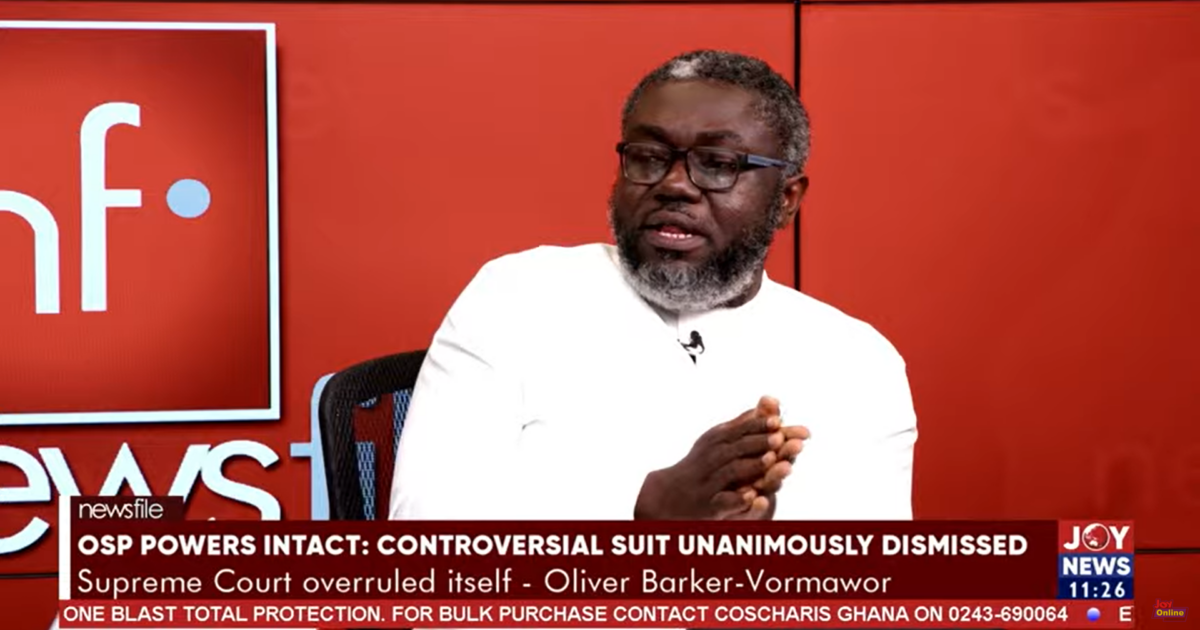
Ghana Supreme Court Upholds Constitutionality of OSP Act
Summary
- The Supreme Court upheld the constitutionality of the Office of the Special Prosecutor Act, 2017 (Act 959), ending a legal challenge to the law establishing the anti-graft agency.
- The court clarified the constitutional relationship between the OSP and the Attorney-General, affirming that the latter retains supervisory authority over public prosecutions.
- The decision reinforces public confidence in the OSP's mandate and strengthens its position within Ghana's anti-corruption framework.
- The Supreme Court's ruling makes it politically difficult for any future government to undermine the effectiveness of the anti-corruption agency.
Independence Reaffirmed
This decision sends a strong signal that the Office of the Special Prosecutor remains a central pillar of Ghana's anti-corruption framework and should continue to enjoy public and institutional support.
The Supreme Court's decision on July 29 has significant implications for Ghana's anti-corruption efforts, with far-reaching consequences for the Office of the Special Prosecutor (OSP). The court's unanimous ruling upheld the constitutionality of the OSP Act, 2017 (Act 959), ending a legal challenge to the law establishing the anti-graft agency. This decision reinforces public confidence in the OSP's mandate and strengthens its position within Ghana's anti-corruption framework. The judgment also clarifies the constitutional relationship between the OSP and the Attorney-General, affirming that the latter retains supervisory authority over public prosecutions while the former remains responsible for investigating and prosecuting corruption cases.
A Stronger OSP
Despite the clarification on the OSP's role, the Supreme Court's decision leaves no doubt about the agency's independence. According to Oliver Barker-Vormawor, Constitutional Rights and Policy Strategy Advisor at Democracy Hub, this judgment makes it politically difficult for any future government to undermine the effectiveness of the anti-corruption agency. The Attorney-General's supervisory authority over public prosecutions does not compromise the OSP's autonomy, as the court has made clear that the latter remains responsible for investigating and prosecuting corruption cases without unnecessary constitutional uncertainty. This decision sends a strong signal that the OSP is a central pillar of Ghana's anti-corruption framework and should continue to enjoy public and institutional support.
A Milestone in Anti-Corruption Efforts
The Supreme Court's ruling on July 29 marks an important moment for Ghana's fight against corruption. The judgment has been hailed as a significant milestone by anti-corruption fighters, who see it as a major step forward in the country's efforts to combat graft. According to Mr. Barker-Vormawor, the court covered itself in glory in terms of how it dealt with the constitutional questions surrounding the OSP. This decision provides greater legal certainty regarding the OSP's role and should strengthen confidence in its ability to investigate and prosecute corruption cases without unnecessary constitutional uncertainty.
Practical Implications
This decision reaffirms the Office of the Special Prosecutor's independence and strengthens its position in Ghana's anti-corruption framework, making it more difficult for future governments to undermine its effectiveness.
Source
How does this affect your business?
Get an AI analysis of this article grounded in your jurisdictions, practice areas, and any policy documents you've uploaded to Wansom.
Wansom is AI and can make mistakes.