
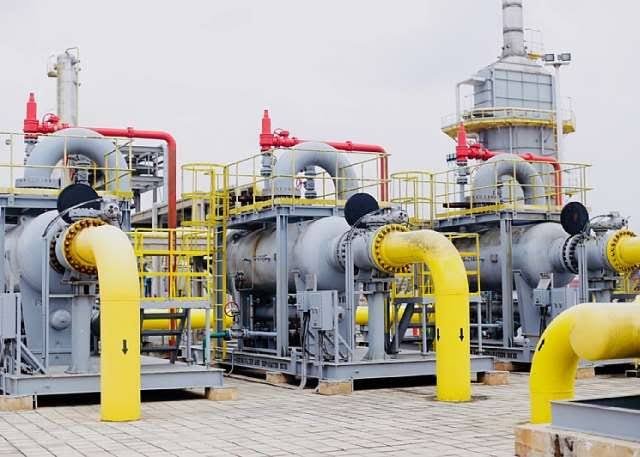
Ghana’s Refineries Hold Fuel Prices: Can Sentuo and Tema Oil Refinery Shield Consumers From Global Oil Shocks?
Ghana’s fuel-price intervention goes beyond a tax cut
Ghana’s response to rising diesel prices in October involved more than suspending a levy. It also relied on an agreement with two domestic refineries to hold their selling prices to Bulk Distribution Companies (BDCs) at the levels recorded during the preceding pricing window.
According to Citi Newsroom’s report of 1 October 2026, Sentuo Oil Refinery and the state-owned Tema Oil Refinery (TOR) agreed to maintain those prices after an emergency meeting involving the government and petroleum-sector stakeholders. National Petroleum Authority (NPA) Chief Executive Godwin Edudzi Tamakloe said the combined measures were intended to prevent diesel from reaching the projected GH¢22 per litre, with pump prices expected to remain below GH¢20.
The intervention matters because the price motorists pay is shaped by several stages of the petroleum supply chain. Refinery selling prices affect the cost at which BDCs acquire products; distribution, marketing, statutory charges and other applicable costs then influence the final pump price.
Holding one component steady can therefore reduce upward pressure without necessarily eliminating it.
The central question is whether this agreement can provide meaningful consumer protection while remaining commercially sustainable for the refineries and the wider fuel market.
What the refineries agreed to and what remains unclear
The reported agreement was specific: Sentuo and TOR would maintain the prices at which they sold petroleum products to BDCs during the previous pricing window.
That is not the same as a permanent price freeze, a government-guaranteed retail price or a commitment to sell fuel below cost.
The public announcement did not provide a detailed breakdown of the financial arrangements underpinning the agreement. It did not establish whether the refineries would absorb higher input costs, offset them through operational efficiencies, receive compensation, or recover some of the difference in a subsequent pricing window.
Those details matter. If international crude or operating costs rise while refinery selling prices remain unchanged, the difference has to be managed somewhere in the supply chain. The public information available at the time of the announcement does not establish precisely how.
The agreement should therefore be understood as a temporary pricing intervention whose commercial mechanics require further disclosure not proof that the underlying cost of producing or supplying fuel has fallen.
The distinction is particularly important for TOR, a state-owned refinery, and Sentuo, a privately operated facility. Their ownership structures differ, but both must manage feedstock costs, operating expenses, product quality, working capital and the need to sustain production.
A stable selling price is useful only if the supply behind it remains commercially and operationally sustainable.
Why domestic refinery prices matter to motorists
Ghana’s fuel-price exposure is not determined exclusively by the amount of crude oil it produces. The country must also secure refined petroleum products, and imported supplies remain an important part of the downstream market.
When international prices for crude oil and refined products rise, importers face higher acquisition costs. Exchange-rate movements can add further pressure because international petroleum transactions are commonly denominated in US dollars.
A weaker cedi increases the local-currency cost of dollar-priced imports, even when the dollar price of the product is unchanged.
Domestic refining can change how much of this cost passes through the import channel. It cannot, by itself, remove Ghana from the international petroleum market: local refineries also require feedstock, and their costs depend on the prices and terms at which it is sourced.
The Chamber of Bulk Oil Distributors (CBOD) has highlighted both sides of this equation. In August 2026, its chief executive said TOR and Sentuo could potentially meet up to 50% of domestic fuel consumption if they operated at full capacity. In September, CBOD put the potential domestic contribution at approximately 25%–30% and called for higher output.
These are industry estimates, not verified measurements of actual production during the October pricing window. The difference illustrates why capacity, actual refinery utilisation and the share of national demand supplied must be reported separately.
The economic case for domestic refining is consequently broader than a promise of cheaper fuel. Reliable local production can diversify supply, reduce some dependence on imported finished products, support industrial activity and potentially reduce exposure to disruptions in international product markets.
But the benefits depend on how efficiently the refineries operate, how much fuel they actually produce and whether their products are competitively priced.
The GH¢22 diesel forecast and the limits of the headline
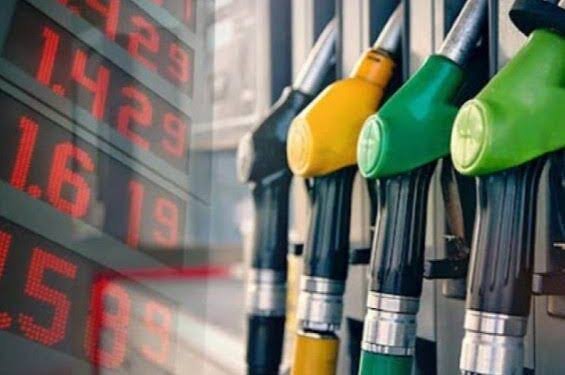
The immediate pressure behind the October intervention was a sharp projected increase in diesel prices.
The Chamber of Petroleum Consumers (COPEC) forecast that diesel could rise from GH¢18.24 to GH¢22.42 per litre in the first October pricing window, an increase of 22.91%. It also projected petrol to rise by 5.21%, from GH¢16.90 to GH¢17.78 per litre.
COPEC attributed the anticipated increases largely to rising international petroleum prices and a marginal depreciation of the cedi.
Those figures were forecasts made before the pricing window, not evidence that diesel actually reached GH¢22.42 per litre. The government’s intervention was announced in response to the anticipated increase, and the NPA subsequently said diesel would remain below GH¢20.
This distinction is essential when evaluating the policy. A forecast establishes the risk decision-makers were trying to manage; it does not, on its own, establish what consumers ultimately paid or how much of the projected increase was prevented by any single measure.
The refinery agreement and levy suspension were introduced together. Without a transparent counterfactual an estimate of what prices would have been in the same period without those measures it is difficult to isolate the contribution of each intervention.
A second intervention: changing how diesel relief is funded
The refinery agreement formed part of a wider government response to the expected price increase.
The government also temporarily suspended the additional GH¢1-per-litre Energy Sector Shortfall and Debt Repayment Levy, commonly called the D-Levy, on diesel. At the same time, the reduction in statutory margins was lowered from GH¢2 to GH¢1 per litre.
The combined intervention was therefore maintained at GH¢2 per litre, but its composition changed.
Measure | Previous arrangement | October–November arrangement |
|---|---|---|
Reduction in statutory margins | GH¢2/L | GH¢1/L |
D-Levy suspension | — | GH¢1/L |
Combined intervention | GH¢2/L | GH¢2/L |
The government was not simply increasing the size of the stated intervention. It was changing the mechanism used to deliver it.
The refinery price agreement worked upstream, by holding the selling prices charged to BDCs. The D-Levy suspension worked through the tax-and-levy component of the price build-up. The statutory-margin adjustment affected another part of the regulated pricing structure.
These measures operate through different channels. Their combined effect may cushion pump prices, but the precise amount passed through to motorists depends on the full price build-up and the conduct of other market participants.
The levy suspension also has a fiscal dimension. The D-Levy is intended to help finance energy-sector shortfalls and legacy obligations. Suspending its collection temporarily may ease the immediate burden on diesel buyers, but it also raises questions about how the associated obligations will be financed during the suspension.
The government has indicated that the diesel levy suspension is temporary, covering October and November. The refinery price agreement was reported in connection with the first October window; the public announcement did not establish a permanent price freeze.
Why holding prices is not the same as lowering costs
A refinery can maintain its selling price even when its underlying costs change. But the economic consequences depend on how the difference is handled.
There are several possible scenarios.
First, operational efficiencies may help absorb some pressure. Better yields, improved energy efficiency, reduced losses or more efficient procurement can lower the cost per unit of output. Whether either refinery achieved savings sufficient to offset the October market pressure has not been established by the public announcement.
Second, margins may absorb some of the increase. A refinery might temporarily accept a lower margin to maintain its selling price. That can provide short-term relief, but it may reduce cash available for maintenance, working capital or other operating needs if prolonged.
Third, costs may be managed elsewhere in the supply chain. The terms agreed with BDCs, the timing of purchases and sales, inventory arrangements and other commercial conditions can affect the overall outcome. The public report does not disclose enough detail to determine whether such mechanisms were used.
Fourth, the price adjustment may be temporary. If international prices remain elevated, a refinery may eventually need to revise its selling price unless costs decline or another party absorbs the difference.
These are possible mechanisms, not claims about what Sentuo or TOR actually did. To assess the agreement properly, the public needs information about its duration, cost-sharing arrangements, product coverage and any conditions governing a return to market-based pricing.
The distinction also matters for investors. A temporary agreement can support market stability, but investors need clarity about the rules governing commercial pricing and the financial treatment of extraordinary interventions.
What domestic refining can and cannot protect Ghana against

The policy case for domestic refining rests on more than price management.
Supply security
Local refining can diversify the sources of petroleum products available to Ghana. A refinery operating consistently may help reduce the need to source every additional litre of finished product from overseas.
However, domestic production is not a guarantee against shortages. Feedstock availability, maintenance, technical interruptions, financing and distribution constraints can all affect output.
Foreign-exchange exposure
Replacing some imports of finished petroleum products with domestically refined fuel can change the composition of foreign-exchange demand. But it does not necessarily eliminate dollar exposure because crude oil and some refinery inputs may still be imported or priced against international benchmarks.
The net foreign-exchange benefit depends on the origin and cost of feedstock, the proportion of local inputs, refinery efficiency and the value of finished products that would otherwise have been imported.
Competition and market resilience
More than one source of supply can help protect buyers from disruptions at a single facility. CBOD has specifically cautioned against excessive dependence on one source and argued for greater local output alongside diversified supply channels.
The policy objective should therefore be a resilient mix of domestic production and imports, rather than domestic refining at any cost.
Industrial development
Refining supports activity in storage, logistics, engineering, distribution and related services. Expanding local operations can create employment and develop technical capabilities, but the scale of those benefits depends on sustained commercial activity rather than announced capacity alone.
The government has also said that expansion at TOR and Sentuo could eventually allow the facilities to meet about 70% of domestic demand. That is an expectation tied to completion of expansion projects, not evidence that Ghana already meets that share through domestic refining.
The consumer test: did the agreement reach the pump?
The immediate test is whether motorists and businesses paid less than they otherwise would have paid.
The NPA's announcement that diesel would remain below GH¢20 per litre was an official expectation. It was not a guarantee that every station would charge the same price. Retail prices can differ between oil marketing companies and locations, and the price floor is not the same as the actual market price.
The second October pricing window provides a useful follow-up. On 14 October, the Chamber of Oil Marketing Companies (COMAC) projected that diesel would decline by 3.32% from 16 October, to GH¢19.30 per litre, while petrol was projected to fall by 1.67%, to GH¢17.67 per litre.
The NPA's minimum price floor for diesel was also set to fall, from GH¢17.97 per litre in the first October window to GH¢17.09 in the second.
These figures indicate an expected easing in the market, but they should not be presented as proof that the refinery agreement alone caused the decline. International product prices, currency movements, inventories and other pricing components can also affect the outcome.
For the public, the relevant questions are practical:
Did the agreement reduce the actual prices charged by oil marketing companies compared with a credible no-intervention estimate?
Were savings passed through consistently, or did the benefit vary considerably between retailers?
Did transport operators, freight companies and other diesel-intensive businesses experience lower costs than they would otherwise have faced?
Did lower fuel costs translate into any moderation in transport fares or the prices of goods?
Were the savings temporary, and what happened as market conditions changed?
A decline in fuel prices does not automatically translate into an equivalent reduction in transport fares or food prices. Those prices reflect several other costs, contracts and market conditions. Evidence is needed to establish the extent of any pass-through.
Why diesel matters beyond motorists
Diesel is a business input across much of the economy. Its price affects the cost of moving goods, operating heavy vehicles and machinery, and supplying businesses that depend on road transport.
Freight operators may face higher costs when diesel rises. Agricultural supply chains can be affected through the transport of inputs and produce. Construction, mining and manufacturing businesses may face pressure on logistics and equipment expenses.
When those costs rise, businesses can respond in different ways: absorbing the increase in their margins, reducing other expenses, delaying activity or passing part of the cost to customers.
A temporary reduction in diesel-price pressure may therefore help businesses manage costs during a volatile period. But the impact cannot be quantified from the refinery agreement alone, and it would be premature to claim that the intervention has reduced food inflation or transport costs by a particular amount.
For policymakers, this is an important reason to track more than the pump price. The broader economic value of the intervention depends on how much relief reaches productive activity and whether that relief persists long enough to influence business decisions.
The sustainability question for Sentuo and TOR
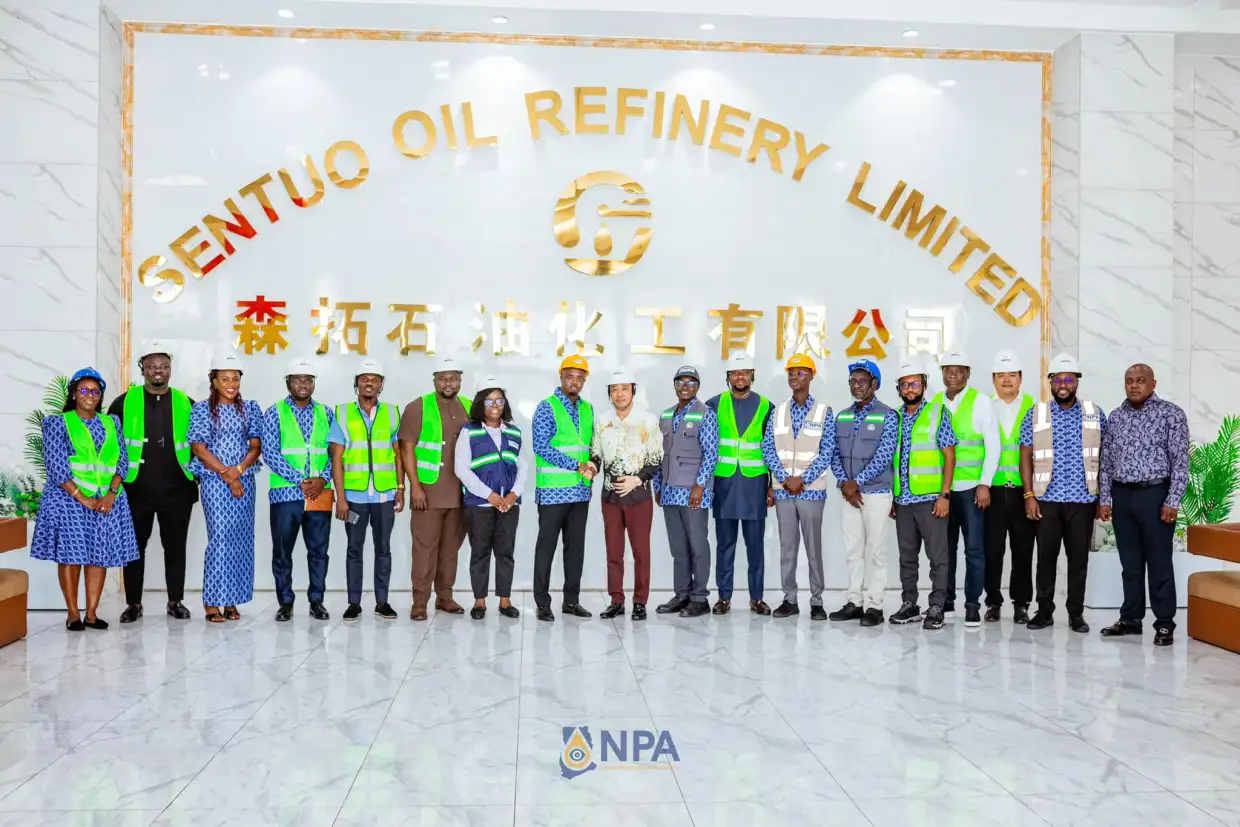
The immediate consumer benefit must be considered alongside the commercial position of the refineries.
Holding prices steady can help downstream buyers plan their purchases and limit sudden price changes. But if the cost of crude, energy, finance or other inputs rises, maintaining a fixed selling price may narrow margins unless offset by efficiencies or other arrangements.
The risk is not that every temporary price agreement must undermine refinery viability. It is that repeated or extended interventions without transparent terms can make it difficult to distinguish genuine efficiency gains from costs being deferred or transferred elsewhere.
A credible policy framework should clarify:
Duration: Which pricing windows are covered, and when can prices be reviewed?
Scope: Does the agreement cover all petroleum products or only specified products?
Cost treatment: Who bears additional costs if international input prices rise?
Supply commitments: What production or delivery volumes are expected during the agreement?
Disclosure: Will the government or the refineries publish enough information to evaluate the arrangement without exposing legitimate commercial secrets?
Exit conditions: What market developments would trigger a revision or end to the agreement?
Such transparency would help consumers understand the intervention and help investors assess the commercial environment.
The next challenge: turning temporary relief into resilience
Ghana's October agreement illustrates the difference between managing a price shock and reducing the economy's vulnerability to future shocks.
Holding refinery selling prices can soften an immediate increase. A temporary levy suspension can reduce one component of the retail price. Neither measure, on its own, changes the international price of crude oil, the dollar cost of imported petroleum products or the exchange rate.
A more durable strategy would combine reliable refinery operations with transparent pricing, adequate storage, diversified supply, efficient distribution and a clear approach to the financing of energy-sector obligations.
It would also require policymakers to distinguish between installed capacity and actual production. A refinery's announced ability to process more crude does not establish that it is consistently producing the products and volumes Ghana needs at competitive costs.
The relevant measures include refinery utilisation, actual domestic output, the share of consumption met by local production, product imports, operating interruptions and the cost of locally refined products relative to imported alternatives.
These indicators would help determine whether domestic refining is reducing vulnerability in practice, rather than merely shifting where costs are incurred.
Conclusion: a useful buffer, not a substitute for reform
Sentuo and Tema Oil Refinery's agreement to hold their selling prices during the first October pricing window was an important component of Ghana's response to a projected diesel-price surge. Together with the temporary D-Levy suspension and the adjustment to statutory-margin relief, it was intended to keep diesel below the feared GH¢22-per-litre level.
But the announcement should not be mistaken for proof that Ghana has insulated itself from global fuel markets. Domestic refineries can provide a valuable supply buffer, yet their performance depends on feedstock costs, operating efficiency, reliable output and commercially sustainable pricing.
The next measure of success is not simply whether the headline price stayed below a forecast. It is whether consumers received demonstrable relief, whether the refineries maintained reliable supply, and whether the intervention's financial consequences were transparent.
If Ghana can combine temporary price management with stronger refinery performance and a more resilient supply chain, the agreement may become part of a broader strategy to reduce vulnerability to external shocks. If not, it risks remaining a short-term response to a recurring problem.
Citations
- 1.Citi Newsroom — 1 October 2026. Government rules out diesel price hitting GH¢22 per litre. Primary report on the refinery agreement and the government's stated price objective.
- 2.Citi Newsroom — 30 September 2026. Government to suspend GH¢1 D-Levy on diesel for October, November. Details the levy suspension and statutory-margin adjustment.
- 3.Citi Newsroom — 3 August 2026. TOR, Sentuo can produce 50% of Ghana's fuel needs, CBOD CEO says. Industry estimate of potential domestic supply at full capacity.
- 4.Citi Newsroom — 16 September 2026. CBOD urges Sentuo and TOR to ramp up production as fuel prices rise. Industry comments on local production and import dependence.
- 5.Ghana Information Services Department — 17 July 2026. Tema and Sentuo refineries could meet 70% of Ghana's fuel demand after expansion. Government statement on planned expansion and expected capacity.
- 6.Citi Newsroom — 14 October 2026. Petrol and diesel prices projected to fall in the second October pricing window. Later market forecast for the second half of October.
- 7.Starr FM — 13 October 2026. NPA sets October fuel price floors for petrol and diesel. Reports the NPA's second-window minimum prices.
Finish Reading the Full Story and Expert Analysis.
Get the latest legal & regulatory intelligence in Ghana
Wansom is AI and can make mistakes.