
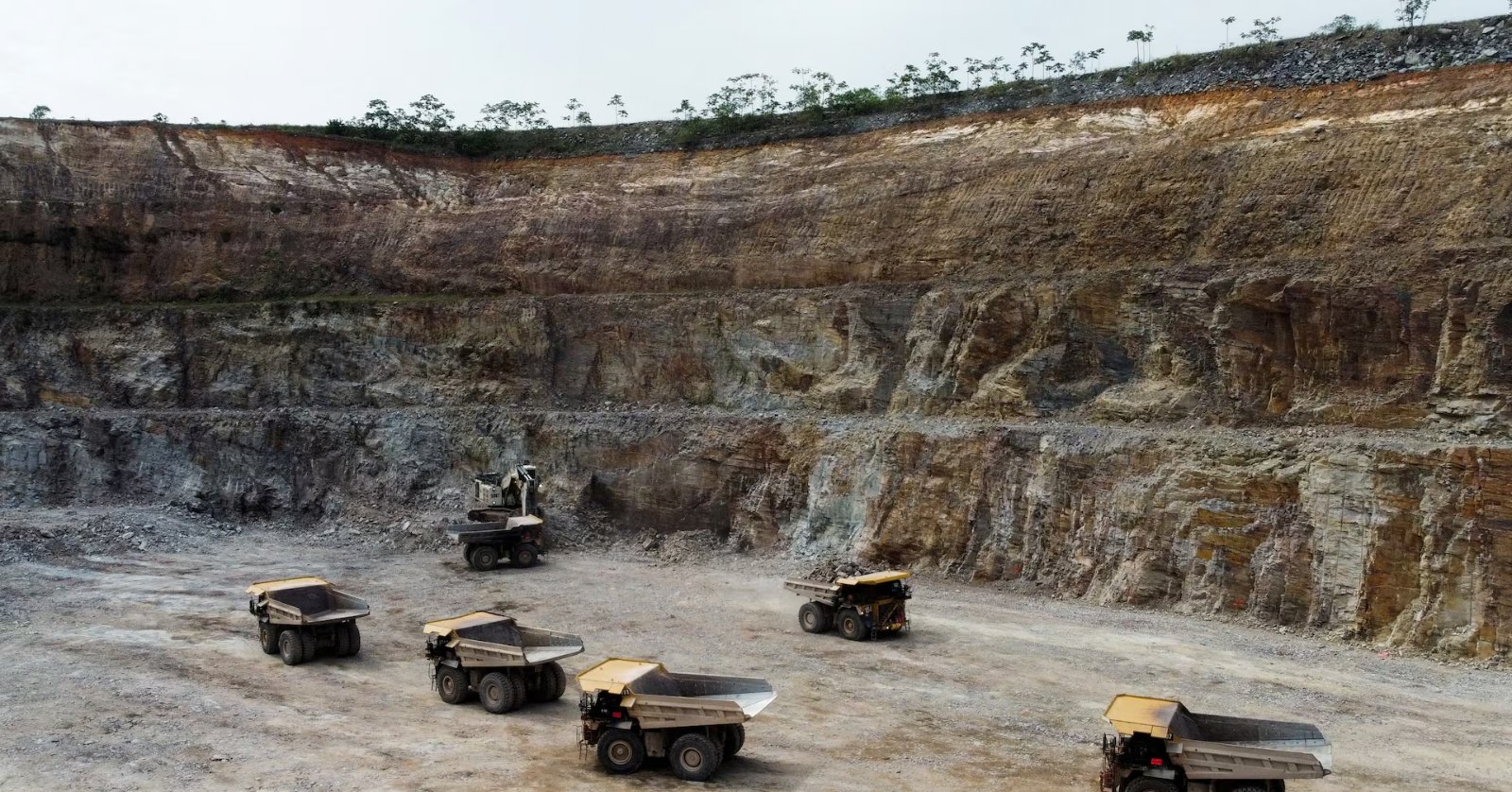
Ghana Mining Bill 2026: State Veto Rights, Lease Reforms and Mahama’s 2030 Raw Ore Export Ban
Abstract
State special share: The September draft would allow the mines minister to require mining companies to issue the state a free special share with veto rights over specified transactions.
Lease terms: The published draft proposed leases of up to 15 years or the remaining life of the mine, whichever was shorter. Reuters reported on 9 October that a revised bill was expected to restore a maximum 20-year term.
Local processing: The draft would give the government powers to require domestic processing and introduce restrictions on exports of unprocessed mineral concentrates through later regulations.
Existing state stake: The government’s 10% free-carried interest in mining projects remains part of the framework.
Raw ore exports: Mahama has pledged that Ghana will stop exporting raw mineral ores by 2030, but implementation depends on further legal and regulatory action.
What comes next: The revised bill’s formal presentation, its final wording and Parliament’s consideration will determine which provisions become law.
Ghana’s mining bill enters a new phase
Ghana’s proposed Minerals and Mining Bill, 2026, seeks to replace the Minerals and Mining Act, 2006, and reshape how the country regulates its mineral resources.
Parliament’s official bills register records that the bill was laid on 26 May 2026. A version published by Parliament subsequently drew attention to proposed changes affecting state control, mining lease durations and mineral processing.
The most consequential provisions concern the government’s ability to exercise greater influence over corporate decisions, the duration of mining rights and the conditions under which minerals can be exported.
However, the legislation’s status changed on 9 October. Reuters reported that Ghana was expected to replace the published draft with a revised version following concerns from mining industry stakeholders.
That means the September draft remains important for understanding the debate, but its provisions must not automatically be presented as the final policy.
The proposed state special share: veto rights over key decisions
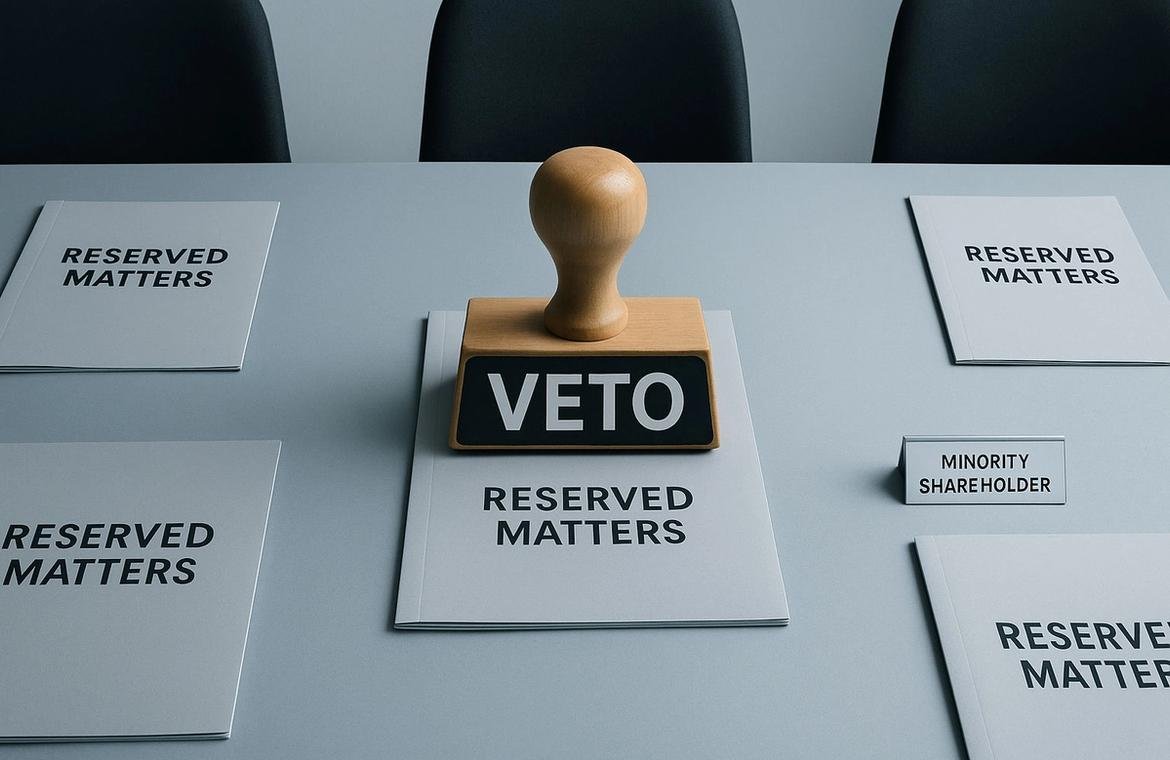
One of the most closely watched provisions in the September draft is a proposed free special share for the state.
Under that version, the mines minister could require a mining company to issue the government a special share carrying veto rights over specified corporate transactions.
These include:
Transfers of mining leases.
Voluntary liquidation of a company.
Sales or disposals of significant overseas assets linked to its Ghanaian operations.
The intended effect would be to give the state an additional mechanism for protecting its interests when a mining company makes major decisions that could affect its Ghanaian assets or operations.
The special share is distinct from the government’s existing 10% free-carried interest in mining projects. A free-carried interest gives the state an ownership stake without requiring it to fund that proportion of the investment. A special share with veto rights, by contrast, is principally a governance mechanism.
There is also an important qualification: the special-share concept is not necessarily entirely new. In its 9 October report, Reuters quoted the Ghana Chamber of Mines as saying that ministerial powers to require a special share already existed under the 2006 mining law and were largely being carried over into the draft, although the proposed penalties for non-compliance were tougher.
The debate therefore concerns not just whether the state can hold such a share, but how the power is defined, when it can be exercised and what safeguards apply.
The final bill will need to be examined to determine whether the September wording is retained, amended or removed.
Mining lease terms: from 30 years to a proposed 20-year limit
The proposed reduction in mining lease durations has become another central point of contention.
Under the existing framework described in the September reporting, mining leases can run for up to 30 years. The published 2026 draft proposed a maximum term of 15 years or the projected life of the mine, whichever was shorter.
For mining companies, lease duration affects long-term investment planning. Developing a mine can require substantial upfront capital for exploration, infrastructure, equipment and processing facilities. Investors therefore consider the duration and renewal conditions of their rights when evaluating projects.
On 9 October, however, Reuters reported that the government was expected to replace the 15-year provision with a maximum 20-year lease term. Sources familiar with the revision said the change followed industry concerns. A mining ministry official reportedly described the document sent to Parliament as containing a mistake that would be corrected.
The report did not establish when the revised bill would be formally reintroduced or confirm the final wording of all its provisions.
The distinction is critical: 20 years is the expected revised position reported by Reuters, not a confirmed enacted rule. Until Parliament considers the revised text and completes the legislative process, companies should not treat the proposed change as settled law.
Local processing: a possible route to restricting raw mineral exports
The bill also addresses Ghana’s ambition to capture more value from its mineral resources before they leave the country.
The September draft would allow the government to require local processing and introduce restrictions on exports of unprocessed mineral concentrates through subsequent regulations.
That is an enabling power, not an immediate, comprehensive ban on raw mineral exports. The draft provision does not itself establish a universal 2030 deadline for processing all minerals domestically.
The distinction matters because local processing requires more than a policy announcement. Depending on the mineral and processing stage, it can require reliable electricity, transport infrastructure, technical expertise, capital investment and sufficient processing capacity.
Regulations would also need to specify which minerals are covered, what level of processing is required, how compliance is assessed and whether exemptions or transitional arrangements apply.
The bill could provide a legal route for implementing some restrictions, but the practical outcome will depend on the final legislation and any subsequent regulations.
Mahama’s 2030 pledge: no more raw mineral ore exports
President John Dramani Mahama has made the end of raw mineral ore exports by 2030 part of his broader industrialisation agenda.
Speaking at the Council on Foreign Relations in New York on 25 September 2026, he said Ghana would not export raw mineral ores from 2030 and urged mining companies to begin introducing primary and secondary processing capacity.
He had also made the commitment publicly earlier in the year. The Presidency reiterated the target in a statement published in February 2026.
The policy objective is to retain more economic value within Ghana, encourage investment in processing and create opportunities for industrial development and employment.
But the pledge faces three practical and legal questions.
The first challenge: turning a pledge into enforceable rules
A presidential statement does not, by itself, establish a complete legal prohibition. The government would need to implement the relevant statutory powers and regulations, including defining the minerals and forms of raw material covered.
The September mining bill could provide part of that framework, but its local-processing provisions are enabling powers rather than a self-executing ban with a fixed deadline.
The second challenge: a previous bauxite commitment
In February 2024, former President Nana Akufo-Addo announced plans to prohibit exports of raw bauxite through a new legislative instrument as part of a wider mineral-processing initiative.
That announcement illustrates the gap that can exist between a policy commitment and implementation. The existence of a previous pledge does not itself establish why it was not implemented, so the status of the proposed instrument and any later regulatory steps should be checked against official records before drawing conclusions.
For Mahama’s 2030 target, the key test will be whether the government establishes enforceable requirements and the capacity needed to meet them.
The third challenge: the presidential timeline
Mahama’s current presidential term is scheduled to end in January 2029, before the 2030 deadline.
That does not prevent his administration from legislating or establishing a regulatory framework before leaving office. However, achieving the target will require implementation to continue beyond the current term, making the final rules, transition arrangements and future enforcement decisions particularly important.
Gold royalties: a higher share of revenue when prices rise

The mining bill arrives alongside a separate change to Ghana’s mining fiscal regime.
A sliding-scale gold royalty system took effect in March 2026, replacing the previous flat 5% royalty rate. Under the new structure, the rate rises with the gold price and reaches 12% when gold exceeds US$4,500 per ounce.
The highest rate was therefore already relevant when the new regime began, given that international gold prices had moved above that threshold.
The system is intended to link the state’s royalty revenue more closely to prevailing market prices. For mining companies, however, it changes the amount payable to the government as prices move through the relevant bands.
Royalties and the mining bill should be distinguished. The royalty regime is a separate fiscal measure already in effect; the lease and special-share provisions discussed above concern proposed changes to the wider legal framework.
Together, these measures form part of a broader policy environment in which Ghana is reviewing how mineral wealth is governed, taxed and converted into domestic economic activity.
Local contractors: a December deadline for major miners
Ghana is also seeking to increase local participation in mining operations.
In April 2026, Reuters reported that the Minerals Commission had directed Newmont, AngloGold Ashanti and Zijin to transition mining operations to locally compliant contractors by December 2026 or face possible sanctions.
The requirements distinguish between surface mining, which must be carried out by wholly Ghanaian-owned firms, and underground mining, where contractors must have at least 50% Ghanaian ownership.
The three companies had sought extensions, according to Reuters, but the regulator rejected the requests.
This contractor transition is separate from the mining bill. It arises from local ownership and contract-mining rules already introduced before the current legislative review.
The deadline nevertheless fits the government’s broader emphasis on domestic participation in the mining value chain. The outcome will depend on how companies meet the applicable requirements and how the regulator assesses compliance.
Damang and Tarkwa: lease decisions in focus
The experiences of Gold Fields’ Damang and Tarkwa mines illustrate why lease terms and renewal procedures matter.
Damang: Gold Fields’ transition lease expired in April 2026, and the mine was transferred to the Government of Ghana on 18 April. The transition followed the government’s decision not to renew the company’s original long-term lease.
Tarkwa: Gold Fields has five mining leases due to expire in April 2027. The company submitted a renewal application in November 2025 and has been discussing the proposed renewal with the government. Its published 2025 annual report also described proposed amendments to mining law, including changes to lease terms and development agreements.
These are distinct cases with their own contractual and regulatory histories. They should not be treated as proof of how the revised 2026 bill will be applied.
They do, however, show why mining companies are watching the legislative process closely: lease duration, renewal conditions and the stability of the regulatory framework can affect long-term mine plans and investment decisions.
What the bill means for investors and Ghana
The proposed reforms raise several questions for mining companies, investors, government and local suppliers.
For mining companies: The final provisions on lease terms, state share rights and local processing will shape the regulatory conditions under which they operate. The revised draft may address some concerns raised by the industry, but the details remain important.
For investors: The distinction between a published draft and enacted law is essential. Investment decisions should be based on the final legislation, applicable regulations and the terms of individual mining rights rather than on an earlier draft alone.
For local businesses: Policies on local processing and Ghanaian-owned contractors could create opportunities for suppliers, service companies and processors. Whether those opportunities translate into durable investment will depend on financing, skills, infrastructure and the detailed rules.
For government: The challenge is to pursue domestic value addition and greater public participation while establishing clear, predictable procedures for companies and regulators.
For workers and communities: Changes in mine ownership, contracting arrangements or processing requirements may affect employment and local procurement. The actual effects will depend on implementation at individual operations.
What to watch next
Several developments will determine the next phase of Ghana’s mining reforms.
Publication of the revised bill: When will the replacement text be formally presented, and what changes will it make beyond the expected 20-year lease limit?
The special-share provision: Will the minister’s powers, veto rights and penalties remain as proposed in September?
Parliamentary scrutiny: When will lawmakers examine the revised bill, and what amendments will emerge from the process?
Raw ore export regulations: Will the government specify which minerals are covered, what processing is required and how the 2030 target will be enforced?
Local contractor compliance: Will Newmont, AngloGold Ashanti and Zijin meet the December deadline?
Gold Fields’ Tarkwa leases: How will the government handle the renewal application ahead of the April 2027 expiry?
The answers will help determine whether Ghana’s policy goals are translated into a stable and enforceable regulatory framework.
Conclusion
Ghana’s mining reforms are moving beyond a debate over a single bill. The proposed special share, changes to lease terms, local-processing powers, higher price-linked royalties and contractor requirements all relate to how the country manages its mineral resources and distributes the economic benefits.
The most important recent development is the government’s expected revision of the mining bill, reported by Reuters on 9 October. The anticipated restoration of a 20-year maximum lease term suggests that the published draft is not the final word on the legislation.
For the 2030 raw ore export pledge, the central question is whether Ghana can translate its stated ambition into clear rules, adequate processing capacity and implementation that continues beyond the current presidential term.
Until the revised bill is formally presented and its final provisions are known, the special-share and processing powers should be understood as proposals, not settled law.
Citations
- 1.Reuters, 30 September 2026:
- 2.September draft: special share and lease provisions
- 3.Reuters, 9 October 2026:
- 4.Expected revision and 20-year lease term
- 5.Parliament of Ghana:
- 6.Official bills register and date laid
- 7.Council on Foreign Relations, 25 September 2026:
- 8.Mahama’s 2030 raw ore export pledge
- 9.Reuters, 9 March 2026:
- 10.Sliding-scale gold royalty regime
- 11.Reuters, 22 April 2026:
- 12.Local contractor deadline for major miners
- 13.Gold Fields, 2025 Integrated Annual Report:
- 14.Damang transition and Tarkwa lease renewal
- 15.Ghana News Agency, 27 February 2024:
- 16.Akufo-Addo’s earlier raw bauxite export pledge
Finish Reading the Full Story and Expert Analysis.
Get the latest legal & regulatory intelligence in Ghana
Wansom is AI and can make mistakes.