
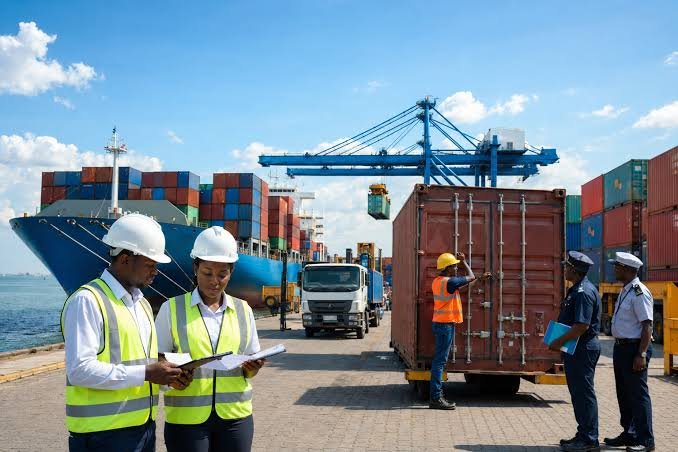
Ghana Makes Local Marine Cargo Insurance Mandatory for All Commercial Imports
Summary
The rule: from 1 October 2026, all commercial imports must carry marine cargo insurance from an NIC-licensed insurer. Personal effects are generally exempt.
The law: Section 222 of the Insurance Act, 2021 (Act 1061) bars placing marine cargo or hull business, other than reinsurance, with an insurer not licensed under the Act, without the NIC's prior written approval. The Ministry of Finance directed enforcement, and the GRA enforces with the NIC.
Enforcement: banks confirm local cover before issuing letters of credit; ICUMS checks cover against the NIC's Marine and Aviation Database; no clearance without proof.
History: the directive first took effect on 1 February 2026 amid opposition from a traders' coalition. The GRA's 3 September statement set 1 October as the compulsory date at clearance.
Why: only about 6% of imports were insured locally. The government expects close to GH¢300 million a year and wants to retain premiums and foreign exchange.
Contracts: CIF and CIP purchases now risk double insurance. Importers should move to CFR, FOB, CPT or FCA terms and arrange local open covers.
Trade law: in effect a local-presence requirement for marine insurance, raising GATS and AfCFTA services questions. Its success depends on local insurers' capacity, pricing and claims performance.
What Was Announced
The rule. On 3 September 2026, the Ghana Revenue Authority (GRA) issued a public statement that, under Section 222 of the Insurance Act, 2021 (Act 1061), marine cargo insurance is compulsory for all goods imported into Ghana. From 1 October 2026, every importer must obtain marine cargo insurance from an insurer licensed by the National Insurance Commission (NIC). Personal effects are generally exempt.
A long road to enforcement. The legal requirement is not new, but it has rarely been enforced:
Date | Step |
|---|---|
Before 2020 | A local-placement requirement for Ghanaian insurance risks has applied for nearly two decades, carried into the Insurance Act, 2021 (Act 1061) as Section 222 |
December 2020 | Marine Cargo Insurance Protocol signed by key institutions to improve compliance |
January 2026 | Minister of Finance directs enforcement of Section 222; the NIC convenes stakeholders |
28 January 2026 | A coalition of exporters, importers, traders and freight forwarders, joined by FABAG and the Traders Advocacy Group Ghana, rejects the directive |
1 February 2026 | Directive's initial effective date |
3 September 2026 | GRA public statement: compulsory marine cargo insurance for all imports from 1 October 2026 |
25 September 2026 | Notice on ICUMS introducing a system for verifying commercial cargo insurance |
1 October 2026 | Enforcement at clearance begins |
Why now. Research cited by the Ghana Shippers' Authority found that only about 6% of imports were insured locally, and about 75% of importers had limited or no awareness of how their cargo was insured. The government's stated aims are to:
retain insurance premiums in Ghana and deepen the domestic insurance market;
reduce foreign exchange outflows on premiums paid abroad, easing pressure on the cedi; and
raise revenue. The Ministry of Finance expects close to GH¢300 million a year once fully in place, and industry estimates put the premium pool at around US$100 million.
The policy is also presented as protection for importers: local cover means claims under Ghanaian law, with a local insurer and local dispute resolution.
The Legal Basis
Section 222 of the Insurance Act, 2021 (Act 1061). The provision on marine insurance states, in substance, that a person shall not place any marine cargo or hull business, other than reinsurance business, with an insurer that is not licensed under the Act, except with the prior written approval of the NIC.
Three features matter:
Feature | Effect |
|---|---|
Scope | Marine cargo and hull business. Reinsurance is excluded, so local insurers can still lay off risk with international reinsurers |
Obligation | Placement must be with an insurer licensed under the Act, meaning an NIC-licensed company |
Exception | Placement abroad is possible only with the NIC's prior written approval |
Who does what.
Body | Role |
|---|---|
Ministry of Finance | Issued the directive to enforce Section 222 |
National Insurance Commission (NIC) | Regulator; licenses insurers, grants exemptions, maintains the Marine and Aviation Insurance Database |
Ghana Revenue Authority, Customs Division | Enforces at clearance through ICUMS, checking cover against the NIC database |
Commercial banks | Confirm valid local cover before issuing letters of credit |
Ghana Shippers' Authority | Supports shipper education and compliance |
The legal debate. The coalition of exporters, importers, traders and freight forwarders argued in January that cargo insurance is a private commercial risk between buyers, sellers and financiers. On this view, it creates no third-party risk of the kind that justifies compulsory insurance, as motor third-party insurance does. The government's answer is that Section 222 is existing law requiring local placement of any marine cover. The directive enforces that law rather than creating a new duty.
A subtle point. Read closely, Section 222 governs where marine cargo insurance is placed. The enforcement design, under which commercial imports are not released without proof of local cover, goes further in practice: it requires every commercial import to carry such cover at all. That gap between the statutory text and the operational rule is the legal ground on which any challenge would most likely focus.
How Enforcement Works
The directive builds compliance into the points every import already has to pass through: finance and customs clearance.
Checkpoint | What happens |
|---|---|
Trade finance | Commercial banks must confirm valid local marine cargo insurance before issuing letters of credit for imports |
Customs declaration | The GRA verifies cover through its Integrated Customs Management System (ICUMS), cross-checked against the NIC's Marine and Aviation Database. On 25 September 2026, GRA announced a system for verifying commercial cargo insurance on ICUMS |
Release | No commercial import will be cleared at any port without evidence of cover from an NIC-licensed insurer |
Exemption | Personal effects are generally exempt |
Why a database matters. The NIC's Marine and Aviation Database is designed to allow real-time electronic verification of marine policies. That reduces the risk of fake certificates, and lets customs confirm, policy by policy, that cover was issued by a licensed insurer for the specific consignment.
The practical sequence for an importer:
Agree purchase terms with the supplier that allow insurance to be arranged locally.
Obtain marine cargo cover from an NIC-licensed insurer, or through a licensed broker, before shipment or before applying for a letter of credit.
Ensure the policy is recorded in the NIC database with details matching the shipment.
Lodge the customs declaration on ICUMS, where the system checks for valid cover.
Clear the goods. Without verified cover, release is refused.
Open issues raised by stakeholders. At sensitisation forums, participants asked about penalties for non-compliance, dispute resolution with local insurers, and the responsibilities of brokers and shipping agents. Clear published guidance on these points will shape how smoothly enforcement works from 1 October.
Incoterms and Contracts: Where the Real Work Lies
Who insures under each Incoterm. Under the Incoterms 2020 rules, only two terms oblige the seller to buy cargo insurance for the buyer's benefit:
Incoterm | Who arranges insurance | Effect of Ghana's rule |
|---|---|---|
CIF (Cost, Insurance and Freight) | Seller, at minimum Institute Cargo Clauses (C) cover | Seller's foreign cover no longer satisfies Ghanaian clearance. Importer must also buy local cover, paying twice, or renegotiate |
CIP (Carriage and Insurance Paid To) | Seller, at Institute Cargo Clauses (A) level | Same problem as CIF |
CFR (Cost and Freight), FOB (Free on Board), FCA, CPT | Buyer, if it chooses to insure | Fits the new regime: importer buys local cover from an NIC-licensed insurer |
DAP, DPU, DDP | Risk stays with seller until delivery in Ghana | Commercially unusual for most imports; check how the seller's arrangements interact with the local requirement |
The practical move. Importers who currently buy on CIF or CIP terms should consider switching to CFR or FOB, and CPT or FCA, so the price excludes foreign insurance and the importer places cover locally. Otherwise they risk paying for two policies on the same cargo.
Contract checklist for shipments arriving after 1 October:
Price and Incoterm. Remove the insurance element from the supplier's price, or agree a credit for it.
Letters of credit. Amend LC terms. Banks will look for local cover before issuing, and LCs drafted on CIF terms that call for a foreign insurance document need revising.
Credit sales and title. Where suppliers sell on credit and keep an interest in the goods, they may want to be named as loss payee or co-insured on the local policy, a point the trader coalition raised.
Open covers. Frequent importers should negotiate an annual open-cover policy with a local insurer, so each shipment is declared under a standing arrangement.
Claims and survey. Agree who surveys damage on arrival and how claims are notified, since claims now run through a Ghanaian insurer under Ghanaian law.
Shipments in transit on 1 October. Goods already at sea under CIF terms may arrive after the deadline. Arrange local cover before arrival to avoid release delays.
Customs value. Ghana assesses import duties on a value that includes insurance. Switching from foreign to local cover changes who pays the premium, not whether insurance forms part of the dutiable value.
The Trade-Law Analysis
1. Trade in services: a local-presence requirement
In trade-law terms, the rule is a restriction on cross-border supply of insurance services (GATS Mode 1): a foreign insurer without an NIC licence can no longer cover Ghana-bound cargo. Instead, the service must be supplied through commercial presence, an insurer licensed in Ghana.
Under the WTO General Agreement on Trade in Services (GATS), such a requirement is a problem only where a country has scheduled commitments to allow cross-border supply of the relevant insurance service without that limitation. Marine, aviation and transport insurance is a common candidate for liberalisation, so Ghana's exposure depends on what it inscribed in its schedule.
Nationality is not the test. The rule turns on licensing in Ghana, not on ownership, so foreign-owned insurers licensed by the NIC can compete for the business. That makes it easier to defend than a rule reserving business for Ghanaian-owned firms.
2. Regional integration: ECOWAS and the AfCFTA
The AfCFTA Protocol on Trade in Services identifies financial services, including insurance, among its priority sectors, and aims at progressive liberalisation. A national rule requiring every import to be insured with a locally licensed insurer cuts against cross-border insurance integration. Over time, regional mechanisms for mutual recognition of insurers or regional licensing could offer a route to reconcile the two.
3. Trade facilitation
The WTO Trade Facilitation Agreement asks members to publish new requirements in advance, consult traders, and keep border formalities to what is necessary. The GRA's public statement on 3 September and the ICUMS notice on 25 September provide notice. Electronic verification through the NIC database is consistent with the Agreement's push for automation. The risk lies in implementation: if verification fails or certificates are rejected for technical reasons, goods will sit at port and costs will rise.
4. Regional precedent
Ghana is not alone. Several African countries require marine cargo insurance on imports to be placed with locally licensed insurers, with similar aims of retaining premiums and foreign exchange and building domestic insurance capacity. Their experience shows that success depends on local insurers' capacity, pricing and claims performance. Industry participants in Ghana have warned that the projected premium windfall depends on claims credibility.
5. The policy trade-off
The rule retains premiums and foreign exchange in Ghana and gives importers recourse under Ghanaian law. Against that, it reduces importers' freedom to choose insurers, may raise costs where local pricing exceeds international rates, and adds a new condition to every clearance.
What It Means for Each Stakeholder
Importers
The rule: from 1 October 2026, no commercial import is released without proof of marine cargo cover from an NIC-licensed insurer. The risk: buying on CIF or CIP terms means paying for foreign cover that customs will not accept, plus local cover on top. What to do: move new purchases to CFR, FOB, CPT or FCA terms, and arrange an annual open cover with a local insurer if you import regularly. Make sure every shipment's policy is recorded in the NIC database before arrival, and arrange cover now for goods already in transit.
Foreign suppliers and exporters to Ghana
The change: CIF and CIP quotations become less useful to Ghanaian buyers. What to do: offer CFR or FOB pricing for Ghana. Where you sell on credit, ask to be named as loss payee on the buyer's local policy.
Banks and trade financiers
The change: banks must confirm valid local marine cover before issuing letters of credit. What to do: update LC templates and checklists, verify policies against the NIC database, and advise clients early so LC applications are not delayed.
Ghanaian insurers and brokers
The opportunity: a market where only about 6% of imports were insured locally is set to expand sharply. Industry estimates put the premium pool at around US$100 million. The obligation: capacity, competitive pricing and, above all, prompt and fair claims settlement. Importers' acceptance of the policy will depend on claims performance. What to do: build marine underwriting and survey capacity, arrange adequate reinsurance (which may still be placed abroad), and ensure every policy is uploaded to the NIC database promptly.
Foreign insurers
The change: without an NIC licence, foreign insurers lose direct access to Ghana-bound cargo, except with the NIC's prior written approval. They can still participate through reinsurance or by establishing a licensed presence in Ghana.
Customs brokers, freight forwarders and shipping agents
The change: ICUMS will check for valid cover at declaration. What to do: collect policy details before lodging entries, and advise clients on Incoterms and timing. Stakeholders have asked for clarity on brokers' and agents' responsibilities, so watch for guidance.
Small traders
The concern: traders' associations have warned about higher costs and reduced commercial freedom. What to do: compare quotes from several NIC-licensed insurers, and ask brokers about simple single-shipment policies.
Government, GRA and NIC
The goal: retain premiums and foreign exchange, raise close to GH¢300 million a year, and deepen the insurance market. The test: smooth verification at ports without delays, and credible claims settlement by local insurers.
Lawyers and advisers
The work includes renegotiating supply contracts and Incoterms, amending LC terms, structuring open covers and loss-payee clauses, advising on exemption applications to the NIC, and handling claims disputes under Ghanaian law.
What to Watch
Milestone | Why it matters |
|---|---|
First weeks of ICUMS verification after 1 October | Whether insurance checks cause release delays at Tema, Takoradi and other entry points |
Guidance on penalties and broker responsibilities | Questions stakeholders have already raised |
NIC exemption practice | When prior written approval for foreign placement will be granted |
Local market pricing and capacity | Whether premiums stay competitive with international rates |
Claims settlement record | The test of whether local cover delivers the promised protection |
Any legal challenge | Whether traders test the gap between Section 222's placement rule and a de facto universal cover requirement |
Frequently Asked Questions
Is marine cargo insurance compulsory for imports into Ghana? Yes. From 1 October 2026, the GRA will not release commercial imports without proof of marine cargo cover from an insurer licensed by the National Insurance Commission.
What is the legal basis? Section 222 of the Insurance Act, 2021 (Act 1061), which bars placing marine cargo or hull business, other than reinsurance, with an insurer not licensed under the Act, except with the NIC's prior written approval.
Are personal effects covered by the rule? Personal effects are generally exempt.
How will customs check cover? Through ICUMS, cross-checked against the NIC's Marine and Aviation Database. Banks must also confirm local cover before issuing letters of credit.
What should importers buying on CIF terms do? Consider switching to CFR or FOB, or CPT or FCA, so they can insure locally without paying for two policies, and arrange local cover for goods already in transit.
Can local insurers still reinsure abroad? Yes. Section 222 excludes reinsurance business from the local-placement requirement.
Citations
- 1.• Compulsory Marine Cargo Insurance for Importers, GRA public statement on ICUMS (3 September 2026)
- 2.• Local Marine Cargo Insurance Becomes Mandatory for All Commercial Imports Into Ghana From October 1, 2026, Accra Street Journal (30 September 2026)
- 3.• An examination of arguments against the enforcement of local marine insurance cover, The Business & Financial Times (10 February 2026)
- 4.• Mandatory local cargo insurance policy set to transform trade, boost local economy, Ghana News Agency (April 2026)
- 5.• Why importers, exporters are kicking against compulsory local marine insurance, GhanaWeb (January 2026)
- 6.• Traders' coalition rejects mandatory local marine insurance policy, Asaase Radio
- 7.• Marine cargo insurance implementation takes off February 1, GhanaWeb
- 8.• US$100m marine insurance windfall hinges on claims credibility, GNBCC / B&FT
Finish Reading the Full Story and Expert Analysis.
Get the latest legal & regulatory intelligence in Ghana
Wansom is AI and can make mistakes.