

Ghana GoldBod and the $1.7 Billion Gold Reserve Loss Dispute
Abstract
The disputed figure: The opposition says the IMF’s August 2026 country report put losses associated with the Bank of Ghana’s Domestic Gold Purchase Programme at about US$1.7 billion, equivalent to approximately GH¢22 billion.
GoldBod’s defence: The institution points to reported 2025 operating and overall surpluses and says it acted as the central bank’s gold-buying agent.
The opposition’s argument: GoldBod reportedly earned around GH¢1 billion in fees while the wider programme incurred a much larger cost.
Parliamentary status: A renewed motion seeking an ad hoc inquiry was filed in August and is expected to await consideration during Parliament’s October sitting.
What comes next: The timing and outcome of the proposed inquiry could determine whether lawmakers formally investigate the programme’s financial results and accountability.
The $1.7 billion question: loss, cost or policy trade-off?
The controversy centres on the financial performance of Ghana’s Domestic Gold Purchase Programme, a policy designed to purchase gold domestically and support the Bank of Ghana’s foreign-reserve position.
According to the opposition’s interpretation of the IMF’s August 2026 country report, the programme recorded losses of approximately US$1.7 billion in 2025, or around GH¢22 billion. The amount is equivalent to roughly 1.5% of Ghana’s gross domestic product, according to the figures cited in the dispute.
The distinction between a financial loss and the cost of a policy programme is central to the debate. Gold purchases, foreign-exchange transactions, pricing arrangements and operational expenses can affect the programme’s reported financial outcome. But establishing exactly what generated the reported figure requires a close examination of the IMF’s wording, the Bank of Ghana’s accounts and the programme’s transaction-level data.
The opposition is pressing for scrutiny of that distinction. GoldBod, meanwhile, rejects the implication that it should be held responsible for the central bank programme’s reported losses.
The unresolved issue is not simply how large the figure is, but how it was calculated, which institution recorded the exposure and what economic benefits Ghana received in return.
GoldBod’s defence: separate the agent from the central bank
GoldBod’s response rests on three main arguments.
First, it says its audited 2025 accounts recorded an operating surplus of GH¢907 million and an overall surplus of GH¢5.4 billion. These figures are presented as evidence that GoldBod’s own financial position should not be confused with the reported losses associated with the wider programme.
Second, GoldBod argues that the IMF did not attribute the alleged US$1.7 billion loss directly to the institution. Its position is that it acted as the Bank of Ghana’s buying agent rather than as the institution ultimately responsible for the central bank’s reserve-management decisions and financial exposure.
Third, GoldBod denies taking any loan or overdraft from the Bank of Ghana, rejecting an opposition MP’s allegation on that point.
These are GoldBod’s stated positions, and they should be assessed against the relevant audited accounts, the IMF report and the Bank of Ghana’s records. An institutional surplus does not, by itself, establish the profitability of the entire gold-purchase programme. Equally, a loss recorded by the central bank does not automatically establish that its buying agent caused that loss.
The distinction matters for public accountability: the financial performance of GoldBod and the financial performance of the Bank of Ghana’s gold-purchase programme are related questions, but they are not necessarily the same question.
The opposition’s case: fees versus public cost
The opposition’s central argument is that GoldBod reportedly received approximately GH¢1 billion in fees while the state faced a programme-related cost of about GH¢22 billion.
That comparison has become a focal point of the political dispute. Critics argue that the scale of the alleged loss warrants a parliamentary investigation into the programme’s structure, pricing, financing and oversight.
However, comparing fee income directly with the programme’s reported loss does not, on its own, establish that GoldBod caused the loss or that its fees were improperly charged. Those conclusions would require evidence about the contractual arrangements, the services performed, the allocation of risks and the accounting treatment of the programme’s transactions.
A credible inquiry would therefore need to establish:
How the IMF derived the reported US$1.7 billion figure.
Which institution recognised each component of the loss or cost.
How GoldBod’s fees were calculated and paid.
Whether any financing arrangements created additional costs or liabilities.
What benefits the programme delivered in terms of gold purchases, reserve accumulation and foreign-exchange management.
Without those details, the public debate risks treating a headline figure as a complete explanation of the programme’s financial performance.
Parliament’s inquiry fight: from March defeat to an October decision
The effort to secure a parliamentary investigation has developed through several stages.
27 March 2026 — Initial motion defeated. The opposition’s motion for an ad hoc inquiry committee was defeated by voice vote. The Speaker also declined a request for a secret ballot.
21 August 2026 — Fresh motion filed. The opposition returned with a new motion seeking an inquiry into the programme and the disputed financial figures.
25 August 2026 — Speaker signals willingness to admit the motion. The Speaker indicated that the matter could be admitted to resolve the question of whether the reported amount should be characterised as a “loss” or a “cost.” He said it would not be handled during the emergency sitting and would have to await the resumption of normal parliamentary business.
October 2026 — Motion pending. The proposed inquiry remains a key issue to watch during the October sitting. Its consideration, approval and eventual scope have not been established by the information currently available.
The procedural distinction is important. A motion being filed or admitted is not the same as Parliament approving a committee, and approval would not itself determine whether the programme was properly managed. Those questions would depend on the inquiry’s terms of reference, evidence and findings.
Separate scrutiny: alleged GH¢122 million fraud among licensees
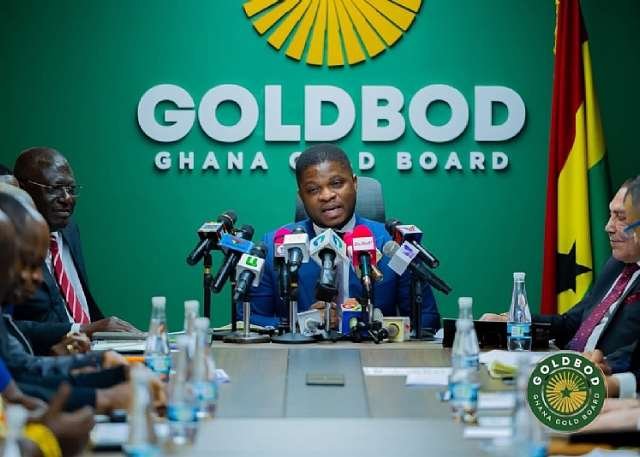
The wider gold-trading sector has faced additional scrutiny over an alleged GH¢122 million fraud involving two licensed gold traders. GoldBod reportedly suspended the traders’ licences in connection with the case.
The suspensions date from July 2026, rather than September. The timing matters because the licensing controversy should not be presented as a new September development.
The alleged fraud is a separate matter from the dispute over the Bank of Ghana’s Domestic Gold Purchase Programme. Any criminal or regulatory responsibility must be established through the relevant investigative and legal processes. The allegations should not be treated as proof of wrongdoing by GoldBod itself or as evidence that the reported programme loss arose from the traders’ conduct.
Nevertheless, the episode adds to pressure for transparency around licensing, compliance controls and oversight across Ghana’s gold-trading system.
Why the dispute matters for Ghana’s economy
The debate goes beyond the accounting treatment of one programme. It raises broader questions about how Ghana pursues reserve accumulation through domestic gold purchases, how those transactions are financed and how their benefits and costs are measured.
For policymakers, the central challenge is to evaluate the programme as a whole. That means considering not only any reported financial losses, but also the value of gold acquired, the effect on foreign reserves, the foreign-exchange flows involved and the opportunity cost of the policy.
For taxpayers and Parliament, the priority is to determine whether the programme’s financial exposure was clearly disclosed, whether the institutions involved had appropriate controls and whether the public received sufficient information to assess the trade-offs.
For GoldBod, the dispute creates pressure to substantiate its defence with audited financial statements and clear explanations of its contractual role. For the Bank of Ghana, the central questions concern reserve-management decisions, accounting treatment and the allocation of programme risks.
A well-evidenced inquiry could help separate the financial results of the central bank’s policy from GoldBod’s own accounts and establish where responsibility lies.
What to watch in October
The next major development is whether Parliament considers the renewed motion during its October sitting.
Four issues will be particularly important:
The motion’s parliamentary progress: Will it be debated, approved, amended or deferred again?
The IMF report’s exact wording: Does it describe the figure as a loss, a cost or another accounting measure, and to which institution or programme does it attribute it?
The financial evidence: Will the Bank of Ghana and GoldBod publish or present sufficiently detailed figures to reconcile the reported programme cost with GoldBod’s audited results?
The scope of accountability: If an inquiry is approved, will it examine fees, financing, transaction pricing, reserve benefits and the allocation of risks across the institutions involved?
Until these questions are answered, the US$1.7 billion figure should be treated as a contested programme-related estimate cited by the opposition, not as proof that GoldBod itself incurred that amount in losses.
Conclusion
Ghana’s gold-for-reserves programme now faces a test of transparency as well as financial credibility. The opposition wants Parliament to investigate the reported US$1.7 billion cost, while GoldBod argues that its own accounts show surpluses and that it served as the Bank of Ghana’s buying agent.
The decisive evidence will be the underlying IMF analysis, the central bank’s financial disclosures, GoldBod’s audited accounts and any findings from a parliamentary inquiry. The October sitting could determine whether lawmakers formally open that process.
For now, the central question remains: who carried the financial cost of the programme, how was that cost calculated, and what did Ghana gain in return?
Citations
- 1.IMF — Domestic Gold Purchase Programme losses:
- 2.IMF report
- 3.GoldBod — Audited 2025 financial statements:
- 4.GoldBod financial results
- 5.Ghana News Agency — GoldBod’s defence:
- 6.GoldBod responds to allegations
- 7.Ghana News Agency — Parliamentary inquiry:
- 8.Speaker’s statement
- 9.MyJoyOnline — March motion:
- 10.March parliamentary vote
- 11.Citi Newsroom — Alleged overdraft:
- 12.GoldBod’s overdraft denial
Finish Reading the Full Story and Expert Analysis.
Get the latest legal & regulatory intelligence in Ghana
Wansom is AI and can make mistakes.