
New report
Briefly Africa Trade Law Report | September 2026
Includes 7 Malawi developments · 6 markets
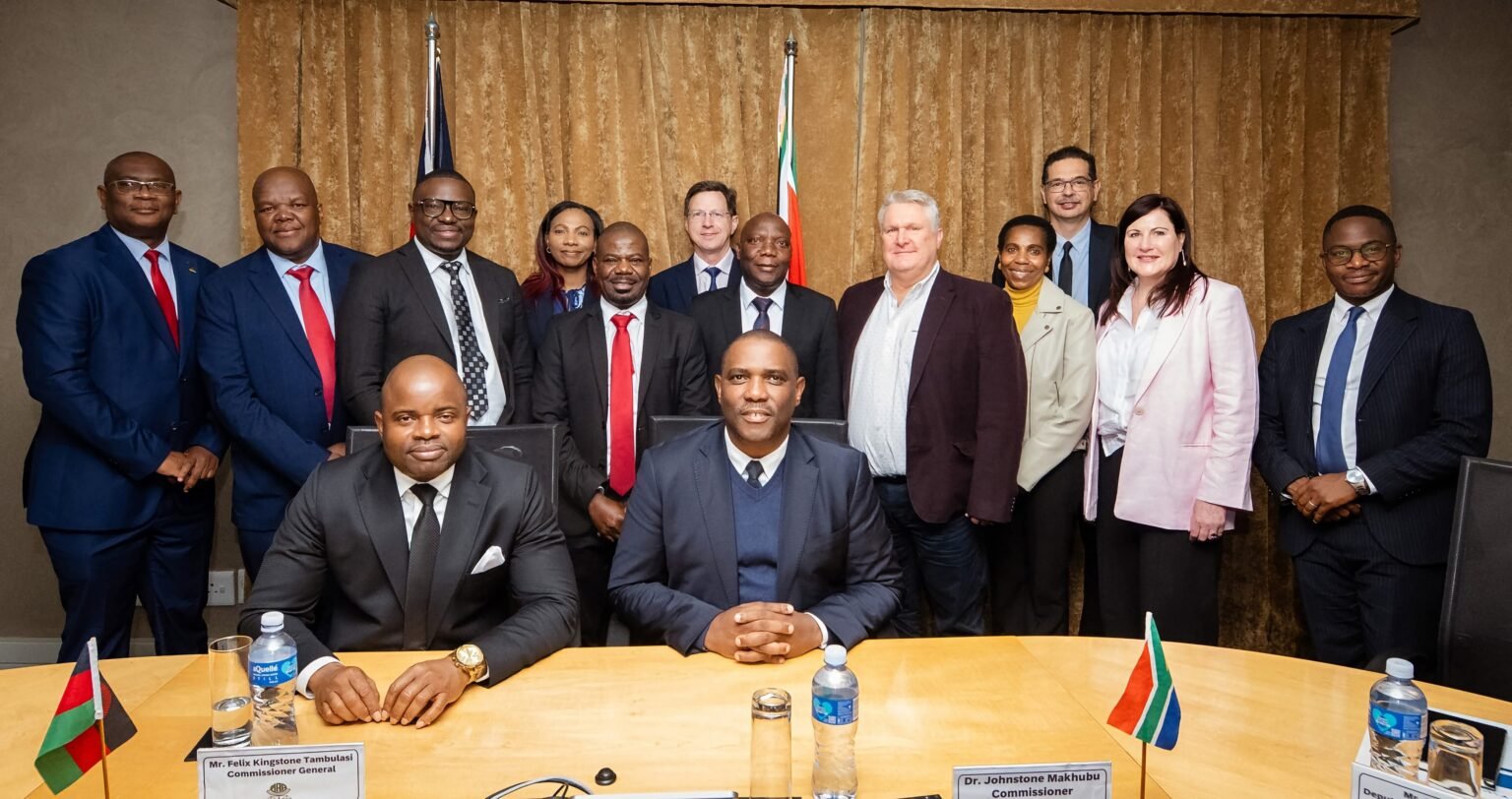
Five Southern African Customs Authorities Agree to Share Trade Data: What Malawi's Importers Should Expect
Summary
The roadmap: adopted in Pretoria on 24–26 August 2026 by the five customs administrations, with SADC Secretariat input and TradeMark Africa support, and publicised around 1 September.
The aim: Customs-to-Customs (C2C) data exchange so information moves ahead of cargo, speeding clearance, improving revenue collection and reducing illicit trade.
The rollout: phased, starting with priority corridors. It builds on live links between Zambia and Malawi (Mwami–Mchinji) and between Zambia and Zimbabwe, and on the July 2026 MRA–SARS IT connectivity arrangement.
The standard: the WCO Data Model with an agreed minimum dataset.
The legal basis: not the roadmap itself, but bilateral customs mutual assistance agreements, implementation arrangements, SADC customs cooperation, the WTO Trade Facilitation Agreement and national data protection law.
The effect: undervaluation, misclassification, false origin and transit diversion become easier to detect, while compliant traders should clear faster.
For importers: make sure every Malawian declaration matches the supplier's export declaration.
What Was Agreed
The meeting. Senior customs, legal and ICT officials from Malawi, Mozambique, South Africa, Zambia and Zimbabwe met in Pretoria from 24 to 26 August 2026. They adopted a joint Roadmap and Action Plan for developing and rolling out Customs-to-Customs (C2C) data exchange across the region, and signed it on 26 August. TradeMark Africa supported the process, and the SADC Secretariat contributed to the meeting. The agreement was publicised around 31 August and 1 September.
The goal. To let customs information move ahead of cargo, so that by the time goods reach a border the receiving customs authority already holds data from the exporting country. The partners expect:
faster and more predictable clearance for legitimate trade;
better revenue collection; and
less illicit cross-border trade.
How it will be rolled out. Implementation may be phased, starting with priority corridors. Existing bilateral links form the foundation:
Link | Status |
|---|---|
Zambia – Malawi | Operational; live exchange integrated into national systems, launched on the Mwami–Mchinji corridor |
Zambia – Zimbabwe | Operational bilateral connection |
Malawi – South Africa | IT Connectivity Implementation Arrangement signed by the MRA and SARS in late July 2026 |
Mozambique – Zambia – Malawi | Earlier work on integrating systems along the Nacala Development Corridor |
A roadmap, not a law. The roadmap is a plan among customs administrations, not a treaty or statute. It creates no new obligations for traders by itself. Its significance lies in the direction it sets: Malawian import declarations will increasingly be cross-checked against export data submitted in neighbouring countries.
How Customs-to-Customs Data Exchange Works
The basic idea. Every cross-border shipment generates two declarations: an export declaration in the country of departure and an import declaration in the country of arrival. They should describe the same goods, in the same quantity, at the same value. Today they are often filed in separate systems that do not talk to each other. C2C exchange connects them.
The flow:
The exporter lodges an export declaration in, for example, Zambia.
Zambia's customs system sends the agreed data to Malawi's system automatically, before the goods reach the border.
When the importer lodges a Malawian declaration, the Malawi Revenue Authority's system matches it against the incoming export data.
Matches can be cleared faster. Mismatches in value, quantity, description, tariff classification or origin are flagged for risk assessment before release.
The common language. At a meeting in Lusaka in August 2025, the revenue authorities of Malawi, Mozambique, Zambia and Zimbabwe adopted the World Customs Organization (WCO) Data Model as the shared standard, and agreed a minimum dataset for real-time sharing. Using a common model lets systems with different software exchange data reliably.
From reference to integration. Earlier cooperation between Zambia and Malawi let officers view the other side's data only for reference. The upgraded link on the Mwami–Mchinji corridor integrates that data directly into national systems. Officials say this closes gaps that let inconsistencies persist and supports earlier identification of incorrect declarations. The MRA has described the live exchange as a revenue and planning tool as well as a facilitation measure, and says enhancements to its ASYCUDA customs system have improved real-time exchange and enforcement.
Extending the scope. The partners have discussed extending the exchange to certificates and other attachments, such as certificates of origin and permits, so traders do not need to submit the same documents twice. The MRA has also notified the SADC Secretariat that its electronic certificate of origin system is designed to be interoperable with neighbouring administrations, including South Africa.
The Legal Framework: What Allows Customs Data to Cross Borders

Customs data includes commercially sensitive information: prices, suppliers, buyers and quantities. Sharing it across borders needs a legal basis, and the roadmap itself does not provide one. Instead, it sits on top of several existing legal layers.
Layer | Instrument | Role |
|---|---|---|
Bilateral treaties | Customs Mutual Administrative Assistance Agreements (CMAAs) | Government-to-government agreements providing the legal basis for exchanging and using customs information. Malawi and South Africa negotiated a CMAA in 2019, and the July 2026 MRA–SARS IT Connectivity Implementation Arrangement is designed to operationalise it |
Technical arrangements | IT connectivity and implementation arrangements between administrations | Define systems, data fields, security and procedures for the exchange |
Regional framework | SADC Protocol on Trade and its customs cooperation and mutual assistance provisions | Commit SADC members to cooperate on customs matters, including the exchange of information |
Multilateral | WTO Trade Facilitation Agreement | Encourages risk management and pre-arrival processing, and recognises customs cooperation, including information exchange, subject to confidentiality safeguards |
Standards | WCO Data Model | The technical standard for what data is exchanged and how |
National law | Customs legislation, revenue authority statutes, and data protection laws | Govern how each administration may use, store and protect the data it receives |
Confidentiality and data protection. Exchanged data may generally be used only for customs purposes, and protected against unauthorised disclosure. In Malawi, the Data Protection Act, 2024 adds a domestic layer of rules on processing personal data, and the government is developing a National Data Exchange Platform to govern information flows between public institutions. Aligning customs data exchange with those frameworks is one of the legal and institutional tasks the roadmap envisages.
The legal work still to do. Earlier meetings identified legal and institutional mechanisms as a pillar of the project. For a region-wide system, administrations need either a network of bilateral CMAAs covering every corridor, or a regional instrument that authorises multilateral exchange. Until then, the operational links will grow corridor by corridor, each needing its own legal underpinning.
Why It Matters: The End of the Blind Spot at the Border
The fraud it targets. MRA Commissioner General Felix Kingstone Tambulasi has said electronic data exchange with SARS will improve detection of customs fraud, including undervaluation, duty evasion and VAT fraud. Exchanged data can expose several common schemes:
Scheme | How C2C data exposes it |
|---|---|
Undervaluation | Import value declared in Malawi is far below the export value declared in the country of departure |
Misdescription and misclassification | Goods described or classified differently on each side of the border, to attract a lower duty rate |
False origin | Goods claiming SADC or COMESA preferential origin that the exporting country's records do not support |
Transit diversion | Goods declared in transit to a third country, but never recorded as arriving there |
Quantity mismatches | Fewer units declared on import than were recorded on export |
The scale of the trade involved. South Africa is Malawi's second-largest source of imports, at about 18% of Malawi's imports. On the busiest corridors, systematic matching of declarations could recover significant revenue.
A link to Malawi's foreign exchange problem. Mis-invoicing is not only a tax problem. Over-invoicing imports can be used to move foreign currency out of a country, and under-invoicing can hide the true value of trade. In September 2026, the Reserve Bank of Malawi tightened controls on foreign currency possession and movement. Matching trade declarations against partner data gives authorities a parallel tool to detect trade-based leakage of scarce foreign currency.
Part of a regional trend. Across the region, governments are moving to verify import declarations against official export records:
Kenya's new Section 23B of the Tax Procedures Act requires importers to obtain the exporting country's export declaration.
South Africa has formalised rules on related-party transfer pricing adjustments to customs value.
Zambia's live C2C link with Malawi already integrates export data into clearance.
The five-country roadmap moves Malawi from bilateral experiments towards a regional network.
What It Means for Each Stakeholder
Malawian importers
The change: your import declaration will increasingly be compared automatically with the export declaration your supplier filed in Zambia, South Africa, Mozambique or Zimbabwe. The risk: any gap in value, quantity, description or tariff classification may trigger a query, a hold or a reassessment, even if the difference is innocent. What to do: obtain a copy of the supplier's export declaration with every shipment. Make sure the commercial invoice, packing list and Malawian declaration match it exactly, and explain any legitimate differences, such as freight, insurance or discounts, in writing.
Exporters in partner countries
The change: your export declaration becomes evidence in your buyer's Malawian clearance. What to do: declare accurately and consistently, and provide buyers with copies. Inaccurate export data can delay your customer's clearance and damage commercial relationships.
Clearing agents and freight forwarders
The change: pre-arrival data means customs may have flagged a consignment before the agent lodges the entry. What to do: collect and reconcile both sides' documents before arrival, and build data checks into your process. Agents who submit clean, matched declarations will benefit most from faster clearance.
Compliant traders and large logistics operators
The opportunity: when declarations match, clearance should be faster and more predictable, with lower demurrage and storage costs. Duplicate submission of certificates should also fall as attachments are shared electronically.
Traders relying on undervaluation or informal routes
The risk: the blind spot that made undervaluation and misdeclaration hard to detect is closing corridor by corridor. Penalties, back-duty and VAT assessments become more likely, along with criminal exposure in serious cases.
Transit operators on the Nacala, Beira and North–South corridors
The change: transit cargo will be easier to track across borders, making diversion of transit goods into local markets harder to conceal. What to do: keep transit documentation complete and ensure goods arrive where they are declared to be going.
The Malawi Revenue Authority and partner administrations
The gain: better risk targeting, higher revenue and earlier detection of fraud. The obligation: to use shared data lawfully and proportionately, protect confidentiality and personal data, and give traders a fair chance to explain discrepancies before penalties.
Lawyers and compliance advisers
The work includes advising on document consistency across borders, responding to queries and reassessments based on partner data, data protection questions on cross-border sharing, and disputes where a partner country's data is itself wrong.
What to Watch
Milestone | Why it matters |
|---|---|
Choice of priority corridors | Which borders see C2C exchange first, and when |
Go-live of the MRA–SARS link | The first live data exchange on the Malawi–South Africa corridor, Malawi's second-largest import source |
New CMAAs or a regional legal instrument | The legal basis for exchange between all five administrations |
Expansion to certificates and attachments | Whether certificates of origin and permits travel electronically |
MRA guidance to traders | How discrepancies with partner data will be handled, and what traders must provide |
Data protection safeguards | How exchanged data is protected under Malawi's Data Protection Act and partner laws |
Frequently Asked Questions
What did the five countries agree? Customs administrations from Malawi, Mozambique, South Africa, Zambia and Zimbabwe adopted a joint Roadmap and Action Plan in Pretoria on 24–26 August 2026, for Customs-to-Customs data exchange so that customs information moves ahead of cargo.
Is the roadmap legally binding on traders? No. It is a plan among customs administrations. The legal basis for sharing data comes from bilateral customs mutual assistance agreements, implementation arrangements, regional instruments and national law.
Is any customs data already being exchanged? Yes. Zambia and Malawi have a live exchange launched on the Mwami–Mchinji corridor, Zambia and Zimbabwe have an operational link, and the MRA and SARS signed an IT connectivity arrangement in July 2026.
What data standard is used? The World Customs Organization Data Model, with an agreed minimum dataset for real-time sharing.
What should Malawian importers do now? Make sure each import declaration matches the supplier's export declaration in value, quantity, description and tariff classification, and keep copies of the export documents.
Citations
- 1.• Five Southern African customs administrations agree on a roadmap for faster, digitally connected trade corridors, TradeMark Africa (31 August 2026)
- 2.• Five Southern African countries move to link customs data as trade corridors face pressure to cut delays, Southern African Times (1 September 2026)
- 3.• Southern African revenue authorities to interlink their customs systems, TradeMark Africa (August 2025)
- 4.• Zambia and Malawi live customs data exchange to speed up trade and strengthen compliance, TradeMark Africa
- 5.• Malawi and South Africa Strengthen Customs Cooperation with Digital Data Exchange, TechAfrica News (5 August 2026)
- 6.• Malawi, South Africa sign IT deal to combat customs and tax fraud, APA News
- 7.• MRA and SARS seal digital agreement to track customs fraud between Malawi and South Africa, Capmad
- 8.• Mozambique & Zambia Integrate Customs Systems to Boost Trade, FurtherAfrica (February 2025)
Finish Reading the Full Story and Expert Analysis.
Get the latest legal & regulatory intelligence in Malawi
Wansom is AI and can make mistakes.